
33 Best Sociology Books
The best sociology books, ranked by how many expert sources recommend each one, with notes for beginners, students, and readers exploring social questions.
Our take
Sociology connects personal experience with the institutions, relationships, and histories that shape it. These books ask how identities form, how power works, and why familiar arrangements come to seem natural. Some introduce a whole field; others build an argument about housing, religion, class, work, or the routines of everyday interaction.
A broad textbook such as Sociology gives beginners a map of theories and research. The Sociological Imagination explains the connection between private troubles and public issues, while The Presentation of Self in Everyday Life makes ordinary encounters a subject of close analysis. Evicted: Poverty and Profit in the American City offers a different entry through detailed observation. More abstract works, including Distinction and Economy and Society, reward slower reading and some background in social theory.
Start with a survey if the vocabulary is unfamiliar, or choose one concrete social question that interests you. Read older theories alongside later studies so that their historical settings and assumptions remain visible.
33 books · 8 sources · Last updated
As an Amazon Associate, we earn from qualifying purchases (at no extra cost to you).
How to choose from this list
Skip to the full rankingIf you're new to the field: Sociology → The Sociological Imagination
If you want to study everyday interaction: The Presentation of Self in Everyday Life → Stigma
If you're interested in housing and low-wage work: Evicted: Poverty and Profit in the American City → Nickel and Dimed
If you want to understand class and taste: The Sociological Imagination → Distinction
If you want the foundations of sociological method: The Rules of Sociological Method → Suicide: A Study In Sociology
If you're exploring religion and social order: The Elementary Forms of Religious Life → The Protestant Ethic and the Spirit of Capitalism
The 33 books, ranked
Ranked by how many expert sources name each book. Ties go to the book more people recommend.

The Presentation of Self in Everyday Life
For readers who want sociological ideas they can recognize in daily encounters. Goffman's theatrical framework makes impression management concrete, though the compact examples and terminology still require slower attention than a popular psychology book.
What it's about
Erving Goffman uses theatrical performance to explain everyday social interaction. He examines how people present themselves, influence others' impressions, and sustain their public roles, drawing on observations of social customs to analyze the techniques of impression management.

For readers asking how familiar institutions come to feel natural and unquestionable. Berger and Luckmann connect ordinary routines with social order, though the abstract terminology makes this a slower read than an introductory survey.
What it's about
Peter Berger and Thomas Luckmann examine how everyday interactions produce a shared sense of reality. Their study of knowledge follows the development of habits, institutions, and socialization, asking how people experience a collectively created social order as objective.

The Sociological Imagination
For readers learning to connect individual experience with history and social structure. Mills gives sociology a clear sense of purpose, though his arguments about the discipline assume more background than a general introductory textbook provides.
What it's about
C. Wright Mills argues for a sociology that connects personal troubles with wider social issues. He critiques prevailing approaches to social research and explains how individual lives become intelligible through their relationships with history and social structure.

For readers interested in civic participation, social networks, and community life. Its extensive American evidence connects everyday activities with larger social changes, though the national focus and historical period limit straightforward application elsewhere.
What it's about
Robert D. Putnam examines declining participation in American civic and community life through evidence about clubs, volunteering, politics, and social networks. He explores possible causes and consequences of weakened social ties, alongside ways to renew collective engagement.
Also recommended by
1 person Brianne Kimmel recommended this book
Brianne Kimmel
"One of my favorite books." - Brianne Kimmel
Brianne Kimmel's recommendation of this book

Distinction
For readers ready to examine how taste and class reinforce each other. Bourdieu makes everyday preferences analytically revealing, though the dense concepts and evidence from French society require patience and careful attention to context.
What it's about
Pierre Bourdieu examines how tastes in art, food, clothing, and leisure express social differences. Drawing on surveys of French society, he argues that aesthetic preferences operate within relations of class and power, turning everyday choices into social judgments.

For readers interested in religion, work, and the historical development of capitalism. Weber offers a focused argument linking ideas with economic conduct, though the historical context and distinctions among religious traditions reward supplementary background reading.
What it's about
Max Weber examines the relationship between Protestant religious beliefs and the emergence of modern capitalism. He connects Calvinist ideas about work, duty, and worldly conduct with the development of an economic outlook that treats disciplined labor as a moral calling.

For readers examining race, law, and institutional exclusion in the United States. Alexander connects criminal justice with a wider argument about racial hierarchy, though the focused advocacy perspective complements rather than replaces broader sociology research.
What it's about
Michelle Alexander examines mass incarceration as a contemporary form of racial control. She argues that the War on Drugs and the criminal justice system impose enduring second-class status on Black Americans despite formal commitments to colorblindness.
Also recommended by
1 person Steve Kerr recommended this book
Steve Kerr
"If you’re like me and you want to understand our country and why things are the way they are, this is the book." - Steve Kerr
Steve Kerr's recommendation of this book

For students interested in how sociology builds explanations from social patterns. Durkheim provides a focused example of the discipline's ambitions, though its historical categories and evidence need critical reading alongside more recent research.
What it's about
Émile Durkheim investigates suicide as a social phenomenon, asking why its incidence varies across communities. He compares social and other explanations, develops categories of suicide, and examines how individual acts relate to broader patterns of collective life.
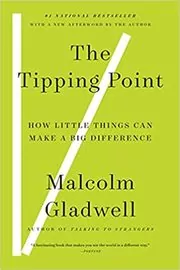
For readers who want an accessible way into questions about social influence and spreading trends. The memorable stories invite curiosity, though its simplified framework is less systematic than a sociology textbook or research study.
What it's about
Gladwell’s breakout book explores social epidemics, the moment when an idea, product, or behavior suddenly takes off. He shows how small shifts, key personalities, and the right context can turn a quiet trend into a cultural wave.
Also recommended by
7 people Joe Rogan recommended this book
Joe Rogan
"Hearing him do the audio part is great." - Joe Rogan
Joe Rogan's recommendation of this book  Ev Williams recommended this book
Ev Williams
On the "books read" section of Ev Williams' GoodReads profile.
Ev Williams's recommendation of this book  Kevin Rose recommended this book
Kevin Rose
"A bunch of really good information here on how to make ideas go viral." - Kevin Rose
Kevin Rose's recommendation of this book  Mike Shinoda recommended this book
Mike Shinoda
"I love books like [this book]." - Mike Shinoda
Mike Shinoda's recommendation of this book  Kevin Systrom recommended this book
Kevin Systrom
Kevin Systrom recommended this book on Facebook.
Kevin Systrom's recommendation of this book  Jenn Im recommended this book
Jenn Im
Jenn Im recommended this book on Twitter.
Jenn Im's recommendation of this book +1
More recommendations
- Michael Hyatt
Michael Hyatt recommended this book on his website.
- Michael Hyatt

For readers who want close observation of how housing insecurity shapes poverty. Desmond makes institutions visible through people's daily experiences, though the Milwaukee setting and distressing material call for attention to place and emotional demands.
What it's about
Matthew Desmond follows eight Milwaukee families struggling to keep their homes. Combining close observation with research on housing insecurity, he examines how eviction, landlords' financial incentives, and unaffordable rents help perpetuate poverty in American cities.
Also recommended by
2 people Barack Obama recommended this book
Barack Obama
Barack Obama's favorite books of 2017 list.
Barack Obama's recommendation of this book  Bill Gates recommended this book
Bill Gates
"Gave me a better sense of what it is like to be very poor in this country than anything else I have read." - Bill Gates
Bill Gates's recommendation of this book

Capital, Volume 1
For readers ready to study class and capitalism through a foundational critique. Marx develops the argument at greater length than introductory summaries, though the difficult terminology and sustained economic analysis demand patience and contextual reading.
What it's about
Karl Marx examines commodities, labor, value, and the accumulation of capital in the first volume of his critique of political economy. His analysis connects production and exchange with the social relations between workers and owners.

Economy and Society
For readers ready for a sustained framework on authority, social action, and class. Weber's concepts support detailed comparison across institutions, though the compressed definitions are demanding and the linked edition covers Part I rather than the entire work.
What it's about
Max Weber develops a framework for understanding social and economic action, forms of rule, and class relations. Keith Tribe's translation of Part I includes commentary and notes that clarify Weber's concepts and place them within later scholarship.

Mind, Self, and Society
For readers exploring how identity and thought develop through social interaction. Mead offers foundations for understanding the social self, though the lecture-based text can feel repetitive and benefits from an introductory guide to its concepts.
What it's about
George Herbert Mead's collected lectures explore social psychology and the emergence of mind and self. The volume brings together his reflections on social behavior and philosophy, with editorial notes explaining the origins of the text and its relationship to his writings.

For readers who want an accessible account of low-wage work and daily insecurity. Ehrenreich's temporary immersion makes practical pressures vivid, though her position as a visiting journalist differs from that of long-term workers.
What it's about
Barbara Ehrenreich takes low-wage jobs in Florida, Maine, and Minnesota to investigate whether their pay can cover basic living costs. Her reporting examines exhausting work, insecure housing, workplace treatment, and the daily strategies required to make ends meet.

For readers interested in the relationship between manners, self-restraint, and state formation. Elias links intimate behavior with long historical changes, though the demanding account centers on Western Europe and needs reading within that scope.
What it's about
Norbert Elias traces changes in Western European manners and personality from the late Middle Ages onward. He connects shifts in individual behavior with the formation of states and the concentration of power, examining social and psychological change together.

The Elementary Forms of Religious Life
For readers interested in religion as a collective social practice. Durkheim connects ritual and shared meaning with a wider theory of society, though the historical evidence and treatment of Indigenous cultures need critical contextual reading.
What it's about
Émile Durkheim examines religion through collective beliefs, rituals, and distinctions between the sacred and the profane. His analysis asks how religious life expresses and renews social bonds, drawing on accounts of Australian Aboriginal religious practices.

For readers who want an accessible argument about durable social hierarchy. Wilkerson combines personal stories and historical comparisons, though applying one caste framework across the United States, India, and Nazi Germany calls for careful comparison.
What it's about
Isabel Wilkerson argues that an entrenched caste hierarchy shapes American life beyond individual prejudice. Comparing systems in the United States, India, and Nazi Germany, she examines their foundations, daily effects, and possibilities for overcoming inherited divisions.
Also recommended by
5 people Ramit Sethi recommended this book
Ramit Sethi
Ramit Sethi mentioned this book in the "What to Read Next" newsletter.
Ramit Sethi's recommendation of this book  Seth Godin recommended this book
Seth Godin
"An extraordinary book." - Seth Godin
Seth Godin's recommendation of this book  Oprah Winfrey recommended this book
Oprah Winfrey
"Shows us how to rebuild a world in which all are truly equal and free." - Oprah Winfrey
Oprah Winfrey's recommendation of this book  Roger Bennett recommended this book
Roger Bennett
Roger Bennett recommended this book on Twitter.
Roger Bennett's recommendation of this book  Preet Bharara recommended this book
Preet Bharara
"If you haven’t yet, do your brain and heart a favor by reading this important book." - Preet Bharara
Preet Bharara's recommendation of this book

For readers questioning the social value and personal meaning of paid work. Graeber builds a provocative argument around workers' experiences, though the broad interpretation is more polemical than a neutral survey of labor research.
What it's about
David Graeber investigates jobs that workers themselves regard as pointless or unnecessary. Drawing on personal testimonies, he develops a theory of meaningless employment and examines its psychological costs, organizational causes, and implications for how society values different kinds of work.
Also recommended by
1 person David Heinemeier Hansson recommended this book
David Heinemeier Hansson
"Essentially a victory lap of the original essay and the response it provoked." - DHH
David Heinemeier Hansson's recommendation of this book

For readers interested in how institutions exercise power through supervision and discipline. Foucault connects punishment with wider social practices, though the historical argument and theoretical vocabulary make this a demanding first introduction to sociology.
What it's about
Michel Foucault examines the emergence of the modern prison and changing forms of punishment. His historical analysis argues that reforms shifted power from public violence toward discipline and control, connecting penal institutions with broader practices for shaping human behavior.

For readers interested in nationalism and how strangers acquire a shared identity. Anderson connects culture and political history with an influential explanatory idea, though the historical arguments assume some familiarity with colonialism and state formation.
What it's about
Benedict Anderson examines the origins and spread of nationalism, describing nations as communities whose members imagine a shared connection. He explores the influence of printed languages, colonial administration, and political change on identities strong enough to inspire sacrifice.
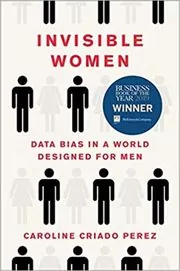
For readers interested in how apparently neutral data and design can exclude women. Its concrete examples connect research choices with everyday systems, though the wide-ranging survey is a starting point rather than a research methods textbook.
What it's about
Criado Perez shows how data built around male defaults shapes medicine, work, transport, and public life. The result is a clear, unsettling look at the hidden costs women pay when half the population is treated as an afterthought.
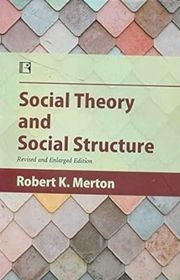
Social Theory and Social Structure
For readers moving from introductory theory toward concepts they can use in research. Merton's essays connect explanation with social patterns, though the collection is substantial and easier to approach selectively than in one continuous reading.
What it's about
Robert K. Merton develops ideas about middle-range theory, social functions, reference groups, and self-fulfilling prophecy. His essays examine how institutions and expectations operate, offering concepts for connecting theoretical arguments with the study of social structure.
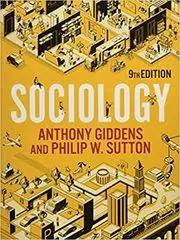
Sociology
For beginners who want a map of the field before tackling individual theorists. Its broad topics and study features provide useful orientation, though the textbook's size makes selective reading easier than treating it as a short introduction.
What it's about
Giddens and Philip W. Sutton introduce sociological theories and research through topics including gender, poverty, politics, media and globalization. The ninth edition connects contemporary problems with digital change and global relationships, using studies and exercises to develop critical analysis.

Sociology Themes and Perspectives
For students who want theories, research, and major social topics brought together for structured study. Its comparisons and summaries help organize revision, though the substantial textbook format is less inviting for readers seeking a brief overview.
What it's about
Michael Haralambos and Martin Holborn introduce sociological theories, research, and methods for students. The textbook examines inequality, gender, ethnicity, families, religion, education, crime, politics, and media, using examples and chapter summaries to connect concepts with social experience.
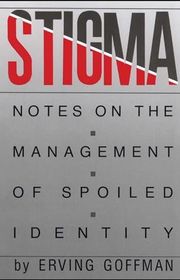
Stigma
For readers interested in exclusion and the everyday management of identity. Goffman's close attention to encounters complements his theatrical account of social life, though some historical language and categories will feel dated to contemporary readers.
What it's about
Erving Goffman examines how people navigate identities that others devalue. Drawing on autobiographies and case studies, he explores social acceptance, disclosure, and strategies for handling encounters shaped by assumptions about what counts as normal.

The Division of Labor in Society
For readers asking what holds a differentiated society together. Durkheim links specialization with solidarity more directly than the broad introductions here, though the nineteenth-century framework benefits from comparison with later research on work and inequality.
What it's about
Émile Durkheim explores how the division of labor changes the ties that hold people together. His study connects specialization, moral regulation, and social solidarity, examining the forms of interdependence associated with the development of industrial societies.

The Rules of Sociological Method
For students who want to understand the methodological claims behind early sociology. Durkheim states a clear program for studying social facts, though its historical assumptions need comparison with later approaches to research.
What it's about
Émile Durkheim sets out principles for treating social phenomena as objects of systematic investigation. This edition includes an introduction and selected writings on method, placing his arguments about evidence, explanation, and sociology's scope in context.
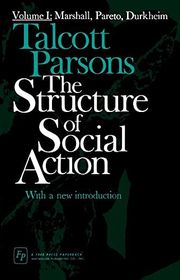
The Structure of Social Action, Vol. 1
For students who want to trace the foundations of Parsons's social theory. Its engagement with earlier thinkers clarifies an important intellectual tradition, though this first volume is dense and doesn't contain the entire work.
What it's about
The first volume of Talcott Parsons's study examines social action through the work of Marshall, Pareto, and Durkheim. It considers relationships between sociology and economics while developing a theoretical account of action and social order.
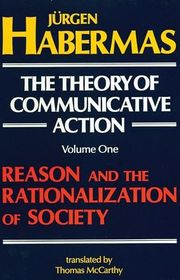
The Theory of Communicative Action, Volume 1
For advanced readers interested in communication, rationality, and social theory. Habermas brings major theoretical traditions into a sustained argument, though this first volume is philosophically demanding and only part of the larger two-volume work.
What it's about
In the first volume of this two-volume work, Jürgen Habermas examines rationality, social action, and communication. He engages with earlier social thinkers to develop an account of how understanding and coordination operate within modern societies.

For readers interested in environmental danger, uncertainty, and modern institutions. Beck connects manufactured risks with changes in politics and inequality, though the broad theoretical argument offers fewer concrete research steps than a methods book.
What it's about
Ulrich Beck argues that modern societies increasingly organize themselves around the risks produced by industrial development. He examines environmental dangers, the politics of knowledge, changing inequalities, and individualization, connecting these shifts with transformations in science and politics.

For readers interested in conformity and the social pressures behind American identity. Its contrast between inner-directed and other-directed character remains a useful conceptual starting point, though the mid-century middle-class setting limits its reach.
What it's about
David Riesman, Nathan Glazer, and Reuel Denney analyze changing patterns of American social character. Their account of inner-directed and other-directed people examines how middle-class individuals respond to social expectations and the psychological, political, and economic pressures around them.

For readers interested in comparing inequality across affluent societies. Wilkinson and Pickett assemble a broad argument with readable comparisons, though evaluating the claims requires separating observed associations from the explanations offered for them.
What it's about
Richard Wilkinson and Kate Pickett compare societies to argue that income inequality contributes to social and health problems. They examine evidence concerning violence, community life, imprisonment, and wellbeing, then explore ways of organizing a more equal society.

The Power Elite and the State
For readers who want institutional detail about how powerful networks influence policy. Domhoff's case studies complement more abstract accounts of authority, though the American focus and historical cases require care when applying the argument elsewhere.
What it's about
G. William Domhoff examines how networks of powerful Americans shape government policy. Case studies of social security, labor legislation, trade, and postwar economic planning explore relationships among business leaders, experts, political coalitions, and the state.
Sources
- 1
15 Best Sociology Books for Beginners & Students
gauravtiwari.org
- 2
10 Best Sociology Books for Beginners - Must Read
sociologygroup.com
- 3
A Ranking Of The Best Sociology Books - Book Scrolling
bookscrolling.com
- 4
Books of the XX Century | ISA
isa-sociology.org
- 5
Good Sociology Books – ReviseSociology
revisesociology.com
- 6
Sociology Books
goodreads.com
- 7
What are “must-read” sociology books?
reddit.com
- 8
I would like to study sociology in my own time (for enjoyment), looking for good books to start with
reddit.com







Edited by
Software engineer whose passion for tracking book recommendations from podcasts inspired the creation of MRB.
Lead investor at 3one4 Capital whose startup expertise and love for books helped shape MRB and its growth.
Comments
Spotted a missing book, a wrong order or a mistake? Tell us and we'll fix this page.
We're a reading guide, not the author or publisher, so we can't send books or pass on messages.