
19 Best Anthropology Books
The best anthropology books, ranked by expert source recommendations, with notes to help you choose broad introductions, ethnographies, human origins, and theory.
Our take
Anthropology studies human life through several kinds of questions and evidence. Cultural and social anthropologists examine how people live together, while biological anthropology, archaeology, and linguistic anthropology investigate other aspects of humanity across time. A broad textbook can map the field, but a close account of one community often shows more clearly how anthropologists learn and interpret what they encounter.
Anthropology offers a four-field introduction, and Cultural Anthropology concentrates on social and cultural questions. How to Read Ethnography helps explain how field-based writing becomes an argument. For a classic example, try The Forest People, keeping its historical viewpoint in mind. Purity and Danger and Imagined Communities are more theoretical, while Debt and The Dawn of Everything make broad historical arguments from anthropological perspectives. Gods of the Upper Air introduces part of the discipline’s intellectual history through biography. Start with a textbook for structure or an ethnographic account for a closer encounter with everyday life.
19 books · 7 sources · Last updated
As an Amazon Associate, we earn from qualifying purchases (at no extra cost to you).
How to choose from this list
Skip to the full rankingIf you want a map of the whole field: Anthropology
If you want cultural anthropology: Cultural Anthropology → How to Read Ethnography
If you want a classic ethnographic account: The Forest People
If you want culture and medical encounters: The Spirit Catches You and You Fall Down
If you want social categories and identity: Purity and Danger → Imagined Communities
If you want broad historical arguments: Debt → The Dawn of Everything
The 19 books, ranked
Ranked by how many expert sources name each book. Ties go to the book more people recommend.
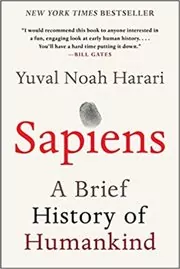
For general readers who want a large-scale story to spark questions about humanity. The confident connections make it accessible, though it is a historical synthesis rather than a dependable substitute for anthropological training or close ethnographic evidence.
What it's about
Harari condenses 70,000 years of human history into a single narrative, tracing how Homo sapiens rose from apes on the savannah to planet-shaping forces. He focuses on shared myths, empires, money, religion and science, and asks whether all this progress made us happier.
Also recommended by
32 people Joe Rogan recommended this book
Joe Rogan
"It really puts in perspective how bizarre human beings are. It’s an awesome overview of our species." - Joe Rogan
Joe Rogan's recommendation of this book  Bill Gates recommended this book
Bill Gates
"I would recommend this book to anyone interested in a fun, engaging look at early human history." - Bill Gates
Bill Gates's recommendation of this book  Naval Ravikant recommended this book
Naval Ravikant
"Best book I've read in [2015]." - Naval Ravikant
Naval Ravikant's recommendation of this book  Lex Fridman recommended this book
Lex Fridman
"Basically one of the things we've created here is we've imagined ideas that we all share." - Lex Fridman
Lex Fridman's recommendation of this book  Mark Zuckerberg recommended this book
Mark Zuckerberg
"A big history narrative of human civilization." - Mark Zuckerberg
Mark Zuckerberg's recommendation of this book  Peter Attia recommended this book
Peter Attia
One of Peter Attia's answers to "any books you feel would make your reading list?"
Peter Attia's recommendation of this book +26
More recommendations
- Ashton Kutcher
"The brainy book I seem to be sharing or talking about the most lately." - Ashton Kutcher
- Whitney Cummings
"A great book about [how] we’ve evolved and why we have anxiety." - Whitney Cummings
- Richard Branson
"I just love the style of his writing." - Richard Branson
- Ray Dalio
Ray Dalio mentioned this book on "The Tim Ferriss Show" podcast.
- Vinod Khosla
"A previous favorite." - Vinod Khosla
- James Cameron
"It explains human behavior and why we are the way we are in human civilization from soup to nuts. And I’ve read it now a couple of times. It’s a pretty astonishing book." - James Cameron
- Demis Hassabis
"There's not many times where I read a book and come out with 20 new ideas I hadn't thought about before, and [this book] made me think like that." - Demis Hassabis
- Keith Rabois
Keith Rabois recommended this book on a Medium blog post.
- Daniel Ek
"Both sobering and conservatively optimistic in equal measure." - Daniel Ek
- Reid Hoffman
"A grand theory of humanity." - Reid Hoffman
- Sam Kass
Sam Kass recommended this book in the "Tools of Titans" book.
- Sebastian Junger
"I’m going to give [this book] over and over again to everyone I know." - Sebastian Junger
- Kishore Biyani
"Fascinating because of its multi-disciplinary approach towards understanding human society, our behaviour and our future." - Kishore Biyani
- Ryan Shea
One of Ryan Shea's 4 answers to "what is the book (or books) you’ve given most as a gift?"
- Melinda Gates
Melinda Gates recommended this book on Likewise.com.
- Bill Gurley
"I really enjoyed [this book]." - Bill Gurley
- Karlie Kloss
"An amazing book on the beginning of humanity." - Karlie Kloss
- Anthony Pompliano
"[One of the] best books I read in 2017." - Anthony Pompliano
- Changpeng Zhao
"Gives me a greater perspective about how humans emerged and why we behave the way we do." - Changpeng Zhao
- PewDiePie
"Tells the major revolutions of human history." - PewDiePie
- Patrick O'Shaughnessy
"Provides a concise history of humankind and outlines why we have the psychology we do today." - Patrick O'Shaughnessy
- Chris Evans
"Truly mind-blowing. It’s changed the way I look at almost everything. I can’t endorse it enough." - Chris Evans
- Simon Mayo
"Love this book still." - Simon Mayo
- Penn Jillette
Penn Jillette mentioned this book in a New York Times interview.
- Mark Manson
Mark Manson recommended this book on his website.
- James Clear
"[One of] the 10 best nonfiction books of all-time." - James Clear
- Ashton Kutcher

For readers interested in an environmental explanation of unequal historical outcomes. Its wide comparisons make geography and subsistence central, though the large-scale argument needs comparison with accounts giving more weight to local histories and human choices.
What it's about
Jared Diamond examines why different societies developed unequal levels of power and wealth. He emphasizes geography, available plants and animals, food production, disease, and technology as explanations for historical differences, challenging accounts based on racial superiority.
Also recommended by
12 people- Joe Rogan recommended this book
Joe Rogan
"An amazing book." - Joe Rogan
Joe Rogan's recommendation of this book - Bill Gates recommended this book
Bill Gates
"Fascinating.... Lays a foundation for understanding human history." - Bill Gates
Bill Gates's recommendation of this book  Charlie Munger recommended this book
Charlie Munger
Charlie Munger recommended this book in the "Poor Charlie's Almanack" book.
Charlie Munger's recommendation of this book  Simon Sinek recommended this book
Simon Sinek
"Offers us a new and remarkably simple way of looking at our world." - Simon Sinek
Simon Sinek's recommendation of this book  Daniel Ek recommended this book
Daniel Ek
"A brilliant Pulitzer Prize-winning book about how the modern world was formed, analyzing how societies developed differently on different continents." - Daniel Ek
Daniel Ek's recommendation of this book  Jesse Williams recommended this book
Jesse Williams
"Helped rid me of the nagging incompleteness in my understood connection between the successes and failings of ancient and modern civilizations." - Jesse Williams
Jesse Williams's recommendation of this book +6
More recommendations
- Stewart Brand
"The main [book by this author]." - Stewart Brand
- Patrick Arnold
"Gave a big eye opening on why certain people of the world are more advanced than others and behave a certain way, as opposed to just genetics and this person is smarter because of this or that." - Patrick Arnold
- Jamie Dimon
On Jamie Dimon's list of favorite books.
- Margaret Atwood
"Also does pandemics." - Margaret Atwood
- Mark Manson
Mark Manson recommended this book on his website.
- James Clear
"[One of] the 10 best nonfiction books of all-time." - James Clear
- Stewart Brand

For readers who want economic arrangements examined through morality, obligation, and power. Graeber connects anthropological examples with a long historical argument, though the ambitious scope makes this more provocative synthesis than a settled account of every period.
What it's about
David Graeber traces the history of debt, credit, and money across cultures and thousands of years. Combining anthropology with economic history, he challenges familiar accounts of barter and examines how obligations become entangled with morality, violence, and political power.
Also recommended by
2 people Seth Godin recommended this book
Seth Godin
"The most fascinating book I've read all year [in 2015]." - Seth Godin
Seth Godin's recommendation of this book  Mark Manson recommended this book
Mark Manson
Mark Manson recommended this book on his website.
Mark Manson's recommendation of this book

For readers who want a framework for understanding nationalism as a social relationship. Its connections among print, language, and political identity invite comparison across societies, though the argument assumes more historical background than a general introduction.
What it's about
Benedict Anderson examines the origins and spread of nationalism, describing nations as communities whose members imagine a shared connection. He explores the influence of printed languages, colonial administration, and political change on identities strong enough to inspire sacrifice.

For readers ready to examine how categories and boundaries organize social life. Douglas makes seemingly ordinary ideas about cleanliness analytically revealing, though the theoretical language and older comparative examples require more effort than an introductory survey.
What it's about
Mary Douglas examines ideas of purity, pollution, and taboo as expressions of social order. Her anthropological analysis connects classification with religious beliefs and everyday practices, exploring how communities define boundaries and respond to things that disrupt their established categories.
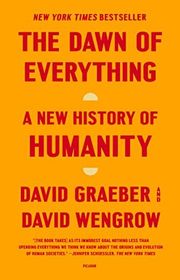
The Dawn of Everything: A New History of Humanity
For readers who want to question simple stories about the origins of inequality and the state. Its wide range of social possibilities challenges familiar assumptions, though the argumentative synthesis should be compared with other archaeological and historical interpretations.
What it's about
David Graeber and David Wengrow reexamine early human societies using archaeology and anthropology. They question accounts that treat farming, cities, and inequality as inevitable stages, exploring varied forms of social organization and the choices people made within them.

Beyond Culture
For readers who want to notice cultural assumptions in ordinary communication. Hall’s examples make implicit expectations easier to discuss, though his broad cultural models can flatten differences within groups if treated as fixed descriptions.
What it's about
Edward T. Hall explores the often-unconscious cultural assumptions that shape thought, feeling, communication, and behavior. Through examples of cross-cultural encounters, he shows how examining these hidden patterns can broaden understanding of people from different backgrounds.

How to Read Ethnography
For students who want to understand how ethnographic arguments are built. Its attention to writing, evidence, and interpretation develops a useful reading skill, though it works best with actual ethnographies to examine alongside it.
What it's about
Paloma Gay y Blasco and Huon Wardle teach readers to approach ethnographic texts critically, examining how anthropological accounts are constructed. The guide develops skills for understanding arguments, evidence, and interpretation while encouraging students to think anthropologically about the complexity of social life.
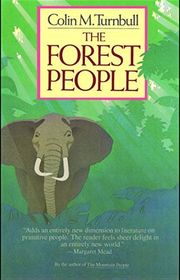
The Forest People
For readers who want a readable classic built around an anthropologist’s encounters with a community. The attention to social relationships makes ethnography tangible, though Turnbull’s affectionate, sometimes idealized portrait should be read as a situated historical account.
What it's about
Colin Turnbull recounts living among Mbuti communities in the Congo’s Ituri forest. Episodes of work, family life, conflict, and ritual form a portrait of social relationships, inviting readers to consider a way of life through one anthropologist’s observations.

The Spirit Catches You and You Fall Down
A Hmong Child, Her American Doctors, and the Collision of Two Cultures
For readers interested in how cultural assumptions shape encounters with institutions. Fadiman makes conflicting understandings of care personal and concrete, though the child’s severe illness is emotionally difficult and the book is literary journalism rather than a clinical guide.
What it's about
Anne Fadiman investigates the care of Lia Lee, a Hmong child with epilepsy in California. Her account explores how her family's beliefs and American medical practice collide, placing their experience within Hmong history and refugee life.

For students who want one textbook to introduce all four major subfields. The broad framework connects biological and cultural questions, though its survey format offers less sustained immersion in a community than an ethnography.
What it's about
Conrad Phillip Kottak introduces biological, archaeological, cultural, and linguistic anthropology. The textbook connects academic and applied approaches with contemporary life, encouraging readers to understand human diversity and recognize anthropology’s relevance to their own experiences.

Anthropology & the Colonial Encounter
For readers interested in the discipline’s relationship with colonial power. The essays encourage scrutiny of how knowledge was produced, though the historical and theoretical focus makes them easier to approach after an introductory account of anthropology.
What it's about
Edited by Talal Asad, this collection examines anthropology within the unequal power relationships of colonialism. Essays investigate how British colonial rule shaped anthropological thought and practice, questioning the discipline’s relationship with the societies it studied.

For readers interested in culture and the international spread of psychiatric ideas. The reported cases make institutional encounters tangible, though this is a journalist’s interpretive argument rather than a comprehensive clinical or anthropological account of mental health.
What it's about
Ethan Watters investigates how Western ideas about mental illness spread across cultures. Reporting from Hong Kong, Sri Lanka, Zanzibar, and Japan, he argues that imported diagnostic models and treatments can reshape local understandings of distress.

For beginners concentrating on cultural anthropology who like learning through questions. Its combination of classic cases and contemporary issues helps connect concepts with social life, though it does not provide the four-field breadth of a general anthropology textbook.
What it's about
Robert Welsch and Luis Vivanco introduce cultural anthropology through questions about human life and society. Classic cases and contemporary problems explore social, political, and economic relationships, helping students develop an anthropological perspective on familiar and unfamiliar communities.

For readers interested in how institutions shape behavior through observation and routine. Foucault offers concepts used widely in social analysis, though the dense historical argument belongs to social theory rather than an introductory ethnography.
What it's about
Michel Foucault examines the emergence of the modern prison and changing forms of punishment. His historical analysis argues that reforms shifted power from public violence toward discipline and control, connecting penal institutions with broader practices for shaping human behavior.

Gods of the Upper Air
How a Circle of Renegade Anthropologists Reinvented Race, Sex, and Gender in the Twentieth Century
For readers who want the discipline’s history through the people who challenged racial and cultural hierarchies. The biographical approach gives ideas a human setting, though it follows a particular intellectual circle rather than the whole field.
What it's about
Charles King follows Franz Boas and the anthropologists around him, including Margaret Mead, Ruth Benedict, Ella Deloria, and Zora Neale Hurston. Their research and personal lives illuminate challenges to established assumptions about race, sex, gender, and human diversity in the twentieth century.

Almost Human
The Astonishing Tale of Homo Naledi and the Discovery That Changed Our Human Story
For readers who enjoy scientific discovery told through an expedition. The fieldwork and teamwork make paleoanthropology concrete, though one discovery cannot provide a full introduction to human evolution and later findings require additional reading.
What it's about
Lee Berger recounts the discovery of Homo naledi in a remote South African cave system. His account follows the exploration and recovery of fossil remains, revealing the teamwork and scientific questions surrounding a find that challenged understandings of human evolution.

For students concentrating on language as social practice. The textbook connects communication with identity and cultural life, though the specialist focus offers less help with the biological and archaeological branches of anthropology.
What it's about
James Stanlaw and his collaborators introduce linguistic anthropology through the relationships between communication, culture, and social identity. The textbook explores how language operates within society and how studying its structures and uses helps explain people's ways of understanding one another.

For curious readers who want an accessible explanation of how linguistic complexity develops. The examples connect small changes in speech with larger grammatical patterns, though the focus is language change rather than a complete introduction to linguistic anthropology.
What it's about
Guy Deutscher investigates how language develops complex grammar, vocabulary, and meaning through gradual change. Examples from ancient and modern languages connect pronunciation, metaphor, and linguistic patterns with the processes that transform ordinary speech into increasingly elaborate systems of expression.
Sources
- 1
10 Best Anthropology Books for Beginners
sociologygroup.com
- 2
Best Popular Anthropology Books
goodreads.com
- 3
Learning Anthropology: The Top Ten Books
superprof.co.uk
- 4
100 Best Anthropology Books of All Time
shortform.com
- 5
Suggested Readings
ucl.ac.uk
- 6
The 30 Essential Books in Anthropology
allegralaboratory.net
- 7
Community FAQ: I’m new to anthropology, what should I read?
reddit.com


Edited by
Software engineer whose passion for tracking book recommendations from podcasts inspired the creation of MRB.
Lead investor at 3one4 Capital whose startup expertise and love for books helped shape MRB and its growth.
Comments
Spotted a missing book, a wrong order or a mistake? Tell us and we'll fix this page.
We're a reading guide, not the author or publisher, so we can't send books or pass on messages.