
10 Best Sleep Books
The best sleep books, ranked by how many expert sources recommend each one, with notes to help you choose science overviews, insomnia programs, and habit guides.
Our take
Books about sleep answer different questions. Some explain what happens in the sleeping brain, others investigate unusual nighttime behavior, and others organize exercises for readers struggling with insomnia. Knowing which question interests you makes choosing easier. Why We Sleep offers a broad science narrative, while Dreamland follows a journalist through sleep's stranger corners. When Brains Dream concentrates on dreaming and the theories researchers use to explain it.
For practical reading, compare the format as well as the subject. Say Good Night to Insomnia lays out a six-week program, while The Book of Sleep lets you browse individual strategies. Hello Sleep focuses on understanding insomnia and changing an anxious relationship with rest. The Sleep Revolution takes a wider view of habits and culture, and The Little Book of Sleep includes traditional body-awareness practices. Start with The Sleep Solution for an approachable overview, or Hello Sleep if insomnia is your main concern.
10 books · 10 sources · Last updated
As an Amazon Associate, we earn from qualifying purchases (at no extra cost to you).
How to choose from this list
Skip to the full rankingIf you want an approachable overview: The Sleep Solution → Why We Sleep
If insomnia is your main concern: Hello Sleep → Say Good Night to Insomnia
If you prefer individual exercises: The Book of Sleep
If you want reported sleep science: Dreamland → When Brains Dream
If you want habits and personal experience: The Sleep Revolution → The Sleep Fix
The 10 books, ranked
Ranked by how many expert sources name each book. Ties go to the book more people recommend.

For readers curious about why sleep matters to memory, mood, and health. Its broad science narrative makes a stronger case for prioritizing rest than it supplies an insomnia program, though the urgency may heighten sleep anxiety.
What it's about
Matthew Walker examines sleep and dreaming, presenting research on their relationship with learning, emotions, and physical health. He discusses changing sleep patterns, the effects of substances such as caffeine, and the consequences of insufficient sleep.
Also recommended by
7 people Bill Gates recommended this book
Bill Gates
"Explains how neglecting sleep undercuts your creativity, problem solving, decision-making, learning, memory, heart health, brain health, mental health, emotional well-being, immune system, and even your life span." - Bill Gates
Bill Gates's recommendation of this book  Bryan Johnson recommended this book
Bryan Johnson
"Not only did I become convinced that getting high-quality sleep is the best protector and enhancer of health and cognition, but it is also the most underappreciated." - Bryan Johnson
Bryan Johnson's recommendation of this book  Keith Rabois recommended this book
Keith Rabois
Keith Rabois mentioned this book on Twitter.
Keith Rabois's recommendation of this book  Alexis Ohanian recommended this book
Alexis Ohanian
"One of the best and most important books I've read [in 2019]." - Alexis Ohanian
Alexis Ohanian's recommendation of this book  Vinod Khosla recommended this book
Vinod Khosla
"Best book on the subject [of sleep]." - Vinod Khosla
Vinod Khosla's recommendation of this book  Michael Mauboussin recommended this book
Michael Mauboussin
"[One of] my favorite science books in 2018." - Michael Mauboussin
Michael Mauboussin's recommendation of this book +1
More recommendations
- Jason Fried
"Highly recommended." - Jason Fried
- Jason Fried

For readers who want a clinician's conversational introduction to sleep problems. Winter mixes explanations with practical questions and humor, though the wide coverage offers less step-by-step structure than a dedicated insomnia workbook.
What it's about
Winter explains sleep science and common sleep difficulties through clinical experience and practical examples. He examines routines, bedroom conditions and misconceptions about rest, using questions and exercises to help readers understand their own sleep patterns.

Say Good Night to Insomnia
The Six-Week, Drug-Free Program Developed At Harvard Medical School
For readers who prefer a defined schedule of exercises. The six-week structure turns cognitive and behavioral ideas into sustained practice, though following the program requires more commitment than browsing individual tips or reading an overview.
What it's about
Jacobs presents a six-week program based on cognitive behavioral approaches to insomnia. Exercises address beliefs about sleep, daily routines, stress and relaxation, organizing behavioral changes into a structured process for readers to work through.

For busy readers who need permission to take rest seriously. Its blend of cultural history, personal experience, and habit advice gives sleep a social context, though it offers less focused instruction for persistent insomnia.
What it's about
Arianna Huffington examines sleep's history, science, and place in modern culture. She considers deprivation, dreams, sleeping pills, and technology, arguing that sleep deserves greater priority while presenting recommendations for improving rest and changing habits that undermine it.
Also recommended by
3 people Emma Watson recommended this book
Emma Watson
On the "books read" section of Emma Watson's GoodReads profile.
Emma Watson's recommendation of this book  Karlie Kloss recommended this book
Karlie Kloss
"Filled with fascinating facts about the importance of sleep for the body & mind." - Karlie Kloss
Karlie Kloss's recommendation of this book  Sheryl Sandberg recommended this book
Sheryl Sandberg
"Shows that sleep is not just vital for our health, but also critical to helping us achieve our goals." - Sheryl Sandberg
Sheryl Sandberg's recommendation of this book

For curious readers drawn to reporting and unusual cases. Randall explores how sleep shapes behavior across many settings, making this broader and more story-driven than the practical guides, though it isn't a treatment program.
What it's about
After an alarming episode of sleepwalking, Randall investigates the science of sleep. His reporting ranges from infant routines to battlefields, athletes and criminal cases, exploring how sleep influences behavior and the institutions organizing daily life.
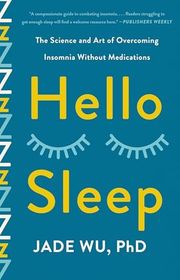
For readers whose insomnia has become a source of worry. Wu combines clinical explanations with a gradual behavioral approach that emphasizes a different relationship with sleep, though the exercises ask for patience rather than immediate results.
What it's about
Behavioral sleep medicine specialist Jade Wu explains insomnia through sleep science and stories from clinical practice. She outlines a program that addresses habits, expectations, and anxiety around sleep, helping readers understand how those patterns can interact.

For readers who want a menu of cognitive and behavioral techniques. Its short strategies and tracking tools make individual issues easy to revisit, though choosing among many options provides less direction than a fixed weekly program.
What it's about
Moshfegh offers seventy-five strategies drawn from cognitive behavioral therapy for insomnia. Readers can explore individual techniques involving sleep diaries, thought patterns, caffeine, daily habits and bedroom conditions rather than following one fixed sequence of exercises.
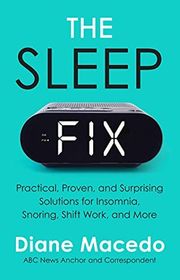
The Sleep Fix: Practical, Proven, and Surprising Solutions for Insomnia, Snoring, Shift Work, and More
For readers who connect with a fellow sufferer's investigation. Macedo combines personal experience with interviews across several sleep problems, though its journalistic breadth makes it less systematic than a workbook focused solely on insomnia.
What it's about
Journalist Diane Macedo investigates her own sleep difficulties by interviewing specialists and examining common advice. Her account explores insomnia, snoring, shift work, and other obstacles, considering why familiar sleep rules do not suit every situation.
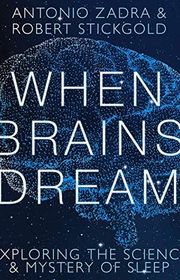
When Brains Dream: Exploring the Science and Mystery of Sleep
For readers more interested in dreaming than bedtime routines. Two sleep researchers connect experiments with questions about dream experience and function, though their proposed explanatory model is a theory to consider rather than a settled answer.
What it's about
Sleep researchers Antonio Zadra and Robert Stickgold investigate how dreams arise and what they might do. They examine nightmares, lucid dreams, memory, and creativity while proposing a model of how dreaming explores connections among experiences.

For readers interested in calming routines and body awareness. Its illustrated mix of yoga, Ayurveda, and sleep advice feels different from the clinical workbooks, though it blends traditional practices with science rather than separating their evidence.
What it's about
Ramlakhan combines ideas from Western sleep science with yoga and Ayurvedic traditions. She explores body awareness, everyday routines and the pressures of constant connectivity, presenting practices intended to support a calmer relationship with sleep.
Sources
- 1
The Best Books on Sleep
sleepfoundation.org
- 2
The Best Sleep Book: 15 Sleep Books To Buy | Glamour UK
glamourmagazine.co.uk
- 3
Best Sleep Books - 13 Books to Improve & Understand Your Sleep
naplab.com
- 4
The 7 Best Books To Understand Sleep 2018 | The Strategist
nymag.com
- 5
These 7 Sleep Books Can Help You Get Better Rest - The Manual
themanual.com
- 6
Sleep (61 books)
goodreads.com
- 7
Books! - jenmundt.com
jenmundt.com
- 8
10 Of The Best Books On Sleep To Get Better ZZZs | Book Riot
bookriot.com
- 9
Best sleep book you've read? (No, "the one that knocked me out on page 3" doesn't count) : r/sleep
reddit.com
- 10
Books That Will Radically Improve Sleep | Penguin Random House
penguinrandomhouse.com









Edited by
Software engineer whose passion for tracking book recommendations from podcasts inspired the creation of MRB.
Lead investor at 3one4 Capital whose startup expertise and love for books helped shape MRB and its growth.
Comments
Spotted a missing book, a wrong order or a mistake? Tell us and we'll fix this page.
We're a reading guide, not the author or publisher, so we can't send books or pass on messages.