
18 Best Prospecting Books
The best prospecting books, ranked by how many expert sources recommend each one, with notes for sellers choosing outreach methods and sales team systems.
Our take
Prospecting covers the work of finding suitable buyers, earning their attention, and starting conversations that can become sales opportunities. These books help new sales representatives establish a routine, experienced sellers improve their outreach, and managers build a process their teams can repeat. The useful starting point depends on whether you're short of activity, targeting the wrong accounts, or losing people once a conversation begins.
Fanatical Prospecting focuses on consistency across channels, while New Sales. Simplified. connects target accounts, messaging, and meetings. Smart Calling and Cold Calling Sucks (and That's Why It Works) concentrate on the telephone. SPIN Selling and Gap Selling are better suited to improving the questions you ask after a prospect engages. For team structure and management, turn to The Sales Development Playbook or Predictable Revenue. Start with one book that addresses your current obstacle, then use it to revise a specific part of your outreach routine.
18 books · 8 sources · Last updated
As an Amazon Associate, we earn from qualifying purchases (at no extra cost to you).
How to choose from this list
Skip to the full rankingIf you're new to prospecting: Fanatical Prospecting → New Sales. Simplified.
If you want better phone conversations: Smart Calling → Cold Calling Sucks (and That's Why It Works)
If you need stronger discovery: SPIN Selling → Gap Selling
If you're building a prospecting team: Predictable Revenue → The Sales Development Playbook
The 18 books, ranked
Ranked by how many expert sources name each book. Ties go to the book more people recommend.

Fanatical Prospecting
For sellers who know the techniques but struggle to prospect consistently. Its emphasis on protecting time and using several channels makes it a practical starting point, though the motivational repetition can frustrate experienced readers.
What it's about
Jeb Blount argues for consistent prospecting across several channels to prevent an empty sales pipeline. He provides frameworks for telephone calls, email, text, and social selling, along with approaches to rejection, familiarity, and securing appointments.

How To Win Friends and Influence People
For sellers whose conversations suffer from impatience or too much self-focused pitching. Its relationship principles offer a useful foundation beneath any outreach method, though the old anecdotes and general advice won't supply a prospecting sequence.
What it's about
Carnegie presents practical guidance for building relationships, communicating effectively, and influencing others. Stories and principles explore social confidence, leadership, and cooperation, offering approaches readers can apply to interactions in their personal lives and at work.
Also recommended by
18 people Warren Buffett recommended this book
Warren Buffett
"In my office, you will not see the degree I have from the University of Nebraska, or the master’s degree I have from Columbia University, but you’ll see the certificate I got from the Dale Carnegie course." - Warren Buffett
Warren Buffett's recommendation of this book  Scott Adams recommended this book
Scott Adams
One of the books on Scott Adams' "Persuasion Reading List."
Scott Adams's recommendation of this book  Dave Ramsey recommended this book
Dave Ramsey
Recommended on Dave Ramsey's website.
Dave Ramsey's recommendation of this book  Paul Graham recommended this book
Paul Graham
"The one book we encourage startup founders to read. [...] It's critically important for anyone in business." - Paul Graham
Paul Graham's recommendation of this book  Derek Sivers recommended this book
Derek Sivers
Derek Sivers mentioned this book on "The Tim Ferriss Show" podcast.
Derek Sivers's recommendation of this book  Dustin Moskovitz recommended this book
Dustin Moskovitz
"Seek to be understood." - Dustin Moskovitz
Dustin Moskovitz's recommendation of this book +12
More recommendations
- Ken Block
"One of the first books that really helped me achieve my management style and what’s helped me really be successful." - Ken Block
- DJ Vlad
Most Recommended Books reached out to DJ Vlad directly.
- Strauss Zelnick
"Archaic references and overweening title to the side, it’s actually a great guide to leadership and salesmanship." - Strauss Zelnick
- Daymond John
"I love all the Dale Carnegie books." - Daymond John
- Shay Carl
"A staple that I have listened to three or four times." - Shay Carl
- Tim Draper
"[One of the books] that are recommended or required at Draper University." - Tim Draper
- Sahil Lavingia
Sahil Lavingia recommended this book on Notion.
- Barbara Corcoran
"A must read for anyone in business." - Barbara Corcoran
- Alex Hormozi
Alex Hormozi recommended this book on Instagram.
- Michael Hyatt
Michael Hyatt recommended this book on his website.
- Ben Greenfield
Most Recommended Books reached out to Ben Greenfield directly.
- Patrick Bet-David
Patrick Bet-David recommended this book on his website.
- Ken Block

New Sales. Simplified.
The Essential Handbook for Prospecting and New Business Development
For sellers who want an organized approach to winning new accounts. It connects targeting, messaging, meetings, and time management more clearly than a single-channel manual, though its direct style can feel repetitive in places.
What it's about
Mike Weinberg lays out a framework for proactive prospecting and new business development. The guide covers targeting accounts, preparing sales messages, securing meetings, conducting useful sales calls, and organizing time to create and advance opportunities.

Combo Prospecting
The Powerful One-Two Punch That Fills Your Pipeline and Wins Sales
For B2B sellers trying to coordinate phone, digital outreach, and professional credibility. Its combined approach is more useful than treating each channel separately, though the execution requires research and adaptation to current platforms.
What it's about
Tony Hughes combines traditional prospecting with social media and digital tools to reach executive buyers. He discusses relevant messaging, online credibility, referrals, and coordinated outreach designed to start conversations and build a pipeline of opportunities.

For sellers who book conversations but struggle to establish why a buyer should change. Its diagnostic approach strengthens discovery and qualification, though it asks for deeper questioning rather than providing a quick opening-call script.
What it's about
Keenan presents a sales approach based on diagnosing the difference between a buyer’s current situation and desired future. The book uses that gap to guide discovery, qualification, demonstrations, objections, and discussions of a proposed solution’s value.

High-Profit Prospecting
Powerful Strategies to Find the Best Leads and Drive Breakthrough Sales Results
For sellers who need better prospects rather than simply more activity. Its emphasis on qualifying opportunities connects outreach to potential value, though experienced readers may find some of the calling advice familiar.
What it's about
Mark Hunter examines prospecting methods for finding and qualifying promising sales leads. Practical guidance covers informed calling, timing, messages, voicemail, email, referrals, social media, and working past gatekeepers, connecting traditional techniques with changes in how buyers engage.

For B2B teams ready to document and measure their early sales process. Its attention to ideal prospects and repeatable follow-up offers more structure than motivational books, though a lone seller may find the operational detail heavy.
What it's about
Marylou Tyler explains how to build a repeatable process at the top of a business-to-business sales pipeline. The guide addresses identifying ideal prospects, organizing outreach and follow-up, measuring progress, and documenting a system that a sales team can use.

SPIN Selling
For sellers whose prospecting conversations lead into complex, expensive purchases. Its question framework develops needs more carefully than a pitch script, though it offers less help with finding contacts or earning the first meeting.
What it's about
Rackham presents a research-based approach to selling complex, high-value products and services. His SPIN framework organizes questions around situation, problem, implication, and need-payoff, emphasizing understanding customers' needs and developing value through structured conversations rather than forceful closing techniques.
Also recommended by
1 person Noah Kagan recommended this book
Noah Kagan
Noah Kagan recommended this book in the "Tools of Titans" book.
Noah Kagan's recommendation of this book

For sellers starting a new job or learning an unfamiliar market. Its structured approach to learning helps build competence faster, though readers seeking a complete cold-call sequence or lead-generation system will need another book.
What it's about
Jill Konrath presents strategies for learning quickly when salespeople change jobs, face unfamiliar products, or encounter shifting markets. The book combines an adaptable mindset with a structured learning plan intended to build credibility and selling proficiency.

For sellers who avoid the phone or rely on generic introductions. Its preparation and conversational opening techniques make calls more relevant, though experienced callers may find the core principles familiar and some examples repetitive.
What it's about
Art Sobczak presents a prospecting method built around preparation rather than unplanned cold calls. He explains how to research potential customers, define call objectives, offer relevant value, and approach conversations with less fear of rejection.

For experienced B2B sellers who can bring informed insights to customer conversations. Its emphasis on teaching and directing offers more challenge than relationship-building advice, though newcomers can sound presumptuous without enough knowledge of the buyer's business.
What it's about
Matthew Dixon and Brent Adamson examine research into the habits of successful sales representatives. They argue that complex business sales benefit from teaching customers new insights, tailoring conversations to their needs, and confidently directing the buying process.

Secrets of Closing the Sale
For sellers who need confidence asking buyers to make a decision. The many conversational examples offer a broad persuasion toolkit, though its closing focus and older anecdotes make it less useful for planning initial outreach.
What it's about
Zig Ziglar explains techniques for persuasion and bringing sales conversations to a decision. Drawing on his own methods and other salespeople's experience, he discusses useful questions, verbal imagery and approaches to presenting ideas in ways that encourage agreement.
Also recommended by
1 person Seth Godin recommended this book
Seth Godin
Seth Godin mentioned this book on "The Tim Ferriss Show" podcast.
Seth Godin's recommendation of this book
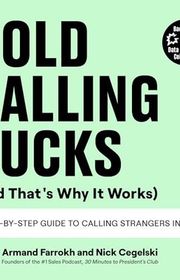
Cold Calling Sucks (and That's Why It Works)
For sales development representatives who want concrete ways to improve phone outreach. Its detailed openers and objection handling offer more immediate practice than general sales books, though the examples fit B2B technology selling most directly.
What it's about
Armand Farrokh and Nick Cegelski break cold calling into preparation, opening, conversation, objections, and next steps. Their guide uses sales-call examples and scripts to help representatives practice starting useful conversations with people who weren't expecting them.
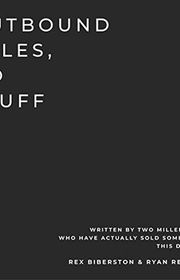
Outbound Sales, No Fluff
For new outbound sellers who want a short introduction they can put into practice quickly. Its concise process is easier to absorb than the larger playbooks, though managers seeking detailed hiring or coaching systems will need more.
What it's about
Ryan Reisert and Rex Biberston outline an outbound sales process centered on finding suitable prospects, starting conversations, and developing opportunities. The compact guide presents practical principles for organizing prospecting activity and focusing on the right potential customers.

Predictable Revenue
For founders and sales leaders deciding how to organize outbound selling. Its specialization of prospecting roles offers a clearer team model than individual habit books, though the original software-sales examples need adapting to your market.
What it's about
Aaron Ross and Marylou Tyler describe a system for generating B2B sales opportunities through specialized roles, targeted outreach, and repeatable processes. Their framework draws on experience building an outbound sales function at Salesforce.

The Sales Development Playbook
Build Repeatable Pipeline and Accelerate Growth with Inside Sales
For managers building or repairing a sales development team. Its treatment of staffing, specialization, coaching, and execution fills a leadership gap in the individual prospecting books, though frontline sellers may need only selected sections.
What it's about
Trish Bertuzzi explains how companies can build and manage sales development teams. Organized around six areas, the guide covers strategy, specialization, recruitment, retention, execution, and leadership as foundations for generating a repeatable pipeline through inside sales.

The Sales Acceleration Formula
Using Data, Technology, and Inbound Selling to go from $0 to $100 Million
For sales leaders building hiring, coaching, and demand-generation systems. Its use of operating metrics gives team development more structure than an individual prospecting manual, though the company-specific model needs adapting to other businesses.
What it's about
Mark Roberge explains the sales systems he developed while growing HubSpot. His approach uses data and technology to organize hiring, training, coaching, and demand generation, offering a framework for building teams and making revenue growth more predictable.
Also recommended by
2 people- Noah Kagan recommended this book
Noah Kagan
Noah Kagan recommended this book in the "Tools of Titans" book.
Noah Kagan's recommendation of this book  Alex Hormozi recommended this book
Alex Hormozi
Alex Hormozi recommended this book on Instagram.
Alex Hormozi's recommendation of this book

The Ultimate Sales Machine
Turbocharge Your Business with Relentless Focus on 12 Key Strategies
For business owners who need prospecting to connect with marketing and staff development. Its emphasis on disciplined execution offers a broader operating framework, though readers seeking daily outreach tactics may find the scope distracting.
What it's about
Chet Holmes presents twelve business strategies centered on disciplined execution and repeated improvement. His guide connects staff development, marketing, sales, and client acquisition with practical systems intended to help companies focus their efforts and improve performance.
Also recommended by
2 people- Noah Kagan recommended this book
Noah Kagan
"This book has so many frigging tips I can't even start. Get it." - Noah Kagan
Noah Kagan's recommendation of this book  Michael Hyatt recommended this book
Michael Hyatt
Michael Hyatt recommended this book on his website.
Michael Hyatt's recommendation of this book
Sources
- 1
Best Sales Prospecting Books (2026): 72 Rated & Ranked
salesgear.io
- 2
Top 10 Sales Prospecting Books to Read
activatedscale.com
- 3
The 11 Best Books on Prospecting
datanyze.com
- 4
20 Best Lead Generation Books to Read (2026)
cience.com
- 5
Prospecting Books
goodreads.com
- 6
Books
reddit.com
- 7
Which book should I read first?
reddit.com
- 8
11 Sales prospecting books everyone in sales should read
copper.com




Edited by
Software engineer whose passion for tracking book recommendations from podcasts inspired the creation of MRB.
Lead investor at 3one4 Capital whose startup expertise and love for books helped shape MRB and its growth.
Comments
Spotted a missing book, a wrong order or a mistake? Tell us and we'll fix this page.
We're a reading guide, not the author or publisher, so we can't send books or pass on messages.