
11 Best Resilience Books
The best resilience books, ranked by how many expert sources recommend each one, with notes for choosing practical exercises, personal stories, or research.
Our take
Resilience involves adapting to disruption, finding support, and rebuilding a life or purpose after difficulty. It is broader than determination alone. These books approach the subject through personal loss, psychological skills, long-term effort, and the experiences of communities and systems. Some readers will want exercises; others will connect more readily with a memoir or a researched life story.
Option B brings bereavement and research together, while The Resilience Factor offers a more structured skills approach. Rising Strong examines the narratives surrounding setbacks, and Resilient emphasizes repeated reflective practices. Grit concentrates on sustained effort toward goals, which is a different question from recovering after trauma. Unbroken and Man's Search for Meaning describe extreme experiences and can be emotionally demanding. These accounts illuminate particular lives rather than set a standard for how anyone else should respond. Start with a practical guide if you want a framework, or Option B if you prefer ideas grounded in personal experience.
11 books · 9 sources · Last updated
As an Amazon Associate, we earn from qualifying purchases (at no extra cost to you).
How to choose from this list
Skip to the full rankingIf you want a structured skills approach: The Resilience Factor → Resilient
If you want reflection after loss or a setback: Option B → Rising Strong
If you want to understand sustained effort: Grit
If you prefer a researched survival narrative: Unbroken
If you want to explore meaning through memoir: Man's Search for Meaning
If you want a mindfulness-focused approach: Freedom from Anxious Thoughts and Feelings
The 11 books, ranked
Ranked by how many expert sources name each book. Ties go to the book more people recommend.

Man's Search for Meaning
For readers who want to explore meaning in suffering through memoir and philosophical reflection. Frankl connects experience with his approach to psychotherapy, though the Holocaust testimony is distressing and should not be read as a universal prescription for coping.
What it's about
Viktor Frankl combines his account of imprisonment in Nazi concentration camps with an introduction to logotherapy. He explores the search for meaning, arguing that purpose and one's response to suffering can remain significant even under extreme circumstances.
Also recommended by
36 people Jordan Peterson recommended this book
Jordan Peterson
Recommended on Jordan Peterson's website.
Jordan Peterson's recommendation of this book  Jocko Willink recommended this book
Jocko Willink
Jocko Willink covered this book in "Jocko Podcast" Ep. 78
Jocko Willink's recommendation of this book  Esther Perel recommended this book
Esther Perel
"The book I’ve probably gifted the most is [this book], since I’m 16." - Esther Perel
Esther Perel's recommendation of this book  Emma Watson recommended this book
Emma Watson
"Loved it. Really loved it." - Emma Watson
Emma Watson's recommendation of this book  Naval Ravikant recommended this book
Naval Ravikant
"Wow it's dark." - Naval Ravikant
Naval Ravikant's recommendation of this book  David Blaine recommended this book
David Blaine
"One of my favorite books." - David Blaine
David Blaine's recommendation of this book +30
More recommendations
- Terry Crews
"Incredible." - Terry Crews
- Jimmy Fallon
"Talks about the meaning of life, and I believe you come out a better person from reading it." - Jimmy Fallon
- Tony Robbins
"Taught me that if you change the meaning, you change everything." - Tony Robbins
- Simon Sinek
"Single most important book you can read." - Simon Sinek
- Michael Gervais
"Outlines methods to discover deep meaning and purpose in life." - Michael Gervais
- Daniel Pink
"A hugely important book for me." - Daniel Pink
- Ev Williams
On the "books read" section of Ev Williams' GoodReads profile.
- Bryan Johnson
"His basic point is no matter the conditions we surround ourselves in, we can author our life." - Bryan Johnson
- Dustin Moskovitz
Dustin Moskovitz recommended this book on Twitter.
- Sam Altman
This book was on Sam Altman's bookshelf.
- Chelsea Handler
"One of those beautiful accounts of a terrible time in our history. His calm and sagaciousness, while witnessing one horror after another played out during his time in three separate concentration camps, is awe inspiring." - Chelsea Handler
- Ryan Holiday
"Looks at how we find purpose by dedicating ourselves to a cause, learning to love and finding a meaning to our suffering." - Ryan Holiday
- Maria Popova
"A meditation on what the gruesome experience of Auschwitz taught [the author] about the primary purpose of life: the quest for meaning, which sustained those who survived." - Maria Popova
- Aniela Gregorek
"A book I have gifted to many people because it changed the way I think about human suffering and grace in life." - Aniela Gregorek
- Fedor Holz
"[From it] I interpreted that we cannot avoid suffering, but we can choose how to cope with it, and that having meaning in our life is essential." - Fedor Holz
- Turia Pitt
"[If people are] doing a bit of soul searching, hands down [I give them this book]." - Turia Pitt
- Chip Conley
"If I were to take the meaning of [this book], and turn it into an equation, it would be despair equals suffering minus meaning." - Chip Conley
- Dave Elitch
Dave Elitch mentioned this book on "The Tim Ferriss Show" podcast.
- PewDiePie
"A great tool to help people. [...] In case something really bad happens, I feel like, from reading this book, I'm better equipped to handle it." - PewDiePie
- Shane Parrish
"As hard as you think your life is, it pales in comparison to Auschwitz." - Shane Parrish
- Phil Jackson
"An important book for me." - Phil Jackson
- Tom Bilyeu
Tom Bilyeu recommended this book on his website.
- Lex Fridman
"I reread [this book] quite often." - Lex Fridman
- Mark Manson
Mark Manson recommended this book on his website.
- Alastair Humphreys
"Slim but packed with wisdom that I often come back to. I really recommend you read it." - Alastair Humphreys
- Steve Kerr
"Incredibly inspiring." - Steve Kerr
- Robin Black
"One of the great books ever written exists because of one of the worst times in human history. From suffering comes beauty." - Robin Black
- Jim Kwik
"Illustrates that it’s not our circumstances but the decisions we make that diminish or develop us." - Jim Kwik
- Michael Hyatt
Michael Hyatt recommended this book on his website.
- Patrick Bet-David
Patrick Bet-David recommended this book on his website.
- Terry Crews

For readers facing loss who want personal experience alongside psychological ideas. The partnership between memoir and research gives coping a human context, though Sandberg's circumstances and resources differ from those of many readers.
What it's about
Sheryl Sandberg and Adam Grant combine her experience of bereavement with research on resilience. They explore coping with adversity, supporting people in crisis, and rebuilding meaning and joy after loss and other major setbacks.
Also recommended by
2 people Tim Urban recommended this book
Tim Urban
"A powerful book about a life skill we all need: resilience." - Tim Urban
Tim Urban's recommendation of this book  Katie Couric recommended this book
Katie Couric
"I felt it was really brave of [the author] to write." - Katie Couric
Katie Couric's recommendation of this book

For readers interested in persistence toward long-term goals rather than recovery from a specific crisis. Duckworth connects research with achievement stories, though the focus on perseverance needs balancing with judgment about when to change direction.
What it's about
Angela Duckworth examines the role of sustained passion and perseverance in achievement. Combining research with stories from education, sports, and professional life, she explores how interests, practice, purpose, and supportive environments contribute to developing what she calls grit.
Also recommended by
7 people Josh Waitzkin recommended this book
Josh Waitzkin
Josh Waitzkin recommended this book in the "Tools of Titans" book.
Josh Waitzkin's recommendation of this book  Tim Ferriss recommended this book
Tim Ferriss
"Really about teaching your kids to focus on hard work and not intrinsic capability." - Tim Ferriss
Tim Ferriss's recommendation of this book  Keith Rabois recommended this book
Keith Rabois
"Although the title may make it appear intuitive, the reading is much more insightful and applicable than you might guess." - Keith Rabois
Keith Rabois's recommendation of this book  Tobi Lütke recommended this book
Tobi Lütke
"Great book. I think she actually talks about me in it ?" - Tobi Lütke
Tobi Lütke's recommendation of this book  Tom Bilyeu recommended this book
Tom Bilyeu
Tom Bilyeu recommended this book on his website.
Tom Bilyeu's recommendation of this book  Jodie Cook recommended this book
Jodie Cook
"Enthusiasm and knowledge are totally useless without grit." - Jodie Cook
Jodie Cook's recommendation of this book +1
More recommendations
- Ali Abdaal
Ali Abdaal recommended this book on his website.
- Ali Abdaal

Rising Strong
How the Ability to Reset Transforms the Way We Live, Love, Parent, and Lead
For readers who want to examine the stories they tell themselves after a setback. Brown's structured reflection gives shame and vulnerability particular attention, though readers seeking concise exercises may find the narrative approach expansive.
What it's about
Centered on the process of reckoning, rumbling, and revolution, this book maps out how to get back up after setbacks. Brown blends research and stories to show how owning our stories of struggle can lead to braver, more grounded lives.
Also recommended by
1 person Lena Dunham recommended this book
Lena Dunham
"If you are dealing with love loss/ break up grief at this difficult time, one book with suggestions on how to rise from it is [this book]." - Lena Dunham
Lena Dunham's recommendation of this book

For readers who like small reflective practices and a gentle explanatory voice. The focus on developing inner strengths offers a daily-practice emphasis, though its neuroscience framing and many concepts may feel elaborate to readers wanting a shorter workbook.
What it's about
Rick and Forrest Hanson combine neuroscience, mindfulness, and practical psychology in a guide to developing inner strengths. Exercises and examples explore qualities such as gratitude, grit, and compassion, connecting everyday experiences with their approach to coping with stress and adversity.

The Resilience Factor
7 Keys to Finding Your Inner Strength and Overcoming Life's Hurdles
For readers who prefer skills to practice over inspirational stories. The questionnaire and seven-part framework make self-reflection concrete, though working through the exercises takes more sustained effort than simply reading about resilience.
What it's about
Karen Reivich and Andrew Shatté present seven techniques for developing resilience. A questionnaire introduces readers to their own patterns, followed by exercises and examples addressing self-criticism, optimism, grief, anxiety, and obstacles in relationships, parenting, and work.

For readers who want resilience portrayed through a researched life story. Hillenbrand's narrative gives endurance and its aftermath emotional weight, though the extended accounts of war and captivity can be harrowing and provide few direct exercises.
What it's about
Laura Hillenbrand follows Olympic runner Louis Zamperini from a rough California boyhood to a plane crash, 47 days adrift in the Pacific, and brutal POW camps. It is a tense, deeply human survival story about endurance, trauma, and forgiveness.
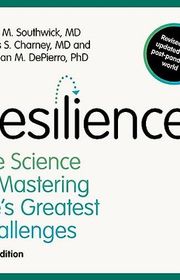
Resilience: The Science of Mastering Life's Greatest Challenges
For readers who want research and survivor accounts organized into a practical conceptual framework. Its range of contributing factors counters the idea that resilience is simply toughness, though the extreme experiences discussed can make ordinary application less obvious.
What it's about
Steven Southwick, Dennis Charney, and Jonathan DePierro examine factors associated with adapting to adversity. Research and accounts from people facing severe challenges explore connections, meaning, flexibility, and other resources, offering a framework for understanding resilience.

Freedom from Anxious Thoughts and Feelings
A Two-Step Mindfulness Approach for Moving Beyond Fear and Worry
For readers drawn to a structured mindfulness approach to worry. Symington's two-screen metaphor gives attention and values a clear organizing image, though this narrow framework is less comprehensive than a broader account of resilience.
What it's about
Scott Symington explains his two-screen approach to mindfulness for readers facing anxious thoughts and feelings. The method combines acceptance with attention to personal values, using mindfulness skills, healthy distractions, and loving action as anchors for responding to difficult emotions.

For readers who want to think beyond individual coping. The reporting connects resilience across communities, economies, and ecological systems, though that wide lens offers fewer direct exercises for someone seeking help with a personal setback.
What it's about
Andrew Zolli and Ann Marie Healy investigate why some people, communities, and systems recover from disruption while others collapse. Reporting across social, economic, and ecological settings, they examine adaptation and cooperation as ways of maintaining purpose amid unexpected shocks.

For readers who connect with personal stories about family crisis and professional responsibility. Lisson's executive perspective adds a leadership dimension to bereavement, though one person's experience offers illustration rather than a general recovery framework.
What it's about
Lisa Lisson recounts balancing executive responsibilities and raising four children after her husband's heart attack left him in a coma. Her memoir connects family crisis and loss with reflections on leadership, perseverance, and finding purpose through difficult circumstances.
Sources
- 1
Best Books on Resilience: 8 Picks Ranked
yalom.com
- 2
Best Resilience Books: The Shelf That Bounces Back
rainingbook.com
- 3
100 Best Resilience Books of All Time (Updated for 2026)
shortform.com
- 4
Al Siebert Resiliency Center » Resiliency Reading List
resiliencycenter.com
- 5
Resilience Books
goodreads.com
- 6
Books that touches on resilience ? : r/booksuggestions
reddit.com
- 7
Suggest me a book that shows the depths of human resilience : r/suggestmeabook
reddit.com
- 8
The Best Books About Building Resilience
linkedin.com
- 9
15 Best Resilience Books on Mental Toughness
positivepsychology.com


Edited by
Software engineer whose passion for tracking book recommendations from podcasts inspired the creation of MRB.
Lead investor at 3one4 Capital whose startup expertise and love for books helped shape MRB and its growth.
Comments
Spotted a missing book, a wrong order or a mistake? Tell us and we'll fix this page.
We're a reading guide, not the author or publisher, so we can't send books or pass on messages.