
6 Best Cryptocurrency Trading Books
The best cryptocurrency trading books, ranked by expert-source recommendations, with notes for beginners and readers studying valuation or trading methods.
Our take
Cryptocurrency trading books cover several separate skills: understanding the assets, evaluating a project, interpreting charts, and planning how to manage a position. A book about blockchain mechanics answers different questions from a trader's account of entries and exits. The useful choice depends on the part of that process you need to understand.
The Basics of Bitcoins and Blockchains introduces the technology and market infrastructure. Cryptoassets develops an investment framework, while The Crypto Trader and An Altcoin Trader's Handbook explain approaches drawn from their authors' trading experience. The shorter introductory guides provide orientation, with less room for detailed analysis. Many examples come from earlier crypto markets, so descriptions of exchanges, token sales, and trading conditions need context. A clear explanation of a method helps you examine its assumptions; it does not demonstrate that future trades will be profitable. Start with Lewis if the mechanics are unfamiliar, then choose valuation or trading practice according to your goal.
6 books · 8 sources · Last updated
As an Amazon Associate, we earn from qualifying purchases (at no extra cost to you).
How to choose from this list
Skip to the full rankingIf crypto mechanics are unfamiliar: The Basics of Bitcoins and Blockchains
If you want to evaluate assets: Cryptoassets
If you want to study a trader's approach: The Crypto Trader
If you want to understand altcoin speculation: An Altcoin Trader's Handbook
If you want a short guide to entries and exits: Trading Cryptocurrency
The 6 books, ranked
Ranked by how many expert sources name each book. Ties go to the book more people recommend.
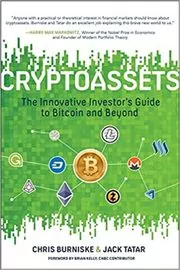
For readers interested in evaluating assets rather than chasing chart signals, Burniske and Tatar connect valuation with portfolio thinking and market history. It offers a broader investment framework than a trading manual, though its examples reflect an earlier market.
What it's about
Chris Burniske and Jack Tatar examine cryptocurrencies and related tokens as an emerging investment category. They connect blockchain history with valuation, portfolio construction, speculative bubbles, exchanges, and storage, offering a framework for evaluating assets rather than focusing solely on bitcoin.
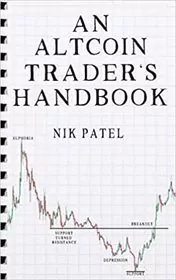
An Altcoin Trader's Handbook
For readers interested in altcoin speculation, Patel combines personal experience with a process for research, accumulation, and distribution. Its focus distinguishes it from broad crypto introductions, though the examples come from an earlier and highly speculative market.
What it's about
Nik Patel combines a memoir of his cryptocurrency trading experiences with a practical manual. Accounts of early mistakes, market cycles, and setbacks lead into his approach to researching alternative coins and managing positions in volatile markets.
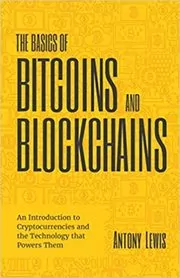
The Basics of Bitcoins and Blockchains
An Introduction to Cryptocurrencies and the Technology that Powers Them
For beginners who need to understand what they would be trading, Lewis explains the mechanics behind cryptocurrencies, wallets, and exchanges. It supplies context that strategy books often assume, though it offers less instruction on executing individual trades.
What it's about
Antony Lewis introduces cryptocurrencies and the technology behind them for readers without prior financial or technical knowledge. Step-by-step explanations cover Bitcoin, transactions, mining, and blockchain systems, connecting their mechanics with the broader history and functions of money.
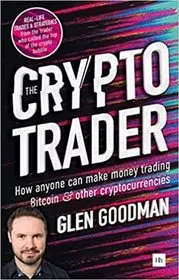
The Crypto Trader
How Anyone Can Make Money Trading Bitcoin and Other Cryptocurrencies
For readers who learn from a trader's decisions, Goodman links personal experience with chart-based methods and risk management. The concrete approach makes trading choices easier to examine, though one trader's examples cannot establish what will work for others.
What it's about
Glen Goodman draws on his own trades to explain his approach to cryptocurrency markets. Personal experience and trading examples illustrate his methods for identifying opportunities and managing risk, placing the decisions behind a trade alongside its possible rewards.
Cryptocurrency Trading & Investing
Beginners Guide To Trading & Investing In Bitcoin, Alt Coins & ICOs
For newcomers who need orientation before studying trades, Vo connects wallets, exchanges, and investing basics with introductory analysis. Its breadth helps establish vocabulary, though the older exchange and ICO coverage needs checking against current conditions.
What it's about
Aimee Vo introduces buying, storing, trading, and investing in cryptocurrencies. The guide moves from wallets and exchanges to portfolio considerations, initial coin offerings, and chart analysis, outlining the research and technical tools the author uses to evaluate opportunities.
Trading Cryptocurrency
The Market Entry, Exit and Stop-Loss Strategies That Made me a Successful Professional Trader
For readers wanting a brief look at trade planning, Lambert concentrates on chart setups, entries, stops, and exits. Its narrow format makes the approach quick to survey, though the explanations offer less depth than a comprehensive trading handbook.
What it's about
Chris Lambert outlines his approach to cryptocurrency trading through chart patterns, market entries, stop-loss placement, and exits. The book presents eight strategies intended to structure trading decisions, with an emphasis on recognizing patterns and planning how a position will be managed.
Sources
- 1
Top 10 BEST Crypto Trading Books for New Traders
bitnewsbot.com
- 2
Best Book on Cryptocurrency Trading
bestbitcoinexchange.net
- 3
10 Best Cryptocurrency Investment Books for 2025
koinly.io
- 4
Top Crypto Books to Read in 2026: Building a Stronger Foundation Before You Trade
blockonomi.com
- 5
I am new to trading and studying crypto markets , can someone recommend me some good books?
reddit.com
- 6
Become an Expert in Cryptocurrency: A Must-Read Book List
captainaltcoin.com
- 7
Crypto Trading Books
goodreads.com
- 8
Best 10 Cryptocoin Books To Read In 2022
tradecrypto.com

Edited by
Software engineer whose passion for tracking book recommendations from podcasts inspired the creation of MRB.
Lead investor at 3one4 Capital whose startup expertise and love for books helped shape MRB and its growth.
Comments
Spotted a missing book, a wrong order or a mistake? Tell us and we'll fix this page.
We're a reading guide, not the author or publisher, so we can't send books or pass on messages.