
9 Best Bipolar Books
The best bipolar books, ranked by how many expert sources recommend each one, with notes for choosing patient guides, personal memoirs, and support for loved ones.
Our take
Books about bipolar disorder can help readers understand the subject from several perspectives. Patient and family guides organize clinical explanations and practical questions, while memoirs show how illness, relationships, and identity interact in one person's life. Books written for partners or parents give supporters a different starting point. The format matters as much as the subject: a reference book answers questions differently from an intense personal narrative or a graphic memoir.
The Bipolar Disorder Survival Guide offers broad coverage, and Francis Mark Mondimore's Bipolar Disorder takes a medical explanatory approach. An Unquiet Mind, Madness, and Manic present distinct first-person experiences; Marbles brings drawing into the account. For supporters, Loving Someone with Bipolar Disorder concentrates on a romantic relationship, while To Walk on Eggshells offers a mother's perspective. Take Charge of Bipolar Disorder organizes daily-life concerns into a shared framework. Start with a guide if you want structured information, or a memoir if you want to understand one person's experience more closely.
9 books · 7 sources · Last updated
As an Amazon Associate, we earn from qualifying purchases (at no extra cost to you).
How to choose from this list
Skip to the full rankingIf you want a broad patient and family guide: The Bipolar Disorder Survival Guide
If you want medical explanations: Bipolar Disorder
If you want first-person memoirs: An Unquiet Mind → Madness
If you prefer a graphic memoir: Marbles
If you're looking for a partner's perspective: Loving Someone with Bipolar Disorder
If you want a framework for daily-life planning: Take Charge of Bipolar Disorder
The 9 books, ranked
Ranked by how many expert sources name each book. Ties go to the book more people recommend.

For readers who want a personal account informed by clinical expertise. Jamison's dual perspective connects professional knowledge with private experience, though the memoir follows one life and is not a comprehensive guide to diagnosis, treatment, or everyday planning.
What it's about
Kay Redfield Jamison recounts living with bipolar disorder while building a career researching and treating mood disorders. Her memoir explores mania, depression, relationships, and resistance to medication, bringing a clinician's knowledge together with her own experience of illness.

For people with bipolar disorder and families who want a broad, organized reference. Its attention to daily life and family concerns makes it more practically structured than the memoirs, though the substantial detail can be easier to use selectively.
What it's about
David Miklowitz explains how people with bipolar disorder and their families can understand treatment and manage daily challenges. The guide addresses mood episodes, recurrence, family conflict, lifestyle choices, and particular issues involving children, teenagers, and bipolar II.

For readers who want an intense account of the disruption bipolar disorder can bring across a life. Hornbacher's candor gives the memoir emotional immediacy, though its accounts of illness, eating disorders, and substance use can be difficult reading.
What it's about
Marya Hornbacher recounts living with bipolar disorder, from childhood mood disturbances to a diagnosis in adulthood. Her memoir traces episodes of mania and depression alongside eating disorders, substance use, relationships, and efforts to sustain everyday life.

For readers seeking a medical explanation written for patients and families. Its focus on diagnosis, treatment research, and medication questions gives it a different role from personal narratives, though the clinical detail requires more concentration than a conversational introduction.
What it's about
Francis Mark Mondimore explains bipolar disorder for people with the condition and their families. The guide discusses causes, diagnosis, treatment research, medications and their potential side effects, alongside evidence concerning nutritional supplements.
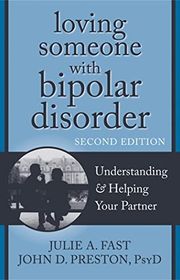
Loving Someone with Bipolar Disorder
For partners who want the relationship itself kept in view. The focus on communication, shared difficulties, and a partner's experience distinguishes it from patient-centered guides, though its couple-focused perspective is less suited to parents or readers seeking clinical detail.
What it's about
Julie Fast and John Preston examine bipolar disorder from the perspective of a romantic partner. The book discusses understanding mood changes, communication, relationship pressures, and ways couples can think about support while recognizing the needs of both people.

For readers interested in the gap between professional appearance and private experience. Cheney's episodic structure conveys instability without a neat chronology, though that approach can feel disorienting and offers less practical guidance than the reference books.
What it's about
Entertainment lawyer Terri Cheney describes the bipolar disorder she concealed behind a successful career. Moving through episodes rather than a straight chronology, her memoir recounts mania, depression, medication, and the difficulties of maintaining a public facade.
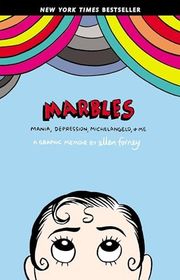
Marbles
For readers who prefer a visual memoir and are interested in creativity alongside mental health. Forney uses drawing to convey experiences that prose describes differently, though the personal story does not represent everyone's experience or provide a general treatment guide.
What it's about
Cartoonist Ellen Forney recounts her bipolar diagnosis and its effects on her identity, work, and relationships. Drawings and prose explore creativity, mood, medication, and her efforts to understand what living as both an artist and a patient means.
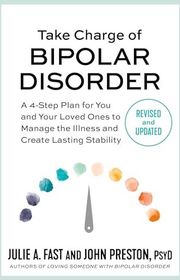
Take Charge of Bipolar Disorder
For readers who want daily-life planning discussed together with the role of supporters. Its organized framework gives practical concerns more attention than the memoirs, though the authors' program requires individual adaptation and is not a personalized treatment plan.
What it's about
Julie Fast and John Preston present a four-part approach to living with bipolar disorder, bringing treatment discussions together with daily routines, mood awareness, and support. The book addresses both the person with the diagnosis and people close to them.

To Walk on Eggshells
For parents and other supporters who want a family member's perspective alongside first-person memoirs. Its connection with a daughter's account gives the experience a relational dimension, though this is one family's story rather than a general guide to bipolar disorder.
What it's about
Jean Johnston recounts caring for her daughter Suzy after she developed a mental illness. This account offers a mother's perspective on the experience described by Suzy in The Naked Bird Watcher, exploring their shared journey from another viewpoint.
Sources
- 1
Best books on bipolar disorder: for patients and families - Simple and Practical Mental Health
simpleandpractical.com
- 2
Mental Health Books - International Bipolar Foundation
ibpf.org
- 3
Bipolar Disorder Resources & Bibliography | Bipolar Therapist Baltimore
johngartner.com
- 4
16 Books That Have Helped People Through Bipolar Disorder
themighty.com
- 5
Bipolar Disorder Books
goodreads.com
- 6
The International Bipolar Foundation Recommends Stacks of Mental Health Reading - WPR
wpr.org
- 7
Book recommendations with bipolar character(s)
reddit.com




Edited by
Software engineer whose passion for tracking book recommendations from podcasts inspired the creation of MRB.
Lead investor at 3one4 Capital whose startup expertise and love for books helped shape MRB and its growth.
Comments
Spotted a missing book, a wrong order or a mistake? Tell us and we'll fix this page.
We're a reading guide, not the author or publisher, so we can't send books or pass on messages.