
10 Best Eastern Philosophy Books
The best Eastern philosophy books, ranked by how many expert sources recommend each one, with notes on classical texts, modern introductions, and where to start.
Our take
Eastern philosophy is a broad label for traditions that often disagree about knowledge, ethical conduct, the self, and the shape of a good life. Chinese and Indian texts do not all share one outlook, and a modern introduction offers a different experience from a classical work. These books are useful for curious beginners as well as readers ready to spend time with a particular tradition.
Tao Te Ching approaches action and leadership through short, often paradoxical passages. The Analects and Mencius place more emphasis on moral cultivation and social relationships, while Zhuangzi uses stories to unsettle familiar perspectives. The Bhagavad Gita and The Upanishads explore spiritual understanding within Hindu traditions. For Zen, The Way of Zen offers explanation and background, while Zen Mind, Beginner's Mind turns toward practice. Be Here Now is a modern, personal encounter with spiritual teaching. Choose an edition with an introduction and notes, then start with one tradition rather than expecting these books to give a single shared answer.
10 books · 10 sources · Last updated
As an Amazon Associate, we earn from qualifying purchases (at no extra cost to you).
How to choose from this list
Skip to the full rankingIf you want short classical reflections: Tao Te Ching → Zhuangzi
If you want ethics and social responsibility: The Analects → Mencius
If you want Hindu philosophical texts: The Bhagavad Gita → The Upanishads
If you're curious about Zen: The Way of Zen → Zen Mind, Beginner's Mind
If you want a modern spiritual memoir and guide: Be Here Now
If you want military strategy: The Art Of War
The 10 books, ranked
Ranked by how many expert sources name each book. Ties go to the book more people recommend.

Tao Te Ching
For readers drawn to brief, paradoxical reflections on action, leadership, and simplicity. Its compact form invites rereading more readily than a systematic treatise, though the meaning depends heavily on translation and cannot always be reduced to practical advice.
What it's about
Traditionally attributed to Lao Tzu, this classic presents reflections on the Tao, or Way, and living in harmony with it. Its teachings connect humility, simplicity, and balanced conduct with personal life and leadership.
Also recommended by
10 people Rick Rubin recommended this book
Rick Rubin
"Always what you need to read at that particular period of time. It’s a magic book, in that way, in that it always fits." - Rick Rubin
Rick Rubin's recommendation of this book  Naval Ravikant recommended this book
Naval Ravikant
Naval Ravikant tweeted about this book.
Naval Ravikant's recommendation of this book  Michael Gervais recommended this book
Michael Gervais
"[The author's] depth of teachings are complicated to decode and provide foundations for wisdom." - Michael Gervais
Michael Gervais's recommendation of this book  Josh Waitzkin recommended this book
Josh Waitzkin
"Inspired my study of softness and receptivity as a counterpoint to my mad passions." - Josh Waitzkin
Josh Waitzkin's recommendation of this book  Brian MacKenzie recommended this book
Brian MacKenzie
"Once you get to a certain level, it’s like, wow." - Brian MacKenzie
Brian MacKenzie's recommendation of this book  Stewart Brand recommended this book
Stewart Brand
Stewart Brand recommended this book on his "Selected Books for the Manual for Civilization" blog post.
Stewart Brand's recommendation of this book +4
More recommendations
- Jason Nemer
"Oftentimes before meditation, I’ll just open [this book] randomly to a page and read about something and then just have that be what I steep in as I sit." - Jason Nemer
- Soman Chainani
"I remember reading it and being like okay, this makes no sense. But you just keep reading it again and again and slowly, I started to get the point of it." - Soman Chainani
- Jack Dorsey
One of Jack Dorsey's answers to "what are the books that had a major influence on you?"
- Jack Ma
Jack Ma always carries a copy of this book.
- Jason Nemer

The Analects
For readers interested in ethical character, learning, and relationships. Its conversations make social responsibility more central than in the contemplative texts, though short passages and an unfamiliar historical setting call for a translation with helpful commentary.
What it's about
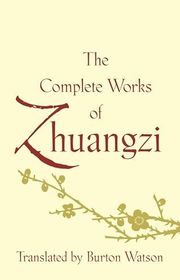
D. C. Lau translates the sayings and conversations of Confucius, exploring moral cultivation, learning, and social responsibility. An introduction, glossary, bibliography, and appendices provide context for the teachings and the disciples associated with this influential philosophical collection.
Zhuangzi
For readers who enjoy philosophical ideas tested through stories, humor, and shifting perspectives. Its imaginative prose offers a different experience from the short sayings in Tao Te Ching, though the playful arguments resist a single settled interpretation.
What it's about
Traditionally associated with Zhuang Zhou and later contributors, this classical Chinese work uses stories, dialogues, and paradoxes to explore transformation, perspective, skill, and ways of living. Its imaginative writing challenges familiar distinctions and assumptions about knowledge.

The Art Of War
For readers interested in strategic judgment and the costs of conflict. Its concrete military concerns distinguish it from the ethical and contemplative texts here, though applying its ideas to ordinary life requires care with the original context.
What it's about
Sun Tzu's military treatise examines planning, leadership, deception, terrain, and adapting to an opponent. Its thirteen chapters consider how preparation and strategic judgment can secure an advantage while limiting the costs and dangers of warfare.
Also recommended by
12 people Jocko Willink recommended this book
Jocko Willink
Jocko Willink covered this book in "Jocko Podcast" Ep. 23
Jocko Willink's recommendation of this book  Neil deGrasse Tyson recommended this book
Neil deGrasse Tyson
"To learn that the act of killing fellow humans can be raised to an art." - Neil deGrasse Tyson
Neil deGrasse Tyson's recommendation of this book  Marc Benioff recommended this book
Marc Benioff
"Served me well. [...] Advocates keeping one’s cool at all times." - Marc Benioff
Marc Benioff's recommendation of this book  Evan Spiegel recommended this book
Evan Spiegel
"After meeting Mark Zuckerberg, [Evan Spiegel] immediately bought every [Snapchat] employee a copy of 'The Art Of War'." - Business Insider
Evan Spiegel's recommendation of this book  Dave Camarillo recommended this book
Dave Camarillo
"Another [book] I have to mention." - Dave Camarillo
Dave Camarillo's recommendation of this book  Ryan Petersen recommended this book
Ryan Petersen
Ryan Petersen mentioned this book on Twitter.
Ryan Petersen's recommendation of this book +6
More recommendations
- Travis Kalanick
"It became [Travis Kalanick's bible]." - Mike Isaac
- Vlad Tenev
"I like the classics such as The Republic by Plato and The Art of War by Sun Tzu." - Vlad Tenev
- Fred Wilson
"Has to get onto my list." - Fred Wilson
- Lex Fridman
Lex Fridman mentioned this book on Instagram.
- Elon Musk
"I've read [this book] many times." - Elon Musk
- Patrick Bet-David
Patrick Bet-David recommended this book on his website.
- Travis Kalanick

For readers who want philosophical questions explored through a dialogue about moral responsibility. It brings action, devotion, and spiritual understanding together, though its religious framework and epic setting benefit from an introduction and explanatory notes.
What it's about
On the eve of battle, Prince Arjuna turns to Krishna for guidance about action and his own nature. Their dialogue explores spiritual understanding and moral responsibility within the larger story of the Mahabharata.
Also recommended by
5 people Alexandria Ocasio-Cortez recommended this book
Alexandria Ocasio-Cortez
Alexandria Ocasio-Cortez recommended this book on Twitter.
Alexandria Ocasio-Cortez's recommendation of this book  Wim Hof recommended this book
Wim Hof
Wim Hof's answer to "What do you give to people as gifts?"
Wim Hof's recommendation of this book - Naval Ravikant recommended this book
Naval Ravikant
Naval Ravikant tweeted about this book.
Naval Ravikant's recommendation of this book  Mahatma Gandhi recommended this book
Mahatma Gandhi
"[This book] became an infallible guide of conduct. It became my dictionary of daily reference." - Mahatma Gandhi
Mahatma Gandhi's recommendation of this book  Paulo Coelho recommended this book
Paulo Coelho
"A book that everybody should read." - Paulo Coelho
Paulo Coelho's recommendation of this book

The Way of Zen
For readers wanting an accessible introduction to Zen’s background and ideas. Watts provides more historical explanation than a collection of practice talks, though his mid-century interpretation for Western readers is a particular perspective rather than a complete account.
What it's about
Alan Watts introduces Zen Buddhism through an account of its history, origins, principles, and practices. Written for readers unfamiliar with the tradition, the book explains its ideas and considers their significance for understanding life in the modern world.
Also recommended by
1 person Steve Jobs recommended this book
Steve Jobs
Daniel Kottke said he and Steve Jobs definitely read this book prior to the India trip.
Steve Jobs's recommendation of this book

For readers interested in the attitude behind Zen practice. The short talks connect attention and everyday conduct more closely than a historical survey, though their simplicity can conceal difficult ideas and they offer no comprehensive philosophical system.
What it's about
Shunryu Suzuki’s informal talks introduce Zen meditation and practice through the idea of maintaining a beginner’s openness. The teachings address posture, breathing, nonattachment, and everyday awareness, connecting practical discipline with reflections on the nature of experience.
Also recommended by
7 people- Steve Jobs recommended this book
Steve Jobs
Brent Schlender said Steve Jobs reread this book several times.
Steve Jobs's recommendation of this book  Kevin Rose recommended this book
Kevin Rose
"You could read over time and time again." - Kevin Rose
Kevin Rose's recommendation of this book  Sharon Salzberg recommended this book
Sharon Salzberg
"Greatly influenced my life." - Sharon Salzberg
Sharon Salzberg's recommendation of this book  Leo Babauta recommended this book
Leo Babauta
"A classic." - Leo Babauta
Leo Babauta's recommendation of this book - Marc Benioff recommended this book
Marc Benioff
Marc Benioff texted The New York Times a screenshot of a quote from this book.
Marc Benioff's recommendation of this book  Garry Tan recommended this book
Garry Tan
Garry Tan shared this book on Instagram.
Garry Tan's recommendation of this book +1
More recommendations
- Andy Puddicombe
"A great all-round book for anyone interested in mindfulness." - Andy Puddicombe
- Andy Puddicombe

Be Here Now
For readers interested in the meeting of Indian spiritual teaching and American counterculture. Its illustrated, personal approach is more experiential than the classical texts, though it should not be treated as a comprehensive account of Asian philosophy.
What it's about
Ram Dass recounts his spiritual transformation from Richard Alpert and presents teachings on awareness and living in the present. Combining memoir, illustrated reflections, and guidance on spiritual practices, the book explores meditation, yoga, and the search for identity beyond ego.
Also recommended by
3 people- Steve Jobs recommended this book
Steve Jobs
"[This book] was profound. It transformed me and many of my friends." - Steve Jobs
Steve Jobs's recommendation of this book  Jack Kornfield recommended this book
Jack Kornfield
"Changed countless lives." - Jack Kornfield
Jack Kornfield's recommendation of this book  Travis Brewer recommended this book
Travis Brewer
One of Travis Brewer's answers to "what is the book (or books) you’ve given most as a gift?"
Travis Brewer's recommendation of this book
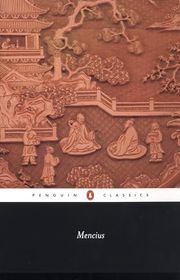
Mencius
For readers ready to follow Confucian ethics into arguments about human nature and government. Its discussions develop moral cultivation more explicitly than The Analects, though the political setting and named historical figures require some contextual reading.
What it's about
The teachings and conversations attributed to Mencius examine moral development, human nature, and the responsibilities of rulers. Arguments about compassion, education, and good government connect everyday ethical responses with larger questions about society and political authority.
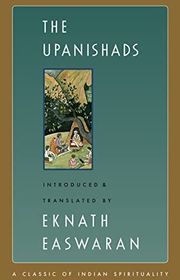
The Upanishads
For readers who want to explore foundational Hindu questions about self and ultimate reality. The varied dialogues reach beyond a single practical message, though the collection’s density and differences between translations make explanatory material especially useful.
What it's about
These ancient Indian texts explore the self, consciousness, knowledge, and ultimate reality through dialogues and teaching stories. Their reflections on spiritual understanding and liberation became important foundations for later Hindu philosophical traditions and interpretations.
Sources
- 1
The best books on Chinese Philosophy
fivebooks.com
- 2
7 essential Eastern philosophy books
bigthink.com
- 3
Best Books On Eastern Philosophy
goodreads.com
- 4
The best 27 Eastern Philosophy books
blinkist.com
- 5
Eastern Philosophy Books
goodreads.com
- 6
I'm curious to learn more about eastern philosophy. Which books are recommended beyond the art of war and the book of five rings?
reddit.com
- 7
The best books on World Philosophy
fivebooks.com
- 8
New to Eastern Philosophy
reddit.com
- 9
The best books on Hinduism
fivebooks.com
- 10
The best books on Meditation
fivebooks.com





Edited by
Software engineer whose passion for tracking book recommendations from podcasts inspired the creation of MRB.
Lead investor at 3one4 Capital whose startup expertise and love for books helped shape MRB and its growth.
Comments
Did we miss something? Have feedback?
Help us improve this page by sharing your thoughts