
11 Best Psychoanalysis Books
The best psychoanalysis books, ranked by expert source recommendations, with notes on who each suits, from introductory histories to Freud and later theorists.
Our take
Psychoanalysis examines unconscious processes, conflict, relationships, and the meanings people give to experience. Its literature includes clinical case histories, competing theories of development, and arguments about culture. These books offer several ways into that tradition. Beginners may want a historical overview before reading its primary texts, while students and clinicians may be looking for a particular school or approach to personality.
Freud and Beyond introduces the major developments and disagreements. Freud's The Interpretation of Dreams and Three Essays on the Theory of Sexuality show foundational arguments at greater length, while Civilization and Its Discontents extends his thinking into social life. Playing and Reality and Envy And Gratitude lead toward later theories of early relationships. When Nietzsche Wept offers an imaginative route into related questions, although its encounters are fictional. Start with the overview if the vocabulary is unfamiliar, then read a primary text alongside the historical context of its claims.
11 books · 8 sources · Last updated
As an Amazon Associate, we earn from qualifying purchases (at no extra cost to you).
How to choose from this list
Skip to the full rankingIf you're new to the field: Freud and Beyond → Civilization and Its Discontents
If you want Freud's foundational theories: The Interpretation of Dreams → Three Essays on the Theory of Sexuality
If you want later theories of early relationships: Playing and Reality → Envy And Gratitude
If you're studying clinical formulation: Psychoanalytic Diagnosis
If you want a philosophical perspective: Civilization and Its Discontents → Eros and Civilization
If you prefer starting with fiction: When Nietzsche Wept
The 11 books, ranked
Ranked by how many expert sources name each book. Ties go to the book more people recommend.

For readers ready to study Freud's account of the unconscious at length. The detailed dream analyses expose his interpretive method more fully than an overview, though the argument is demanding and its claims should be read historically.
What it's about
Sigmund Freud develops his theory of dreams as expressions of unconscious wishes. Through detailed examples and case histories, he examines dream content, symbolism, childhood experiences, and the processes he argues transform hidden thoughts into remembered dreams.
Also recommended by
1 person Jordan Peterson recommended this book
Jordan Peterson
Recommended on Jordan Peterson's website.
Jordan Peterson's recommendation of this book

Civilization and Its Discontents
For readers interested in the tension between personal desire and social order. Freud's compact cultural argument opens larger questions more quickly than his case studies, though its bleak conclusions and theoretical assumptions invite disagreement.
What it's about
Sigmund Freud examines the tension between individual desires and the demands of social life. His argument considers aggression, guilt, religion, and repression, asking why the civilization that offers protection also creates obstacles to human happiness.
Also recommended by
1 person Mark Manson recommended this book
Mark Manson
"Basically arguing that we’re all fucked and there’s no hope for any of us. And doing it convincingly." - Mark Manson
Mark Manson's recommendation of this book
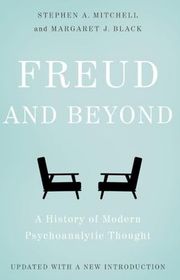
Freud and Beyond
For beginners who need a map of competing psychoanalytic schools before choosing primary texts. Mitchell and Black connect theoretical changes with clinical examples, though the historical overview necessarily compresses disagreements that specialists explore in greater depth.
What it's about
Stephen A. Mitchell and Margaret J. Black trace psychoanalytic thought from Freud through later schools and theorists. Accounts of ego psychology, object relations, interpersonal approaches, and other traditions connect conceptual differences with examples from clinical work.

Three Essays on the Theory of Sexuality
For readers investigating Freud's account of sexuality and development in its historical setting. The essays expose foundational claims more directly than a survey, though dated categories and contested assumptions require careful contextual reading.
What it's about
Sigmund Freud sets out his psychoanalytic theory of sexuality in three essays. Discussions of sexual variation, childhood, and puberty challenge assumptions about development, connecting bodily sources of pleasure with the formation of desires and psychological conflicts.

The Art of Loving
For general readers who want a psychoanalytic perspective on relationships and maturity. Fromm's accessible argument is more approachable than the clinical texts, though its broad ideals offer philosophical reflection rather than detailed evidence or therapeutic instruction.
What it's about
Erich Fromm treats love as an art requiring knowledge and practice. He explores love between parents and children, brotherly love, and religious love, linking the capacity to love with maturity, self-knowledge, courage, and disciplined effort.
Also recommended by
1 person Esther Perel recommended this book
Esther Perel
"I recently reread." - Esther Perel
Esther Perel's recommendation of this book

For readers already familiar with psychoanalytic language who want Klein's later thinking. These essays offer more concentrated work on early emotional relationships than a survey, though the technical vocabulary and theoretical assumptions make them challenging.
What it's about
This collection brings together Melanie Klein's later psychoanalytic writings, including work on infant development and psychosis. Essays explore emotional development and unconscious processes, presenting theories that influenced child analysis and the development of psychoanalytic practice.

For readers interested in the political and philosophical uses of Freud. Marcuse connects repression with social arrangements more explicitly than the clinical books, though the argument requires patience and familiarity with both Marxist and psychoanalytic ideas.
What it's about
Marcuse reconsiders Freud's account of civilization as the repression of human instincts. Exploring its philosophical and social implications, he asks whether a different society could reconcile freedom, pleasure and play with the demands of collective life.

For readers who prefer approaching ideas through imagined conversations. Yalom makes questions about desire and responsibility more immediate than a theoretical treatise, though this is fiction and should not be treated as a historical account.
What it's about
In an imagined encounter in nineteenth-century Vienna, physician Josef Breuer attempts to treat Friedrich Nietzsche's despair. Their conversations draw both men into questions of love, freedom, and personal responsibility, blending historical figures with a fictional exploration of psychotherapy's beginnings.
Also recommended by
1 person Tim O’Reilly recommended this book
Tim O’Reilly
"An imagined story of early psychoanalysis about a guy who was a predecessor to Freud." - Tim O’Reilly
Tim O’Reilly's recommendation of this book

Playing and Reality
For readers interested in how play and early relationships shape experience. Winnicott's focus on creativity offers a different route from Freud's accounts of drives, though his compressed essays work best with some background in psychoanalytic concepts.
What it's about
D. W. Winnicott develops ideas about play, transitional objects, creativity, and the relationship between inner experience and external reality. Drawing on clinical work, the essays explore how early relationships support a person's capacity for meaningful experience.
Psychoanalytic Diagnosis
For clinicians and students who want to understand personality through a psychoanalytic framework. McWilliams connects theory with clinical formulation more directly than the cultural essays, though the professional vocabulary and case material make it a substantial read.
What it's about
Nancy McWilliams explains a psychoanalytic approach to understanding personality organization, defensive processes, and character patterns. Clinical examples connect these concepts with the therapeutic relationship and treatment considerations, emphasizing the person behind a diagnostic category rather than a symptom checklist.

Studies on Hysteria
For readers studying how early psychoanalytic methods developed through case histories. The clinical narratives make the origins of the talking cure concrete, though the diagnostic language and interpretations belong to a specific nineteenth-century medical setting.
What it's about
Josef Breuer and Sigmund Freud present case histories and theoretical discussions of patients diagnosed with hysteria. Their exploration of past experiences, symptoms, and therapeutic conversations documents an early stage in the development of psychoanalysis.
Sources
- 1
The Best Books on Psychoanalysis
fivebooks.com
- 2
100 Best Psychoanalysis Books of All Time (Updated for 2026)
shortform.com
- 3
The 8 Best Books on Psychoanalysis
exploringyourmind.com
- 4
Top 10 books about psychoanalysis
theguardian.com
- 5
Recommended Reading
rediscoveringpsychoanalysis.org
- 6
Psychoanalysis Books
goodreads.com
- 7
Best beginner friendly books?
reddit.com
- 8
What is the best books/readings/ place to start for someone who is a beginner?
reddit.com








Edited by
Software engineer whose passion for tracking book recommendations from podcasts inspired the creation of MRB.
Lead investor at 3one4 Capital whose startup expertise and love for books helped shape MRB and its growth.
Comments
Spotted a missing book, a wrong order or a mistake? Tell us and we'll fix this page.
We're a reading guide, not the author or publisher, so we can't send books or pass on messages.