
22 Best Parent Books
The best books for parents, ranked by how many expert sources recommend each one, with guidance for everyday challenges, family relationships, and reflection.
Our take
Books for parents answer different questions. Some offer words to use during a difficult conversation, while others ask why family life feels so demanding or how a parent's own childhood shapes their reactions. The most helpful starting point is often the problem you keep returning to, rather than a promise to change everything at once.
How to Talk So Kids Will Listen & Listen So Kids Will Talk and Siblings Without Rivalry focus on communication in familiar conflicts. No Bad Kids addresses toddler boundaries, while The Explosive Child considers persistent difficulties with frustration and flexibility. More reflective books, including Parenting from the Inside Out and The Book You Wish Your Parents Had Read, turn attention toward the adult. All Joy and No Fun, The Second Shift, and Unequal Childhoods widen the view to work, relationships, and social conditions.
Begin with one book that matches your child's stage or your own question, and give its ideas time before adding another approach.
22 books · 7 sources · Last updated
As an Amazon Associate, we earn from qualifying purchases (at no extra cost to you).
How to choose from this list
Skip to the full rankingIf you want better everyday conversations: How to Talk So Kids Will Listen & Listen So Kids Will Talk
If you're parenting a toddler: No Bad Kids → How to Talk So Little Kids Will Listen
If siblings keep fighting: Siblings Without Rivalry
If you want to understand your own reactions: Parenting from the Inside Out → The Book You Wish Your Parents Had Read
If you want to support independence: The Gift of Failure → The Self-Driven Child
If you want to understand parenthood itself: All Joy and No Fun → The Second Shift
The 22 books, ranked
Ranked by how many expert sources name each book. Ties go to the book more people recommend.

How to Talk so Little Kids Will Listen
A Survival Guide to Life with Children Ages 2-7
For parents of children aged two to seven who want concrete responses to everyday resistance. Its playful adaptations are more age specific than the original communication guide, though the many examples can feel repetitive when read straight through.
What it's about
Joanna Faber and Julie King adapt their communication approach for adults caring for children ages two to seven. The guide offers practical tools for recognizing feelings, encouraging cooperation, and navigating everyday conflicts while strengthening relationships with young children.
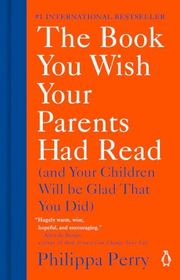
The Book You Wish Your Parents Had Read
For parents who want to understand the relationship beneath daily disagreements. Its attention to feelings and inherited patterns makes it a reflective companion to practical manuals, though readers seeking age specific routines may find it broad.
What it's about
Philippa Perry explores how parents’ past experiences and emotional habits shape their relationships with children. The book discusses communication, acknowledging feelings, and repairing difficulties, encouraging adults to examine their own responses as well as the child’s behavior.

For parents navigating toddler limits who want a calm, respectful approach. The collected pieces make common situations easy to find, though the consistent emotional composure they describe can be difficult to sustain during exhausting days.
What it's about
Janet Lansbury offers an approach to toddler discipline based on respect, calm leadership, and clear boundaries. Collected articles address tantrums, hitting, biting, and other common challenges, explaining how parents can respond while acknowledging children's feelings and developmental needs.
Also recommended by
1 person Ezra Klein recommended this book
Ezra Klein
Ezra Klein recommended this book on Twitter.
Ezra Klein's recommendation of this book

The Whole-Brain Child
12 Revolutionary Strategies to Nurture Your Child's Developing Mind
For parents who like accessible explanations paired with practical responses to emotional moments. Its illustrations make the ideas easy to remember, though its simplified brain models should not be mistaken for a complete account of child development.
What it's about
Daniel Siegel and Tina Payne Bryson present twelve parenting strategies based on their account of children's brain development. Through explanations, stories, and illustrations, they explore ways to respond to emotions, everyday conflicts, and opportunities for learning.
Also recommended by
1 person Graham Duncan recommended this book
Graham Duncan
Graham Duncan mentioned this book on "The Tim Ferriss Show" podcast.
Graham Duncan's recommendation of this book

Cribsheet
A Data-Driven Guide to Better, More Relaxed Parenting, from Birth to Preschool
For parents who want help weighing evidence rather than following a single parenting philosophy. Its focus on tradeoffs can reduce pressure around early decisions, though its economic lens does not settle questions shaped by individual circumstances.
What it's about
Emily Oster examines research on parenting from birth through preschool, including feeding, sleep, childcare, and early development. Her economic approach weighs evidence alongside family preferences, presenting a framework for decisions that often provoke conflicting advice.
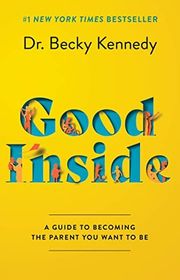
Good Inside
For parents who want emotional connection alongside clear limits. Its reassuring framework links recurring conflicts to a view of the child beneath the behavior, though the sample language can feel formulaic when real conversations become messier.
What it's about
Becky Kennedy presents a parenting approach that separates a child’s identity from difficult behavior. Discussions of boundaries, emotional regulation, and repairing conflict connect this framework with practical responses to common family challenges and parents’ own reactions.
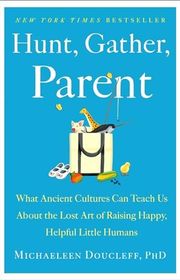
Hunt, Gather, Parent
For parents interested in alternatives to constant negotiation and child centered schedules. Its reporting highlights cooperation through shared family life, though observations from selected communities should not be treated as a universal recipe for every household.
What it's about
Michaeleen Doucleff reports on parenting practices in Maya, Inuit, and Hadzabe communities while reflecting on her relationship with her daughter. She explores how children participate in everyday family work and how adults encourage cooperation, independence, and emotional steadiness.

Parenting from the Inside Out
How a Deeper Self-Understanding Can Help You Raise Children Who Thrive
For parents who notice their own history entering present day conflicts. Its reflective exercises explore patterns beneath reactions more fully than communication handbooks, though the emotional work is slower and less concrete than following practical scripts.
What it's about
Daniel Siegel and Mary Hartzell explore how parents' childhood experiences can influence their relationships with their children. Combining attachment research with reflective exercises, they encourage greater self-understanding and more deliberate communication as foundations for secure family connections.

Positive Discipline
For parents seeking firm boundaries without relying on punishment. Its focus on responsibility and cooperation offers a broad discipline framework, though applying the principles to recurring family conflicts takes more work than the reassuring examples suggest.
What it's about
Jane Nelsen presents a discipline approach combining kindness with firm boundaries and mutual respect. Addressing parents and teachers, she explains strategies for improving communication, reducing power struggles, encouraging cooperation, and helping children develop responsibility without punitive methods.

For parents who want usable language for everyday disagreements rather than a broad theory of childhood. The examples make respectful communication concrete, though adopting unfamiliar responses can feel scripted until they become part of ordinary conversation.
What it's about
Adele Faber and Elaine Mazlish offer approaches to communicating with children through everyday challenges. Examples and exercises address listening, feelings, cooperation, and conflict, showing how parents can express concerns while respecting a child's perspective and developing understanding.
Also recommended by
1 person Brian Armstrong recommended this book
Brian Armstrong
"Really about how to communicate with all people. I found this book quite helpful and it changed how I communicate." - Brian Armstrong
Brian Armstrong's recommendation of this book

For parents who want to understand their own experience rather than collect more techniques. Its reporting takes everyday frustration seriously alongside deeper satisfaction, though readers seeking immediate advice for a particular behavior will need another book.
What it's about
Jennifer Senior investigates how children reshape their parents' marriages, work, friendships, habits, and identities. Following contemporary families, she examines the gap between parenthood's daily frustrations and its deeper rewards, drawing on reporting and social research.

For readers who enjoy questioning familiar claims about children through reported research. Its varied topics broaden the discussion beyond discipline, though findings selected for a counterintuitive narrative should not be treated as a complete or permanently settled consensus.
What it's about
Po Bronson and Ashley Merryman examine research on child development that challenges familiar parenting assumptions. Their account asks how well everyday beliefs about raising children hold up against scientific findings, encouraging readers to reconsider conventional advice.

Raising Your Spirited Child
A Guide for Parents Whose Child Is More Intense, Sensitive, Perceptive, Persistent, and Energetic
For parents who find standard advice poorly matched to an intense or sensitive child. Its temperament lens makes everyday reactions easier to interpret, though the broad label does not explain every difficulty or replace an individual assessment.
What it's about
Mary Sheedy Kurcinka explores parenting children whose temperament makes them especially intense, persistent, sensitive, or uncomfortable with change. Examples and practical strategies address meltdowns, everyday routines, discipline, and understanding both the child's temperament and the parent's responses.

For parents whose main difficulty is conflict between their children. Its attention to comparisons and competing feelings makes it more specific than general communication books, though the techniques require repetition and cannot remove every disagreement.
What it's about
Adele Faber and Elaine Mazlish examine how parents can respond to conflict between siblings. Through anecdotes and practical examples, they challenge assumptions about unavoidable rivalry and discuss ways to acknowledge feelings, reduce comparisons, and encourage more cooperative relationships.

Simplicity Parenting
Using the Extraordinary Power of Less to Raise Calmer, Happier, and More Secure Kids
For families who feel overwhelmed by activities, possessions, and daily stimulation. Its attention to the home environment differs from behavior focused guides, though simplifying schedules and spaces is easier for some households than others.
What it's about
Kim John Payne and Lisa M. Ross propose reducing clutter, overscheduling, and excessive stimulation in children's lives. Practical suggestions for family routines, home environments, and everyday choices explain their approach to creating a calmer, more secure childhood.

For parents who want to examine their own expectations rather than focus solely on changing a child. Its reflective, philosophical approach invites a different kind of attention, though it supplies fewer concrete tools than the communication guides.
What it's about
Shefali Tsabary proposes a parenting approach that asks adults to examine their own expectations and emotional patterns. Combining psychological ideas with Eastern philosophy, she presents the parent-child relationship as an opportunity for mutual growth, awareness, and respect.

The Explosive Child
A New Approach for Understanding and Parenting Easily Frustrated, Chronically Inflexible Children
For parents facing persistent outbursts who want an alternative to escalating consequences. Its collaborative problem solving framework looks beneath visible behavior, though working through underlying difficulties requires time, practice, and cooperation that may develop slowly.
What it's about
Ross Greene presents an approach to children's severe outbursts centered on difficulties with flexibility, frustration tolerance, and problem solving. He explains how parents can work collaboratively with children to address the problems that trigger explosive behavior.

The Gift of Failure
How the Best Parents Learn to Let Go So Their Children Can Succeed
For parents tempted to manage every school or friendship problem themselves. Its teacher perspective makes the case for allowing manageable setbacks, though deciding when to step back still depends on the child and the situation.
What it's about
Jessica Lahey argues that children need opportunities to encounter frustration and learn from mistakes. Drawing on her teaching experience, she offers parents guidance on schoolwork, friendships, and activities, exploring how stepping back can support responsibility, independence, and resilience.

The Self-Driven Child
The Science and Sense of Giving Your Kids More Control Over Their Lives
For parents worried about motivation, anxiety, and constant supervision. Its emphasis on giving children meaningful control provides a coherent alternative to micromanagement, though putting that principle into practice requires adjustment for age and individual needs.
What it's about
William Stixrud and Ned Johnson argue that children benefit from greater control over their lives. Drawing on research and experience, they describe how parents can act as supportive consultants while encouraging autonomy, motivation, and less anxious approaches to challenges.

The Child, The Family And The Outside World
For readers interested in the emotional relationship between a young child and caregiver. Its conversational psychoanalytic perspective offers a historical counterpoint to modern manuals, though its assumptions about mothers and family roles can feel dated.
What it's about
D. W. Winnicott explores children's emotional development through their relationships with parents and the wider world. He discusses the early mother-infant bond and familiar parenting concerns, including crying, aggression, and children's questions, while examining ordinary psychological growth.

For parents who want to understand unequal household work and its effect on relationships. Its sociological lens broadens the discussion beyond child behavior, though the original research reflects a particular period in American family life.
What it's about
Arlie Hochschild and Anne Machung examine the unpaid work that follows paid employment in dual-career households. Their study explores how childcare and housework are divided, revealing tensions between changing workplace roles and persistent expectations about women's responsibilities at home.

For readers interested in how social class shapes family routines and opportunity. Its close observation complicates universal parenting advice, though the sociological analysis and American institutional setting make it less directly practical than a handbook.
What it's about
Drawing on observations of Black and white families across social classes, Annette Lareau examines how parenting practices shape children’s opportunities. This edition also follows the original subjects into adulthood to explore the continuing effects of unequal childhood experiences.
Sources
- 1
Best Parenting Books for Every Stage: Your Ultimate Guide 2026
mumsnet.com
- 2
100 Best Parenting Books of All Time (Updated for 2026)
shortform.com
- 3
Parenting Books
goodreads.com
- 4
The Best Parenting Books (From Newborn Days to Toddler Years)
babylist.com
- 5
Parenting books that are worth reading?
reddit.com
- 6
The 10 Best Parenting Books That Actually Change How You Parent
thepragmaticparent.com
- 7
26 Best Parenting Books for Every Age and Stage
thecut.com






Edited by
Software engineer whose passion for tracking book recommendations from podcasts inspired the creation of MRB.
Lead investor at 3one4 Capital whose startup expertise and love for books helped shape MRB and its growth.
Comments
Spotted a missing book, a wrong order or a mistake? Tell us and we'll fix this page.
We're a reading guide, not the author or publisher, so we can't send books or pass on messages.