
12 Best Psychotherapy Books
The best psychotherapy books, ranked by how many expert sources recommend each one, with notes on who they suit, from curious readers to clinicians.
Our take
Psychotherapy books serve different readers. Clinical texts explain how practitioners formulate problems and organize treatment, while case stories show the uncertainty and emotional work inside the consulting room. Other books introduce a particular tradition or adapt therapeutic ideas for the public. Choosing between them means asking whether you want to understand the experience of therapy, study a method, or reflect on relationships and meaning.
For an accessible view of therapeutic conversations, start with The Examined Life or Love's Executioner. The Gift of Therapy offers a practitioner's reflections, while On Becoming a Person develops the person-centered tradition. Trainees seeking a structured approach can turn to Cognitive Behavior Therapy. Linehan's DBT texts serve different roles: a treatment framework and materials for skills practice. The Theory and Practice of Group Psychotherapy addresses the separate demands of leading groups. Begin with the purpose that fits you; a compelling case narrative and a professional manual are useful in different ways.
12 books · 5 sources · Last updated
As an Amazon Associate, we earn from qualifying purchases (at no extra cost to you).
How to choose from this list
Skip to the full rankingIf you're curious about the consulting room: The Examined Life → Love's Executioner
If you're beginning clinical training: The Gift of Therapy → Cognitive Behavior Therapy
If you want person-centered foundations: On Becoming a Person
If you're studying DBT: Cognitive-Behavioral Treatment of Borderline Personality Disorder → DBT® Skills Training Handouts and Worksheets
If you're preparing for group work: The Theory and Practice of Group Psychotherapy
If you want conversations about change: Motivational Interviewing
The 12 books, ranked
Ranked by how many expert sources name each book. Ties go to the book more people recommend.
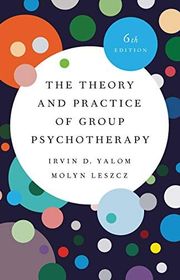
The Theory and Practice of Group Psychotherapy
For clinicians learning to lead therapy groups rather than individual sessions. Yalom and Leszcz's sixth edition connects group processes with practical clinical work, though the substantial textbook requires sustained study and complements rather than replaces supervision.
What it's about
Yalom and Leszcz examine how therapy groups develop and how leaders can work with their dynamics. The sixth edition connects therapeutic factors, member selection, group stages, and clinical challenges with examples and guidance for professional practice.

For readers exploring the person-centered tradition and the therapist's way of relating. Rogers offers a sustained philosophical foundation beyond a collection of practical tips, though the essays' historical context differs from a contemporary training manual.
What it's about
Carl Rogers explains his approach to psychotherapy through reflections on helping relationships and personal growth. Drawing on clinical experience, he explores how acceptance, understanding, and authenticity can support people in discovering their own capacities and direction.
Also recommended by
1 person Jordan Peterson recommended this book
Jordan Peterson
Recommended on Jordan Peterson's website.
Jordan Peterson's recommendation of this book

For readers who want to see the therapist's uncertainty as well as the patient's concerns. Yalom's case narratives offer a more personal view than a textbook, though their literary selection does not represent every approach to psychotherapy.
What it's about
Irvin Yalom recounts psychotherapy encounters with patients struggling with anxiety, isolation, obsession, and questions of meaning. The cases also reveal his own reactions and uncertainties, showing how the therapist's humanity enters the difficult work of understanding another person.

The Gift of Therapy
An Open Letter to a New Generation of Therapists and Their Patients
For beginning therapists and curious patients interested in the working relationship. Yalom's brief reflections are easier to revisit than a comprehensive textbook, though the personal perspective offers guidance rather than a complete model of clinical practice.
What it's about
Irvin Yalom shares lessons from decades of psychotherapy in short chapters addressed to therapists and their patients. Examples and reflections examine caring relationships, tailoring therapy to individuals, and the opportunities and limits of a therapist’s self-disclosure.

Man's Search for Meaning
For general readers interested in meaning, suffering, and the ideas behind logotherapy. Frankl combines personal testimony with a therapeutic perspective, though the Holocaust account is emotionally demanding and the book is not a clinical training manual.
What it's about
Viktor Frankl combines his account of imprisonment in Nazi concentration camps with an introduction to logotherapy. He explores the search for meaning, arguing that purpose and one's response to suffering can remain significant even under extreme circumstances.
Also recommended by
36 people- Jordan Peterson recommended this book
Jordan Peterson
Recommended on Jordan Peterson's website.
Jordan Peterson's recommendation of this book  Jocko Willink recommended this book
Jocko Willink
Jocko Willink covered this book in "Jocko Podcast" Ep. 78
Jocko Willink's recommendation of this book  Esther Perel recommended this book
Esther Perel
"The book I’ve probably gifted the most is [this book], since I’m 16." - Esther Perel
Esther Perel's recommendation of this book  Emma Watson recommended this book
Emma Watson
"Loved it. Really loved it." - Emma Watson
Emma Watson's recommendation of this book  Naval Ravikant recommended this book
Naval Ravikant
"Wow it's dark." - Naval Ravikant
Naval Ravikant's recommendation of this book  David Blaine recommended this book
David Blaine
"One of my favorite books." - David Blaine
David Blaine's recommendation of this book +30
More recommendations
- Terry Crews
"Incredible." - Terry Crews
- Jimmy Fallon
"Talks about the meaning of life, and I believe you come out a better person from reading it." - Jimmy Fallon
- Tony Robbins
"Taught me that if you change the meaning, you change everything." - Tony Robbins
- Simon Sinek
"Single most important book you can read." - Simon Sinek
- Michael Gervais
"Outlines methods to discover deep meaning and purpose in life." - Michael Gervais
- Daniel Pink
"A hugely important book for me." - Daniel Pink
- Ev Williams
On the "books read" section of Ev Williams' GoodReads profile.
- Bryan Johnson
"His basic point is no matter the conditions we surround ourselves in, we can author our life." - Bryan Johnson
- Dustin Moskovitz
Dustin Moskovitz recommended this book on Twitter.
- Sam Altman
This book was on Sam Altman's bookshelf.
- Chelsea Handler
"One of those beautiful accounts of a terrible time in our history. His calm and sagaciousness, while witnessing one horror after another played out during his time in three separate concentration camps, is awe inspiring." - Chelsea Handler
- Ryan Holiday
"Looks at how we find purpose by dedicating ourselves to a cause, learning to love and finding a meaning to our suffering." - Ryan Holiday
- Maria Popova
"A meditation on what the gruesome experience of Auschwitz taught [the author] about the primary purpose of life: the quest for meaning, which sustained those who survived." - Maria Popova
- Aniela Gregorek
"A book I have gifted to many people because it changed the way I think about human suffering and grace in life." - Aniela Gregorek
- Fedor Holz
"[From it] I interpreted that we cannot avoid suffering, but we can choose how to cope with it, and that having meaning in our life is essential." - Fedor Holz
- Turia Pitt
"[If people are] doing a bit of soul searching, hands down [I give them this book]." - Turia Pitt
- Chip Conley
"If I were to take the meaning of [this book], and turn it into an equation, it would be despair equals suffering minus meaning." - Chip Conley
- Dave Elitch
Dave Elitch mentioned this book on "The Tim Ferriss Show" podcast.
- PewDiePie
"A great tool to help people. [...] In case something really bad happens, I feel like, from reading this book, I'm better equipped to handle it." - PewDiePie
- Shane Parrish
"As hard as you think your life is, it pales in comparison to Auschwitz." - Shane Parrish
- Phil Jackson
"An important book for me." - Phil Jackson
- Tom Bilyeu
Tom Bilyeu recommended this book on his website.
- Lex Fridman
"I reread [this book] quite often." - Lex Fridman
- Mark Manson
Mark Manson recommended this book on his website.
- Alastair Humphreys
"Slim but packed with wisdom that I often come back to. I really recommend you read it." - Alastair Humphreys
- Steve Kerr
"Incredibly inspiring." - Steve Kerr
- Robin Black
"One of the great books ever written exists because of one of the worst times in human history. From suffering comes beauty." - Robin Black
- Jim Kwik
"Illustrates that it’s not our circumstances but the decisions we make that diminish or develop us." - Jim Kwik
- Michael Hyatt
Michael Hyatt recommended this book on his website.
- Patrick Bet-David
Patrick Bet-David recommended this book on his website.
- Terry Crews

For couples and readers interested in emotionally focused therapy in accessible form. Johnson connects relationship patterns with conversations partners can attempt, though this public-facing guide offers less clinical detail than a professional treatment text.
What it's about
Sue Johnson introduces seven conversations intended to strengthen a couple’s emotional bond. Drawing on emotionally focused therapy, she explores recurring conflict, vulnerable feelings, and the need for connection through examples, explanations, and exercises for partners.
Also recommended by
1 person Mark Manson recommended this book
Mark Manson
"[The author] realized that romantic relationships were largely driven by unconscious emotions and desires." - Mark Manson
Mark Manson's recommendation of this book

Cognitive Behavior Therapy
For trainees who want a structured introduction to delivering cognitive behavior therapy. Beck connects formulation and session work through detailed cases, though the clinical focus assumes professional study and cannot replace supervised practice.
What it's about
Judith Beck introduces cognitive behavior therapy through detailed client cases and practical instruction for clinicians. The text covers engagement, case formulation, treatment planning, session structure, cognitive and behavioral techniques, and ways to address difficulties within the therapeutic relationship.

Cognitive-Behavioral Treatment of Borderline Personality Disorder
For clinicians studying the foundations of dialectical behavior therapy. Linehan explains the treatment framework more deeply than a skills handout collection, though this foundational text needs to be read alongside subsequent developments in DBT practice.
What it's about
Marsha Linehan presents the foundations and clinical application of dialectical behavior therapy for borderline personality disorder. Her treatment framework integrates behavioral methods with approaches to emotion dysregulation and complex problems, offering a detailed reference for clinicians delivering DBT.

DBT® Skills Training Handouts and Worksheets
For clinicians and clients using structured DBT skills training. The reusable practice materials complement explanation-focused texts, though worksheets alone do not provide the assessment, treatment planning, or therapeutic support needed for a complete program.
What it's about
Marsha Linehan provides client-oriented handouts and worksheets for learning dialectical behavior therapy skills. Brief module introductions and practice materials support structured skills training, giving clients and clinicians tools to select and use according to individual needs.

Games People Play
For readers interested in the historical influence of transactional analysis on ideas about relationships. Berne's memorable interaction patterns are accessible, though the period language and interpretive categories should not be treated as a current universal diagnostic framework.
What it's about
Eric Berne introduces transactional analysis through recurring patterns of interaction that he calls games. Examples explore the hidden motives and predictable exchanges within human relationships, offering readers a framework for recognizing the roles they and others adopt.

For practitioners who want a collaborative way to discuss ambivalence and change. Miller and Rollnick emphasize conversation skills rather than persuading clients through instruction, though the listed edition predates later revisions and the methods require practice.
What it's about
William Miller and Stephen Rollnick explain motivational interviewing through its four processes of engaging, focusing, evoking, and planning. Interview examples and vignettes show how practitioners listen, explore ambivalence, support personal motivation, and collaborate on plans for change.

For general readers curious about what psychoanalytic conversations can reveal. Grosz's short accounts offer an approachable route into therapeutic thinking, though their reflective insights are not a systematic explanation of techniques or a treatment guide.
What it's about
Stephen Grosz draws on decades of psychoanalytic conversations to explore the hidden feelings behind puzzling behavior. Short stories from the consulting room examine love, loss, change, and self-understanding, showing how talking and listening can illuminate ordinary lives.
Sources




Edited by
Software engineer whose passion for tracking book recommendations from podcasts inspired the creation of MRB.
Lead investor at 3one4 Capital whose startup expertise and love for books helped shape MRB and its growth.
Comments
Spotted a missing book, a wrong order or a mistake? Tell us and we'll fix this page.
We're a reading guide, not the author or publisher, so we can't send books or pass on messages.