
15 Best Psychiatry Books
The best psychiatry books, ranked by how many expert sources recommend each one, with notes on who each suits, from curious readers to students and clinicians.
Our take
Psychiatry books can introduce a profession, describe living with mental illness, or examine how diagnosis and care have changed. These are different reading tasks. A memoir gives access to one person’s experience, while a textbook assumes professional study. A historical theory or critique can sharpen questions about the field without providing a current account of clinical practice.
An Unquiet Mind and The Center Cannot Hold combine personal experience with demanding professional lives. Hallucinations takes a broader narrative approach to perception, and Darkness Visible offers a short literary account of depression. Readers interested in professional debates can compare Saving Normal and Unhinged, keeping their arguments and publication periods in view. For formal clinical study, Kaplan & Sadock’s Synopsis of Psychiatry serves a different purpose altogether. Start with the kind of understanding you want: lived experience, historical context, or a structured professional overview.
15 books · 5 sources · Last updated
As an Amazon Associate, we earn from qualifying purchases (at no extra cost to you).
How to choose from this list
Skip to the full rankingIf you want lived experience: An Unquiet Mind → The Center Cannot Hold
If you prefer a short literary memoir: Darkness Visible → Man's Search for Meaning
If you're curious about perception and the brain: The Man Who Mistook His Wife for a Hat → Hallucinations
If you want debates within the profession: Saving Normal → Unhinged
If you're studying clinical psychiatry: Kaplan & Sadock’s Synopsis of Psychiatry
If you want historical existential theory: The Divided Self
The 15 books, ranked
Ranked by how many expert sources name each book. Ties go to the book more people recommend.

For readers seeking a sustained personal account of schizophrenia alongside education and professional life. Saks gives agency, support, and institutional encounters unusual attention, though her individual trajectory should not become a standard imposed on others.
What it's about
Elyn R. Saks recounts living with schizophrenia while pursuing education, relationships, and a legal career. Her memoir describes frightening episodes, hospitalizations, and the obstacles she encountered in building an independent life and becoming a respected professional.

Man's Search for Meaning
For readers interested in meaning, suffering, and the ideas behind logotherapy. Frankl connects memoir with a therapeutic philosophy, though the concentration-camp account is harrowing and the short theoretical section is not a clinical training manual.
What it's about
Viktor Frankl combines his account of imprisonment in Nazi concentration camps with an introduction to logotherapy. He explores the search for meaning, arguing that purpose and one's response to suffering can remain significant even under extreme circumstances.
Also recommended by
36 people Jordan Peterson recommended this book
Jordan Peterson
Recommended on Jordan Peterson's website.
Jordan Peterson's recommendation of this book  Jocko Willink recommended this book
Jocko Willink
Jocko Willink covered this book in "Jocko Podcast" Ep. 78
Jocko Willink's recommendation of this book  Esther Perel recommended this book
Esther Perel
"The book I’ve probably gifted the most is [this book], since I’m 16." - Esther Perel
Esther Perel's recommendation of this book  Emma Watson recommended this book
Emma Watson
"Loved it. Really loved it." - Emma Watson
Emma Watson's recommendation of this book  Naval Ravikant recommended this book
Naval Ravikant
"Wow it's dark." - Naval Ravikant
Naval Ravikant's recommendation of this book  David Blaine recommended this book
David Blaine
"One of my favorite books." - David Blaine
David Blaine's recommendation of this book +30
More recommendations
- Terry Crews
"Incredible." - Terry Crews
- Jimmy Fallon
"Talks about the meaning of life, and I believe you come out a better person from reading it." - Jimmy Fallon
- Tony Robbins
"Taught me that if you change the meaning, you change everything." - Tony Robbins
- Simon Sinek
"Single most important book you can read." - Simon Sinek
- Michael Gervais
"Outlines methods to discover deep meaning and purpose in life." - Michael Gervais
- Daniel Pink
"A hugely important book for me." - Daniel Pink
- Ev Williams
On the "books read" section of Ev Williams' GoodReads profile.
- Bryan Johnson
"His basic point is no matter the conditions we surround ourselves in, we can author our life." - Bryan Johnson
- Dustin Moskovitz
Dustin Moskovitz recommended this book on Twitter.
- Sam Altman
This book was on Sam Altman's bookshelf.
- Chelsea Handler
"One of those beautiful accounts of a terrible time in our history. His calm and sagaciousness, while witnessing one horror after another played out during his time in three separate concentration camps, is awe inspiring." - Chelsea Handler
- Ryan Holiday
"Looks at how we find purpose by dedicating ourselves to a cause, learning to love and finding a meaning to our suffering." - Ryan Holiday
- Maria Popova
"A meditation on what the gruesome experience of Auschwitz taught [the author] about the primary purpose of life: the quest for meaning, which sustained those who survived." - Maria Popova
- Aniela Gregorek
"A book I have gifted to many people because it changed the way I think about human suffering and grace in life." - Aniela Gregorek
- Fedor Holz
"[From it] I interpreted that we cannot avoid suffering, but we can choose how to cope with it, and that having meaning in our life is essential." - Fedor Holz
- Turia Pitt
"[If people are] doing a bit of soul searching, hands down [I give them this book]." - Turia Pitt
- Chip Conley
"If I were to take the meaning of [this book], and turn it into an equation, it would be despair equals suffering minus meaning." - Chip Conley
- Dave Elitch
Dave Elitch mentioned this book on "The Tim Ferriss Show" podcast.
- PewDiePie
"A great tool to help people. [...] In case something really bad happens, I feel like, from reading this book, I'm better equipped to handle it." - PewDiePie
- Shane Parrish
"As hard as you think your life is, it pales in comparison to Auschwitz." - Shane Parrish
- Phil Jackson
"An important book for me." - Phil Jackson
- Tom Bilyeu
Tom Bilyeu recommended this book on his website.
- Lex Fridman
"I reread [this book] quite often." - Lex Fridman
- Mark Manson
Mark Manson recommended this book on his website.
- Alastair Humphreys
"Slim but packed with wisdom that I often come back to. I really recommend you read it." - Alastair Humphreys
- Steve Kerr
"Incredibly inspiring." - Steve Kerr
- Robin Black
"One of the great books ever written exists because of one of the worst times in human history. From suffering comes beauty." - Robin Black
- Jim Kwik
"Illustrates that it’s not our circumstances but the decisions we make that diminish or develop us." - Jim Kwik
- Michael Hyatt
Michael Hyatt recommended this book on his website.
- Patrick Bet-David
Patrick Bet-David recommended this book on his website.
- Terry Crews

How to Change Your Mind
For general readers curious about the history and investigation of psychedelics. Pollan combines reporting with personal experience, though the book captures a particular research period and does not establish current treatments or suitability for individual readers.
What it's about
Michael Pollan investigates psychedelic drugs through their history, contemporary scientific research, and his own experiences. He explores what altered states may reveal about consciousness while examining research into their potential therapeutic uses.
Also recommended by
12 people Amelia Boone recommended this book
Amelia Boone
"Fantastic book." - Amelia Boone
Amelia Boone's recommendation of this book  Aubrey Marcus recommended this book
Aubrey Marcus
"Has done a better job than any I’ve read so far on this subject at rationally, calmly, and scientifically exploring just how impactful psychedelics can be for the individual and our culture." - Aubrey Marcus
Aubrey Marcus's recommendation of this book  Hamilton Morris recommended this book
Hamilton Morris
Hamilton Morris mentioned a passage from this book on Twitter.
Hamilton Morris's recommendation of this book  Michael Mauboussin recommended this book
Michael Mauboussin
"[One of the] books that helped me think better in 2018." - Michael Mauboussin
Michael Mauboussin's recommendation of this book - Naval Ravikant recommended this book
Naval Ravikant
Naval Ravikant's answer to "do you have any advice for dealing with the death of a parent?"
Naval Ravikant's recommendation of this book  Paul Stamets recommended this book
Paul Stamets
Paul Stamets mentioned this book on "The Tim Ferriss Show" podcast.
Paul Stamets's recommendation of this book +6
More recommendations
- Peter Attia
"Excellent." - Peter Attia
- Stewart Butterfield
"A great overview of research into the therapeutic uses of psychedelics." - Stewart Butterfield
- Tim Ferriss
"One of my favorite books of the last five years." - Tim Ferriss
- Vinod Khosla
"A fun exploration of psychedelic drugs, especially for someone who has never tried them." - Vinod Khosla
- Yuval Noah Harari
"Changed my mind, or at least some of the ideas held in my mind." - Yuval Noah Harari
- Kara Swisher
"Wonderful." - Kara Swisher
- Peter Attia
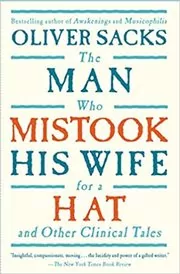
For readers who want case narratives that connect brain function with identity and everyday experience. Sacks makes unusual conditions approachable through individual lives, though the focus is neurological and the storytelling is not a clinical reference.
What it's about
In this collection of clinical tales, Sacks follows patients whose brains alter memory, recognition, movement, and identity. Strange symptoms become deeply human stories about how people rebuild a sense of self.
Also recommended by
1 person- Jordan Peterson recommended this book
Jordan Peterson
Recommended on Jordan Peterson's website.
Jordan Peterson's recommendation of this book

For readers seeking a personal account of bipolar disorder informed by clinical knowledge. Jamison makes the tension between professional expertise and lived experience unusually visible, though one memoir cannot represent the full range of experiences.
What it's about
Kay Redfield Jamison recounts living with bipolar disorder while building a career researching and treating mood disorders. Her memoir explores mania, depression, relationships, and resistance to medication, bringing a clinician's knowledge together with her own experience of illness.

Anatomy of an Epidemic
Magic Bullets, Psychiatric Drugs, and the Astonishing Rise of Mental Illness in America
For readers examining criticism of psychiatric medication and long-term outcome research. Whitaker presents a sustained challenge to prevailing explanations, though his interpretation is contested and should not be treated as a guide to individual treatment decisions.
What it's about
Robert Whitaker investigates rising rates of disabling mental illness in the United States. Combining patient stories with his reading of psychiatric research, he questions the long-term effects of psychiatric medication and examines alternative approaches used elsewhere.

For readers interested in how severe illness can unsettle identity and complicate diagnosis. Cahalan’s reconstructed experience makes uncertainty tangible, though this particular neurological case is not a general explanation for psychiatric symptoms.
What it's about
Susannah Cahalan reconstructs a sudden illness that left her hospitalized with severe behavioral and neurological symptoms and gaps in her memory. Her memoir follows her family's efforts, the search for a diagnosis, and her recovery of identity.
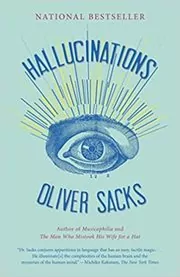
Hallucinations
For readers curious about perceptual experiences across different neurological and everyday contexts. Sacks places people’s accounts at the center, though the wide range of cases makes this narrative exploration rather than a diagnostic guide.
What it's about
Sacks looks at visions and voices that can arise from migraine, fever, sensory loss, drugs, grief, and neurological illness. He treats hallucinations not as freakish events, but as clues to how the brain makes reality.

It's Kind of a Funny Story
For readers who prefer a novel to clinical exposition when exploring adolescent distress. Vizzini combines an accessible voice with psychiatric hospitalization, though its humor and fictional resolution cannot stand for every young person’s experience.
What it's about
After entering an academically demanding Manhattan high school, Craig Gilner struggles with depression and overwhelming expectations. A suicidal crisis leads to psychiatric hospitalization, where unexpected friendships help him confront his anxiety and reconsider his future.

Saving Normal
For readers interested in debates about diagnostic boundaries and medicalization. Frances writes from experience inside the profession, though the reform argument reflects a particular perspective and period rather than a neutral survey of every controversy.
What it's about
Allen Frances critiques expanding psychiatric diagnoses and the medicalization of ordinary distress. Drawing on his experience with diagnostic manuals, he argues that overdiagnosis and pharmaceutical influence can divert resources and expose people to unnecessary treatment.

For readers studying historical existential approaches to psychosis and identity. Laing asks how experience feels from within, though the terminology and theoretical assumptions need their historical setting and do not supply contemporary diagnostic guidance.
What it's about
R. D. Laing uses case studies to explore alienation and the experience of schizophrenia through an existential lens. He examines the tension between a person's private identity and a defensive false self presented to others.

Unhinged
The Trouble with Psychiatry - A Doctor's Revelations about a Profession in Crisis
For readers who want a clinician’s critique of professional incentives and medication-centered practice. Carlat connects institutional pressures with everyday work, though the US focus and period-specific arguments make this a reform perspective rather than a current clinical reference.
What it's about
Psychiatrist Daniel Carlat critiques his profession's shift from therapeutic conversation toward brief medication appointments. Drawing on clinical experience, he examines diagnosis, reimbursement, drug marketing, and overprescription, then proposes reforms to psychiatric care.

For readers who want a brief literary account of severe depression. Styron gives careful language to an experience that resists explanation, though the concentrated personal voice offers less practical or clinical guidance than a broader reference.
What it's about
William Styron describes the depression that overwhelmed him, tracing its effects on thought, daily life, and his sense of survival. This personal memoir examines an experience he found difficult to communicate and his movement toward recovery.

Kaplan & Sadock’s Synopsis of Psychiatry
For medical students and trainees who need a broad clinical overview. The organized coverage supports study and consultation across major topics, though the density and professional assumptions make it unsuitable as a first personal introduction to mental health.
What it's about
This clinical reference surveys psychiatric assessment, disorders, and treatment across the lifespan. Case studies, diagnostic tables, and concise summaries support learning and consultation, with sections on psychotherapy, medication, and other interventions.

Personality Disorders in Modern Life
For readers with clinical background who want to compare theories of personality pathology. Millon and colleagues connect cases with multiple explanatory traditions, though the older diagnostic framework requires historical context and comparison with contemporary teaching.
What it's about
Theodore Millon and colleagues examine personality disorders, their subtypes, developmental roots, and treatment. Case studies connect biological, psychodynamic, interpersonal, cognitive, and evolutionary perspectives, with attention to assessment and cultural and gender differences.
Sources




Edited by
Software engineer whose passion for tracking book recommendations from podcasts inspired the creation of MRB.
Lead investor at 3one4 Capital whose startup expertise and love for books helped shape MRB and its growth.
Comments
Spotted a missing book, a wrong order or a mistake? Tell us and we'll fix this page.
We're a reading guide, not the author or publisher, so we can't send books or pass on messages.