
12 Best Kim Stanley Robinson Books
The best Kim Stanley Robinson books, ranked by expert source recommendations, with notes to help you choose climate fiction, space exploration, and alternate history.
Our take
Kim Stanley Robinson’s books ask how people might build a workable society under difficult conditions. The setting can be a new settlement on Mars, a damaged Earth, or a community in the distant past. Scientific explanation and political debate are part of the storytelling, so these books often suit readers who enjoy thinking through systems as much as following individual characters.
The Mars trilogy is the largest commitment here: begin with Red Mars, then continue through Green Mars and Blue Mars. For a standalone space novel, 2312 imagines life across the solar system, while Aurora examines the limits of leaving it behind. The Ministry for the Future and New York 2140 keep climate and collective action closer to Earth. Shaman turns toward prehistory, and The Years of Rice and Salt rebuilds world history around a different premise. Start with the setting that interests you most, choosing Red Mars if you want the full trilogy.
12 books · 8 sources · Last updated
As an Amazon Associate, we earn from qualifying purchases (at no extra cost to you).
Reading Kim Stanley Robinson in order? See all Kim Stanley Robinson books in order
How to choose from this list
Skip to the full rankingIf you want the Mars trilogy in order: Red Mars → Green Mars → Blue Mars
If you want a standalone solar-system novel: 2312
If you want the limits of interstellar travel: Aurora
If you want climate and institutions: The Ministry for the Future → New York 2140
If you want alternate history: The Years of Rice and Salt
If you want a smaller community: The Wild Shore → Pacific Edge
The 12 books, ranked
Ranked by how many expert sources name each book. Ties go to the book more people recommend.
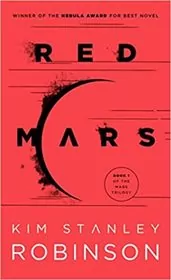
For readers who want planetary exploration to include arguments about how people should live together. Its detailed settlement process gives the trilogy a substantial foundation, though long technical passages and ideological disputes slow the action.
What it's about
The first Mars Trilogy volume follows the First Hundred colonists as they build the initial settlements, debate whether to terraform the planet, and become entangled in revolutions and corporate power struggles that reshape both Mars and an ecologically stressed Earth.
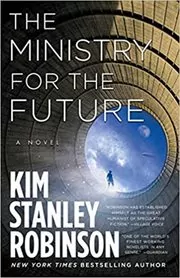
For readers interested in climate responses across economics, institutions, and everyday life. Its many forms allow ideas to matter as much as characters, though the documentary sections and devastating opening make it an unusual, sometimes difficult novel.
What it's about
Beginning with a deadly Indian heat wave, this near-future novel tracks a new UN agency based in Zurich and traumatized survivor Frank May as they pursue carbon coins, legal reforms, and sometimes violent resistance in a desperate attempt to stabilize the climate.
Also recommended by
3 people Ezra Klein recommended this book
Ezra Klein
"Near-future fiction about the world climate change is creating, and how it will change us, and we will change it." - Ezra Klein
Ezra Klein's recommendation of this book  Bill Gates recommended this book
Bill Gates
"Presents a stimulating and engaging story, spanning decades and continents." - Bill Gates
Bill Gates's recommendation of this book  Cory Doctorow recommended this book
Cory Doctorow
"An uncomfortable read. It's a brilliant book." - Cory Doctorow
Cory Doctorow's recommendation of this book

2312
For readers who want Robinson’s scientific imagination across the solar system without committing to a trilogy. Its varied habitats offer a broad speculative canvas, though lists, digressions, and an unconventional pace interrupt the central mystery.
What it's about
In 2312, artist and terrarium designer Swan Er Hong teams with diplomat Fitz Wahram and investigator Jean Genette after a catastrophic attack on Mercury's mobile city, uncovering a conspiracy that spans the colonized solar system and the fate of a warming Earth.
Also recommended by
1 person- Cory Doctorow recommended this book
Cory Doctorow
"My favorite KSR series." - Cory Doctorow
Cory Doctorow's recommendation of this book
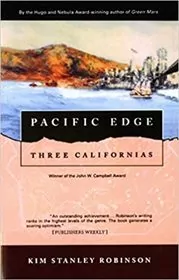
For readers interested in how an environmentally minded society handles everyday conflict. Its local relationships make utopian ideas feel lived in, though the small scale and attention to community politics can seem quiet beside the space novels.
What it's about
Set in a small Southern California town that has embraced green politics and cooperative living, the novel follows carpenter and new councilmember Kevin Clayborne as a development fight over the last wild hill tests friendships, ideals, and this fragile utopia.
Also recommended by
1 person- Cory Doctorow recommended this book
Cory Doctorow
"My favorite KSR novel." - Cory Doctorow
Cory Doctorow's recommendation of this book
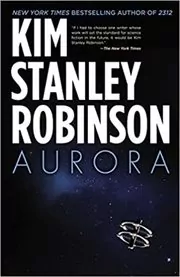
Aurora
For readers who want a generation-ship story to take ecology seriously. It questions the practical limits of interstellar settlement more closely than a simple exploration adventure, though the technical emphasis and sober outlook can feel discouraging.
What it's about
A generation starship built as a spinning ring nears Tau Ceti after centuries in flight, but ecological systems are failing, and the ship's artificial intelligence gradually becomes a narrator, questioning whether interstellar colonization is possible without destroying its travelers.
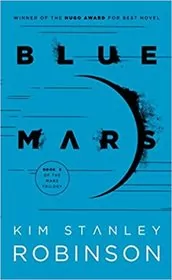
For readers finishing the trilogy who want to see a society live with the consequences of transformation. Its long perspective connects politics with aging and memory, though it depends on the earlier volumes and remains deliberately expansive.
What it's about
In the trilogy's finale, Mars is largely terraformed, Earth reels from climate disasters, and Martian factions must negotiate independence, immigration pressures, and the ethics of extreme longevity as they expand human settlement throughout the solar system.
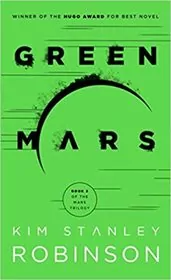
For readers continuing directly from Red Mars who want the political consequences of settlement developed at length. The growing society gives the debates greater scope, though the dense scientific detail and returning cast make this a poor starting point.
What it's about
Decades after the first landing, long-lived colonists and their children push terraforming forward, organize underground resistance to Earth's control, and fight over what kind of society Mars should become as the planet slowly turns from red to green.
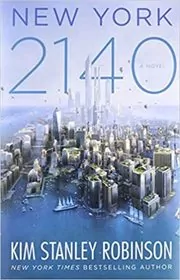
New York 2140
For readers who prefer a city-sized ensemble to planetary exploration. Its flooded neighborhoods make climate adaptation tangible while connecting finance to daily life, though explanations of economic systems sometimes take precedence over the characters.
What it's about
In a half-submerged New York turned 'SuperVenice,' an ensemble cast of co-op residents in the old Met Life tower, from quants and traders to activists and cops, navigate flooded streets, financial crashes, and bold schemes to reclaim the city.
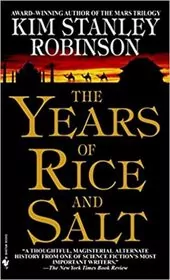
For readers who enjoy alternate history as a way to question whose stories become central. Its recurring souls connect widely separated eras, though the episodic structure and philosophical discussions require patience with repeated changes of setting.
What it's about
In this sweeping alternate history, the Black Death wipes out nearly all of Europe, and the story instead follows reincarnating characters across centuries of Islamic, Chinese, Indian, and Indigenous histories as they struggle toward more just and peaceful worlds.
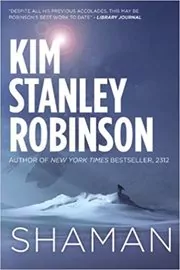
Shaman
For readers interested in human adaptation on an intimate, bodily scale. The prehistoric setting gives survival and cultural knowledge unusual prominence, though its deliberate pace and attention to physical hardship offer little conventional science-fiction spectacle.
What it's about
Set in Ice Age Europe, the novel follows Loon, a young orphan apprenticed to irascible shaman Thorn, as he survives a harsh wilderness initiation, learns the stories and rituals of his people, and helps his small band endure a changing world.
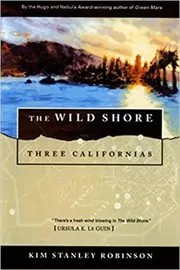
For readers who want a smaller, more personal introduction to Robinson’s imagined societies. Its coastal community makes the aftermath of catastrophe concrete, though the limited viewpoint offers less scientific breadth than the Mars books.
What it's about
In 2047, a small fishing village on the ruined California coast struggles to survive after a devastating nuclear attack, while young Hank Fletcher is drawn toward dangerous schemes to reconnect with the wider world and remake a broken America.
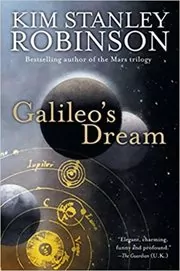
For readers who enjoy scientific history mixed with speculative ideas. The combination of Galileo’s world and a distant future gives questions about discovery an unusual frame, though the shifts between periods can interrupt the historical immersion.
What it's about
Moving between seventeenth-century Italy and a utopian future society on Jupiter's moons, this novel follows Galileo as time travelers enlist him in their political struggles, weaving hard science, biography, and philosophical debates about memory, faith, and scientific change.
Sources
- 1
Ranking Author Kim Stanley Robinson's Best Books (A Bibliography Countdown)
bookscrolling.com
- 2
Books by Kim Stanley Robinson and Complete Book Reviews
publishersweekly.com
- 3
Where to start with Kim Stanley Robinson's works?
reddit.com
- 4
Kim Stanley Robinson
sfcrowsnest.info
- 5
Kim Stanley Robinson Books
goodreads.com
- 6
Books by Kim Stanley Robinson
book-filter.com
- 7
Bibliography
kimstanleyrobinson.info
- 8
Where to start with Kim Stanley Robinson?
reddit.com







Edited by
Software engineer whose passion for tracking book recommendations from podcasts inspired the creation of MRB.
Lead investor at 3one4 Capital whose startup expertise and love for books helped shape MRB and its growth.
Comments
Spotted a missing book, a wrong order or a mistake? Tell us and we'll fix this page.
We're a reading guide, not the author or publisher, so we can't send books or pass on messages.