
14 Best Alan Watts Books
The best Alan Watts books, ranked by how many expert sources recommend each one, with notes on Zen, identity, essays, autobiography and where to start.
Our take
Alan Watts brought Zen, Taoism and Vedanta into conversation with Western religion, psychology and everyday questions about identity. His books often challenge the effort to control life through fixed definitions, endless striving or a sharp division between self and world. Some develop a sustained explanation; others preserve the wandering, playful quality familiar from his recorded talks.
The Wisdom of Insecurity is a relatively direct starting point for his reflections on uncertainty, while The Book concentrates on the feeling of being a separate self. The Way of Zen gives more historical and philosophical context, and Tao turns toward a different tradition. Readers who prefer shorter pieces can explore Become What You Are or Cloud-Hidden, Whereabouts Unknown. In My Own Way offers his personal account of the experiences behind the ideas. Begin with the question that interests you most, then compare his interpretation with other voices from the traditions he discusses.
14 books · 8 sources · Last updated
As an Amazon Associate, we earn from qualifying purchases (at no extra cost to you).
How to choose from this list
Skip to the full rankingIf you're reading Watts for the first time: The Wisdom of Insecurity → The Book
If you're interested in Zen and Taoism: The Way of Zen → Tao
If you prefer short essays: Become What You Are → Cloud-Hidden, Whereabouts Unknown
If you want his personal story: In My Own Way
If you're interested in psychology and spiritual traditions: The Meaning of Happiness → Psychotherapy East & West
If you want his ecological and cultural reflections: Nature, Man and Woman → Does It Matter?
The 14 books, ranked
Ranked by how many expert sources name each book. Ties go to the book more people recommend.

The Wisdom of Insecurity
For newcomers interested in uncertainty and the effort to secure a changing life. Watts develops the question through a relatively direct argument, though the philosophical reflections offer a perspective on anxiety rather than a clinical guide.
What it's about
Alan Watts examines the desire for certainty in a changing world and its relationship to anxiety. He argues for attending fully to present experience, exploring how acceptance of impermanence can change one's understanding of security and fulfillment.

The Way of Zen
For readers who want a coherent introduction to Zen's history and main ideas. Watts connects unfamiliar concepts with accessible explanations, though this mid-century Western interpretation should be read as one perspective rather than a complete account of Zen traditions.
What it's about
Alan Watts introduces Zen Buddhism through an account of its history, origins, principles, and practices. Written for readers unfamiliar with the tradition, the book explains its ideas and considers their significance for understanding life in the modern world.
Also recommended by
1 person Steve Jobs recommended this book
Steve Jobs
Daniel Kottke said he and Steve Jobs definitely read this book prior to the India trip.
Steve Jobs's recommendation of this book

For readers who want Watts's argument against experiencing the self as separate from the world. His Vedanta-inspired explanations make the central idea memorable, though the provocative analogies invite reflection more than formal philosophical proof.
What it's about
Alan Watts uses Vedanta to question the belief that each person exists separately from the wider universe. He examines personal identity and argues that this sense of isolation shapes human conflict and the exploitation of nature.

Become What You Are
For readers who prefer short pieces they can revisit rather than one sustained argument. The essays show Watts moving between traditions and questions of identity, though their variety makes the collection less systematic than his focused books.
What it's about
Alan Watts draws on Taoism, Christianity, and other traditions to explore identity and spiritual understanding. These writings consider accepting life as it is, living harmoniously, the limits of language, and the symbolism underlying religious ideas.
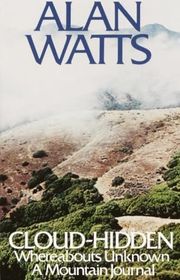
Cloud-Hidden, Whereabouts Unknown
For readers who want Watts in a more exploratory, personal essay form. The mountain-journal setting gives his reflections on nature and awareness room to wander, though the loose structure offers fewer sustained explanations than his major introductions.
What it's about
Watts gathers essays in the form of a mountain journal written during a retreat near Mount Tamalpais. Reflections on nature, ecology, aesthetics, religion and metaphysics explore his interest in living with experience rather than continually analyzing it.

For readers curious about the person and experiences behind Watts's ideas. His autobiography connects intellectual development with encounters and cultural change, though the self-portrait is selective and offers less distance than an independent biography.
What it's about
Alan Watts recounts his spiritual and philosophical development from an English childhood to life as an unconventional teacher. His autobiography combines reflections on religion with encounters, cultural observations, and stories of the experiences that shaped his thinking.

Nature, Man and Woman
For readers interested in how Watts connects nature, the body and relationships. The book develops his resistance to familiar Western divisions, though its gender assumptions and broad cultural comparisons reflect the period in which it was written.
What it's about
Alan Watts draws on Taoism to question divisions between humanity and nature, mind and body, and self and others. He examines how Western assumptions affect emotion, sexuality, and relationships, proposing a more integrated understanding of existence.

For readers who enjoy the conversational energy of Watts's talks. The lecture-derived teachings make recurring ideas about identity and interdependence approachable, though the repetition and loose progression are less concise than a book written as one argument.
What it's about
Drawn from Alan Watts's lectures, these six teachings question conventional ideas about the self and rational thought. He explores interdependence, uncertainty, and spiritual traditions, inviting readers to reconsider their relationship with the world and their own experience.

For readers drawn to Taoism and the image of working with nature rather than forcing it. Watts's final work, completed by Al Chung-liang Huang, offers an inviting interpretation, though its scope is selective rather than encyclopedic.
What it's about
Alan Watts introduces Taoist philosophy through ancient and modern sources, attending to the Chinese language as well as its ideas. His final work explores this tradition's view of existence and offers Western readers an account of its thought.

For readers interested in the philosophical language of altered consciousness and the counterculture. Watts gives his subjective experiences a vivid reflective form, though the personal account should not be mistaken for a scientific study of psychedelics.
What it's about
Alan Watts recounts experiences of altered consciousness associated with LSD, mescaline, and psilocybin. Combining personal observation with philosophical reflection, he explores perception, identity, and the insights he believes these experiences can offer into humanity's relationship with existence.
Also recommended by
1 person Ed Cooke recommended this book
Ed Cooke
"Well worth the read." - Ed Cooke
Ed Cooke's recommendation of this book
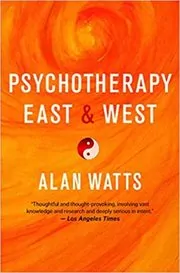
Psychotherapy East & West
For readers interested in how Watts compares psychological adjustment with spiritual liberation. The book questions assumptions about selfhood and social normality, though its historical synthesis is philosophical and should not be read as current psychotherapy instruction.
What it's about
Alan Watts compares Western psychotherapy with Eastern traditions including Buddhism, Taoism, Vedanta, and yoga. He asks whether adapting to social expectations is enough, or whether genuine liberation requires rethinking the relationship between the individual and the world.
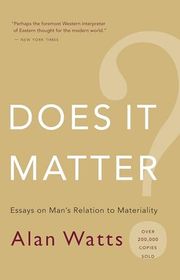
Does It Matter?
For readers interested in the ecological and material implications of Watts's philosophy. The essays connect everyday values with dependence on the environment, though the cultural critique and examples belong to their late-1960s setting rather than current environmental policy.
What it's about
Watts examines humanity's relationship with material life and the environment. Essays question the substitution of money, symbols and abstractions for direct experience, exploring how habits of thought affect people's awareness of nature and their dependence on the world around them.

For readers who want a gentle, discursive introduction to meditation through Watts's voice. Mark Watts's compilation connects awareness with questions about identity, though the assembled format provides less of a progressive practice course than the subtitle might suggest.
What it's about
Compiled by Mark Watts from his father's journals and recorded lectures, this introduction explores the philosophy and practice of meditation. Alan Watts considers identity, contemplative exercises, and the ways that awareness and inner understanding can develop.

The Meaning of Happiness
The Quest for Freedom of the Spirit in Modern Psychology and the Wisdom of the East
For readers interested in Watts's early attempt to connect psychology with spiritual traditions. The argument makes acceptance central to happiness, though the older psychological vocabulary and broad synthesis can feel less direct than The Wisdom of Insecurity.
What it's about
Alan Watts argues that happiness depends on accepting life's contradictions rather than acquiring particular things or achievements. Drawing on Eastern philosophy, Western mysticism, and psychology, he explores acceptance of the surrounding world and one's inner life.
Sources
- 1
Alan Watts' 7 best books on philosophy and life
bigthink.com
- 2
10 Best Alan Watts Books That Will Change Your Life
nerdycreator.com
- 3
Books and Articles
alanwatts.org
- 4
Books by Alan W. Watts
goodreads.com
- 5
10 Best Alan Watts Books ([year]) That You Must Read!
ereads.com
- 6
Which is the best book to read first?
reddit.com
- 7
Any recommendations on Alan Watts books I should read next?
reddit.com
- 8
Alan Watts
penguinrandomhouse.com






Edited by
Software engineer whose passion for tracking book recommendations from podcasts inspired the creation of MRB.
Lead investor at 3one4 Capital whose startup expertise and love for books helped shape MRB and its growth.
Comments
Spotted a missing book, a wrong order or a mistake? Tell us and we'll fix this page.
We're a reading guide, not the author or publisher, so we can't send books or pass on messages.