
15 Best Aldous Huxley Books
The best Aldous Huxley books, ranked by how many expert sources recommend each one, with notes on who each book suits and where to start reading.
Our take
Aldous Huxley wrote about the distance between what people believe and how they live. His early novels turn that gap into social comedy, filling country houses and London rooms with artists, thinkers, and uneasy lovers. Later books ask larger questions about freedom, attention, violence, and whether people can change the habits that keep them unhappy.
Brave New World is the natural starting point if you’re interested in society and technology. Island offers a useful companion, imagining institutions meant to support a more attentive life. If you prefer comedy, try Crome Yellow before the larger cast of Point Counter Point. For the spiritual side, The Perennial Philosophy presents his argument directly, while The Doors of Perception and Heaven and Hell approaches perception through personal experience and art. These are books of ideas, so expect conversation and reflection to matter as much as plot. Begin with the question that interests you most.
15 books · 8 sources · Last updated
As an Amazon Associate, we earn from qualifying purchases (at no extra cost to you).
Reading Aldous Huxley in order? See all Aldous Huxley books in order
How to choose from this list
Skip to the full rankingIf you’re new to Huxley: Brave New World → Island
If you want social comedy: Crome Yellow → Point Counter Point
If you want spiritual ideas: The Perennial Philosophy → The Doors of Perception and Heaven and Hell
If you want political analysis: Brave New World → Brave New World Revisited
If you want historical nonfiction: The Devils of Loudun
The 15 books, ranked
Ranked by how many expert sources name each book. Ties go to the book more people recommend.
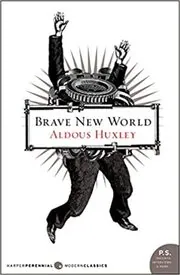
Brave New World
For readers who want Huxley’s clearest fictional warning about social control through comfort. Its imagined institutions make abstract questions tangible, though the long explanations and dated assumptions can interrupt the story.
What it's about
In the World State, people are engineered, conditioned, and kept docile by pleasure. Huxley's classic dystopia follows a few uneasy outsiders as they discover the human cost of a perfectly managed society.
Also recommended by
10 people Jordan Peterson recommended this book
Jordan Peterson
Recommended on Jordan Peterson's website.
Jordan Peterson's recommendation of this book  Yuval Noah Harari recommended this book
Yuval Noah Harari
"The best science fiction book ever, definitely the most prescient." - Yuval Noah Harari
Yuval Noah Harari's recommendation of this book  Tristan Harris recommended this book
Tristan Harris
"Slightly older and less well known [than 1984] but equally chilling vision." - Tristan Harris
Tristan Harris's recommendation of this book  Matt Mullenweg recommended this book
Matt Mullenweg
Matt Mullenweg mentioned this book on "The Tim Ferriss Show" podcast.
Matt Mullenweg's recommendation of this book  Stewart Brand recommended this book
Stewart Brand
Stewart Brand recommended this book on his "Selected Books for the Manual for Civilization" blog post.
Stewart Brand's recommendation of this book  Sam Altman recommended this book
Sam Altman
This book was on Sam Altman's bookshelf.
Sam Altman's recommendation of this book +4
More recommendations
- Christopher Hitchens
"In [this book], one can often detect strong hints of a vicarious approval of what is ostensibly being satirized." - Christopher Hitchens
- Sahil Lavingia
Sahil Lavingia recommended this book on Notion.
- Winston Churchill
One of Winston Churchill's favorite books.
- PewDiePie
"I love this book. I think it's a masterpiece." - PewDiePie
- Christopher Hitchens
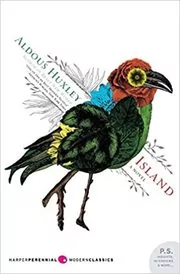
Island
For readers who want to see Huxley imagine a workable alternative to his dystopia. Its practical interest in education and attention gives it a hopeful purpose, though dialogue often becomes an extended lesson.
What it's about
Shipwrecked journalist Will Farnaby lands on Pala, an island that has built a humane society by blending science, mindfulness, and practical politics. As outside pressures close in, Huxley tests whether a good society can survive the real world.
Also recommended by
2 people- Jordan Peterson recommended this book
Jordan Peterson
Recommended on Jordan Peterson's website.
Jordan Peterson's recommendation of this book  Aubrey Marcus recommended this book
Aubrey Marcus
"The beauty of [this book] was seeing how a system could work en masse, and it was my first exposure to rewriting the rules of how everything could be and understanding that we can just change everything." - Aubrey Marcus
Aubrey Marcus's recommendation of this book
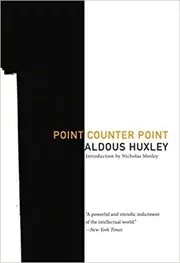
Point Counter Point
For readers who enjoy a large social novel driven by arguments and contrasting lives. Its interwoven structure gives competing beliefs room to collide, though the crowded cast and limited narrative momentum require patience.
What it's about
A large cast of artists, thinkers, lovers, and opportunists collide in this sharp London satire. The book trades a single plot for clashing voices, making modern life feel like an argument set to music.
Also recommended by
1 person- Jordan Peterson recommended this book
Jordan Peterson
Recommended on Jordan Peterson's website.
Jordan Peterson's recommendation of this book
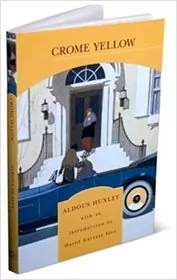
Crome Yellow
For newcomers who want Huxley’s social comedy in a shorter novel. The country-house conversations introduce his satirical eye without a vast cast, though readers looking for a strong plot may find little forward movement.
What it's about
Young poet Denis Stone spends a weekend at an English country house full of talkative, eccentric guests. Huxley uses the house party to skewer fashion, intellect, and romantic self-delusion.
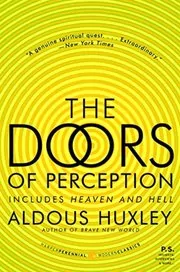
The Doors of Perception and Heaven and Hell
For readers curious about Huxley’s account of altered perception and its connections with art. These essays offer a compact entry to his later concerns, but the personal interpretations should not be mistaken for scientific evidence.
What it's about
These paired essays begin with Huxley's mescaline experiment and widen into a meditation on art, mysticism, and altered consciousness. Together they ask how much of reality the ordinary mind leaves out.
Also recommended by
4 people Dr. Andrew Weil recommended this book
Dr. Andrew Weil
"Came first [in terms of my interests]." - Dr. Andrew Weil
Dr. Andrew Weil's recommendation of this book  Michael Pollan recommended this book
Michael Pollan
"A very famous book about what were not then known as psychedelics." - Michael Pollan
Michael Pollan's recommendation of this book  Ryan Shea recommended this book
Ryan Shea
Ryan Shea recommended this book on his website.
Ryan Shea's recommendation of this book  Douglas Murray recommended this book
Douglas Murray
"About something really interesting and dangerous." - Douglas Murray
Douglas Murray's recommendation of this book

Antic Hay
For readers who enjoy restless urban satire rather than country-house conversation. Its drifting artists and intellectuals give Huxley’s comedy a broader London setting, though the aimless characters can make the novel feel emotionally cold.
What it's about
After the First World War, Theodore Gumbril drifts through London chasing love, reinvention, and absurd schemes. It is funny on the surface and quietly bleak about a culture that has lost its center.
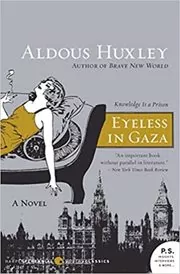
For readers interested in the connection between private regret and ethical change. Its shifts through time make the search for meaning feel unsettled, though the disrupted chronology takes more work than his earlier satires.
What it's about
Told out of order, this novel follows Anthony Beavis from childhood through disillusionment toward a search for meaning. Love affairs, grief, and politics all feed its restless inner life.
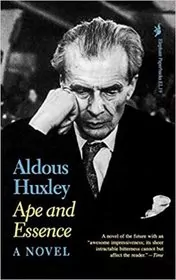
Ape and Essence
For readers who want a harsher dystopia after Brave New World. The screenplay form gives its attack on war and collective cruelty a different shape, though the bleakness and unusual framing can be distancing.
What it's about
A century after global catastrophe, a New Zealand expedition finds a brutal society living among the ruins of California. Huxley turns post-apocalyptic fiction into a savage satire of war and dehumanization.

Brave New World Revisited
For readers who have finished Brave New World and want Huxley’s direct political analysis. The essay format makes his concerns explicit, though its demographic assumptions and examples belong to the mid-twentieth century.
What it's about
More than two decades after his novel, Huxley returned to its warnings in nonfiction form. He examines propaganda, overpopulation, distraction, and chemical persuasion in the real world.
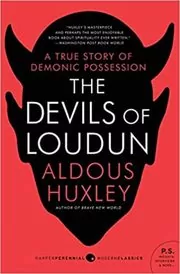
The Devils of Loudun
For readers who prefer historical events to fictional societies. Its examination of religious accusation and political advantage gives Huxley’s concerns a concrete setting, though substantial philosophical digressions make it more than a straightforward history.
What it's about
Huxley reconstructs the 1630s Loudun possession case, where hysteria, religion, and state power destroy a priest named Urbain Grandier. It reads like history, but feels uncomfortably current.
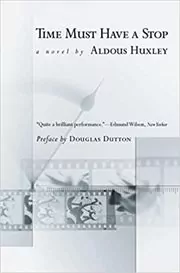
Time Must Have a Stop
For readers who want a coming-of-age novel that reaches into spiritual questions. Its movement between worldly pleasure and reflection bridges Huxley’s two interests, though the metaphysical passages can feel separate from the human drama.
What it's about
Seventeen-year-old Sebastian Barnack is pulled between appetite, art, family pressure, and spiritual questions. Set partly in Florence, the novel turns a coming-of-age story into a philosophical search.
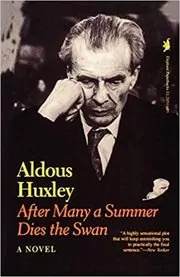
After Many a Summer Dies the Swan
For readers drawn to grotesque satire about wealth and the fear of death. The Californian setting gives Huxley’s social criticism a different target, though long philosophical conversations slow the sharper comic passages.
What it's about
Hollywood millionaire Jo Stoyte is terrified of death and willing to chase immortality at any cost. Huxley turns that fear into a dark California satire about money, appetite, and decay.
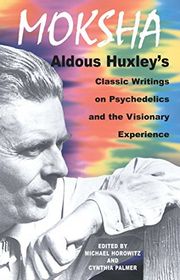
Moksha
For readers who want more of Huxley’s thinking after The Doors of Perception and Heaven and Hell. The varied documents show ideas developing over time, though this collected material lacks a single continuous argument.
What it's about
This posthumous collection brings together Huxley’s essays, letters, and other writings on psychedelics and visionary experience. It traces his interest in perception, spiritual life, and the possible place of altered consciousness in wider society.
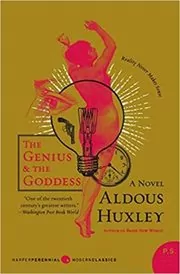
For readers who want an intimate, brief novel rather than a broad social panorama. Its retrospective voice brings questions of guilt close to home, though the characters still spend considerable time debating ideas.
What it's about
John Rivers looks back on his time as assistant to a brilliant physicist and his growing attraction to the scientist's wife, Katy. The novel is brief, intimate, and haunted by guilt.
The Perennial Philosophy
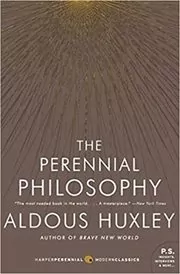
For readers who want Huxley’s spiritual ideas stated directly through texts and commentary. Its thematic arrangement makes comparison easy, though the argument for shared truths can flatten differences between religious traditions.
What it's about
Huxley gathers passages from many religious traditions to argue that mystics keep arriving at similar truths. It is part anthology, part commentary, and a key book for his spiritual side.
Sources
- 1
Aldous Huxley books you need to read
indianexpress.com
- 2
Aldous Huxley Books in Order, and Which to Read First
lisanneswart.com
- 3
The greatest books written by Aldous Huxley
thegreatestbooks.org
- 4
Essential Aldous Huxley Books
theportalist.com
- 5
Ranking Author Aldous Huxley's Best Books (A Bibliography Countdown) - Book Scrolling
bookscrolling.com
- 6
Which Aldous Huxley Book Should I Read Next?
reddit.com
- 7
Aldous Huxley Books
goodreads.com
- 8
Books by Aldous Huxley - Five Books Expert Recommendations
fivebooks.com




Edited by
Software engineer whose passion for tracking book recommendations from podcasts inspired the creation of MRB.
Lead investor at 3one4 Capital whose startup expertise and love for books helped shape MRB and its growth.
Comments
Spotted a missing book, a wrong order or a mistake? Tell us and we'll fix this page.
We're a reading guide, not the author or publisher, so we can't send books or pass on messages.