
15 Best Chess Books
The best chess books, ranked by how many expert sources recommend each one, with notes to help beginners, club players and stronger competitors choose.
Our take
Chess books help with different problems: recognizing tactics, forming a plan, converting an endgame or understanding how strong players think. The most useful choice depends on what you can already do over the board. A famous advanced manual can be excellent and still be the wrong starting point. These books range from accessible explanations of complete games to collections and exercises that demand substantial playing experience.
If you know the rules but often wonder why a move was played, begin with Logical Chess. Chess Fundamentals connects basic principles across the game’s phases, while How to Reassess Your Chess gives club players a language for planning. Silman’s Complete Endgame Course lets you study endings progressively before attempting Dvoretsky’s Endgame Manual. For inspiration and deeper analysis, explore My 60 Memorable Games, Life & Games of Mikhail Tal or Zurich International Chess Tournament, 1953. Pick the gap that appears most often in your own games, then work through positions on a board rather than only reading the commentary.
15 books · 8 sources · Last updated
As an Amazon Associate, we earn from qualifying purchases (at no extra cost to you).
How to choose from this list
Skip to the full rankingIf you know the rules and want explanations: Logical Chess → Chess Fundamentals
If you want to improve positional planning: How to Reassess Your Chess → My System
If you want to study endgames progressively: Silman's Complete Endgame Course → Endgame Strategy → Dvoretsky's Endgame Manual
If you want annotated games: My 60 Memorable Games → Zurich International Chess Tournament, 1953
If you want to examine your thinking: Think Like a Grandmaster → The Seven Deadly Chess Sins
If you want demanding strategic exercises: Grandmaster Preparation
The 15 books, ranked
Ranked by how many expert sources name each book. Ties go to the book more people recommend.

My System
For club players who want a vocabulary for positional ideas such as blockade and overprotection. Its coherent strategic framework makes plans easier to discuss, though the older prose and dogmatic formulations need thoughtful interpretation.
What it's about
Aron Nimzowitsch presents his approach to chess strategy, examining pawn structures, central control, open files, blockade, and overprotection. Annotated games illustrate how these ideas work together, connecting the treatment of individual positional elements with a coherent plan.

Zurich International Chess Tournament, 1953
For club players who want to understand middlegame plans through a whole tournament. Its explanations connect individual moves with positional ideas, though the large collection and complex games can overwhelm readers still learning basic tactics.
What it's about
David Bronstein records and annotates the games of the 1953 Zurich international tournament. His explanations explore the players' strategic choices and middlegame plans, turning the event's competitive record into a study of how leading players approach difficult positions.

For improving players who want to study a champion’s decisions through his own explanations. The inclusion of mistakes and difficult games adds honesty, though the variations require a board and more concentration than a beginner’s lesson.
What it's about
Bobby Fischer annotates sixty of his games, explaining strategic plans, tactical decisions, and the psychological struggle across the board. His commentary includes victories, draws, and defeats, allowing readers to follow both his insights and his critical assessment of mistakes.
Also recommended by
1 person Adam Robinson recommended this book
Adam Robinson
"I played over these games every night, these 60 games." - Adam Robinson
Adam Robinson's recommendation of this book

For players who know the rules but want the reasons behind ordinary moves. Its repeated explanations make complete games approachable, though stronger players will find some advice simplified and should check disputed analysis critically.
What it's about
Irving Chernev annotates thirty-three complete chess games, explaining the reason behind every move. Following each game from start to finish gives readers a practical view of piece placement, planning, and the choices that shape effective play.
Also recommended by
1 person Dan Heisman recommended this book
Dan Heisman
"A classic which explains each move in excruciating detail!" - Dan Heisman
Dan Heisman's recommendation of this book

Silman's Complete Endgame Course
For players who want endgame study matched to their present strength. The organization helps you focus on useful material without learning everything at once, though it is less exhaustive than an advanced technical manual.
What it's about
Jeremy Silman organizes endgame instruction according to players' levels of experience. Beginning with basic mates and progressing to advanced concepts, the course builds an understanding of essential positions, techniques, and the strategic ideas behind successful endgame play.
Also recommended by
1 person- Dan Heisman recommended this book
Dan Heisman
"Great book." - Dan Heisman
Dan Heisman's recommendation of this book
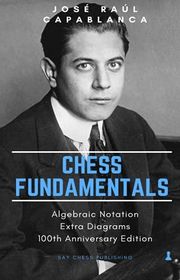
Chess Fundamentals
For players who want a compact foundation that connects endings, middlegames and openings. Capablanca’s clear positions emphasize sound judgment, though the concise explanations and older notation in some editions require careful study with a board.
What it's about
Capablanca explains basic chess principles through endgame positions, strategic examples and annotated games. The book connects piece activity, planning and technique across the game’s phases, showing how small advantages can be created and converted into wins.

Dvoretsky's Endgame Manual
For serious tournament players ready to work deeply on technical endings. Its precise positions and demanding exercises reward disciplined study, though it is much denser than a first endgame course and unsuitable for casual browsing.
What it's about
This chess manual studies essential endgame positions and the reasoning behind correct play. Mark Dvoretsky moves from elementary pawn endings to more demanding rook and queen positions, using detailed analysis to build understanding of the game’s final phase.

Life & Games of Mikhail Tal
For readers who want a player’s personality alongside imaginative attacking chess. Tal’s conversational recollections make the collection enjoyable beyond instruction, though understanding why the combinations work still takes patient analysis rather than admiration alone.
What it's about
Mikhail Tal combines recollections of his chess career with analysis of his games. Conversational accounts of competition and personal experience accompany annotated encounters, revealing the imagination, risks, and attacking ideas behind the former world champion’s distinctive play.

For club players who see reasonable moves but lack a plan. Its language of imbalances offers a practical way to evaluate positions, though applying the framework well still depends on accurate calculation and tactical awareness.
What it's about
Jeremy Silman teaches positional judgment through his concept of chess imbalances. Examples and explanations show how differences within a position can guide planning, while a section on chess psychology examines mental and emotional obstacles to effective play.
Also recommended by
1 person- Dan Heisman recommended this book
Dan Heisman
"How to use imblances to figure out what to do." - Dan Heisman
Dan Heisman's recommendation of this book

The Seven Deadly Chess Sins
For experienced players who recognize recurring mistakes that knowledge alone has not fixed. Its psychological approach encourages reflection on decision-making, though the ideas require honest work on your own games rather than memorizing rules.
What it's about
Jonathan Rowson investigates the psychological habits behind avoidable chess mistakes. Through seven recurring pitfalls, including perfectionism, egoism, and excessive concern with results, he explores why players lose their way and how they can recognize warning signs.
Also recommended by
1 person- Dan Heisman recommended this book
Dan Heisman
"A book on thinking - psychological aspects - avoiding time trouble, etc." - Dan Heisman
Dan Heisman's recommendation of this book

For experienced readers interested in how championship styles and ideas developed across generations. The combination of history and detailed analysis provides unusual breadth, though the five-volume commitment and long variations demand considerable time.
What it's about
This five-part collection follows Garry Kasparov’s study of the world champions who preceded him. Combining historical accounts with extensively annotated games, it traces their achievements, contrasting styles, and contributions to the evolution of modern chess.

Think Like a Grandmaster
For players who want a more disciplined approach to choosing candidate moves and calculating variations. Its analytical framework gives training a clear focus, though real thinking is less orderly than the method can suggest.
What it's about
Alexander Kotov examines the thinking and preparation behind strong chess play. He explains selecting candidate moves, organizing a tree of analysis, and deciding when to calculate, offering a training framework based on his experiences as a player and Soviet coach.

Endgame Strategy
For players who know basic endgame theory but struggle to form a practical plan. Its game-based explanations connect technique with strategic judgment, though it does not replace a reference for exact theoretical positions.
What it's about
Mikhail Shereshevsky explains strategic principles for handling chess endgames through examples from actual play. He focuses on understanding positions and forming plans, helping players connect practical decisions with the broader ideas that guide play after the middlegame.

For ambitious tournament players who need challenging strategic exercises rather than introductory principles. Its difficult positions expose weaknesses in judgment, though the training is frustrating without a strong foundation and time for sustained analysis.
What it's about
Jacob Aagaard uses challenging games and exercises to develop strategic thinking in complex chess positions. Aimed at ambitious players, the book asks readers to go beyond familiar patterns, calculation, and routine positional analysis when choosing a course of play.

Play Like a Grandmaster
For readers already familiar with Kotov’s approach who want to extend their study of strong play. Its instructional examples complement the earlier book, though the older presentation and assumed experience make it less suitable as an introduction.
What it's about
Alexander Kotov continues his exploration of chess mastery in this sequel to Think Like a Grandmaster. Drawing on his experience as a player and trainer, he examines elements of strong play through methodical instruction, examples, and observations from competitive chess.
Sources
- 1
The Top 10 Chess Books Every Chess Player Should Read
chess.com
- 2
Grandmaster recommended Chess Books
listudy.org
- 3
New to chess booklist
englishchess.org.uk
- 4
Best Chess Books
goodreads.com
- 5
Which book should I get?
reddit.com
- 6
The best chess books, ranked by level
chesspert.com
- 7
The 20 Chess Books That Helped Me To Become a Grandmaster
rafaelleitao.com
- 8
which are the most complete chess books that you or GMs recomend?
reddit.com








Edited by
Software engineer whose passion for tracking book recommendations from podcasts inspired the creation of MRB.
Lead investor at 3one4 Capital whose startup expertise and love for books helped shape MRB and its growth.
Comments
Spotted a missing book, a wrong order or a mistake? Tell us and we'll fix this page.
We're a reading guide, not the author or publisher, so we can't send books or pass on messages.