
10 Best Options Books
The best options books, ranked by how many expert sources recommend each, with notes for beginners, strategy readers, and students of pricing and volatility.
Our take
Options books explain contracts whose behavior depends on more than the direction of a market. Time, volatility, and the structure of a position all affect what the reader needs to understand. Some books introduce calls, puts, and common combinations; others assume that knowledge and move into pricing, hedging, or evaluating trading decisions. A useful starting point matches your comfort with both the terminology and the mathematics.
Options Trading For Dummies offers a broad introduction, while The Options Playbook organizes individual setups for comparison. Options as a Strategic Investment provides a much larger reference. To understand changing exposures, turn to Trading Options Greeks, then consider Option Volatility and Pricing for deeper study. Dynamic Hedging and Positional Option Trading assume a more experienced reader. Start with contract mechanics before using advanced strategy references, and distinguish a book’s explanation of possible outcomes from any promise that a trade will produce them.
10 books · 9 sources · Last updated
As an Amazon Associate, we earn from qualifying purchases (at no extra cost to you).
How to choose from this list
Skip to the full rankingIf you’re new to options: Options Trading For Dummies → The Options Playbook
If you want a broad strategy reference: Options as a Strategic Investment
If you want to understand changing exposures: Trading Options Greeks → Option Volatility and Pricing
If you want a derivatives textbook: Fundamentals of Futures and Options Markets
If you want advanced position analysis: Positional Option Trading → Dynamic Hedging
If you want a portfolio operating framework: The Option Trader's Hedge Fund
The 10 books, ranked
Ranked by how many expert sources name each book. Ties go to the book more people recommend.

For readers who already know basic contracts and want pricing, volatility, and hedging connected in one framework. The practical explanations bridge models and position behavior, though the technical detail demands sustained study rather than quick strategy browsing.
What it's about
Sheldon Natenberg connects option pricing theory with the practical decisions traders face. The book explains volatility, pricing models, hedging, arbitrage, and risk management, showing how these concepts inform the construction and evaluation of advanced option trading strategies.

Options as a Strategic Investment
For readers who want a substantial reference covering many ways to structure option positions. Its breadth makes it useful for comparison and lookup, though the length and assumed familiarity make it a demanding first introduction.
What it's about
Lawrence McMillan examines option strategies for readers already familiar with the market's basics. This reference explains how different positions work and when they may be used, including applications of index options and futures to portfolio management and downside protection.

Trading Options Greeks
How Time, Volatility, and Other Pricing Factors Drive Profits
For readers who understand basic positions but struggle to explain how their exposures change. Its focus on the Greeks makes price sensitivities more concrete, though the examples require numerical attention and do not remove trading uncertainty.
What it's about
Dan Passarelli explains delta, gamma, theta, vega, and rho as tools for understanding option prices and trading decisions. This second edition connects the Greeks with time, volatility, and other pricing factors, helping traders evaluate how positions respond to changing conditions.

Options Trading For Dummies
For beginners who want plain-language explanations before approaching a specialist volatility text. The broad coverage gives common strategies context, though learning the vocabulary is only a first step toward understanding a position’s changing risks.
What it's about
Joe Duarte introduces options contracts and strategies, explaining how to compare their costs, risks, and potential benefits. The guide covers equity, index, and ETF options alongside market analysis, helping readers understand how different positions fit into a broader investing approach.

The Options Playbook
Featuring 40 Strategies for Bulls, Bears, Rookies, All-Stars and Everyone in Between
For readers who prefer a visual reference organized around individual option setups. The consistent format makes strategies easier to compare, though a payoff diagram alone cannot capture execution costs, liquidity, or how exposures evolve before expiration.
What it's about
Brian Overby explains forty option strategies through a playbook format organized around setup, market conditions, trader experience, and risk. Introductory material covers basic concepts and common beginner mistakes, while individual plays describe the costs and purposes of different positions.

Options Trading Crash Course
The #1 Beginner's Guide to Make Money with Trading Options in 7 Days or Less!
For newcomers who want a short orientation to terminology and basic trade types. The concise format is approachable, though the title’s rapid-profit framing should not be mistaken for a reliable timetable or a guarantee of returns.
What it's about
Frank Richmond introduces options trading for beginners, explaining market terminology, trade types, and the calculations involved in evaluating opportunities. The guide focuses on understanding basic principles and considering risk when choosing positions, using a concise introductory approach.

The Option Trader's Hedge Fund
A Business Framework for Trading Equity and Index Options
For experienced readers interested in organizing option selling as a repeatable operating process. Its insurance-business analogy gives the portfolio framework coherence, though collecting premiums still involves substantial loss exposure and requires more than routine execution.
What it's about
Dennis Chen and Mark Sebastian propose treating an options portfolio as a business modeled on an insurance company. Their framework centers on selling options, connecting income strategies with the operational decisions and risk management needed to run a trading portfolio.
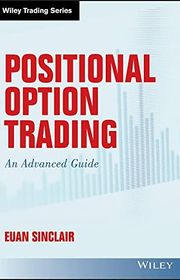
Positional Option Trading: An Advanced Guide
For experienced readers who want to question whether a proposed options position has a defensible edge. The quantitative focus sharpens strategy evaluation, though probability and volatility concepts make it unsuitable as an introduction to basic contracts.
What it's about
Euan Sinclair examines how experienced options traders can evaluate opportunities, construct positions, and manage risk. The guide connects probability, volatility, and market behavior with decisions about selecting trades and assessing whether an apparent advantage is meaningful.

For mathematically prepared readers who want a practitioner’s account of managing changing derivative exposures. The focus on hedging problems goes beyond static payoff diagrams, though the density and professional assumptions make it a difficult starting point.
What it's about
Nassim Nicholas Taleb provides a practical reference for professional traders managing ordinary and exotic options. He examines hedging, arbitrage, and forms of market risk, using trading examples, tools, and risk-management rules to connect theory with practice.
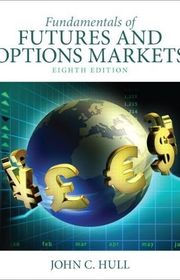
Fundamentals of Futures and Options Markets
For students who want a structured introduction to derivatives before specializing in options strategies. Hull connects contracts, pricing, and hedging through textbook explanations, though this older edition needs comparison with current course requirements and market conventions.
What it's about
John Hull introduces futures, options, and other derivative contracts through market mechanics, pricing ideas, and hedging examples. The textbook connects how contracts are traded with the financial reasoning used to understand their values and risks.
Sources
- 1
The 6 Best Books on Becoming an Options Trader
investopedia.com
- 2
Best Options Trading Books
benzinga.com
- 3
The 10 Best Books on Options Trading
wealthfit.com
- 4
Options Trading Books
goodreads.com
- 5
Are there 3 top books group recommends for option trading
reddit.com
- 6
10 Best Books for Option Trading
zmtacademy.com
- 7
Citations and Additional Reading
support.spotgamma.com
- 8
The Best Books on Selling Options, and What Each One Is For
premiumtracker.com
- 9
Options Trading Books
wallstreetmojo.com


Edited by
Software engineer whose passion for tracking book recommendations from podcasts inspired the creation of MRB.
Lead investor at 3one4 Capital whose startup expertise and love for books helped shape MRB and its growth.
Comments
Spotted a missing book, a wrong order or a mistake? Tell us and we'll fix this page.
We're a reading guide, not the author or publisher, so we can't send books or pass on messages.