
14 Best Oil Painting Books
The best oil painting books, ranked by how many expert sources recommend each, with notes on skill level, teaching style, and where to begin practicing.
Our take
Oil painting asks you to learn both how paint behaves and how to see a subject clearly. A useful book might explain materials and brush control, develop your sense of color and value, or help you understand why a painting has stopped working. Those are different needs, so the right guide depends on what happens when you sit down at the easel.
The Oil Painting Course You've Always Wanted offers a sequence of exercises, while Daily Painting concentrates on making regular practice manageable. The Elements of Landscape Oil Painting breaks natural subjects into specific challenges. For broader observation and technique, Alla Prima II rewards slower study. Problem Solving for Oil Painters is useful once you have work to assess, and Color and Light helps explain visual effects across media. Start with a structured beginner course if handling paint is still unfamiliar, then add a specialist reference as your questions become more specific.
14 books · 6 sources · Last updated
As an Amazon Associate, we earn from qualifying purchases (at no extra cost to you).
How to choose from this list
Skip to the full rankingIf you're new to oil painting: The Oil Painting Course You've Always Wanted
If you need a regular practice habit: Daily Painting → Think Big Paint Small
If you want to paint landscapes: The Elements of Landscape Oil Painting → Landscape Painting
If you want to understand color: Color and Light
If you need to diagnose weak paintings: Problem Solving for Oil Painters
If you're ready for deeper representational study: Alla Prima II → Traditional Oil Painting
The 14 books, ranked
Ranked by how many expert sources name each book. Ties go to the book more people recommend.

For painters ready to examine the decisions behind representational work. Its attention to observation, color, and technique rewards repeated study, though it asks for more independent practice than a beginner's sequence of projects.
What it's about
Richard Schmid expands his original instruction in representational painting with revised explanations, additional images, and step-by-step sequences. The enlarged treatment, including a more extensive discussion of color, combines technical knowledge with reflections on artistic practice and the painter's choices.

For painters who want to understand why colors change under different lighting. Its illustrated explanations connect visual principles with observation more deeply than a mixing recipe book, though it covers several media rather than teaching oil handling.
What it's about
James Gurney connects artistic observation with explanations of color and light for realist painters. Illustrated discussions examine how illumination reveals form, how pigments behave, and how atmospheric effects influence a scene, helping artists translate visual experience into painting.

Daily Painting
Paint Small and Often To Become a More Creative, Productive, and Successful Artist
For painters who struggle to practice consistently or finish large projects. Its emphasis on small, frequent works makes experimentation manageable, though the material on selling and posting art may be less useful if you paint only for yourself.
What it's about
Carol Marine encourages artists to make small works regularly as a way to experiment and overcome creative blocks. Lessons address composition, value, subject selection, and working habits, alongside practical guidance on photographing, posting, and selling artwork online.

Landscape Painting
Essential Concepts and Techniques for Plein Air and Studio Practice
For landscape painters who need to simplify complex outdoor scenes into strong shapes and value patterns. Its emphasis on selection and composition complements element-by-element instruction, though it is less useful for painters focused on portraits or figures.
What it's about
Mitchell Albala explains how landscape painters translate complex natural scenes into organized pictures. His guidance connects simplified shapes and value patterns with color and light, addressing practical challenges that arise while painting outdoors and developing work in the studio.

The Elements of Landscape Oil Painting
Techniques for Rendering Sky, Terrain, Trees, and Water
For painters who need help translating particular landscape elements into paint. Its breakdown of skies, land, trees, and water gives concrete study targets, though working through individual elements is only part of learning to compose a complete scene.
What it's about
Suzanne Brooker breaks landscape oil painting into sky, terrain, trees, and water, developing each element through observation and technique. Demonstrations and examples support lessons in rendering, color mixing, and materials, helping painters translate natural scenes into convincing compositions.

The Oil Painting Course You've Always Wanted
Guided Lessons for Beginners and Experienced Artists
For beginners who like a planned sequence and experienced painters revisiting fundamentals. Its exercises connect brush control, mixing, and depth across several subjects, though progress depends on completing the practice rather than simply reading the lessons.
What it's about
Kathleen Staiger presents a sequence of oil painting lessons covering brush control, color mixing, and the illusion of depth. Exercises, diagrams, and demonstrations develop skills through still life, landscapes, and portraits, supporting both beginning painters and those revisiting fundamentals.

For painters working with very limited time or space who want to finish tiny studies. Its attention to scaling and presentation makes the small format practical, though techniques for miniature surfaces do not transfer unchanged to large canvases.
What it's about
Joyce Washor demonstrates oil painting on canvases measuring four inches or less. Still life and landscape projects explain scaling subjects, creating depth, and rendering shadows, highlights, and textures, while further advice addresses framing, displaying, and marketing small paintings.
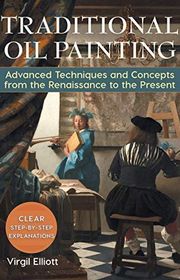
Traditional Oil Painting
For painters drawn to established representational methods and the reasoning behind them. Its discussion of drawing, materials, and technique provides a broader foundation for classical work, though the detailed approach is less immediate than a project-based beginner guide.
What it's about
Virgil Elliott examines the materials, visual principles, and working methods of traditional oil painting. Discussions of drawing, color, portraiture, and historical technique connect the study of earlier painters with decisions artists make in their own work.

1,500 Color Mixing Recipes for Oil, Acrylic & Watercolor
Achieve Precise Color When Painting Landscapes, Portraits, Still Lifes, and More
For painters who want a quick reference when a mixture proves elusive. The indexed recipes make useful starting points across several media, though changing pigments, brands, and lighting means you still need to test and adjust.
What it's about
William Powell provides more than fifteen hundred color mixtures for oil, acrylic, and watercolor painting. An indexed recipe system connects subjects with measured combinations, supported by guidance on color theory, value, portrait tones, skies, and other practical mixing problems.

For painters who want to compare several artists' working methods. The range of approaches helps you see that similar subjects can be handled differently, though the multi-artist format is less cohesive than a single structured course.
What it's about
Cindy Salaski brings together instruction from ten oil painters on materials, observation, composition, color, and working methods. Lessons explore underpainting, layering, light, texture, and painting on location, with finished artworks illustrating the contributors' different techniques and approaches.

Painting for the Absolute and Utter Beginner
For complete beginners who need gradual exercises and reassurance about early results. Student examples make common difficulties easier to recognize, though the general painting foundations offer less depth on oil-specific materials than a dedicated medium reference.
What it's about
Claire Watson Garcia introduces representational painting through exercises on brush handling, paint consistency, color mixing, and dimension. Student artwork and commentary show beginners how others approached the same challenges as lessons build toward more demanding projects.

Painting with Oils
For painters who want an approachable overview with varied subjects. Its mix of demonstrations and practical advice encourages exploration, though readers seeking a deep course in one genre may prefer a more specialized book.
What it's about
David Howell introduces oil painting through practical advice and examples spanning landscapes, marine scenes, figures, and horses. Discussions of drawing, materials, composition, color, and light accompany demonstrations that encourage artists to experiment and develop their use of the medium.

Problem Solving for Oil Painters
Recognizing What's Gone Wrong and How to Make it Right
For painters whose work feels wrong but who struggle to identify why. Its focus on diagnosis helps connect individual corrections with the whole picture, though it is less suitable than a sequenced course for learning basic brush handling.
What it's about
Gregg Kreutz examines recurring problems that can weaken an oil painting and offers strategies for resolving them. His approach emphasizes underlying artistic principles, helping painters assess unsuccessful or stalled work and find practical ways to strengthen the painting's overall effect.

For painters who want an illustrated reference beside their materials. Its range of techniques and subjects makes it useful for looking things up, though the breadth leaves less space for sustained practice in any one method.
What it's about
Brian Gorst introduces oil painting materials, equipment, and methods for artists at different levels. Illustrated guidance examines paint application, form, color, and subject choices, connecting techniques such as glazing and impasto with practical work in portraiture, figures, and still life.
Sources




Edited by
Software engineer whose passion for tracking book recommendations from podcasts inspired the creation of MRB.
Lead investor at 3one4 Capital whose startup expertise and love for books helped shape MRB and its growth.
Comments
Spotted a missing book, a wrong order or a mistake? Tell us and we'll fix this page.
We're a reading guide, not the author or publisher, so we can't send books or pass on messages.