
17 Best Self Discipline Books
The best self-discipline books, ranked by how many expert sources recommend each one, with notes on reader fit, habits, focus, and where to start.
Our take
Self-discipline can mean beginning an avoided task, repeating a useful action, or keeping attention on demanding work. These problems overlap, but they do not always need the same response. A stronger routine may help more than another motivational speech, while perfectionism can make stricter demands counterproductive. The books here differ in how they explain the gap between an intention and what happens next.
Atomic Habits and Tiny Habits focus on making repeated actions easier. The Now Habit examines the pressures behind procrastination, while Deep Work concentrates on protecting attention. The Practicing Mind offers a patient approach to learning, and Discipline Equals Freedom takes a much more forceful motivational tone. Research-oriented books add another perspective, though older findings and broad theories deserve careful reading. Start with the difficulty you can name most clearly: a habit that never sticks, work you keep postponing, or time that disappears into distractions. Then choose one approach to apply consistently.
17 books · 7 sources · Last updated
As an Amazon Associate, we earn from qualifying purchases (at no extra cost to you).
How to choose from this list
Skip to the full rankingIf your new habits never stick: Tiny Habits → Atomic Habits
If pressure makes you procrastinate: The Now Habit
If distractions interrupt demanding work: Deep Work
If learning feels frustratingly slow: The Practicing Mind
If you want to understand temptation: The Willpower Instinct → The Marshmallow Test
If you respond to blunt motivational prompts: Discipline Equals Freedom
The 17 books, ranked
Ranked by how many expert sources name each book. Ties go to the book more people recommend.

For creative workers who repeatedly avoid starting work they value. Its blunt treatment of resistance can make procrastination easier to recognize, though the combative and spiritual language offers less analytical depth than the psychology-focused books.
What it's about
Pressfield names the inner enemy of creative work, Resistance, then breaks down how fear, procrastination, and self-sabotage keep people from doing what matters. It is short, blunt, and aimed at writers, artists, entrepreneurs, and anyone stuck at the starting line.
Also recommended by
16 people Joe Rogan recommended this book
Joe Rogan
"A great book about harnessing creativity." - Joe Rogan
Joe Rogan's recommendation of this book  Lex Fridman recommended this book
Lex Fridman
"Beautiful book." - Lex Fridman
Lex Fridman's recommendation of this book  Aubrey Marcus recommended this book
Aubrey Marcus
"One of the most influential books in my life." - Aubrey Marcus
Aubrey Marcus's recommendation of this book  Ryan Holiday recommended this book
Ryan Holiday
One of Ryan Holiday's 2 answers to "what book are you most likely to give out as a gift?"
Ryan Holiday's recommendation of this book  Seth Godin recommended this book
Seth Godin
Seth Godin mentioned this book on "The Tim Ferriss Show" podcast.
Seth Godin's recommendation of this book  Brian Koppelman recommended this book
Brian Koppelman
"Talks about resistance." - Brian Koppelman
Brian Koppelman's recommendation of this book +10
More recommendations
- Marie Forleo
"The essential no-bullshit guide for anyone who battles self-doubt or struggles to bring any important project to life." - Marie Forleo
- Daniel Pink
"I have [a little sign] on my desk here that says, 'Beat the resistance.' So, I’ve given [this book] out a lot too." - Daniel Pink
- Derek Sivers
"Are you a writer who doesn’t write, a painter who doesn’t paint, an entrepreneur who never starts a venture? Then you know what “Resistance” is. This book is about that. Read it." - Derek Sivers
- Soman Chainani
"Half drill sergeant, half Zen voodoo master, [the author] shot me out of my stupor and taught me the meaning of creative discipline." - Soman Chainani
- Russell Moore
"About showing up and not waiting for inspiration to hit." - Russell Moore
- Jen Sincero
"Read this thing if you want to blast past your fears and insecurities and resistance to being your biggest, badassiest self." - Jen Sincero
- Jodie Cook
"This book is a sharp reality check for every artist. It will help you become unblocked, right now and possibly forever." - Jodie Cook
- Danny Miranda
"Odds of re-reading: close to 100%." - Danny Miranda
- James Clear
"[One of] the 10 best nonfiction books of all-time." - James Clear
- Michael Hyatt
Michael Hyatt recommended this book on his website.
- Marie Forleo

For readers who want to understand recurring behavior before changing it. Its stories connect individual routines with organizations and wider patterns, though it spends less time on step-by-step personal implementation than a dedicated habit workbook.
What it's about
Charles Duhigg examines how habits form and change through scientific research and stories about individuals, companies, and social movements. He explains how recurring patterns influence behavior and how identifying them can help people reshape routines and organizations improve their practices.
Also recommended by
9 people Ray Dalio recommended this book
Ray Dalio
"Fantastic. I got [this book] and I gave it to everyone in my company." - Ray Dalio
Ray Dalio's recommendation of this book  Scott Adams recommended this book
Scott Adams
One of the books on Scott Adams' "Persuasion Reading List."
Scott Adams's recommendation of this book  Tim Ferriss recommended this book
Tim Ferriss
"A very good book." - Tim Ferriss
Tim Ferriss's recommendation of this book  Naval Ravikant recommended this book
Naval Ravikant
"Interesting, not because of its content necessarily, but because it’s good for me to always keep on top of mind how powerful my habits are." - Naval Ravikant
Naval Ravikant's recommendation of this book  Kelly Starrett recommended this book
Kelly Starrett
Kelly Starrett recommended this book in the "Tools of Titans" book.
Kelly Starrett's recommendation of this book  Mr. Money Mustache recommended this book
Mr. Money Mustache
Mr. Money Mustache recommended this book on his blog.
Mr. Money Mustache's recommendation of this book +3
More recommendations
- Max Levchin
"Compiles a bunch of great academic neuroscience and applied psychology research on habit formation." - Max Levchin
- Danny Miranda
"Great writing, interesting stories, and incredible insights on how to control your habits." - Danny Miranda
- Patrick Bet-David
Patrick Bet-David recommended this book on his website.
- Max Levchin

The Willpower Instinct
How Self-Control Works, Why It Matters, and What You Can Do to Get More of It
For readers who want to notice how stress, temptation, and competing goals affect their choices. Its experiments encourage active self-observation, though the broad research-based framework should not be mistaken for a personalized or guaranteed program.
What it's about
Kelly McGonigal examines self-control through psychology, neuroscience and the material from her Stanford course. She explains how temptation, stress and competing goals affect decisions, then offers exercises involving attention, habits and awareness of one's own responses.
Also recommended by
1 person Jane McGonigal recommended this book
Jane McGonigal
"The better book on will power."- Jane McGonigal
Jane McGonigal's recommendation of this book

For readers who need a simple reminder to track small choices consistently. Its emphasis on accumulation makes progress easier to picture, though the motivational success framing gives less detail on why particular habits resist change.
What it's about
Darren Hardy argues that small daily decisions accumulate into major changes over time. He offers a framework for tracking choices, replacing unhelpful habits, maintaining discipline, and building momentum toward goals in work, relationships, and personal life.

For readers interested in the influential research story behind modern willpower advice. Its examples make self-control questions accessible, though the central model of willpower as a depletable resource has faced substantial challenges from later replication studies.
What it's about
Roy Baumeister and John Tierney examine self-control through psychological research and personal stories. They develop the idea that willpower can be strengthened and depleted, applying their account to habits, decisions, and the practical challenges of pursuing long-term goals.
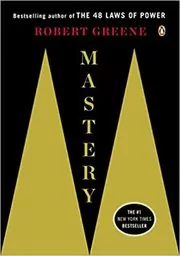
Mastery
For readers willing to think about discipline over an entire apprenticeship. Its biographical examples give long-term learning a larger context, though exceptional careers do not translate neatly into a daily routine for every reader.
What it's about
Greene looks at how masters in art, science, and business learned their craft over time. Using real-life stories and practical steps, he argues for apprenticeship, deliberate practice, and patience over quick hacks.
Also recommended by
8 people- Aubrey Marcus recommended this book
Aubrey Marcus
"The master work of a master author." - Aubrey Marcus
Aubrey Marcus's recommendation of this book - Ryan Holiday recommended this book
Ryan Holiday
"Read [this book] so that you can figure your life’s task and how to dedicate yourself to it." - Ryan Holiday
Ryan Holiday's recommendation of this book  Mark Hart recommended this book
Mark Hart
"An excellent book." - Mark Hart
Mark Hart's recommendation of this book  Tom Bilyeu recommended this book
Tom Bilyeu
Tom Bilyeu recommended this book on his website.
Tom Bilyeu's recommendation of this book - Rollo Tomassi recommended this book
Rollo Tomassi
"His best book next to 48 Laws." - Rollo Tomassi
Rollo Tomassi's recommendation of this book  Robin Sharma recommended this book
Robin Sharma
"GREAT book." - Robin Sharma
Robin Sharma's recommendation of this book +2
More recommendations
- Robin Black
"Wonderful book examining the lives of Masters. Recommend it highly." - Robin Black
- Patrick Bet-David
Patrick Bet-David recommended this book on his website.
- Robin Black

For readers who respond to direct accountability and exercises across several areas of life. Its broad scope can help turn intentions into commitments, though the emphatic personal-responsibility message gives less attention to external constraints.
What it's about
Brian Tracy argues that self discipline plays a central role in personal achievement, work, finances, and happiness. Each chapter explores a different application, combining explanations with exercises intended to help readers take responsibility and follow through on commitments.

For readers curious about delayed gratification and the management of attention. Mischel connects experiments with practical ways of approaching temptation, though early test performance should not be read as a fixed prediction of someone's future.
What it's about
Walter Mischel explores self-control through his research on delaying gratification, including the marshmallow experiment. He examines how people respond to temptation and presents strategies for managing attention and emotions, arguing that the capacity for restraint can be developed.

The Now Habit
A Strategic Program for Overcoming Procrastination and Enjoying Guilt-Free Play
For readers whose procrastination grows from pressure, perfectionism, or fear of starting. Its approach makes room for leisure alongside work, though applying the program requires rethinking familiar scheduling habits rather than simply adding another task list.
What it's about
Neil Fiore presents a program for understanding and addressing procrastination without sacrificing leisure. Psychological exercises and practical strategies target the pressures that make starting difficult, helping readers approach tasks with less stress and create room for guilt-free play.

The Practicing Mind
For readers frustrated by slow progress while learning a skill. Its process-focused approach makes patient practice the main task, though the reflective discussion offers less concrete scheduling or tracking structure than a detailed behavior-change guide.
What it's about
Thomas Sterner argues that developing skills becomes more satisfying when attention shifts from results to the process of practice. Drawing on everyday learning, he explains how steady effort, patience, and awareness can support discipline across work and personal challenges.

The Science of Self-Discipline
The Willpower, Mental Toughness, and Self-Control to Resist Temptation and Achieve Your Goals
For readers who want a compact menu of ways to manage distraction and persistence. Its direct focus keeps the topic practical, though the wide-ranging strategies need selection rather than being treated as one universally effective system.
What it's about
Peter Hollins examines the psychological factors behind self-discipline and resistance to temptation. He presents strategies for managing distractions, sustaining effort, and translating intentions into action, connecting discussions of motivation and behavior with the pursuit of personal goals.

For readers who want a clear system for making repeated actions easier. Its emphasis on cues, environment, and small steps translates well into daily routines, though the simple framework cannot explain every difficult or persistent behavior.
What it's about
James Clear offers a framework for changing habits through small, consistent adjustments. He explores the role of systems in shaping repeated behavior, using research and stories to explain how people can develop useful routines and interrupt unhelpful ones.
Also recommended by
1 person Justin Kan recommended this book
Justin Kan
"I learned how to hack habits with help from [this book]." - Justin Kan
Justin Kan's recommendation of this book

For readers who respond to terse, demanding prompts to act. Willink's uncompromising voice makes the message memorable, though the military tone and fitness emphasis are less suitable for readers seeking a gentle or research-led approach.
What it's about
Discipline Equals Freedom is Jocko Willink's field manual for self-mastery, pairing blunt mindset chapters with concrete guidance on training, sleep, and nutrition. It shows how strict daily discipline, not fleeting motivation, creates real freedom in health, work, and life.

For readers whose response to difficulty is to doubt their ability altogether. Its distinction between fixed and growth beliefs offers a useful lens on setbacks, though changing your vocabulary alone is not a complete practice plan.
What it's about
Carol Dweck explores how beliefs about ability influence learning, achievement, and responses to setbacks. Contrasting fixed and growth mindsets, she considers their implications for parenting, education, work, sports, and personal development.
Also recommended by
10 people Bill Gates recommended this book
Bill Gates
"Dweck and her research have helped my foundation colleagues and me understand more about the attitudes and habits that allow some students to persevere in school despite big challenges." - Bill Gates
Bill Gates's recommendation of this book  Tobi Lütke recommended this book
Tobi Lütke
Mentioned on "The Knowledge Project" podcast.
Tobi Lütke's recommendation of this book  Satya Nadella recommended this book
Satya Nadella
"Whatever change we’ve been able to achieve is because the cultural meme we picked was inspired by [this book]." - Satya Nadella
Satya Nadella's recommendation of this book  Tony Robbins recommended this book
Tony Robbins
Tony Robbins mentioned this book on "The Tim Ferriss Show" podcast.
Tony Robbins's recommendation of this book  Josh Waitzkin recommended this book
Josh Waitzkin
Josh Waitzkin recommended this book in the "Tools of Titans" book.
Josh Waitzkin's recommendation of this book  Ev Williams recommended this book
Ev Williams
"One of those ideas that is obvious only once you know it." - Ev Williams
Ev Williams's recommendation of this book +4
More recommendations
- Dustin Moskovitz
Dustin Moskovitz recommended this book on Twitter.
- Kathryn Minshew
"Read this book & love the idea!" - Kathryn Minshew
- Tom Bilyeu
Tom Bilyeu recommended this book on his website.
- Mark Manson
Mark Manson recommended this book on his website.
- Dustin Moskovitz

For readers whose main discipline problem is protecting attention for demanding work. Its scheduling and distraction-reduction principles give focus a practical structure, though some recommendations assume more control over working hours than many jobs allow.
What it's about
Newport makes the case that focused, distraction-free work is a rare and valuable skill. He explains why shallow busyness takes over and offers rules for building routines that protect serious thinking.
Also recommended by
1 person Tai Lopez recommended this book
Tai Lopez
"Great book on how to focus the mind. Read this if you need to be more productive." - Tai Lopez
Tai Lopez's recommendation of this book

For readers who struggle to maintain ambitious new routines. Its deliberately small starting actions reduce the demand on motivation, though choosing effective prompts and adjusting the behavior takes experimentation rather than passive agreement with the idea.
What it's about
BJ Fogg presents a method for changing behavior by starting with actions small enough to repeat easily. He explains how prompts, existing routines, and immediate celebration can support new habits, using examples and exercises to develop the approach.
Also recommended by
1 person Arianna Huffington recommended this book
Arianna Huffington
"At a time when there's a 'painful gap between what people want and what they actually do,' it's a blueprint for changing our approach." - Arianna Huffington
Arianna Huffington's recommendation of this book

For readers exhausted by treating every urge as a battle. Its emphasis on observing thoughts offers a contrasting perspective on habit change, though the spiritual framework is less structured than a step-by-step behavioral program.
What it's about
Amy Johnson offers an approach to changing unwanted habits that emphasizes understanding thoughts and urges rather than battling them through willpower. Combining psychological ideas with spiritual perspectives, she proposes small shifts in how readers relate to habitual behavior.
Sources
- 1
11 Best Books to Improve Willpower and Self Discipline
hygger.io
- 2
Best Books On Self-Discipline - Top 13 Picks For Self Control
wisdomfuel.com
- 3
Self Discipline Books
goodreads.com
- 4
100 Best Discipline Books of All Time
shortform.com
- 5
Best Books for Discipline
hourlife.com
- 6
19 Best Books on Discipline & Self-Control
positivepsychology.com
- 7
10 Best Books About Self-Discipline to Help You Reach Your Goals
roliedema.com


Edited by
Software engineer whose passion for tracking book recommendations from podcasts inspired the creation of MRB.
Lead investor at 3one4 Capital whose startup expertise and love for books helped shape MRB and its growth.
Comments
Spotted a missing book, a wrong order or a mistake? Tell us and we'll fix this page.
We're a reading guide, not the author or publisher, so we can't send books or pass on messages.