
15 Best Gabriel Garcia Marquez Books
The best Gabriel García Márquez books, ranked by how many expert sources recommend each one, with notes on novels, stories, journalism, and where to begin.
Our take
Gabriel García Márquez’s books connect private lives with the histories, rumors, and political pressures surrounding them. In some, extraordinary events belong naturally to everyday life. Others draw on reporting, historical figures, or remembered experience. His range includes sprawling family narratives, concentrated novellas, short stories, memoir, and journalism, so readers can enter his work at very different scales.
One Hundred Years of Solitude offers the largest immersion in Macondo, while Chronicle of a Death Foretold is a shorter introduction to his handling of memory and communal responsibility. Love in the Time of Cholera gives relationships and aging more room. The Autumn of the Patriarch is more demanding in its language and structure. For nonfiction, News of a Kidnapping presents a reported crisis, and Living to Tell the Tale follows the experiences behind the writer. Strange Pilgrims offers stories outside the familiar Colombian settings. Start with Chronicle of a Death Foretold for a compact first encounter, or One Hundred Years of Solitude if you want the full sweep.
15 books · 9 sources · Last updated
As an Amazon Associate, we earn from qualifying purchases (at no extra cost to you).
Reading Gabriel Garcia Marquez in order? See all Gabriel Garcia Marquez books in order
How to choose from this list
Skip to the full rankingIf you want a short first encounter: Chronicle of a Death Foretold → Leaf Storm
If you want the broad Macondo story: One Hundred Years of Solitude
If you want love and aging across decades: Love in the Time of Cholera
If you want short stories: Strange Pilgrims → No One Writes to the Colonel, and Other Stories
If you prefer nonfiction: News of a Kidnapping → Living to Tell the Tale → The Scandal of the Century
If you want demanding political fiction: The General in His Labyrinth → The Autumn of the Patriarch
The 15 books, ranked
Ranked by how many expert sources name each book. Ties go to the book more people recommend.
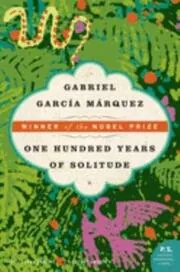
One Hundred Years of Solitude
For readers ready for García Márquez’s broadest family and community portrait. Its mixture of ordinary life, political upheaval, and the marvelous offers the fullest immersion here, though repeated names and shifting generations demand close attention.
What it's about
The rise and fall of the Buendia family unfolds alongside the equally strange history of Macondo. Love, war, invention, grief, and the marvelous crowd into a novel that feels both intimate and immense.
Also recommended by
9 people Alexandria Ocasio-Cortez recommended this book
Alexandria Ocasio-Cortez
Alexandria Ocasio-Cortez recommended this book on Twitter.
Alexandria Ocasio-Cortez's recommendation of this book  Neil Strauss recommended this book
Neil Strauss
"A good book to appreciate." - Neil Strauss
Neil Strauss's recommendation of this book  Richard Branson recommended this book
Richard Branson
Richard Branson recommended this book on his "70 must-read books" blog post.
Richard Branson's recommendation of this book  Oprah Winfrey recommended this book
Oprah Winfrey
"As steamy, dense and sensual as the jungle that surrounds the surreal town of Macondo!" - Oprah Winfrey
Oprah Winfrey's recommendation of this book  Cal Fussman recommended this book
Cal Fussman
"If you’ve never written a book and you’re going to tell somebody you want to write a great book, [...] read this and know what a great book is." - Cal Fussman
Cal Fussman's recommendation of this book  Christopher Hitchens recommended this book
Christopher Hitchens
"Epic." - Christopher Hitchens
Christopher Hitchens's recommendation of this book +3
More recommendations
- Fred Wilson
"Another amazing book that made me see things differently." - Fred Wilson
- Chimamanda Ngozi Adichie
"I think it’s glorious." - Chimamanda Ngozi Adichie
- Shashi Tharoor
"Extraordinary, magical reinvention of the Latin-American experience." - Shashi Tharoor
- Fred Wilson

Love in the Time of Cholera
For readers drawn to relationships examined across a lifetime. It gives aging, desire, and self-deception more sustained attention than the shorter works, though its slow pace and troubling forms of devotion complicate expectations of a straightforward romance.
What it's about
Florentino Ariza waits decades for another chance with Fermina Daza after she marries a respected doctor. Their long, complicated story turns love into a test of time, obsession, aging, and patience.
Also recommended by
3 people- Oprah Winfrey recommended this book
Oprah Winfrey
"One of the greatest love stories I have ever read." - Oprah Winfrey
Oprah Winfrey's recommendation of this book  Diane Rehm recommended this book
Diane Rehm
"About the romantic devotion one man has for a woman from his youth." - Diane Rehm
Diane Rehm's recommendation of this book  Bryan Callen recommended this book
Bryan Callen
Bryan Callen recommended this book on YouTube.
Bryan Callen's recommendation of this book
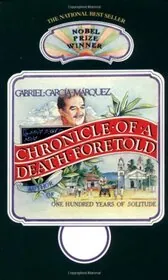
Chronicle of a Death Foretold
For readers who want a short first encounter with his narrative control. The investigative structure gives memory and collective responsibility a clear focus, though the emphasis on how events unfold replaces the suspense of an unknown outcome.
What it's about
Everyone in town seems to know Santiago Nasar will be killed, yet nobody truly stops it. Told like a reconstruction after the fact, the novella turns a murder into a question about memory, honor, and collective guilt.
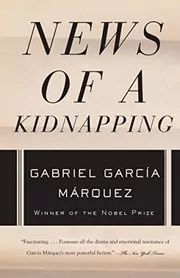
News of a Kidnapping
For readers who prefer reported events to magical realism. Its attention to individual experiences brings a national crisis close to the reader, though the violence and Colombian political context make it a heavier choice than the shorter fiction.
What it's about
This nonfiction account follows the kidnapping of several prominent Colombians during Pablo Escobar's war with the state. Garcia Marquez turns a national crisis into a tense, deeply human story about fear, power, and survival.
Also recommended by
1 person Lisa Ling recommended this book
Lisa Ling
"A journalistic account of ten notable Colombians kidnapped by Pablo Escobar’s Medellín Drug Cartel." - Lisa Ling
Lisa Ling's recommendation of this book
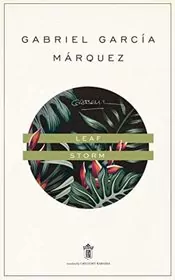
Leaf Storm
For readers curious about Macondo before One Hundred Years of Solitude. Its concentrated setting and alternating voices offer a smaller introduction to the town’s tensions, though the compressed structure can be more elusive than its length suggests.
What it's about
In Macondo, a colonel insists on burying a doctor despised by the town, despite the consequences for his family. Alternating voices of the colonel, his daughter, and her son reveal old grievances and conflicting responsibilities toward the dead.
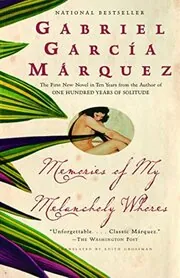
Memories of My Melancholy Whores
For readers already familiar with his treatment of loneliness and aging. Its brevity makes the late style easy to sample, but the narrator’s exploitative relationship and self-justifications make it an uncomfortable, controversial starting point.
What it's about
On his ninetieth birthday, an aging newspaper columnist arranges a night with a teenage prostitute and is shaken by unexpected tenderness. The novella is brief, unsettling, and centered on desire, aging, and loneliness.
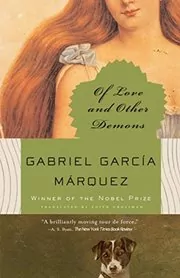
Of Love and Other Demons
For readers interested in religious authority, fear, and desire in a compact historical setting. Its concentrated atmosphere offers a shorter route into his fiction, though coercion and unequal relationships make the emotional territory troubling.
What it's about
In colonial Colombia, young Sierva Maria is bitten by a dog and sent to a convent when fear and superstition take over. A priest drawn into her case turns the story into a tragic clash of faith, desire, and cruelty.
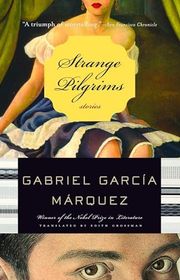
Strange Pilgrims
For readers who want self-contained stories with a wider geographical range. Its Latin American characters in European settings bring displacement into sharper focus than the Macondo novels, though the separate pieces provide less continuity than a sustained family story.
What it's about
Twelve stories follow Latin American characters living in or visiting Europe. Encounters with unfamiliar places, illness, memory, and unexpected events bring the ordinary and the strange together while exploring displacement and the ties people carry from home.
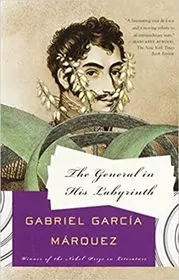
The General in His Labyrinth
For readers interested in historical figures viewed through physical decline and disappointment. It gives political power a more intimate perspective than a conventional biography, though familiarity with Bolívar’s role makes the historical references easier to follow.
What it's about
A sick, exhausted Simon Bolivar drifts down the Magdalena River on his final journey, watching his dream of a united Latin America slip away. It is a historical novel about power, failure, and the man behind the legend.
Also recommended by
1 person John Green recommended this book
John Green
"[Gets] better every time I read [it]." - John Green
John Green's recommendation of this book
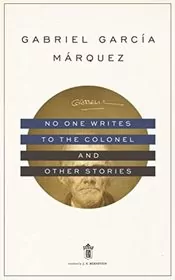
No One Writes to the Colonel, and Other Stories
For readers who want restrained early fiction before the expansive novels. The central novella’s economy makes poverty, pride, and waiting unusually immediate, though readers seeking the abundant marvels of Macondo may find its austerity surprising.
What it's about
At its center is an aging colonel who keeps waiting for the pension he was promised and refuses to give up hope. The surrounding stories deepen the mood of poverty, pride, and political tension.
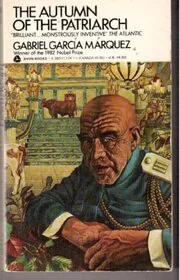
The Autumn of the Patriarch
For readers ready for his more formally demanding political fiction. The shifting voices and long sentences embody the instability of absolute power, but its dense, circular prose makes it a difficult introduction to his work.
What it's about
In a nameless Caribbean dictatorship, an aging ruler clings to absolute power as myth and rot close in around him. The novel is dense, dark, and sharply focused on loneliness at the top.
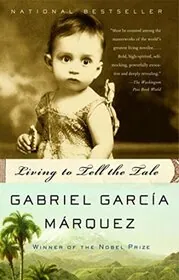
Living to Tell the Tale
For readers who want to see the experiences behind the fiction. Its richly remembered childhood and early working life offer more personal context than the novels, though it covers only the first part of his life.
What it's about
The first volume of Garcia Marquez's memoir follows him from childhood into his early years as a reporter and struggling writer. Family legend, political unrest, and newsroom life all feed the fiction to come.
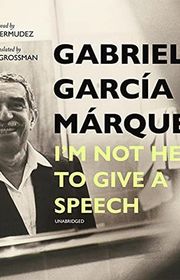
I'm Not Here to Give a Speech
For readers who want his public reflections on writing, journalism, and Latin America. The speeches provide a more direct voice than the fiction, though their ceremonial occasions and recurring concerns make the collection uneven to read straight through.
What it's about
García Márquez’s speeches and public addresses trace his thoughts on literature, journalism, friendship, and Latin America. The collection spans decades and includes his Nobel address, connecting the writer’s public commitments with his account of the work of storytelling.
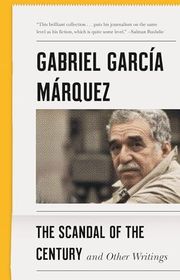
The Scandal of the Century: And Other Writings
For readers interested in García Márquez as a working journalist. The varied pieces reveal more of his reporting and cultural observations than a single nonfiction narrative, though their changing subjects make this a collection to browse selectively.
What it's about
This collection gathers García Márquez’s newspaper and magazine writing from the 1950s through the 1980s. Reports, profiles, and reflections range across public events, everyday lives, and literature, showing the relationship between his journalism and storytelling.
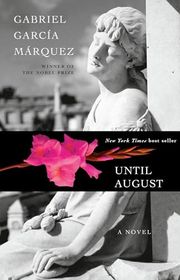
Until August
For returning readers curious about the work published after his death. Its brief focus on desire and independence offers a different late perspective, though its posthumous editorial history makes it less representative than his established novels.
What it's about
Ana Magdalena Bach makes an annual journey to a Caribbean island to visit her mother’s grave. Over successive visits, unexpected encounters alter her understanding of desire, marriage, and freedom in this novel published after García Márquez’s death.
Sources
- 1
Where To Start With Gabriel García Márquez Books
penguinrandomhouse.com
- 2
Where to start reading Gabriel Garcia Márquez’s books
penguin.co.uk
- 3
Best of Gabriel Garcia Marquez
goodreads.com
- 4
Gabriel García Márquez Best Books
bookanalysis.com
- 5
The 10 Best Gabriel García Márquez Books You Must Hear in Audio
audible.com
- 6
10 best books by Gabriel García Márquez
en.actualidadliteratura.com
- 7
Books by Gabriel Garcia Marquez and Complete Book Reviews
publishersweekly.com
- 8
just barely getting into gabriel garcia marquez, recommendations?
reddit.com
- 9
Which Gabriel García Márquez to start with?
reddit.com









Edited by
Software engineer whose passion for tracking book recommendations from podcasts inspired the creation of MRB.
Lead investor at 3one4 Capital whose startup expertise and love for books helped shape MRB and its growth.
Comments
Did we miss something? Have feedback?
Help us improve this page by sharing your thoughts