
12 Best Object Oriented Programming Books
The best object-oriented programming books, ranked by how many expert sources recommend each one, with notes on who they suit and where to begin reading.
Our take
Object-oriented programming books can teach several different skills: writing classes, choosing their responsibilities, managing dependencies, or recognizing designs that recur across applications. Learning the syntax of a language does not automatically make those decisions easy. The books here range from visual introductions to detailed language-specific references and opinionated arguments about what good objects should look like.
The Object-Oriented Thought Process is useful when the underlying ideas still feel uncertain. Head First Object-Oriented Analysis and Design connects them with requirements and examples, while Practical Object-Oriented Design develops the reasoning through Ruby. Head First Design Patterns offers an approachable route into patterns before the denser Design Patterns catalog. The Python, Java, and JavaScript titles let you connect those ideas with a particular language, but their editions matter when following tools and APIs. Start with concepts if you already write code, or a language-specific introduction if you are learning programming at the same time.
12 books · 8 sources · Last updated
As an Amazon Associate, we earn from qualifying purchases (at no extra cost to you).
How to choose from this list
Skip to the full rankingIf object-oriented thinking feels unclear: The Object-Oriented Thought Process → Head First Object-Oriented Analysis and Design
If you want to reason about design choices: Practical Object-Oriented Design → Head First Design Patterns
If you're ready for a patterns reference: Head First Design Patterns → Design Patterns
If you want a Python route: Python 3 Object-Oriented Programming → Mastering Object-Oriented Python
If you're learning Java: Beginning Java Programming
If you work in JavaScript: Mastering JavaScript Object-Oriented Programming
The 12 books, ranked
Ranked by how many expert sources name each book. Ties go to the book more people recommend.

For experienced developers who want a shared vocabulary for recurring object-oriented designs. The catalog explains intent and tradeoffs more systematically than an introductory tutorial, though its older C++ and Smalltalk examples require translation into current language idioms.
What it's about
Erich Gamma and his coauthors catalog reusable solutions to recurring object-oriented design problems. Organized into creational, structural, and behavioral patterns, the book explains when each approach applies, its consequences, and trade-offs within a larger software design.

Head First Object-Oriented Analysis and Design
For programmers who want a visual introduction to turning requirements into object responsibilities. The examples make design decisions easier to discuss, though the playful repetition and Java-oriented presentation may feel slow if you prefer concise theory.
What it's about
Brett McLaughlin, Gary Pollice, and David West use visual explanations and practical examples to teach object-oriented analysis and design. The guide focuses on developing software that meets requirements while remaining reusable, maintainable, and adaptable to new features.

Elegant Objects
For experienced programmers who want a forceful alternative view of object design. Bugayenko's independent recommendations make assumptions easy to challenge, though the strict, opinionated style is less suitable as a neutral introduction to common practice.
What it's about
Yegor Bugayenko presents a collection of independent recommendations for object-oriented programming. His opinionated approach examines the design of classes and objects, arguing for coding practices intended to produce clearer software and more maintainable architectures.

Head First Design Patterns
Building Extensible and Maintainable Object-Oriented Software
For developers who know classes and want to understand recurring design solutions through approachable examples. The second edition uses Java and visual exercises, though recognizing a pattern does not mean every problem benefits from applying one.
What it's about
Eric Freeman and Elisabeth Robson teach object-oriented design patterns through Java examples, visual explanations, and exercises. The second edition connects recurring design solutions with underlying principles, emphasizing understanding and applying patterns to extensible, maintainable software.

For programmers who want to understand dependencies, responsibilities, and change through a coherent set of examples. Metz makes design tradeoffs concrete, though the Ruby code requires some translation if you work mainly in another language.
What it's about
Sandi Metz uses Ruby examples to explain object-oriented design that accommodates change. Discussion of responsibilities, dependencies, interfaces, inheritance, composition, and testing helps programmers consider how design decisions affect the cost of maintaining and extending an application over time.

The Object-Oriented Thought Process
For readers who can write code but still find object-oriented thinking unclear. Weisfeld emphasizes concepts and design choices before language detail, though that broad approach provides less sustained practice than a language-specific project book.
What it's about
Matt Weisfeld explains the thinking behind object-oriented design, emphasizing how responsibilities and interfaces shape software. Examples explore abstraction, encapsulation, inheritance, composition, and reuse, then connect these ideas to persistence, distributed applications, and web services.
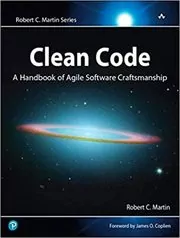
For developers reviewing how naming, functions, and classes affect readability. Martin gives concrete material for code discussions, though the older Java-heavy examples and prescriptive rules work better as arguments to evaluate than universal requirements.
What it's about
Martin presents principles and practices for writing understandable, maintainable code. Examples and case studies examine naming, functions, classes, formatting, error handling, and testing, while a catalog of heuristics and code smells helps readers recognize and improve troublesome code.

For Python programmers ready to study substantial applications after learning the language. Lutz shows objects within larger working programs, though the book is broader than OOP and its older libraries and examples need checking carefully.
What it's about
Mark Lutz shows how to apply Python fundamentals to substantial programs. Extended examples and tutorials cover system scripting, graphical interfaces, web applications, databases, networking, and text processing, emphasizing the tools and patterns used in practical software development.

Mastering Object-Oriented Python
Build Powerful Applications with Reusable Code Using OOP Design Patterns and Python 3.7
For experienced Python programmers exploring the language's object protocols in detail. Lott connects special methods and reusable components with application design, though the advanced scope and Python 3.7-era examples make it a demanding starting point.
What it's about
Steven F. Lott explores advanced object-oriented design in Python through reusable application components. Topics include special methods, abstract classes, context managers, containers, decorators, persistence, and design patterns, with examples that connect implementation choices to testing and performance.

For beginners who want to learn Java and object-oriented concepts together. Its progressive programs and exercises provide a structured route, though the older Java tools and interface examples need updating for a contemporary development environment.
What it's about
Bart Baesens, Aimée Backiel, and Seppe vanden Broucke introduce Java through object-oriented concepts, sample programs, and practical exercises. Step-by-step instruction progresses toward data handling, graphical interfaces, design patterns, and case studies that combine the skills developed.

Mastering JavaScript Object-Oriented Programming
For JavaScript developers who want to connect objects and design patterns with larger applications. Chiarelli addresses the language's own model rather than assuming Java-style classes, though its early-ES6 context needs supplementing with current language guidance.
What it's about
Andrea Chiarelli explains object-oriented principles and design patterns in JavaScript, including features introduced in ES6. The guide connects objects, inheritance and modular organization with architectural techniques for building larger, more maintainable web applications.

Python 3 Object-Oriented Programming
Build Robust and Maintainable Software with Object-Oriented Design Patterns in Python 3.8
For Python learners who want classes, composition, patterns, and testing connected through practical examples. Phillips offers more language-specific development than a conceptual overview, though this older edition needs complementing with current Python documentation.
What it's about
Dusty Phillips introduces object-oriented Python through classes, encapsulation, inheritance, and composition. Practical examples and case studies develop into discussions of design patterns, testing, and reusable interfaces for building software that is easier to extend and maintain.
Sources
- 1
Object-Oriented Software Engineering: The Textbooks
pl.cs.jhu.edu
- 2
Recommended readings
kurzy.kpi.fei.tuke.sk
- 3
100 Best Object Oriented Programming Books of All Time
shortform.com
- 4
Object Oriented Programming Books
goodreads.com
- 5
Best books to learn Object-Oriented Programming in 2026?
reddit.com
- 6
Feeling overwhelmed trying to find a book to improve my skills
reddit.com
- 7
5 Best Books on Object Oriented Programming
javahungry.blogspot.com
- 8
The 5 Best Object Oriented Programming Books
conqueryourexam.com




Edited by
Software engineer whose passion for tracking book recommendations from podcasts inspired the creation of MRB.
Lead investor at 3one4 Capital whose startup expertise and love for books helped shape MRB and its growth.
Comments
Spotted a missing book, a wrong order or a mistake? Tell us and we'll fix this page.
We're a reading guide, not the author or publisher, so we can't send books or pass on messages.