
13 Best Java Books
The best Java books, ranked by expert source recommendations, with notes to help beginners and experienced developers choose tutorials, design guides, and references.
Our take
Learning Java involves more than recognizing syntax. Beginners need practice with objects, control flow, and small programs; working developers need to make choices about APIs, collections, concurrency, and performance. A tutorial, a reference, and a specialist book serve different purposes, so choosing a starting point matters more than collecting several books that cover the same ground.
Head First Java uses visual explanations and exercises, while Java offers a more conventional beginner’s path. Core Java suits readers with programming experience who want substantial examples. For stronger design habits, move to Effective Java or Head First Design Patterns. Java Generics and Collections, Java Concurrency in Practice, and Java Performance address narrower problems once you have the basics. Several entries link to older editions, whose coverage should be checked against the Java version you use. Start with one introductory book, write the exercises, then choose a specialist title when your own programs give you a reason to use it.
13 books · 8 sources · Last updated
As an Amazon Associate, we earn from qualifying purchases (at no extra cost to you).
How to choose from this list
Skip to the full rankingIf you learn through visual exercises: Head First Java
If you prefer a conventional beginner course: Java
If you already program in another language: Core Java → Effective Java
If you want better object-oriented designs: Head First Object-Oriented Analysis and Design → Head First Design Patterns
If you need deeper library and concurrency knowledge: Java Generics and Collections → Java Concurrency in Practice
If you need a working reference: Java in a Nutshell
The 13 books, ranked
Ranked by how many expert sources name each book. Ties go to the book more people recommend.

For programmers moving to Java who want detailed explanations and substantial examples. The systematic treatment supports serious study and later reference, though this eleventh edition stops at Java 11 and moves quickly for complete programming beginners.
What it's about
Cay Horstmann explains Java fundamentals through substantial examples for experienced programmers. This eleventh edition addresses Java SE 9, 10, and 11, covering object-oriented design, generics, collections, lambda expressions, graphical interfaces, and concurrency in the first of two volumes.

Effective Java
For developers who already know Java and want better design judgment. The focused items explain API choices and common pitfalls with concrete examples, though the third edition predates several language features introduced after Java 9.
What it's about
Joshua Bloch presents focused recommendations for writing dependable Java programs, each supported by examples and explanations of common pitfalls. This third edition updates the discussion for newer language features while emphasizing sound design and careful use of libraries.

Head First Java
For first-time programmers who learn through pictures, puzzles, and active exercises. The visual style makes object-oriented ideas approachable, though this second edition teaches Java 5 and needs substantial supplementation for the language as used today.
What it's about
Kathy Sierra and Bert Bates teach Java through visual explanations, puzzles, and exercises. This second edition focuses on Java 5, progressing from object-oriented fundamentals to topics such as threads, network sockets, and distributed programming with RMI.

Java Concurrency in Practice
For experienced Java developers who need to reason about shared state, thread safety, and coordination. Its concurrency principles remain valuable, though the APIs and examples predate virtual threads and other later developments.
What it's about
Brian Goetz and his coauthors explain the theory and practical techniques behind concurrent Java applications. The book connects threading and concurrency APIs with design principles for creating software that remains reliable, scalable, and maintainable as complexity increases.

Head First Design Patterns
Building Extensible and Maintainable Object-Oriented Software
For Java programmers ready to understand recurring object-oriented design problems. Visual examples and exercises connect patterns with design principles, though applying every pattern mechanically can make otherwise simple software unnecessarily complicated.
What it's about
Eric Freeman and Elisabeth Robson teach object-oriented design patterns through Java examples, visual explanations, and exercises. The second edition connects recurring design solutions with underlying principles, emphasizing understanding and applying patterns to extensible, maintainable software.

For beginners who prefer a conventional sequence of explanations, examples, and exercises. The step-by-step approach offers more structure than a reference manual, though this eighth edition needs supplementation for language features added after its release.
What it's about
Herbert Schildt begins with creating, compiling, and running Java programs before introducing more advanced language features. This eighth edition combines examples and exercises with coverage of generics, lambda expressions, modules, multithreading, and Swing, building from basic syntax toward larger programming tasks.

Thinking in Java
For readers who prefer extensive code examples and explanations of object-oriented ideas. The detailed treatment supports deliberate study, though this fourth edition targets Java 5 and cannot serve as a complete guide to modern Java.
What it's about
Bruce Eckel develops an understanding of Java through explanations and extensive programming examples. This fourth edition covers Java 5, moving from object-oriented concepts and basic syntax toward more advanced features while examining the reasoning behind language design.

For developers who want broad language and library coverage in a reference format. The organized explanations are useful when revisiting unfamiliar features, though this twelfth edition covers Java 17 and is less guided than a beginner course.
What it's about
Herbert Schildt surveys Java's language features and libraries in a reference covering Java SE 17. The twelfth edition explains developing, compiling, debugging, and running programs, connecting fundamental syntax with the tools and techniques used to construct Java applications.
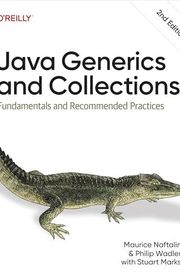
Java Generics and Collections
For Java developers who want deeper understanding of generic types and collection choices. The focused treatment explains difficult rules and practical tradeoffs more fully than broad introductions, though it assumes familiarity with basic Java programming.
What it's about
Maurice Naftalin and Philip Wadler explain generic types, collection interfaces, and the choices behind Java’s data structures. The second edition covers Java 21, connecting type safety, collection selection, and stream processing with practical library use.
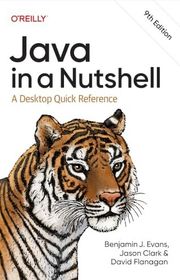
Java in a Nutshell
For programmers who want a compact language reference to consult while working. The concise organization makes it easier to revisit concepts than a large teaching textbook, though it assumes programming experience and provides less introductory practice.
What it's about
Benjamin Evans and his coauthors survey Java’s language, core libraries, and development tools in a compact reference. Explanations connect everyday programming constructs with the platform’s broader design, helping experienced programmers learn Java and revisit unfamiliar parts of it.

For developers investigating slow applications who want to measure before changing code. The focus on profiling and JVM behavior encourages disciplined diagnosis, though this edition’s tools and tuning details need checking against your runtime.
What it's about
Scott Oaks explains how to evaluate and improve the performance of Java applications. The guide connects measurement with JVM tuning, memory management, threading, synchronization, and database interactions, helping programmers investigate bottlenecks rather than rely on assumptions.

For Java programmers who enjoy testing assumptions through small, surprising examples. The puzzle explanations sharpen attention to language rules, though obscure corner cases and older platform behavior are less useful than a structured course for beginners.
What it's about
Joshua Bloch and Neal Gafter challenge readers with ninety-five short programming puzzles that expose surprising Java behavior. Detailed explanations reveal traps in the language and its core libraries, connecting unexpected results with lessons for everyday coding.

Head First Object-Oriented Analysis and Design
For programmers who understand classes but struggle to turn requirements into adaptable designs. The visual exercises emphasize analysis and design decisions, though the extended scenarios and playful presentation may feel slow to experienced developers.
What it's about
Brett McLaughlin, Gary Pollice, and David West use visual explanations and practical examples to teach object-oriented analysis and design. The guide focuses on developing software that meets requirements while remaining reusable, maintainable, and adaptable to new features.
Sources
- 1
13 Best Java Programming Books for 2026 (Java 21 and 25)
computingforgeeks.com
- 2
Must-read books to learn Java programming
freecodecamp.org
- 3
15 BEST Java Books for Beginners (2026 Update)
guru99.com
- 4
100 Best Java Books of All Time
shortform.com
- 5
10 Must-Read Books for Java Developers
blogs.bmc.com
- 6
Java Books
goodreads.com
- 7
Books for Senior Java Dev should read
reddit.com
- 8
Any recommendations for recent/up to date books to learn Java?
reddit.com


Edited by
Software engineer whose passion for tracking book recommendations from podcasts inspired the creation of MRB.
Lead investor at 3one4 Capital whose startup expertise and love for books helped shape MRB and its growth.
Comments
Did we miss something? Have feedback?
Help us improve this page by sharing your thoughts