
14 Best Nuclear Physics Books
The best nuclear physics books, ranked by how many expert sources recommend each one, with notes on who each suits, from curious beginners to physics students.
Our take
Nuclear physics asks how atomic nuclei are held together, how they change and how those changes release energy or radiation. The books here approach those questions at very different levels. Some explain the subject through history and applications; others expect you to work through equations, compare models and solve problems using knowledge from earlier physics courses.
Introductory Nuclear Physics offers a broad foundation for students. An Introduction to Nuclear Physics provides a more compact course route, while Basic Ideas and Concepts in Nuclear Physics gives nuclear structure sustained attention. Nuclear and Particle Physics connects the subject with the constituents of matter. For applications, Radiation Detection and Measurement concentrates on instruments and data, and How to Drive a Nuclear Reactor explains power-station behavior from an operator's viewpoint. Atomic Accidents offers historical cases rather than a course in the underlying theory.
Start with Frank Close's Nuclear Physics for a conceptual overview, or Introductory Nuclear Physics if you already have university physics and want to study quantitatively.
14 books · 11 sources · Last updated
As an Amazon Associate, we earn from qualifying purchases (at no extra cost to you).
How to choose from this list
Skip to the full rankingIf you're ready for undergraduate study: Introductory Nuclear Physics
If you prefer a compact course text: An Introduction to Nuclear Physics → Fundamentals of Nuclear Physics
If you want to study nuclear structure: Basic Ideas and Concepts in Nuclear Physics → Nuclear Physics in a Nutshell
If you need experimental measurement methods: Radiation Detection and Measurement
If you want reactor applications: How to Drive a Nuclear Reactor → Introduction to Nuclear Engineering
If you prefer historical cases: Atomic Accidents
The 14 books, ranked
Ranked by how many expert sources name each book. Ties go to the book more people recommend.

Introductory Nuclear Physics
For physics students who want a broad undergraduate foundation with experimental context and worked examples. Its balance of structure, decay and reactions makes it a useful main text, though the mathematics assumes prior university physics.
What it's about
Kenneth Krane introduces nuclear structure, radioactive decay, and nuclear reactions through theory and experimental results. Worked examples connect mathematical ideas with research and applications, while separate sections offer more advanced material.
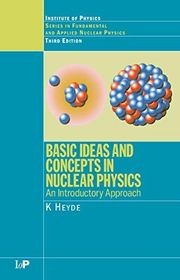
Basic Ideas and Concepts in Nuclear Physics
For students who want nuclear structure developed through both models and experimental findings. Its attention to how the subject is investigated complements Krane’s broad foundation, though the detailed structure material is better approached with quantum mechanics already in place.
What it's about
Kris Heyde introduces nuclear constituents, interactions and structure through theoretical explanations and experimental evidence. Diagrams, problems and research examples support a progression from basic nuclear properties to models and developments in the study of light and unstable nuclei.

For undergraduates who want nuclei and elementary particles taught together through theory and experiment. Its combined perspective helps connect the fields, though readers concentrating solely on nuclear structure may prefer a more specialized textbook.
What it's about
Brian Martin and Graham Shaw introduce nuclear and particle physics with an emphasis on interpreting experimental data. The textbook combines theory, experimental methods, examples, and problems, providing a foundation for further undergraduate study.
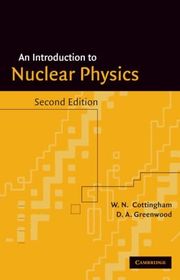
An Introduction to Nuclear Physics
For undergraduates who want a compact course text that develops simple models and supplies problems with outline solutions. Its links to reactors and stellar processes widen the context, though basic quantum mechanics and special relativity are assumed.
What it's about
Cottingham and Greenwood explain nuclear properties, excited states and reactions using physical models. Chapters connect the subject with fission, reactors and energy generation in stars, while exercises and outline solutions help students apply the ideas quantitatively.
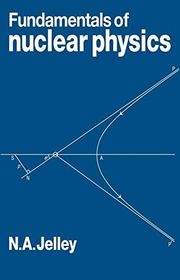
Fundamentals of Nuclear Physics
For final-year undergraduates who want quantitative explanations with short derivations shown in full. It bridges introductory material and more advanced topics in a single text, though its density and older research context make it less suitable for casual reading.
What it's about
N. A. Jelley examines nuclear properties, models, decay and reactions for advanced undergraduate study. Worked discussions connect nuclear forces and collective motion with fission and fusion, using quantitative derivations to help readers make predictions about nuclear behavior.

For students who prefer an experimental introduction that keeps practical applications in view. Lilley emphasizes physical understanding more than extended derivations, though readers pursuing theoretical depth will need a more mathematically detailed companion.
What it's about
John Lilley introduces nuclear physics from an experimental perspective before turning to its applications. The text pairs fundamental theory with practical examples and problems, emphasizing physical understanding without relying on extensive mathematical treatments.
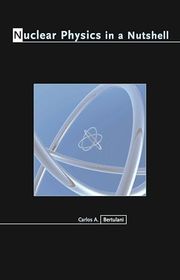
Nuclear Physics in a Nutshell
For advanced undergraduates and beginning graduates seeking a compact overview that connects nuclei, particles and stars. Its range supports further study across the field, but the concise presentation assumes mathematical confidence rather than teaching physics from scratch.
What it's about
Carlos Bertulani surveys nuclear constituents, forces, models and reactions, connecting nuclear structure with particle physics and astrophysics. The text includes light and unstable nuclei, rare-isotope reactions and the role of nuclear processes in stellar energy and element formation.

Theoretical Nuclear Physics
For readers with substantial quantum mechanics who want a classic theoretical account of nuclear phenomena. Its detailed development of physical models rewards close study, though its historical coverage needs supplementing for modern nuclear theory.
What it's about
John Blatt and Victor Weisskopf examine theoretical concepts used to interpret nuclear experiments and predict nuclear phenomena. Their treatment covers nuclear properties and forces, two-body problems, and systems with three or four particles.

For readers who understand ideas best through accounts of failures and investigations. Its historical cases make the consequences of nuclear technology concrete, but its accident-centered narrative does not provide the systematic grounding of a physics textbook.
What it's about
James Mahaffey surveys accidents and disasters across the history of nuclear science. He examines what happened, how investigators interpreted failures, and what incidents taught researchers, while presenting his perspective as an advocate of continued nuclear research.

How to Drive a Nuclear Reactor
For readers curious about what reactor operators actually need to understand. Its operational viewpoint connects physics with the behavior of a power station, though its emphasis on pressurized water reactors makes it narrower than a general nuclear introduction.
What it's about
Colin Tucker explains nuclear power stations from the perspective of a trainee reactor operator. The book connects reactor science with startup, operation, shutdown, engineering, safety, and potential failures, focusing particularly on pressurized water reactors.

Introduction to Nuclear Engineering
For engineering students who want nuclear principles connected to technology and plant design. Its broad applied treatment provides context beyond nuclear structure, but the engineering scope is substantial if your main interest is fundamental physics.
What it's about
John Lamarsh and Anthony Baratta introduce nuclear engineering for undergraduate study. The text connects the field’s foundational principles with practical applications of nuclear technology, industry developments, and the design and construction of advanced nuclear plants.

Radiation Detection and Measurement
For students and researchers who need to understand how radiation measurements are made. Its detailed comparison of detectors and signal processing distinguishes it from general nuclear texts, but the technical depth makes it demanding as a first introduction.
What it's about
Glenn Knoll surveys instruments and techniques for detecting and measuring ionizing radiation. The text examines detector technologies, spectroscopy, scintillation sensors, micropattern gas detectors, and signal processing, linking physical principles with practical measurement methods.

For curious readers who want a short conceptual introduction before tackling equations. Close connects the nucleus with discovery, stars and applications, but the compact format cannot supply the derivations or problem practice needed for a university course.
What it's about
Frank Close traces the development of nuclear physics and explains the forces and structures within nuclei. Topics include nuclear stability, the formation of elements in stars, exotic nuclei, and applications such as medical imaging.

For students who want an experimentally grounded bridge between nuclear and particle physics. The shared treatment of matter and interactions makes the connection explicit, though readers need more physics background than a general-audience introduction assumes.
What it's about
Bogdan Povh and his coauthors present nuclear and particle physics through a shared experimental perspective. The textbook introduces the constituents of matter and their interactions, connecting physical concepts with observations at scales within the atom.
Sources
- 1
Bibliografia · Física Nuclear
fenix.tecnico.ulisboa.pt
- 2
Part II Particle and Nuclear Physics
hep.phy.cam.ac.uk
- 3
Phy 555: Fundamental Nuclear Physics
pa.uky.edu
- 4
The Best 13 Nuclear Physics Books
blinkist.com
- 5
Best (undergrad) nuclear engineering textbooks
reddit.com
- 6
Is Evans "The Atomic Nucleus" still a good introductory text for nuclear physics (before reading something like Attix)?
reddit.com
- 7
Subatomic - books
users.ox.ac.uk
- 8
Theoretical Nuclear Physics
theorie.ikp.physik.tu-darmstadt.de
- 9
DERS BİLGİ FORMU: Çekirdek Fiziği 1
fed.yildiz.edu.tr
- 10
Nuclear Science Studies
goodreads.com
- 11
Nuclear Power Reading List
whatisnuclear.com




Edited by
Software engineer whose passion for tracking book recommendations from podcasts inspired the creation of MRB.
Lead investor at 3one4 Capital whose startup expertise and love for books helped shape MRB and its growth.
Comments
Spotted a missing book, a wrong order or a mistake? Tell us and we'll fix this page.
We're a reading guide, not the author or publisher, so we can't send books or pass on messages.