
12 Best Jazz Guitar Books
The best jazz guitar books, ranked by how many expert sources recommend each one, with notes on playing level, harmony, improvisation and where to start.
Our take
Jazz guitar study combines listening, reading, harmony and the ability to respond musically in real time. Books can organize that work, but they serve different purposes. A progressive method supplies a sequence of exercises; a chord reference offers possibilities to explore; a transcription collection lets you examine an improviser's phrasing closely. Choosing the right kind of book matters more than starting with the most demanding one.
The Jazz Guitar Handbook provides a broad introduction, while Jazz Guitar, Complete Edition offers a more sustained course. Chord Chemistry and Modern Chord Progressions develop harmonic vocabulary from different angles. For improvisation, Joe Pass Guitar Style connects lines with harmony, and Intervallic Designs for Jazz Guitar explores a more specialized melodic approach. The Advancing Guitarist suits experienced players willing to direct their own experiments. Start with a general method if the musical vocabulary is unfamiliar, then work through a focused reference while applying its ideas to tunes you already play.
12 books · 8 sources · Last updated
As an Amazon Associate, we earn from qualifying purchases (at no extra cost to you).
How to choose from this list
Skip to the full rankingIf you're moving into jazz from other guitar styles: The Jazz Guitar Handbook → Jazz Guitar, Complete Edition
If you want stronger reading and fingerboard skills: A Modern Method for Guitar
If you want a broader chord vocabulary: Chord Chemistry → Modern Chord Progressions
If you want a focused voicing study: Jazz Guitar Voicings - Vol.1
If you want to develop improvised lines: Joe Pass Guitar Style → Omnibook → Intervallic Designs for Jazz Guitar
If you're ready for independent exploration: The Advancing Guitarist
The 12 books, ranked
Ranked by how many expert sources name each book. Ties go to the book more people recommend.

For experienced guitarists who want to rethink how they explore the instrument. Goodrick's questions and experiments encourage an individual approach to the fingerboard, though the open-ended format provides little of the reassurance of a conventional lesson sequence.
What it's about
Mick Goodrick offers essays and practical ideas for guitarists developing their technique and musical voice. He explores fingerboard mechanics, scales, chords, harmony, and improvisation, encouraging players to experiment and evaluate how these concepts inform their own style.
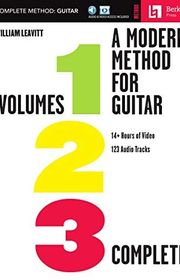
A Modern Method for Guitar
For guitarists who want disciplined work on reading, technique and fingerboard knowledge. This edition collects all three method volumes into a sustained course, though the notation-centered exercises are demanding and provide limited explanation of jazz style itself.
What it's about
Leavitt's method develops reading, technique and musical understanding through progressive guitar studies. This complete edition combines three volumes of exercises, melodies, solos and chord work, supporting long-term study of the fingerboard and standard notation.

For players who know chord shapes but want to hear how voicings connect. Greene places harmonic movement at the center of study, though the quantity of material requires a selective practice plan and some existing chord knowledge.
What it's about
Ted Greene presents chord progressions for guitarists developing their harmonic vocabulary, with material spanning jazz and classical approaches. The book explores connected voicings, diatonic relationships, and cycles, encouraging players to study chords within musical sequences.

Chord Chemistry
For guitarists who want a deep store of chord shapes and harmonic possibilities. Greene offers far more options than an introductory method, though the dense diagrams need patient selection and musical application rather than memorizing every page.
What it's about
Ted Greene's guitar chord reference explores voicings beyond standard barre shapes, presenting a broad collection of harmonic possibilities. Explanations and diagrams help players investigate chord relationships and develop a richer vocabulary for accompanying songs and improvising.
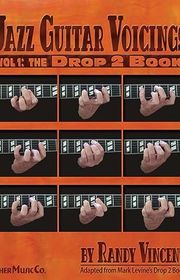
Jazz Guitar Voicings - Vol.1: The Drop 2 Book
For players ready to make drop-two voicings usable in jazz harmony. Vincent provides a focused study rather than a general chord dictionary, though the narrow subject assumes basic theory and leaves broader technique and improvisation to other books.
What it's about
Vincent studies drop-two chord voicings for jazz guitar, showing how their shapes and inversions can function in harmonic settings. The book develops a focused vocabulary for accompaniment and chordal playing through written musical examples and exercises.
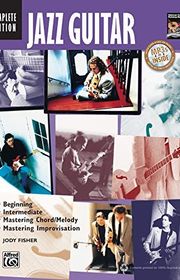
Jazz Guitar, Complete Edition
For guitarists who want a more sequential jazz course than the specialist references provide. Fisher's collected method builds through progressively harder material, though beginners to the instrument itself should establish basic playing and reading skills first.
What it's about
Fisher's complete edition gathers a progressive jazz guitar course covering harmony, chords, improvisation and practical playing. Explanations and exercises develop material from introductory jazz concepts toward more advanced applications, with recorded examples supporting the written instruction.

For players who want harmony and melodic improvisation connected through Joe Pass's approach. The examples make chord choices part of solo development, though the compact presentation assumes more reading ability and harmonic knowledge than a first jazz course.
What it's about
Joe Pass and Bill Thrasher examine the relationship between jazz harmony and improvisation. Their guitar method covers chord construction, substitutions, embellishments, and melodic approaches, using examples to explore how changing harmonic choices support more varied solo lines.

Linear Expressions
For players interested in investigating Pat Martino's approach to constructing lines. The exercises give a concentrated route into one improviser's thinking, though their value depends on careful musical application rather than treating the patterns as a universal system.
What it's about
Pat Martino explains his approach to jazz guitar improvisation through chord conversion and linear playing. Exercises and musical examples show how he develops melodic lines, giving guitarists a structured way to investigate elements of his personal style.

For improvisers who want melodic material beyond familiar scale patterns. Diorio's interval-based studies can expand your vocabulary and fingerboard thinking, though the specialized approach makes more sense after basic harmony and jazz phrasing are secure.
What it's about
Joe Diorio explores jazz guitar improvisation through interval-based patterns rather than familiar scale shapes alone. Notated examples and tablature develop melodic ideas across diatonic, chromatic, and diminished material, including approaches to altered dominant chords in playing.

For readers who want to study bebop phrasing directly through Parker's recorded solos. The C-instrument transcriptions supply substantial melodic material, though they are not guitar-specific and require fingerboard adaptation, close listening and solid notation skills.
What it's about
This collection transcribes 60 Charlie Parker solos for C instruments, providing material for studying his bebop phrasing and improvisation. Chord symbols, tempo indications, recording information, and practice suggestions help players connect the notation with recorded performances.

For guitarists who want several chord studies collected into one practical reference. Alexander connects voicings with progressions and voice leading, though the combined format rewards working through one topic carefully rather than rushing across the whole collection.
What it's about
Joseph Alexander combines three guitar methods covering chords in context, chord mastery, and voice leading. Examples and downloadable audio explore voicings, inversions, and harmonic movement, showing how individual chord shapes become usable elements of jazz accompaniment.

For players who want a broad introduction connecting jazz styles with practical guitar work. Fogg combines historical context and exercises in one handbook, though its survey approach offers less depth on individual techniques than the specialist books here.
What it's about
Rod Fogg introduces jazz guitar through historical context, practical explanations, and exercises supported by recorded examples. The handbook explores styles including swing, bebop, modal jazz, and jazz funk, connecting harmonic knowledge with techniques for playing and improvising.
Sources
- 1
Jazz Guitar Books Lessons: The Essential Library For Serious Players
jazzguitarlessons.net
- 2
Top 50 Jazz Guitar Books
jazzguitar.be
- 3
Top 5 Jazz Books that I have learned a lot from!
jenslarsen.nl
- 4
What are the most practical/efficient books for learning jazz?
reddit.com
- 5
Best Jazz Guitar book for absolute beginners?
reddit.com
- 6
Best Guitar Books For Beginners To Advanced Players
guitarcommand.com
- 7
Jazz Guitar Books
goodreads.com
- 8
5 Awesome Books For Learning Jazz Guitar Theory
guitarmeet.com






Edited by
Software engineer whose passion for tracking book recommendations from podcasts inspired the creation of MRB.
Lead investor at 3one4 Capital whose startup expertise and love for books helped shape MRB and its growth.
Comments
Spotted a missing book, a wrong order or a mistake? Tell us and we'll fix this page.
We're a reading guide, not the author or publisher, so we can't send books or pass on messages.