
9 Best Guitar Books
The best guitar books, ranked by how many expert sources recommend each one, with notes for beginners, developing players, and musicians studying theory.
Our take
Guitar books can solve different problems: learning your first notes, organizing the fretboard, improving technique, or finding a more musical way to practice. A beginner course gives lessons an order, while a reference lets you investigate a particular question. Exercise books help establish a routine, but they work best alongside songs, listening, and time spent playing with other people.
Hal Leonard Guitar Method offers a starting sequence for new players. Guitar Aerobics supplies daily technical work once the basics feel familiar, and Fretboard Logic SE connects patterns across the neck. Music Theory for Guitarists explains the relationships behind those patterns, while The Guitar Handbook includes the instrument’s practical upkeep. More experienced players can explore the open assignments in The Advancing Guitarist or the detailed harmony of Chord Chemistry. Zen Guitar addresses attention and motivation. Start with the book that answers your current playing problem, then practice its ideas with the guitar in your hands.
9 books · 8 sources · Last updated
As an Amazon Associate, we earn from qualifying purchases (at no extra cost to you).
How to choose from this list
Skip to the full rankingIf you are learning the basics: Hal Leonard Guitar Method → Guitar Aerobics
If you want to understand the fretboard: Fretboard Logic SE → Music Theory for Guitarists
If you want deeper harmonic study: Music Theory for Guitarists → Chord Chemistry
If you want to develop your own style: Creative Guitar 1 → The Advancing Guitarist
If you want a broad reference: The Guitar Handbook
If you need a fresh approach to practice: Zen Guitar
The 9 books, ranked
Ranked by how many expert sources name each book. Ties go to the book more people recommend.

Guitar Aerobics
A 52-Week, One-Lick-Per-Day Workout Program for Developing, Improving & Maintaining Guitar Technique
For players who already know the basics but struggle to maintain a practice routine. The daily exercises provide more structure than the reference books, though isolated licks need to be applied to actual songs.
What it's about
Troy Nelson organizes guitar technique practice into a yearlong program with one lick for each day. Exercises develop skills including alternate picking, legato, string bending, sweep picking, and rhythm, using examples across musical styles to create a structured practice routine.

For players who want one broad reference covering the instrument as well as playing. Its maintenance and equipment material distinguishes it from technique courses, though some technology coverage reflects an earlier era.
What it's about
Ralph Denyer provides a broad reference for acoustic and electric guitar players. The handbook combines a learning program with material on performance technology, maintenance, repair, and customization, supporting musicians who want to understand both playing and the workings of their instrument.

Fretboard Logic SE
The Reasoning Behind the Guitar's Unique Tuning + Chords Scales and Arpeggios Complete
For players who memorize shapes without understanding how they connect across the neck. Its tuning based framework organizes chords and scales coherently, though the diagrams reward slow study rather than quick browsing.
What it's about
Bill Edwards combines the first two volumes of Fretboard Logic in this special edition. He explains patterns underlying the guitar's tuning and fretboard, then connects that framework with chords, scales, and arpeggios to support a more systematic understanding of the instrument.

For guitarists who can play patterns but want to understand their musical relationships. It connects theory directly to the instrument, though readers must work through the examples rather than expect instant fretboard fluency.
What it's about
Tom Kolb explains music theory through terms, diagrams, and examples tailored to the guitar. Lessons connect scales, chords, intervals, notation, and related concepts with practical playing, helping guitarists understand the musical relationships behind patterns they encounter on the fretboard.

For experienced players who enjoy designing their own investigations of the instrument. Its open exercises and essays encourage independent musical thinking, though the absence of a prescribed sequence can frustrate learners who want daily assignments.
What it's about
Mick Goodrick offers essays and practical ideas for guitarists developing their technique and musical voice. He explores fingerboard mechanics, scales, chords, harmony, and improvisation, encouraging players to experiment and evaluate how these concepts inform their own style.

Zen Guitar
For musicians whose main obstacle is attention, confidence, or motivation. Its reflective approach addresses the experience of practicing more directly than technical manuals, though it provides no systematic course in chords or scales.
What it's about
Philip Toshio Sudo applies Zen ideas to music-making through reflective lessons drawn from his experience. Using guitar playing as a path for exploring attention, discipline, and expression, he connects musical practice with broader questions about creativity and daily life.

Chord Chemistry
For guitarists ready to expand their harmonic vocabulary beyond familiar chord shapes. Its extensive voicings offer more depth than the general methods, though the dense diagrams can overwhelm readers without a working grasp of harmony.
What it's about
Ted Greene's guitar chord reference explores voicings beyond standard barre shapes, presenting a broad collection of harmonic possibilities. Explanations and diagrams help players investigate chord relationships and develop a richer vocabulary for accompanying songs and improvising.

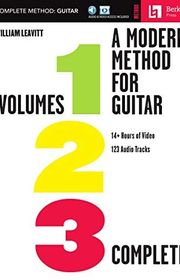
For beginners who want lessons in a clear sequence rather than a collection of exercises. The combined volumes support steady progression and reading skills, though a teacher can still help correct physical habits.
What it's about
Will Schmid and Greg Koch combine three instructional volumes into a progressive course for beginning acoustic and electric guitarists. Lessons and musical examples develop foundational playing skills, with demonstration and play-along material supporting practice as students advance through the method.

For intermediate rock players who want to connect technique, theory, and personal expression. Govan’s explanations encourage musical choices beyond mechanical exercises, though beginners may need a more gradual grounding in basic playing first.
What it's about
Guthrie Govan addresses rock guitarists seeking new directions in their playing. He combines explanations of theory and technique with practice advice, licks, pentatonic patterns, and arpeggios, encouraging musicians to understand the material and adapt it to their own style.
Sources
- 1
10 Best Guitar Books (2024)
musiccritic.com
- 2
5 Best Guitar Books 2026
equipboard.com
- 3
Best guitar books for beginner to advanced players
chasingsound.com
- 4
Guitar Books
goodreads.com
- 5
Best guitar books?
reddit.com
- 6
[QUESTION] Best Guitar book for music theory, scales and techniques?
reddit.com
- 7
7 Best Guitar Books
killerguitarrigs.com
- 8
Best Books for Guitarists: Top 20
dougcameronmusic.com






Edited by
Software engineer whose passion for tracking book recommendations from podcasts inspired the creation of MRB.
Lead investor at 3one4 Capital whose startup expertise and love for books helped shape MRB and its growth.
Comments
Spotted a missing book, a wrong order or a mistake? Tell us and we'll fix this page.
We're a reading guide, not the author or publisher, so we can't send books or pass on messages.