
18 Best Islamic History Books
The best Islamic history books, ranked by how many expert sources recommend each one, with notes on accessible surveys, early Islam, empires and scholarly studies.
Our take
Islamic history includes the development of religious traditions, the lives of Muslim communities and the political worlds of many different empires. No single regional or dynastic story can cover that range. The books here offer broad introductions as well as focused studies of early Islam, intellectual life, succession disputes and encounters with neighboring societies.
Islam provides Karen Armstrong’s short orientation, while Destiny Disrupted offers a longer narrative from an Islamic-world perspective. The Great Arab Conquests concentrates on early expansion, and Osman's Dream follows the Ottoman Empire. The Crusades Through Arab Eyes changes the viewpoint on medieval conflict. For more demanding reading, The Venture of Islam develops a large-scale scholarly interpretation, while The Succession to Muhammad closely examines one foundational controversy. Traditional biographies and historical-critical studies also approach their evidence with different aims.
Begin with a broad survey, then choose a period or question to pursue. Reading different interpretations is especially useful for the earliest centuries, where evidence and its meaning remain debated.
18 books · 9 sources · Last updated
As an Amazon Associate, we earn from qualifying purchases (at no extra cost to you).
How to choose from this list
Skip to the full rankingIf you want a short introduction: Islam → Destiny Disrupted
If you want early expansion and community formation: The Great Arab Conquests → Muhammad and the Believers
If you want succession debates: After the Prophet → The Succession to Muhammad
If you want medieval encounters: The Crusades Through Arab Eyes → The Ornament of the World
If you want Ottoman history: Osman's Dream
If you want substantial scholarly study: The Formation of Islam → The Venture of Islam
The 18 books, ranked
Ranked by how many expert sources name each book. Ties go to the book more people recommend.

For readers who want a large-scale interpretation of Islamic civilization within world history. Its integration of social, cultural and religious questions offers unusual depth, though the three-volume scale and demanding conceptual vocabulary require a substantial commitment.
What it's about
Marshall Hodgson’s three-volume history places Islamic civilization within world history, from its origins to the twentieth century. It traces religious, social, and cultural developments through the classical period, medieval expansion, and the age of gunpowder empires and modern change.

For readers who want a broad, accessible survey that gives cultural and intellectual achievements space alongside political events. Its civilizational perspective provides a clear starting narrative, though the compressed sweep and corrective emphasis leave specialist debates for further reading.
What it's about
Firas Alkhateeb surveys Islamic history from the life of Muhammad to the modern era. Alongside major empires and rulers, he examines scholars, scientists, and intellectual movements, connecting political developments with the wider history of Muslim societies.

The Crusades Through Arab Eyes
For readers who know the Crusades mainly through European narratives. Its use of Arab chroniclers changes the angle of familiar events, though the literary retelling and selected sources are best supplemented by a wider study of the period.
What it's about
Amin Maalouf retells the Crusades using accounts by Arab chroniclers and participants. Their perspectives illuminate the invasions, rivalries, and responses of the medieval Muslim world, and the lasting place these events occupy in regional historical memory.

The Ornament of the World
How Muslims, Jews and Christians Created a Culture of Tolerance in Medieval Spain
For readers interested in cultural exchange through literature and intellectual life in medieval Spain. Its evocative portraits open a different perspective from military history, though its emphasis on coexistence needs comparison with studies of conflict and unequal power.
What it's about
Maria Rosa Menocal examines the culture of medieval Muslim Spain and exchanges among Muslims, Jews, and Christians. Through literature, art, and intellectual life, she argues that religious differences could coexist with a shared and productive cultural world.

For readers interested in how a medieval scholar explained societies, states and historical change. Its analytical questions distinguish it from a modern chronological survey, though unfamiliar concepts and the abridged translation call for patience and contextual reading.
What it's about
Ibn Khaldun examines history through ideas that connect society, culture, and economic life. This abridgment of Franz Rosenthal's translation presents the fourteenth-century scholar's work in one volume, with introductions providing context for modern readers.
Also recommended by
1 person Mark Zuckerberg recommended this book
Mark Zuckerberg
"A history of the world written by an intellectual who lived in the 1300s." - Mark Zuckerberg
Mark Zuckerberg's recommendation of this book

For readers who want a connected narrative that shifts world history’s center of attention. Its conversational style makes long developments approachable, though the broad organizing perspective simplifies regional differences and should not stand in for detailed scholarship.
What it's about
Tamim Ansary recounts world history from the perspective of Islamic societies, beginning with Muhammad and continuing through empires, colonial encounters, and modern conflicts. He explores how this historical narrative differs from familiar accounts centered on Europe.

For readers who need a short chronological orientation before choosing a specialist topic. Its accessible explanation keeps religious and political developments connected, though the compact format necessarily simplifies differences among regions, communities and historical interpretations.
What it's about
Karen Armstrong offers a concise history of Islam, tracing its beginnings and development into a diverse religious tradition. She examines beliefs, practices, and political changes while challenging simplified portrayals that reduce the faith to modern fundamentalism.

For readers who want to follow one major empire across its full life. Its sustained chronology connects Ottoman expansion with internal politics and administration, though the substantial length and dynastic detail make it a demanding introduction to Islamic history overall.
What it's about
Caroline Finkel traces six centuries of Ottoman history, from the dynasty’s beginnings in medieval Anatolia to its collapse after the First World War. The account follows an empire spanning three continents through expansion, political change, and eventual dissolution.

For readers who want to understand the early expansion of Muslim rule in military and political terms. Its focused treatment develops a period compressed in surveys, though readers looking for the full history of Islamic belief and everyday life will need more.
What it's about
Hugh Kennedy examines the rapid expansion of Muslim rule after Muhammad’s death. Following campaigns across former Byzantine and Persian territories and beyond, he explores the conquest’s military dynamics and its consequences for government, language, religion, and culture.

For readers ready to examine early succession through close argument and source analysis. Its sustained reassessment of Ali’s claims gives the controversy scholarly depth, though the specialist detail and interpretive position make it difficult without an introductory account first.
What it's about
Wilferd Madelung reassesses the struggle over leadership following Muhammad’s death. Examining the first four caliphs and the first Muslim civil war, he gives particular attention to Ali’s claims and the origins of divisions within the Muslim community.

For readers who want an accessible narrative of the succession conflicts after Muhammad’s death. Its attention to personalities gives the disputes emotional immediacy, though the dramatic reconstruction and focus on origins can compress the later development of Sunni and Shia traditions.
What it's about
Lesley Hazleton narrates the events and rivalries that followed Muhammad’s death and contributed to the division between Sunni and Shia Islam. The history connects personal relationships, succession disputes, and political conflict with the origins of an enduring religious split.

For readers interested in a revisionist account of Islam’s emergence within late antiquity. Its narrative connects imperial and religious change, though the disputed reconstruction of early origins makes familiarity with other interpretations especially useful before accepting its conclusions.
What it's about
Tom Holland examines the emergence of Islam and the Arab empire amid the transformation of the ancient world. His history explores how a new imperial civilization took shape and considers the enduring consequences of that period of religious and political upheaval.

For readers curious about intellectual and artistic contributions often given little space in broad histories. Its biographical approach makes achievements approachable, though the restorative emphasis is more celebratory than a detailed examination of institutions or scholarly disputes.
What it's about
Michael Hamilton Morgan recounts contributions by Muslim scientists, thinkers, and artists that influenced later civilizations. Mathematics, astronomy, medicine, literature, and architecture provide examples of intellectual achievements shaped by inquiry, patronage, and encounters across cultures.
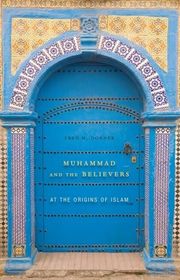
Muhammad and the Believers
For readers who want a scholarly introduction that also advances a distinct argument about Islam’s beginnings. Its focus on an early community of believers makes the interpretive question clear, though the thesis is debated and benefits from comparison with other scholarship.
What it's about
Fred Donner examines the movement associated with Muhammad and its early expansion. He argues that its initial community of believers included a wider range of monotheists, tracing how a more distinct Muslim religious identity emerged over time.

For readers seeking a detailed biography of Muhammad within a traditional Muslim framework. Its chronological account offers a clear devotional perspective, though it has a different purpose and approach to sources from modern historical-critical studies.
What it's about
Safiur Rahman Al-Mubarakpuri presents a chronological biography of Muhammad within the society of early Arabia. It follows his preaching in Mecca, migration to Medina, community leadership, conflicts and treaties, and the final years of his life.

For readers interested in encounters between Islamic societies and medieval Europe. Its broad argument gives Muslim Spain a prominent place in that history, though the ambitious thesis and long chronology invite comparison with more focused regional studies.
What it's about
David Levering Lewis traces the rise of Islam and its encounters with emerging medieval Europe. Focusing on the period from late antiquity to the early thirteenth century, he argues that Muslim Spain played a formative role in European civilization.

For readers ready for a substantial account of institutions and communities across many Muslim societies. Its global range broadens an empire-centered narrative, though the textbook density and long time span require more concentration than an introductory popular history.
What it's about
Ira Lapidus follows the development of Islamic societies from the seventh through the nineteenth century. His global account examines how families, tribes, religious communities, and states interacted, including the growing impact of European commerce and imperial expansion.
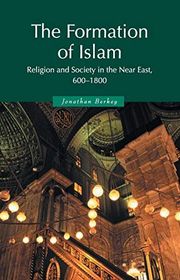
The Formation of Islam
For readers who want religious development explained through institutions and social life rather than rulers alone. Its long Near Eastern perspective connects periods often studied separately, though the scholarly density and regional focus make it better after a basic survey.
What it's about
Jonathan Berkey traces religious and social change in the Near East from late antiquity through the Ottoman period. The book examines how Muslim beliefs, institutions and communities developed in interaction with the region’s existing traditions and changing political structures.
Sources
- 1
Top 12 Islamic History Books Every Muslim Must Read
theislamicquotes.com
- 2
A List of Books on Islamic History, Muslim history.
islamhashtag.com
- 3
100 Best Islamic History Books of All Time
shortform.com
- 4
Islamic History Books
goodreads.com
- 5
Bibliography
know-your-history.com
- 6
Recommendation to understand Islam from a historical perspective
reddit.com
- 7
6 Of The Best Islamic History Books To Broaden Your Understanding
bookriot.com
- 8
Recommended List of Books on Islam and Muslims
ing.org
- 9
Get started in Islamic History
fivebooks.com




Edited by
Software engineer whose passion for tracking book recommendations from podcasts inspired the creation of MRB.
Lead investor at 3one4 Capital whose startup expertise and love for books helped shape MRB and its growth.
Comments
Spotted a missing book, a wrong order or a mistake? Tell us and we'll fix this page.
We're a reading guide, not the author or publisher, so we can't send books or pass on messages.