
14 Best Marketing Strategy Books
The best marketing strategy books, ranked by how many expert sources recommend each one, with notes on who each suits for brand, growth, and digital planning.
Our take
Marketing strategy begins with choices about whom to serve, what value to offer, and how to make that value recognizable. Books on the subject range from broad arguments about markets and brands to practical guides for content, digital channels, and experimentation. The useful choice depends on which decision is unclear.
Purple Cow challenges readers to examine the offer itself, while Blue Ocean Shift provides a process for exploring new demand. What Customers Crave looks at the experience people actually receive. Other books concentrate on particular ways to reach and persuade: They Ask, You Answer focuses on buyer questions, Contagious explores sharing, and the social media guides organize channel work. Hacking Growth is most relevant when a team can run and evaluate experiments. These narrower methods work best when they support a coherent direction.
Start with This Is Marketing to examine audience and value, then choose Positioning or Digital Marketing Strategy for a more specific next question.
14 books · 8 sources · Last updated
As an Amazon Associate, we earn from qualifying purchases (at no extra cost to you).
How to choose from this list
Skip to the full rankingIf you want to clarify audience and value: This Is Marketing → Positioning
If you want to question brand-growth assumptions: How Brands Grow
If you're planning digital activity: Digital Marketing Strategy → Digital Marketing For Dummies
If you're building helpful buyer content: They Ask, You Answer → Top of Mind
If you're organizing growth experiments: Hacking Growth
If you're exploring new demand: Blue Ocean Shift
The 14 books, ranked
Ranked by how many expert sources name each book. Ties go to the book more people recommend.

For marketers who want to understand why people share some ideas and ignore others, Berger offers a memorable behavioral framework. Its examples help diagnose messages, though shareability alone doesn't determine whether a campaign serves the wider business strategy.
What it's about
Jonah Berger investigates why certain products, ideas, and stories spread through word of mouth. Research and examples explain how social motives, emotions, everyday reminders, and other factors influence what people share and what others choose to pass along.
Also recommended by
1 person Changpeng Zhao recommended this book
Changpeng Zhao
"A must-read for all product designers and marketers, and a lot of people in our team have taken the lessons in this book to heart." - Changpeng Zhao
Changpeng Zhao's recommendation of this book

Digital Marketing For Dummies
For small-business readers who need a broad introduction to online marketing activities, Deiss and Henneberry provide an approachable map. The practical coverage helps organize initial learning, though platform details age and the book goes lighter on competitive strategy.
What it's about
Ryan Deiss and Russ Henneberry introduce digital marketing through practical approaches to attracting prospects, generating leads, and building customer relationships. The guide covers online campaigns and channels, showing how to move an audience from initial engagement toward purchase and loyalty.
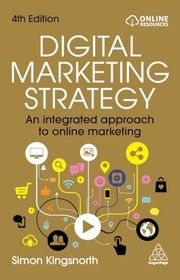
Digital Marketing Strategy: An Integrated Approach to Online Marketing
For marketers who need to connect digital channels with business objectives, Kingsnorth offers a more integrated planning treatment than a platform handbook. Its breadth supports structured work, though readers must adapt examples, tools, and measurement choices to their organization.
What it's about
Simon Kingsnorth explains how to build and implement an integrated digital marketing strategy. The book connects business objectives with customer understanding, channel selection, planning, measurement, and organizational delivery through frameworks, examples, and practical planning tools.

For teams that already have users and want a disciplined experimentation process, Ellis and Brown connect growth work across functions. The practical operating emphasis is useful, though it depends on reliable data and doesn't replace a product or positioning strategy.
What it's about
Sean Ellis and Morgan Brown explain growth hacking as a process of experimentation centered on customers. Their guide connects acquiring, retaining, engaging, and monetizing users with coordinated teamwork and repeated testing, showing how companies can investigate opportunities for growth.
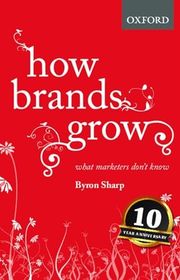
How Brands Grow
For marketers who want to test familiar assumptions about loyalty and growth against research, Sharp offers a challenging evidence-led perspective. Its emphasis on patterns encourages better questions, though readers must examine how findings apply to their situation.
What it's about
Byron Sharp examines patterns in how people buy and how brands grow, challenging familiar marketing assumptions. The book discusses customer acquisition, loyalty, recognition, and availability, using research to connect brand management decisions with observed purchasing behavior.
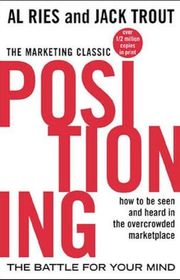
Positioning: The Battle for Your Mind
For readers struggling to explain why customers should choose an offer, Ries and Trout provide a concise vocabulary for competitive positioning. The central idea remains useful for discussion, though the older examples and categorical claims deserve a critical reading.
What it's about
Al Ries and Jack Trout argue that effective marketing depends on establishing a clear place in the audience's mind relative to alternatives. Examples discuss names, categories, competitors, and communication choices in markets crowded with competing messages.

For readers who need to clarify whom their work serves before selecting tactics, Godin offers an accessible set of strategic questions. The audience-centered perspective supports reflection, though the short observations provide less operational detail than a planning manual.
What it's about
Seth Godin presents marketing as understanding and serving a specific audience rather than pursuing attention indiscriminately. He explores empathy, positioning, trust, and storytelling, arguing that helping people solve problems creates more meaningful connections with customers.

What Customers Crave
How to Create Relevant and Memorable Experiences at Every Touchpoint
For teams whose marketing promise and customer experience feel disconnected, Webb makes interactions across the customer journey central. The focus helps move discussion beyond campaigns, though examples and broad principles need translating into specific operating changes.
What it's about
Nicholas Webb argues that customer experience begins with understanding what people love and hate. His framework examines five stages of a customer relationship, using examples to show how organizations can reduce frustration and design more relevant interactions across channels.

For readers questioning whether promotion can compensate for an ordinary offer, Godin makes differentiation the central challenge. The short, provocative format encourages discussion, though its selective examples don't provide a complete process for choosing a market position.
What it's about
Seth Godin argues that businesses should create products and services remarkable enough for people to notice and discuss. His marketing manifesto examines standing out through what a company offers, rather than relying on conventional advertising.
Also recommended by
5 people Cindy Eckert recommended this book
Cindy Eckert
"About how you stand out in a sea of sameness." - Cindy Eckert
Cindy Eckert's recommendation of this book  Joe Gebbia recommended this book
Joe Gebbia
"Make something that’s distinct enough that people want to talk about it." - Joe Gebbia
Joe Gebbia's recommendation of this book  Noah Kagan recommended this book
Noah Kagan
"Only the unique get remembered." - Noah Kagan
Noah Kagan's recommendation of this book  Jay-Z recommended this book
Jay-Z
"This is straight marketing advice: Your product has to be a purple cow—it has to be distinct to have any success." - Jay-Z
Jay-Z's recommendation of this book  Jodie Cook recommended this book
Jodie Cook
"A worthwhile reminder that extraordinary companies win." - Jodie Cook
Jodie Cook's recommendation of this book

For entrepreneurs who want a manageable approach to planning social content, Lance connects platforms with an editorial routine. Its small-business perspective is practical, though the channel-specific guidance needs updating and offers less help with broader market choices.
What it's about
Katie Lance presents a social media planning guide for entrepreneurs, small businesses, and real estate professionals. She explains choosing platforms, developing an online story, and organizing blogs, video, and other content with an editorial calendar.

Blue Ocean Shift
Beyond Competing - Proven Steps to Inspire Confidence and Seize New Growth
For teams that want a guided process for exploring new demand, Kim and Mauborgne turn a broad strategic idea into staged exercises. The organizational focus supports shared work, though market evidence is still needed to test any proposed opportunity.
What it's about
W. Chan Kim and Renée Mauborgne present a five-step process for moving beyond crowded competitive markets. They explain tools for creating new demand while building the confidence and participation needed to carry an organization through change.

Social Media Marketing All-in-One For Dummies
For readers who want social media planning and channel reference material in one volume, this guide offers convenient breadth. The checklists support selective consultation, though fast-changing platforms make tactical instructions less durable than the underlying planning questions.
What it's about
Michelle Krasniak and her coauthors introduce social media marketing through planning tools, checklists, case studies, and examples. The guide discusses choosing channels, reaching customers, organizing campaigns, and using analytics to assess marketing efforts.

They Ask, You Answer
A Revolutionary Approach to Inbound Sales, Content Marketing, and Today's Digital Consumer
For businesses selling products that prompt substantial buyer research, Sheridan makes honest answers the basis of content and sales alignment. Its focused principle is easy to discuss, though the examples fit considered purchases better than every business model.
What it's about
Marcus Sheridan builds a content marketing approach around answering buyers' questions openly and thoroughly. Drawing on his pool business and other company examples, he explains creating useful written and video content and connecting it with sales.

For professionals whose growth depends on trust and relationships, Hall gives useful content a role beyond immediate promotion. The emphasis encourages sustained visibility, though it offers less detail on competitive analysis, channel economics, or measuring incremental results.
What it's about
John Hall examines how useful content and trustworthy relationships can keep a business memorable to customers and partners. His approach connects changing consumer expectations with practical ways to build influence, strengthen a brand, and create professional opportunities.
Sources
- 1
11 of the Best Marketing Strategy Books Worth Reading
solutionsreview.com
- 2
15 Best Marketing Books to Revolutionize Your Strategy in 2021
breadcrumbs.io
- 3
Marketing Strategy Books
goodreads.com
- 4
Marketing Strategy Books: 20 Best Books to Read in 2026
pandabloggers.com
- 5
19 Best Marketing Books To Level Up Your Marketing Strategy (2020)
optinmonster.com
- 6
The 24 Top Marketing Strategy Books You Need to Read This Year
mayple.com
- 7
Best digital marketing books to read in 2026: our top 10 picks | Target Internet
targetinternet.com
- 8
Which marketing books are still relevant in 2025?
reddit.com


Edited by
Software engineer whose passion for tracking book recommendations from podcasts inspired the creation of MRB.
Lead investor at 3one4 Capital whose startup expertise and love for books helped shape MRB and its growth.
Comments
Spotted a missing book, a wrong order or a mistake? Tell us and we'll fix this page.
We're a reading guide, not the author or publisher, so we can't send books or pass on messages.