
10 Best Managerial Accounting Books
The best managerial accounting books, ranked by how many expert sources recommend each one, with notes for students, working managers, costing, and lean operations.
Our take
Managerial accounting uses information about costs, resources, and performance to support decisions inside an organization. It helps explain what drives spending, how budgets translate plans into numbers, and how results compare with expectations. The books here approach that work from different starting points: some build a complete course, some introduce the language for beginners, and others focus on a particular operating philosophy.
Accounting QuickStart Guide combines financial and managerial basics, while Managerial Accounting For Dummies offers a more focused introduction. Ray Garrison's Managerial Accounting provides a substantial textbook route, and Cost Accounting gives costing methods more sustained attention. Real Numbers is a specialist choice for readers connecting accounting with lean operations. Working managers who mainly need to interpret reports may prefer Finance for Nonfinancial Managers. Start with an introductory guide if the terminology is unfamiliar; students should choose the textbook and edition their course uses, then work through the accompanying problems.
10 books · 5 sources · Last updated
As an Amazon Associate, we earn from qualifying purchases (at no extra cost to you).
How to choose from this list
Skip to the full rankingIf you're learning the basic language: Accounting QuickStart Guide → Managerial Accounting For Dummies
If you want a full course: Managerial Accounting (Ray Garrison)
If you want deeper cost analysis: Cost Accounting
If you work with lean operations: Real Numbers
If you need to interpret reports as a manager: Finance for Nonfinancial Managers
The 10 books, ranked
Ranked by how many expert sources name each book. Ties go to the book more people recommend.

Managerial Accounting
For students who want a full course in using accounting information inside a business. The combination of explanations and practice supports systematic study, though its textbook scale demands more work than a concise introduction for working managers.
What it's about
Ray Garrison, Eric Noreen, and Peter Brewer explain the accounting information managers use to plan operations, control activities, and make decisions. Examples and exercises develop methods for collecting, analyzing, and interpreting financial data within business organizations.

Managerial Accounting For Dummies
For readers who need a friendly explanation alongside a course or their first management responsibilities. It makes terminology and common methods approachable, though its compact coverage offers fewer demanding applications than the larger textbooks.
What it's about
Mark Holtzman explains managerial accounting terminology and methods through accessible examples. The guide covers cost behavior, analysis, profit planning, organizational control, capital budgeting, and ethical questions, showing how accounting information supports decisions and communicates progress toward business goals.

For finance leaders and operations managers working with lean practices. Its challenge to conventional reporting makes the link between accounting and operations explicit, though the specialist focus assumes an interest in organizational change rather than introductory accounting study.
What it's about
Jean Cunningham and Orest Fiume draw on their experience as financial executives to examine accounting in lean organizations. They explain why conventional reports can obscure operational performance and present an approach emphasizing clearer information and simpler accounting processes.

Accounting QuickStart Guide
For beginners who need financial and managerial accounting explained together. The approachable examples and practice establish a useful foundation, though the broad introduction leaves less room for advanced costing and control methods than the dedicated textbooks.
What it's about
Josh Bauerle introduces financial and managerial accounting through stories, examples, illustrations, and practice problems. Designed for students and business readers, the guide explains core accounting principles and the information needed to understand financial statements and business performance.

Cost Accounting
For students and practitioners who need depth in how costs support different decisions. Its sustained focus on costing systems and analysis goes beyond the beginner guides, though the technical detail requires comfort with accounting fundamentals and regular problem practice.
What it's about
Charles Horngren, Srikant Datar, and Madhav Rajan connect cost accounting techniques with managerial decisions. The textbook explains how different purposes require different cost information, covering costing systems, cost-volume-profit relationships, variance analysis, and the interpretation of business costs.
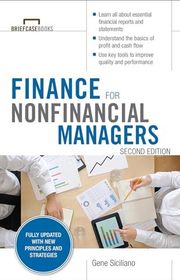
Finance for Nonfinancial Managers
For managers who need to use financial information without becoming accountants. Its emphasis on interpreting reports and connecting them with business decisions makes the material accessible, though the broader finance coverage gives less depth on individual managerial accounting techniques.
What it's about
Gene Siciliano introduces financial reports, accounting language, budgeting, cash flow, and the financial effects of business decisions. Written for managers outside finance, the guide connects numbers with the responsibilities of running a department or business.

For students taking a combined financial and managerial accounting course. Linking external reporting with internal decisions gives a broader foundation than a managerial-only text, though readers interested solely in budgeting or costing must work around substantial reporting material.
What it's about
John Wild and Ken Shaw combine financial reporting with accounting information used inside organizations. The textbook develops core concepts through business examples, demonstrations, and exercises, connecting financial statement preparation with the information managers need for decisions.

For readers who want to understand why managers use particular accounting methods. Its attention to strategy, ethics, and different organizational settings broadens the decision-making perspective, though the substantial textbook treatment requires more commitment than a practical overview.
What it's about
Michael Maher, Clyde Stickney, and Roman Weil emphasize using accounting information to make management decisions. The textbook combines concepts and application problems with discussions of strategy, ethics, international issues, and accounting in service, government, and nonprofit organizations.

For students who benefit from seeing how calculations connect to a business decision. The structured examples help link procedures with their purpose, though working through a full textbook takes time and course users should match the assigned edition.
What it's about
Maryanne Mowen, Don Hansen, and Dan Heitger connect managerial accounting concepts with their practical use in business decisions. Examples explain where accounting information comes from and how managers apply it, alongside topics including lean accounting, sustainability, and risk.

For students seeking a broad set of tools for planning and evaluating business activity. Company examples connect calculations with managerial choices, though the textbook format rewards repeated exercises and is less convenient for a quick working reference.
What it's about
Weygandt, Paul Kimmel and Jill Mitchell explain accounting tools used in business decisions. Topics include costing systems, pricing, budgeting, performance evaluation and capital investment, supported by company examples and exercises connecting calculations with managerial choices.
Sources
- 1
100 Best Managerial Accounting Books of All Time (Updated for 2026)
shortform.com
- 2
Managerial Accounting Books
goodreads.com
- 3
10 Managerial Accounting Books That Separate Experts from Amateurs
bookauthority.org
- 4
The Best 23 Managerial Accounting Books - Blinkist
blinkist.com
- 5
Management Accounting Books - 10 Best Textbooks [2026]
wallstreetmojo.com




Edited by
Software engineer whose passion for tracking book recommendations from podcasts inspired the creation of MRB.
Lead investor at 3one4 Capital whose startup expertise and love for books helped shape MRB and its growth.
Comments
Spotted a missing book, a wrong order or a mistake? Tell us and we'll fix this page.
We're a reading guide, not the author or publisher, so we can't send books or pass on messages.