
14 Best Accounting Books
The best accounting books, ranked by how many expert sources recommend each one, with notes on beginner learning, financial reports and business references.
Our take
Accounting books help readers understand how transactions become records and how those records become financial reports. The right choice depends on whether you want to keep books, interpret a company's statements, study reporting rules or improve an accounting department's processes. Short introductions can establish the vocabulary, while textbooks and handbooks provide far more detail. Tax and regulatory material also depends on jurisdiction and edition, so its role differs from the more enduring explanation of how statements connect.
Accounting Made Simple offers a brief starting point, while The Accounting Game uses activities and a familiar small-business example. Financial Statements makes the links between reports visible. For owners, Accounting for the Numberphobic connects those reports with business decisions. How to Read a Financial Report emphasizes interpretation, and Financial Shenanigans asks what reported numbers might conceal. Students with the basics in place can move toward Intermediate Accounting, while practitioners may prefer Barron's Accounting Handbook or Accounting Best Practices for reference. Begin with a short introduction and worked examples before choosing a specialist text.
14 books · 7 sources · Last updated
As an Amazon Associate, we earn from qualifying purchases (at no extra cost to you).
How to choose from this list
Skip to the full rankingIf you're completely new: The Accounting Game → Accounting Made Simple
If you want to understand financial reports: Financial Statements → How to Read a Financial Report
If you run a small business: Accounting for the Numberphobic → Profit First
If you want to scrutinize reported numbers: How to Read a Financial Report → Financial Shenanigans
If you're ready for a course textbook: Intermediate Accounting
If you need a professional reference: Barron's Accounting Handbook → Accounting Best Practices
The 14 books, ranked
Ranked by how many expert sources name each book. Ties go to the book more people recommend.

For beginners who want a concise map of accounting before a larger reference. Piper connects core statements, ratios and bookkeeping vocabulary with little reading overhead, though the compressed format offers less practice and depth than a course textbook.
What it's about
Mike Piper introduces accounting through concise explanations of financial statements, ratios, and the accounting equation. Topics include debits and credits, cash and accrual methods, generally accepted principles, inventory costs, depreciation, and amortization.

Accounting All-in-One For Dummies
For readers who want a broad reference they can consult topic by topic. Its range connects basic accounting with business decisions and auditing, though the size and breadth can be less approachable than a short, sequential introduction.
What it's about
Boyd brings together accounting fundamentals and practical business applications in a single reference. The book covers financial statements, cash management, purchasing decisions, auditing, and fraud detection, with online quizzes that let readers check their understanding of individual topics.

For small-business owners who feel intimidated by financial reports but need to discuss decisions. Fotopulos keeps the three main statements connected with everyday business questions, though the practical overview provides less bookkeeping detail than a dedicated instructional text.
What it's about
Fotopulos explains the income statement, cash flow statement, and balance sheet in plain language for small-business owners. The guide connects these reports with practical decisions about profits, break-even points, cash flow, and the overall financial condition of a business.

The Accounting Game
For beginners who learn best through one simple business example and repeated activities. The lemonade-stand format makes transactions and reports easier to connect, though readers with prior accounting knowledge may find the pace and presentation too elementary.
What it's about
Mullis and Orloff use a child's lemonade stand to introduce accounting without technical jargon. Interactive lessons, color-coded charts, and worksheets teach readers to track expenses, understand cash flow, and connect business activity with financial reports.

Barron's Accounting Handbook
For students and practitioners who need a substantial desk reference and accounting vocabulary. The handbook's wide coverage supports looking up unfamiliar topics, though its reference structure and edition-specific reporting material make it less suitable as a first step-by-step course.
What it's about
This reference surveys financial and management accounting, statement analysis, auditing, taxation, and accounting technology. It combines explanations with an accounting dictionary and coverage of nonprofit, international, and forensic accounting for students and professionals needing a broad practical resource.

Financial Shenanigans
How to Detect Accounting Gimmicks and Fraud in Financial Reports
For readers who already understand the basic statements and want to question what reported numbers conceal. The case studies make manipulation patterns concrete, though identifying warning signs requires judgment and does not by itself prove that fraud occurred.
What it's about
Howard Schilit, Jeremy Perler, and Yoni Engelhart explain how to identify deceptive financial reporting. Case studies examine inflated revenue, manipulated earnings and cash flow, misleading performance measures, and acquisitions that obscure business deterioration, helping readers scrutinize corporate accounts.

Intermediate Accounting
For accounting students ready to move beyond an introductory overview. The detailed explanations and problem material develop reporting concepts systematically, though the workload, prerequisites and edition-specific standards make this a course commitment rather than a casual business guide.
What it's about
Kieso, Weygandt, and Warfield develop intermediate financial accounting concepts through explanations and problem material. This edition includes data analytics and coverage of leases, revenue recognition, financial instruments, and the accounting frameworks of US GAAP and IFRS.

Profit First
Transform Your Business from a Cash-Eating Monster to a Money-Making Machine
For small-business owners who want a behavioral system for allocating cash and controlling spending. The account-based routine makes implementation tangible, though this is a cash-management method rather than a substitute for bookkeeping, financial statements or business profitability analysis.
What it's about
Mike Michalowicz presents a cash management system that assigns money to profit before operating expenses. He explains using separate accounts and allocation routines to shape spending habits, combining implementation steps with examples from small business finances.

For US small-business owners who want to recognize tax and legal planning questions before meeting advisers. The scenarios make the issues concrete, though the linked edition discusses earlier legislation and needs current professional context rather than direct application.
What it's about
Kohler addresses small-business tax and legal planning through case studies, practical scenarios, and discussion points. This revised edition examines the Tax Cuts and Jobs Act of 2017 and explores how owners can approach business decisions and asset protection.

For investors who want accounting connected with reading company reports and valuation. The worked approach gives the statements a clear purpose, though the investing lens offers less help with running a company's books and valuation depends on uncertain assumptions.
What it's about
Brodersen and Pysh introduce accounting tools used in value investing, including two approaches to calculating a stock's intrinsic value. Readers learn how to interpret income statements, balance sheets, cash flow statements, and key financial ratios when examining a company.
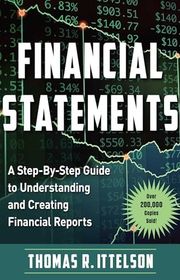
Financial Statements: A Step-by-Step Guide to Understanding and Creating Financial Reports
For readers who want to see how individual transactions change the three main financial statements together. The visual, step-by-step approach connects bookkeeping with reporting, though the simplified examples leave complex professional accounting issues for more advanced texts.
What it's about
Thomas Ittelson explains how income statements, balance sheets, and cash-flow statements connect. A running business example follows transactions through the reports, introducing the accounting relationships needed to prepare statements and interpret a company’s financial position.

For managers and other non-specialists who want to interpret reports rather than maintain the underlying ledger. The emphasis on connections between profit, cash and financial condition is useful, though the linked ninth edition's regulatory details need checking for updates.
What it's about
John and Tage Tracy explain how income statements, balance sheets, and cash flow reports connect. Their guide examines revenue, expenses, capital, profits, and financial ratios, helping readers interpret a company's condition and recognize common misunderstandings about reported numbers.

Accounting Best Practices
For accounting staff and managers who want to improve established department processes. Bragg's organization by function makes targeted consultation practical, though many suggestions require adapting to the organization's systems, controls and responsibilities rather than applying a universal checklist.
What it's about
Steven Bragg presents practices for improving the work of accounting departments. Organized by areas such as payables, billing, cash management, collections, financial statements, inventory, and payroll, the reference discusses productivity, costs, and monitoring accounting processes.

For US small-business owners who want an organized introduction to tax records, deductions and responsibilities. The reference format helps identify questions to investigate, though the linked older edition must be checked against current law and an individual's circumstances.
What it's about
This guide introduces tax planning for small-business owners, connecting business structure, deductions, and record keeping with tax responsibilities. It discusses retirement arrangements, employment taxes, and handling an IRS audit, helping readers understand the questions involved in managing business taxes.
Sources
- 1
Top 8 Accounting Books of 2026
proalt.com
- 2
10 BEST ACCOUNTING BOOKS OF ALL TIME
wikiaccounting.com
- 3
Accounting Books - List of 10 Best Books [Updated 2026]
wallstreetmojo.com
- 4
The 14 Best Accounting Books of 2026
thecfoclub.com
- 5
Accounting Books
goodreads.com
- 6
8 BEST Accounting Books for Beginners (2026 Update)
guru99.com
- 7
Accounting: Top Books
guides.library.illinoisstate.edu




Edited by
Software engineer whose passion for tracking book recommendations from podcasts inspired the creation of MRB.
Lead investor at 3one4 Capital whose startup expertise and love for books helped shape MRB and its growth.
Comments
Did we miss something? Have feedback?
Help us improve this page by sharing your thoughts