
13 Best Financial Accounting Books
The best financial accounting books, ranked by how many expert sources recommend each, with notes for beginners, business owners, students, and report readers.
Our take
Financial accounting books explain how business activity becomes a set of reports: what a company owns and owes, how it earns a profit, and where its cash goes. Some start with individual transactions and the accounting cycle. Others help managers or investors interpret completed statements. Those are connected skills, but a book that teaches one may assume knowledge of the other.
Accounting Made Simple offers a compact introduction, while The Accounting Game teaches through a small business and practical exercises. Financial Statements connects the main reports through a continuing example. Students who need more practice can turn to Accounting Principles before tackling Intermediate Accounting. For critical reading, Financial Shenanigans examines how reported performance can mislead. Textbook editions and reporting frameworks matter, especially when studying for a course. Start with a beginner’s explanation if the language is new, then choose statement interpretation or deeper transaction work according to your purpose.
13 books · 7 sources · Last updated
As an Amazon Associate, we earn from qualifying purchases (at no extra cost to you).
How to choose from this list
Skip to the full rankingIf you’re starting from zero: Accounting Made Simple → The Accounting Game
If you want to connect the statements: Financial Statements → How to Read a Financial Report
If you’re studying accounting formally: Accounting Principles → Intermediate Accounting
If you run a small business: Accounting for Small Business Owners → Accounting For Dummies
If you want to examine reporting critically: Financial Shenanigans → Quality of Earnings
If you want an investing context: Warren Buffett Accounting Book
The 13 books, ranked
Ranked by how many expert sources name each book. Ties go to the book more people recommend.

For complete beginners who want a compact explanation before tackling a textbook. The short format makes financial statements and basic entries approachable, though it provides fewer worked problems and less depth than a full introductory course.
What it's about
Mike Piper introduces accounting through concise explanations of financial statements, ratios, and the accounting equation. Topics include debits and credits, cash and accrual methods, generally accepted principles, inventory costs, depreciation, and amortization.

Financial Shenanigans
How to Detect Accounting Gimmicks and Fraud in Financial Reports
For readers who already understand basic statements and want to question reported results more critically. The case-based approach makes warning signs memorable, though it emphasizes suspicious reporting rather than teaching the accounting cycle from scratch.
What it's about
Howard Schilit, Jeremy Perler, and Yoni Engelhart explain how to identify deceptive financial reporting. Case studies examine inflated revenue, manipulated earnings and cash flow, misleading performance measures, and acquisitions that obscure business deterioration, helping readers scrutinize corporate accounts.
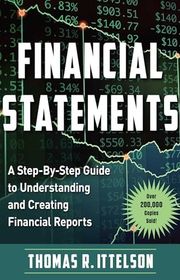
Financial Statements: A Step-by-Step Guide to Understanding and Creating Financial Reports
For readers who want to see how business transactions flow through the three main financial statements. The connected examples make it a strong bridge from vocabulary to understanding, though complex reporting standards need a more advanced textbook.
What it's about
Thomas Ittelson explains how income statements, balance sheets, and cash-flow statements connect. A running business example follows transactions through the reports, introducing the accounting relationships needed to prepare statements and interpret a company’s financial position.

The Accounting Game
For beginners who learn best by following one simple business through its transactions. The lemonade-stand exercises make relationships between statements concrete, though the simplified setting leaves many real-world reporting complications for later study.
What it's about
Mullis and Orloff use a child's lemonade stand to introduce accounting without technical jargon. Interactive lessons, color-coded charts, and worksheets teach readers to track expenses, understand cash flow, and connect business activity with financial reports.

Accounting Principles
For students who want a structured introduction with worked examples and substantial practice. Its progression through the accounting cycle supports coursework, though the broader financial-and-managerial scope and edition requirements make it less convenient for casual reading.
What it's about
Weygandt, Paul Kimmel and Jill Mitchell introduce financial and managerial accounting through the accounting cycle. Transactions, company examples and practice problems connect foundational concepts with decision making, while introductory data-analysis material shows how accounting information is used.

Intermediate Accounting
For students ready to move beyond introductory bookkeeping into detailed financial reporting. The substantial problem material supports serious study, though prerequisites, accounting framework, and the edition assigned by your course matter more than a general recommendation.
What it's about
Kieso, Weygandt, and Warfield develop intermediate financial accounting concepts through explanations and problem material. This edition includes data analytics and coverage of leases, revenue recognition, financial instruments, and the accounting frameworks of US GAAP and IFRS.

For investors who want accounting explained through the statements and ratios they encounter when examining companies. The investment context gives the material direction, though valuation methods share space with accounting and the book is not written by Buffett.
What it's about
Brodersen and Pysh introduce accounting tools used in value investing, including two approaches to calculating a stock's intrinsic value. Readers learn how to interpret income statements, balance sheets, cash flow statements, and key financial ratios when examining a company.

Accounting All-in-One For Dummies
For readers who want a broad accounting reference they can consult by topic. The combined coverage supports business questions beyond statement preparation, though the size and mix of subjects make it less focused than a dedicated financial-accounting textbook.
What it's about
Boyd brings together accounting fundamentals and practical business applications in a single reference. The book covers financial statements, cash management, purchasing decisions, auditing, and fraud detection, with online quizzes that let readers check their understanding of individual topics.

Accounting For Dummies
For readers who want accessible explanations of accounting language and its business uses. The broader discussion helps connect reports with management questions, though learners needing rigorous transaction practice may prefer a course textbook with exercises.
What it's about
John and Tage Tracy introduce accounting terminology and the information behind financial statements. Practical explanations cover budgets, forecasts, business plans and financing, helping readers connect accounting records with the decisions involved in managing business or personal finances.

For readers who can recognize the statements but want to understand the relationships among their numbers. The emphasis on connections supports careful interpretation, though it is less useful for learning bookkeeping procedures through extensive practice problems.
What it's about
John and Tage Tracy explain how income statements, balance sheets, and cash flow reports connect. Their guide examines revenue, expenses, capital, profits, and financial ratios, helping readers interpret a company's condition and recognize common misunderstandings about reported numbers.

Quality of Earnings
For readers who want to look beyond headline profit and examine the quality of reported results. Its skeptical approach complements introductory accounting, though the older company examples require separation from current reporting rules and disclosure practices.
What it's about
Thornton L. O'glove explains how investors can scrutinize financial reports to assess a company's earnings. Examples reveal accounting warning signs, inflated results, and differences between figures reported to shareholders and tax authorities, emphasizing the gap between reported profits and business performance.
Also recommended by
1 person Bill Ackman recommended this book
Bill Ackman
One of 11 Books Bill Ackman told a young man to read before hiring him.
Bill Ackman's recommendation of this book

Accounting for Small Business Owners
For owners who need to organize basic records and understand what their accounts are showing. The small-business context makes the examples practical, though it offers less depth on complex reporting issues or large-company statements.
What it's about
Tycho Press introduces financial accounting for running a small business. Definitions, sample statements and practical explanations cover tracking money, expenses and employees, with guidance on establishing accounting systems and balancing accounts at the end of the month.

Barron's Accounting Handbook
For students and professionals who want a broad reference for looking up accounting topics and terminology. The handbook format supports occasional consultation, though its older coverage needs checking against current standards and jurisdiction-specific requirements.
What it's about
This reference surveys financial and management accounting, statement analysis, auditing, taxation, and accounting technology. It combines explanations with an accounting dictionary and coverage of nonprofit, international, and forensic accounting for students and professionals needing a broad practical resource.
Sources
- 1
Accounting Books
wallstreetmojo.com
- 2
Top 15 Accounting Books Recommended Most Times by Business Owners, Students or Accounting Pro’s
blog.consultants500.com
- 3
The Best Accounting Textbooks of 2026
conqueryourexam.com
- 4
100 Best Financial Accounting Books of All Time
shortform.com
- 5
10 Accounting and Finance Books to Read in 2026
rightworks.com
- 6
Accounting Books
goodreads.com
- 7
Books to learn financial accounting
reddit.com



Edited by
Software engineer whose passion for tracking book recommendations from podcasts inspired the creation of MRB.
Lead investor at 3one4 Capital whose startup expertise and love for books helped shape MRB and its growth.
Comments
Spotted a missing book, a wrong order or a mistake? Tell us and we'll fix this page.
We're a reading guide, not the author or publisher, so we can't send books or pass on messages.