
22 Best Logical Thinking Books
The best logical thinking books, ranked by how many expert sources recommend each one, with notes for beginners, careful debaters, and students of formal logic.
Our take
Logical thinking can mean checking whether a conclusion follows, deciding whether evidence is strong enough, or noticing when a persuasive argument hides a weak assumption. Those tasks overlap, but they call for different books. A fallacy reference helps you recognize patterns of error; a formal textbook teaches precise methods for testing arguments; a psychology book examines how judgment goes astray.
Being Logical offers a short introduction, and A Rulebook for Arguments is useful when you need to build a case in writing. Asking the Right Questions gives you a way to examine other people’s claims. The textbooks by Copi and Hurley provide longer courses, while Logic Primer takes a particularly concise approach to symbolic work. Thinking, Fast and Slow supplies a different perspective on intuition and decision-making rather than a sequence of logic exercises.
Start with Being Logical for the basics, then choose argument practice or formal proof according to what you want to do.
22 books · 12 sources · Last updated
As an Amazon Associate, we earn from qualifying purchases (at no extra cost to you).
How to choose from this list
Skip to the full rankingIf you’re starting with everyday reasoning: Being Logical → A Rulebook for Arguments
If you want to evaluate claims: Asking the Right Questions → Informal Logic
If you want Priest’s brief overview: Logic → Introducing Logic
If you want a formal course with Copi: Introduction to Logic → An Introduction to Formal Logic
If you prefer a concise proof reference: Logic Primer
If you want reasoning through problems: How to Solve It
The 22 books, ranked
Ranked by how many expert sources name each book. Ties go to the book more people recommend.

A Rulebook for Arguments
For students and writers who need to make a case clearly and assess supporting evidence. Weston's concise rules are easy to revisit while drafting, though the compact format offers less theoretical background than a textbook.
What it's about
Anthony Weston presents concise rules for constructing and evaluating arguments, from choosing evidence to supporting conclusions. Examples illustrate persuasive reasoning, while guidance on public debate addresses the responsibilities and etiquette of engaging with other people's views.

For readers who want a short introduction before tackling a formal logic textbook. Its compact discussions make everyday reasoning approachable, though the brevity leaves less space for extended practice or detailed treatment of symbolic systems.
What it's about
D. Q. McInerny explains how clear premises, reliable evidence, and careful conclusions support good reasoning. Short discussions and examples contrast sound arguments with common errors, including diversions and oversimplification, offering a practical foundation for everyday logical thinking.

Introduction to Logic
For readers ready for a substantial textbook rather than a collection of tips. Copi develops the analysis and testing of arguments systematically, though the exercises require sustained work and notation varies across editions.
What it's about
This introductory textbook develops methods for assessing arguments and understanding deductive validity. Its treatment of truth tables, indirect proof, and conditional proof gives students tools for formal reasoning and for distinguishing different kinds of sound and demonstrative arguments.

For curious beginners who want to understand what logic studies before committing to a course. Priest connects basic ideas with philosophical problems, though the short format offers limited room for developing proof skills through exercises.
What it's about
Graham Priest introduces the central questions and methods of logic through accessible examples. Discussions of validity, probability, decision making, identity, and time show how logical reasoning works, while later sections connect it with algorithms and mathematical proof.
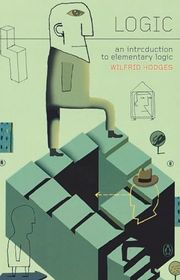
Logic
For readers who want an approachable route into formal logic without assumed prior study. Hodges builds from ordinary-language examples and offers optional harder material, though the book still asks readers to work carefully with logical expressions.
What it's about
Wilfrid Hodges introduces elementary logic by examining ordinary statements and the expressions used to connect them. Starting without assumed knowledge, he develops formal ways of analyzing reasoning, with optional sections for readers ready for more mathematical material.

Thinking, Fast and Slow
For readers interested in why intuitive judgments can depart from careful reasoning. Kahneman offers a psychological perspective that complements argument guides, though the wide-ranging research discussion is not a course in constructing or testing formal proofs.
What it's about
Kahneman explores two modes of thought: quick, intuitive responses and slower, deliberate reasoning. Drawing on psychological research, he examines how biases and impressions shape decisions, and when intuition helps or misleads in personal and professional life.
Also recommended by
19 people Bill Gates recommended this book
Bill Gates
List of books Bill Gates read in 2012.
Bill Gates's recommendation of this book  Ray Dalio recommended this book
Ray Dalio
Ray Dalio mentioned this book in his book, "Principles."
Ray Dalio's recommendation of this book  Scott Adams recommended this book
Scott Adams
One of the books on Scott Adams' "Persuasion Reading List."
Scott Adams's recommendation of this book  Naval Ravikant recommended this book
Naval Ravikant
"Fine book but it didn’t need to be an entire book. A blog post would have gotten the point across." - Naval Ravikant
Naval Ravikant's recommendation of this book  Ev Williams recommended this book
Ev Williams
"I love surprising scientific findings, as well as information about how our brains work. [This book] is a treasure trove of both." - Ev Williams
Ev Williams's recommendation of this book  Marc Andreessen recommended this book
Marc Andreessen
"Captivating dive into human decision making, marred by inclusion of several/many? psychology studies that fail to replicate. Will stand as a cautionary tale?" - Marc Andreessen
Marc Andreessen's recommendation of this book +13
More recommendations
- Stewart Brand
Stewart Brand recommended this book on his "Selected Books for the Manual for Civilization" blog post.
- Bryan Johnson
"I started reading [this book] and I became increasingly convinced of my own fickleness and inability to actually act rationally in life." - Bryan Johnson
- Derek Sivers
"If you liked 'Predictably Irrational' or 'Stumbling on Happiness' or any of those pop-psychology books, well, this is the Godfather of all of their work." - Derek Sivers
- Sam Altman
One of Sam Altman's answers to "What are some of the best books you recommend for a young startup founder?"
- Ron Conway
"Covers all three phases of [the author's] career: his early days working oncognitive bias, his work on prospect theory, and his later work on happiness." - Ron Conway
- Jason Fried
"I enjoyed [this book]. Fascinating." - Jason Fried
- Nassim Taleb
"A landmark book in social thought, in the same league as The Wealth of Nations by Adam Smith and The Interpretation of Dreams by Sigmund Freud." - Nassim Taleb
- Sahil Lavingia
Sahil Lavingia recommended this book on Notion.
- Mark Manson
Mark Manson recommended this book on his website.
- Jay Shetty
"[One] of my favourite books." - Jay Shetty
- Michiko Kakutani
"Has become essential reading in many baseball front offices and among coaching staffs." - Michiko Kakutani
- Preston Pysh
"An incredible book!" - Preston Pysh
- Ben Greenfield
Most Recommended Books reached out to Ben Greenfield directly.
- Stewart Brand

The Art of Thinking Clearly
For readers who prefer brief, self-contained examples of judgment errors. Dobelli’s short chapters make dipping in easy, though the compressed explanations offer less discussion of evidence and context than a longer account of cognitive psychology.
What it's about
Rolf Dobelli examines common errors in reasoning through ninety-nine short chapters. Everyday examples illustrate cognitive biases and mistaken judgments, inviting readers to recognize recurring traps and reconsider how they make decisions at work and in personal life.

Tractatus Logico-Philosophicus
For readers interested in logic’s relationship with language and reality, Wittgenstein offers a demanding philosophical landmark. Its compressed numbered propositions reward commentary and rereading, but they do not provide a beginner’s course in constructing formal proofs.
What it's about
Wittgenstein explores the relationship between language, thought, and reality through a carefully numbered sequence of propositions. His account of facts, logical representation, and meaningful statements seeks to clarify philosophical problems and establish the limits of what language can express.
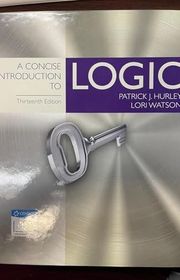
A Concise Introduction to Logic
For students who want a structured course with substantial practice in evaluating arguments. Hurley moves between ordinary language and formal techniques, though the textbook format demands more time than the short introductory guides.
What it's about
Patrick Hurley explains how to identify, construct, and evaluate arguments through informal and formal methods. The textbook connects clear language with systematic reasoning, using examples and exercises to develop the techniques needed for an introductory logic course.
An Introduction to Formal Logic
For beginners prepared to learn symbolic languages and practice formal proof. Smith combines worked examples with philosophical explanation, though the focus on propositional and predicate logic provides less direct guidance for everyday disagreement.
What it's about
Peter Smith develops the aims and methods of formal logic, introducing propositional and predicate languages and natural deduction. Worked examples and exercises show how arguments can be translated into these languages and evaluated using systematic proof techniques.

For readers who need a repeatable way to evaluate claims in essays, news, or discussions. Browne and Keeley organize scrutiny around practical questions, though this focus on informal arguments provides little training in symbolic proof.
What it's about
M. Neil Browne and Stuart Keeley teach critical thinking through questions about arguments and evidence. The guide examines conclusions, reasons, assumptions, and language, helping readers recognize fallacies and evaluate competing claims before deciding what to accept.
How to Solve It
For readers who want to practice reasoning through problems rather than classify arguments alone. Polya’s questions encourage planning and checking a solution, though the mathematical examples may feel indirect for readers focused on public debate.
What it's about
George Pólya explains how to understand a problem, devise a plan, carry it out and review the result. Mathematical examples and a dictionary of heuristic ideas explore analogy, working backward and other ways to approach unfamiliar questions.

For readers who enjoy short examples of how arguments go wrong. The fallacy-by-fallacy format is convenient for browsing, though its playful emphasis on winning disputes can distract from the more useful goal of evaluating claims fairly.
What it's about
Madsen Pirie examines common logical fallacies and the ways they appear in arguments. Examples show how misleading reasoning can be detected or deployed, with discussions extending to spoken exchanges, written disputes, and online debate.
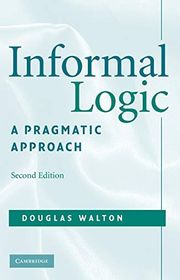
Informal Logic
For readers who want to analyze arguments as exchanges between people rather than isolated formulas. Walton’s many examples develop context-sensitive judgment, though the detailed discussion makes it slower reading than a short rulebook.
What it's about
Douglas Walton examines how arguments succeed or fail in practical discussion. Using numerous examples, he considers relevance, emotion, expert opinion, analogy, questions, and statistical claims, explaining how criticism and reasoned persuasion depend on the context of an exchange.
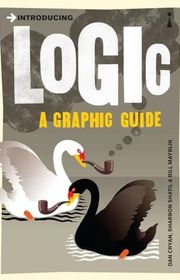
Introducing Logic
For visually oriented readers who want a broad first encounter with logic and its history. The graphic format provides another route into abstract ideas, though it offers less sustained technical practice than a conventional textbook.
What it's about
Bill Mayblin, Dan Cryan, and Sharron Shatil trace the development of logic through illustrated explanations. The guide introduces symbols, methods, and philosophical questions while connecting logical reasoning with scientific inquiry, computers, and the development of digital technology.
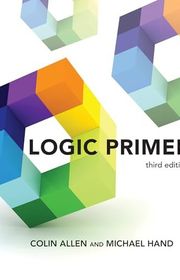
Logic Primer
For students who prefer precise definitions and exercises with little surrounding exposition. Allen and Hand provide a compact route through symbolic logic, though the spare style may require a teacher or a more explanatory companion.
What it's about
Colin Allen and Michael Hand introduce validity, soundness, formal languages, proof methods, and semantics. The third edition covers sentential and first-order predicate logic with identity, using concise definitions, examples, and exercises arranged to build technical understanding progressively.
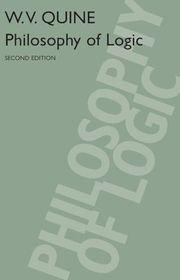
Philosophy of Logic
For readers who know some logic and want to question its foundations. Quine examines truth, grammar, and the boundaries of logical systems, though the compact philosophical argument is more demanding than a beginner’s skills guide.
What it's about
Willard Van Orman Quine investigates the relationship between logic, truth, and grammar. He considers what makes a truth logical and where the subject’s boundaries lie, presenting philosophical arguments about the foundations and possible extensions of logical systems.
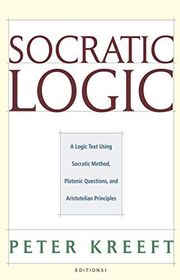
Socratic Logic
For readers who prefer verbal reasoning, questions, and traditional syllogisms to mathematical symbolism. Kreeft provides extensive exercises in an Aristotelian framework, though his opinionated defense of that approach differs from contemporary symbolic logic textbooks.
What it's about
Peter Kreeft presents traditional logic through Socratic questioning, ordinary-language arguments, and Aristotelian principles. Examples and exercises address definitions, hidden assumptions, argument construction, and analysis, giving readers a practical course within a deliberately classical philosophical framework.
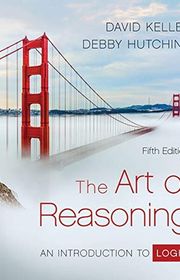
The Art of Reasoning
For students wanting ordinary-language argument analysis and symbolic logic in one course. Kelley and Hutchins connect several methods of reasoning, though the breadth makes this a longer commitment than a single-purpose fallacy guide.
What it's about
David Kelley and Debby Hutchins introduce logic through concepts, explanations, and progressively developed problem sets. The fifth edition combines argument analysis with formal reasoning and includes a chapter on cognitive biases, supporting an organized course of study.
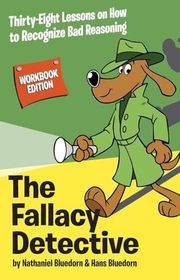
The Fallacy Detective
For younger learners or adults who prefer brief lessons and humorous examples. The exercises make common reasoning mistakes concrete, though the introductory treatment is narrower than a full logic course and uses a distinctive homeschooling tone.
What it's about
Nathaniel and Hans Bluedorn introduce common errors in reasoning through short lessons, examples, cartoons, and exercises with answers. The book is designed for readers from about age twelve upward and includes a game for practicing fallacy recognition.

For readers who want a reference to consult when an argument seems misleading. Bennett’s large collection makes comparison between fallacies convenient, though learning labels alone does not establish whether a particular claim is false.
What it's about
Bo Bennett explains more than three hundred logical fallacies through definitions and original examples. The collection helps readers recognize faulty reasoning in discussions, debates, and decisions, and understand why apparently persuasive arguments can fail to support their conclusions.

For readers curious about an older presentation of concepts, judgments, and syllogisms. Its traditional framework gives historical context to reasoning manuals, though the period language and approach differ from contemporary symbolic logic courses.
What it's about
William Atkinson outlines the foundations of reasoning, moving from concepts and judgments to induction, deduction, and analogy. Discussions of syllogisms, hypotheses, and fallacies explain how arguments are formed, tested, and weakened by errors in thought.
Sources
- 1
Best Books on Logical Thinking & Rational Decision-Making
readingandthinking.com
- 2
17 Best Books on Critical Thinking [Handpicked for You]
upjourney.com
- 3
GLRC | Training Problems
gllrc.org
- 4
Newsletter Book Recommendations
amateurlogician.com
- 5
Logic Books
goodreads.com
- 6
Suggest me books to improve rational thinking
reddit.com
- 7
Bookstore
philosophy.hku.hk
- 8
100 Best Logic Books of All Time (Updated for 2026)
shortform.com
- 9
CRITICAL THINKING AND LOGIC TEXTBOOKS
philosophystudent.org
- 10
The Four Best Books on Formal Logic
thedailyidea.org
- 11
The best books on Logic
fivebooks.com
- 12
5 Best Books On Logic (Clear Thinking And Better Reasoning)
bookuncover.com





Edited by
Software engineer whose passion for tracking book recommendations from podcasts inspired the creation of MRB.
Lead investor at 3one4 Capital whose startup expertise and love for books helped shape MRB and its growth.
Comments
Spotted a missing book, a wrong order or a mistake? Tell us and we'll fix this page.
We're a reading guide, not the author or publisher, so we can't send books or pass on messages.