
13 Best Lean Manufacturing Books
The best lean manufacturing books, ranked by how many expert sources recommend each one, with notes for newcomers, practitioners, and managers choosing a guide.
Our take
Lean manufacturing examines how work creates value and what prevents it from flowing reliably. The books here approach that question through production history, management behavior, practical tools, and daily improvement routines. A mapping workbook serves a different purpose from a study of Toyota, and knowing the vocabulary is only a beginning when the work involves real people and processes.
Lean Production Simplified offers an accessible overview, while Lean Thinking connects the principles with wider organizational change. The Machine That Changed the World supplies historical context. For a practical next step, Learning to See concentrates on value-stream mapping, and Kaizen Express introduces production-system fundamentals visually. The Toyota Way and Toyota Kata shift attention toward management and developing people. Experienced practitioners can use the pocket toolbook as a reference rather than a first course. Start with an overview, then choose a focused book that matches the process or management problem you need to understand.
13 books · 8 sources · Last updated
As an Amazon Associate, we earn from qualifying purchases (at no extra cost to you).
How to choose from this list
Skip to the full rankingIf you are new to lean: Lean Production Simplified → Lean Thinking
If you want to understand the origins: The Machine That Changed the World → Toyota Production System
If you need to examine production flow: Learning to See
If improvements keep fading: Creating a Lean Culture → Toyota Kata
If you want to develop problem-solving skills: Managing to Learn
If you want to understand bottlenecks: The Goal
The 13 books, ranked
Ranked by how many expert sources name each book. Ties go to the book more people recommend.

For teams ready to map how one product family actually moves through production. Its workbook format makes material and information flow concrete, though useful maps require observation at the workplace rather than drawing from assumptions.
What it's about
Mike Rother and John Shook explain how to map the flow of materials and information through production. Their workbook develops current and future-state maps to identify waste, improve flow, and introduce pull systems across a product's value stream.

For managers who want to connect production methods with leadership behavior and organizational learning. Its fourteen-principle framework gives the tools a wider context, though understanding Toyota’s approach does not make it straightforward to reproduce elsewhere.
What it's about
Jeffrey Liker examines Toyota's management philosophy and production system through fourteen principles. This second edition explores how organizations can develop an improvement approach suited to their circumstances, with updated frameworks for innovation and quality.

For managers who want to understand lean as an organization-wide approach. Its principles and cross-industry cases connect improvements with customer value, though it gives less detailed instruction in individual tools than the focused workbooks.
What it's about
James Womack and Daniel Jones explain lean thinking through case studies across industries. They examine how companies identify customer value and eliminate waste, providing an action plan for changing both production practices and the mindsets behind organizational routines.
Also recommended by
1 person Jeff Bezos recommended this book
Jeff Bezos
Part of "Jeff's Reading List."
Jeff Bezos's recommendation of this book

For readers who want to understand why lean production became influential. Its automotive research provides historical context beyond a tool manual, though the industry comparisons and business setting belong to an earlier period.
What it's about
James Womack, Daniel Jones, and Daniel Roos examine the worldwide automobile industry through MIT's international research program. They explore lean production and the challenges facing Western and Japanese manufacturers as established approaches to making vehicles encounter new competition.

For leaders whose improvement efforts fade after workshops end. Its practice and coaching routines focus on developing habits of experimentation, though using them consistently requires repeated coaching rather than simply adopting another meeting format.
What it's about
Mike Rother examines Toyota's routines for developing people and sustaining continuous improvement. He explains the Improvement Kata for working toward challenging goals and the Coaching Kata for teaching employees to experiment, learn, and adapt.

For readers who want to understand production-system ideas through Ohno’s own account. Its reasoning about waste and flow offers a useful foundation, though the historical examples and reflective style provide less implementation structure than later guides.
What it's about
Taiichi Ohno explains the thinking behind the Toyota Production System through his experiences developing it. He examines waste, just-in-time production, kanban, and automation with human oversight, relating these methods to the limitations of mass production.

For readers who learn best through a story about operational problems. Its focus on constraints and overall flow challenges local efficiency measures, though it teaches the theory of constraints rather than a complete lean production system.
What it's about
Plant manager Alex Rogo has ninety days to rescue his struggling factory while his marriage also unravels. Guidance from Jonah pushes him to question conventional measures of productivity in this business novel introducing the Theory of Constraints.
Also recommended by
3 people- Jeff Bezos recommended this book
Jeff Bezos
Part of "Jeff's Reading List."
Jeff Bezos's recommendation of this book  Kevin Systrom recommended this book
Kevin Systrom
"About basically manufacturing and supply chain management. It sounds really boring, but I promise you it’s really good." - Kevin Systrom
Kevin Systrom's recommendation of this book  Trung Phan recommended this book
Trung Phan
"About the Operations industry." - Trung Phan
Trung Phan's recommendation of this book

For teams who want a concise, visual introduction to the production system and its basic practices. Its bilingual explanations and standard forms support shared learning, though the compact format offers less discussion than a full textbook.
What it's about
Toshiko Narusawa and John Shook introduce the Toyota Production System in a logical implementation sequence. Illustrations, bilingual English and Japanese explanations, a glossary, and standard forms support learning through practical work at production sites.
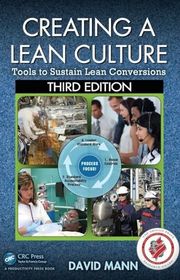
Creating a Lean Culture: Tools to Sustain Lean Conversions
For managers trying to keep improvements alive after the initial project. Its emphasis on leader standard work, visual management, and accountability addresses daily routines more directly than the broad lean histories, though consistent execution requires organizational commitment.
What it's about
David Mann explains the management practices needed to sustain lean operations. The book connects leader standard work, visual controls, and regular accountability with the everyday behavior of supervisors and managers, rather than treating improvement as a one-time event.

Lean Production Simplified
A Plain-Language Guide to the World's Most Powerful Production System
For newcomers who need to see how lean practices fit into one system. Its plain-language structure helps organize unfamiliar concepts, though readers implementing a specific method will eventually need a more detailed workbook or reference.
What it's about
Pascal Dennis presents lean production as an interconnected system of practices and culture. Using the image of a house, he explains waste, visual management, maintenance, just-in-time delivery, and planning, with third-edition examples extending beyond manufacturing.
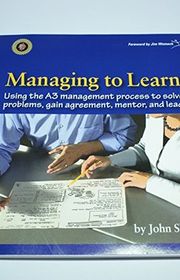
Managing to Learn: Using the A3 Management Process to Solve Problems, Gain Agreement, Mentor and Lead
For managers who want to coach people through problems rather than supply answers. Its paired perspectives connect the A3 document with thinking and dialogue, though reading the example is easier than developing the habit through practice.
What it's about
John Shook follows a manager and mentor through the use of the A3 process. Their different perspectives show how problem analysis, communication, agreement, and coaching connect within lean management, extending the method beyond filling in a template.

The Lean Six Sigma Pocket Toolbook
A Quick Reference Guide to 100 Tools for Improving Quality and Speed
For improvement practitioners who need reminders of tools during a project. Its compact organization makes comparison and selection easier than searching several textbooks, though abbreviated explanations assume background knowledge and cannot replace learning the methods.
What it's about
Michael George and his coauthors provide a compact reference to Lean and Six Sigma tools, grouped by purpose. Summaries and examples explain how to choose techniques for improvement projects and use the DMAIC problem-solving cycle.

How To Implement Lean Manufacturing
For practitioners who want a more explicit sequence for introducing lean manufacturing. Its combination of production methods and organizational issues offers implementation detail, though the industrial focus requires adaptation for other kinds of work.
What it's about
Lonnie Wilson presents a sequence for implementing lean manufacturing across an organization. The second edition combines production methods and case studies with discussion of leadership, culture, inventory, lead times, constraints, and sustaining improvements.
Sources
- 1
The best lean and manufacturing improvement books, with honest summaries
theleansuite.com
- 2
Lean Manufacturing Books
planview.com
- 3
10 Best Lean Manufacturing Books (And 1 Bonus Book!)
tulip.co
- 4
11 Best Lean Manufacturing Books to Read This Year and 2020
scmdojo.com
- 5
The Best Lean Books
leanuk.org
- 6
Lean Manufacturing Books
goodreads.com
- 7
Looking for Must-Read Books on Lean Manufacturing
reddit.com
- 8
Putting together a Lean Library - What should I include?
reddit.com




Edited by
Software engineer whose passion for tracking book recommendations from podcasts inspired the creation of MRB.
Lead investor at 3one4 Capital whose startup expertise and love for books helped shape MRB and its growth.
Comments
Spotted a missing book, a wrong order or a mistake? Tell us and we'll fix this page.
We're a reading guide, not the author or publisher, so we can't send books or pass on messages.