
12 Best Supply Chain Books
The best supply chain books, ranked by how many expert sources recommend each one, with notes for beginners, students and managers choosing a useful guide.
Our take
Supply chains connect the decisions behind purchasing, production, inventory and delivery. Understanding them means looking beyond one department to see how cost, service and risk affect the whole system. These books serve readers at different stages, from newcomers learning the vocabulary to students analyzing operating choices and managers setting a broader direction.
Supply Chain Management For Dummies and Essentials of Supply Chain Management offer accessible overviews. Sunil Chopra’s Supply Chain Management and Managing Supply Chain Operations provide more structured analytical study. The Goal explains constraints through a business story, while The Toyota Way examines the management habits behind continuous improvement. For wider context, The Box shows how container shipping changed trade. The New (Ab)Normal turns toward disruption and the responses of businesses under pressure.
Start with Supply Chain Management For Dummies if you are new to the field, or The Goal if you want an engaging introduction to thinking about an operating system as a whole.
12 books · 8 sources · Last updated
As an Amazon Associate, we earn from qualifying purchases (at no extra cost to you).
How to choose from this list
Skip to the full rankingIf you are new to the field: Supply Chain Management For Dummies → Essentials of Supply Chain Management
If you want analytical study: Supply Chain Management → Managing Supply Chain Operations
If you want to understand improvement: The Goal → The Toyota Way
If you want to connect operations with strategy: Strategic Supply Chain Management → The Supply Chain Revolution
If you want context for global disruption: The Box → The New (Ab)Normal
If you want to study network design: Designing and Managing the Supply Chain
The 12 books, ranked
Ranked by how many expert sources name each book. Ties go to the book more people recommend.

The Supply Chain Revolution
Innovative Sourcing and Logistics for a Fiercely Competitive World
For managers who want sourcing and logistics treated as drivers of growth rather than cost centers. Its business examples connect operations with competitive positioning, but the strategic argument provides less detail for building quantitative planning models.
What it's about
Suman Sarkar argues that sourcing and logistics can drive competitive advantage beyond simple cost reduction. Business examples illustrate customer service, alliances, bottlenecks, and retail investment, linking supply-chain decisions with revenue growth and a company's broader strategy.

For readers who want to understand bottlenecks through a story rather than equations. Its factory narrative makes system-wide tradeoffs memorable, but the simplified setting is an introduction to constraint thinking rather than a complete supply-chain design method.
What it's about
Plant manager Alex Rogo has ninety days to rescue his struggling factory while his marriage also unravels. Guidance from Jonah pushes him to question conventional measures of productivity in this business novel introducing the Theory of Constraints.
Also recommended by
3 people Jeff Bezos recommended this book
Jeff Bezos
Part of "Jeff's Reading List."
Jeff Bezos's recommendation of this book  Kevin Systrom recommended this book
Kevin Systrom
"About basically manufacturing and supply chain management. It sounds really boring, but I promise you it’s really good." - Kevin Systrom
Kevin Systrom's recommendation of this book  Trung Phan recommended this book
Trung Phan
"About the Operations industry." - Trung Phan
Trung Phan's recommendation of this book

Supply Chain Management For Dummies
For newcomers who need to see how supply-chain functions connect before specializing. Its plain-language overview makes terminology and operational relationships easier to grasp, but it offers less analytical depth than the university textbooks on this list.
What it's about
Daniel Stanton explains how purchasing, production, delivery, returns, and planning connect within a supply chain. Using the SCOR framework, the guide covers metrics, risk, analytics, technology, and career development for readers seeking an accessible operational overview.

The Box
How the Shipping Container Made the World Smaller and the World Economy Bigger
For readers who want to understand why modern global logistics became possible. Its history connects a simple-looking technology with large economic changes, but it explains the system’s development rather than teaching current shipping operations or procurement practice.
What it's about
Marc Levinson traces the development and adoption of the shipping container and its effects on global trade. His history connects cheaper transportation with changes in ports, labor, manufacturing locations, and the organization of international supply chains.
Also recommended by
4 people Tobi Lütke recommended this book
Tobi Lütke
"We all live in Malcolm’s world because the shipping container has been hugely influential in history." - Tobi Lütke
Tobi Lütke's recommendation of this book  Jeff Dean recommended this book
Jeff Dean
"A great book about the invention of the shipping container and what impacts it had across many industries." - Jeff Dean
Jeff Dean's recommendation of this book  Bill Gates recommended this book
Bill Gates
"Mostly about globalization, but there is also a larger story here that touches on business and philanthropy more broadly."- Bill Gates
Bill Gates's recommendation of this book - Trung Phan recommended this book
Trung Phan
"[Has] comparable breadth as The Prize in terms of globe-spanning industries." - Trung Phan
Trung Phan's recommendation of this book

For students who want a structured framework for analyzing supply-chain tradeoffs. Its cases and quantitative tools connect strategy with operating choices, but the textbook treatment and exercises demand more time than a concise practitioner overview.
What it's about
Sunil Chopra presents a strategic framework for analyzing supply-chain performance, focusing on facilities, inventory, transportation, information, sourcing, and pricing. Cases and quantitative tools connect planning and operating decisions with an organization's competitive position and customer needs.

For managers interested in the leadership behind dependable logistics. Its military and civilian examples make coordination and customer needs concrete, but the anecdotal lessons are less systematic than a textbook and reflect an earlier operating environment.
What it's about
Joseph L. Walden draws on civilian logistics and military experience, including Operation Iraqi Freedom, to examine supply-chain leadership. His lessons connect operational improvement, customer needs, and strategic coordination, arguing that better logistics can strengthen organizational performance.

For managers who want improvement connected to people and organizational habits, not isolated tools. Its principles give lean operations a wider management context, but applying them requires adaptation rather than simply copying practices from one manufacturer.
What it's about
Jeffrey Liker examines Toyota's management philosophy and production system through fourteen principles. This second edition explores how organizations can develop an improvement approach suited to their circumstances, with updated frameworks for innovation and quality.
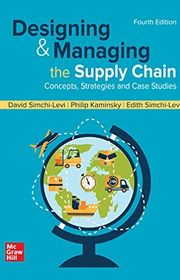
Designing and Managing the Supply Chain
For business and engineering students who want supply-chain design decisions developed through analysis and cases. Its combination of concepts and practical applications supports structured study, but the textbook approach requires more effort than an introductory operational overview.
What it's about
David Simchi-Levi presents supply-chain management through analytical concepts, case studies and practical applications. Designed for business and engineering study, the text connects strategic choices with the methods used to understand, design and manage supply-chain operations.

Essentials of Supply Chain Management
For readers who want a compact introduction linking planning, sourcing and delivery. Its practical overview is easier to consult than a large course text, but the breadth leaves specialized forecasting, optimization and technical implementation to other books.
What it's about
Michael H. Hugos introduces supply-chain planning, sourcing, production, delivery, and coordination through practical examples. The guide examines performance metrics and technological change, showing how organizations can analyze their operations and develop supply chains suited to competitive demands.

Managing Supply Chain Operations
For students and practitioners who want analytical tools connected to operating decisions. Its mix of quantitative models and industry projects offers more structured problem-solving than the introductory guides, but it requires comfort with mathematical work and sustained study.
What it's about
Lei Lei, Leonardo DeCandia, Rosa Oppenheim, and Yao Zhao combine industry projects with quantitative models. The textbook covers forecasting, sales and operations planning, inventory, capacity, transportation, integration, and risk, connecting analytical tools with strategic operational decisions.

For leaders trying to align supply-chain decisions with the wider business. Its five-discipline framework connects processes, organization and measurement, but the management emphasis gives less help with the calculations behind day-to-day inventory or transport planning.
What it's about
Shoshanah Cohen and Joseph Roussel connect supply-chain strategy with competitive advantage through five core disciplines. The guide examines processes, organizational design, collaboration, and performance measurement, using business examples to show how operations can support broader strategic goals.

For managers interested in how organizations responded to an abrupt global disruption. Its executive perspectives connect resilience with real operating pressures, but the pandemic-centered lens is a time-specific case study rather than a general planning manual.
What it's about
Yossi Sheffi examines how COVID-19 disrupted businesses and global supply chains through executive interviews, reporting, and historical analysis. He explores corporate responses and changing economic conditions, emphasizing flexibility, agility, and resilience in managing uncertainty during and after crisis.
Sources
- 1
9 Supply Chain Books Worth a Look
ratelinx.com
- 2
The Best Supply Chain Books Your Company Should Be Reading
solutionsreview.com
- 3
5 Must Read Books on Supply Chain Management
sdcexec.com
- 4
Supply Chain Books
goodreads.com
- 5
Best books on supply chain?
reddit.com
- 6
2024 Reading Guide
inboundlogistics.com
- 7
Book recommendations
reddit.com
- 8
13 Books Logistics And Supply Chain Experts Need To Read
freightos.com


Edited by
Software engineer whose passion for tracking book recommendations from podcasts inspired the creation of MRB.
Lead investor at 3one4 Capital whose startup expertise and love for books helped shape MRB and its growth.
Comments
Spotted a missing book, a wrong order or a mistake? Tell us and we'll fix this page.
We're a reading guide, not the author or publisher, so we can't send books or pass on messages.