
8 Best Landscape Architecture Books
The best landscape architecture books, ranked by how many expert sources recommend each one, with notes on design, ecology, drawing, and practical reader fit.
Our take
Landscape architecture brings together the design of outdoor space, the behavior of people, and the living systems of a site. Its books range from arguments about cities and ecology to drawing guides and technical references. A student may need help seeing and representing space, while a practitioner may be looking up planting characteristics or construction details. No single kind of book covers all of that work equally well.
The Death and Life of Great American Cities and The Social Life of Small Urban Spaces turn attention toward everyday use. Design with Nature provides an ecological planning perspective, while Landscape Graphics develops the drawing skills needed to communicate a proposal. Manual of Woody Landscape Plants serves a more specialized horticultural role. For technical consultation, Landscape Architectural Graphic Standards offers a different kind of resource from a book read straight through. Start with Landscape Architecture for a broad design framework, or Landscape Graphics if your immediate goal is to express spatial ideas clearly.
8 books · 8 sources · Last updated
As an Amazon Associate, we earn from qualifying purchases (at no extra cost to you).
How to choose from this list
Skip to the full rankingIf you want a broad design framework: Landscape Architecture
If you want to understand public space: The Social Life of Small Urban Spaces → The Death and Life of Great American Cities
If you want ecological planning principles: Design with Nature
If you're learning visual communication: Landscape Graphics → Digital Drawing for Landscape Architecture
If you need a planting reference: Manual of Woody Landscape Plants
If you need technical drawing details: Landscape Architectural Graphic Standards
The 8 books, ranked
Ranked by how many expert sources name each book. Ties go to the book more people recommend.

The Death and Life of Great American Cities
For readers who want to understand how design affects neighborhood life, Jacobs builds arguments from close observation of streets and communities. Its social perspective broadens a technical design shelf, though it reflects particular American cities and an earlier planning debate.
What it's about
Jane Jacobs challenges prevailing urban planning through observations of streets and neighborhoods. She examines safety, diversity, and the conditions that allow communities to flourish, arguing that large redevelopment schemes often undermine the vitality they are meant to create.
Also recommended by
3 people Sam Altman recommended this book
Sam Altman
This book was on Sam Altman's bookshelf.
Sam Altman's recommendation of this book  Ramit Sethi recommended this book
Ramit Sethi
Ramit Sethi mentioned this book in the "What to Read Next" newsletter.
Ramit Sethi's recommendation of this book  Chris Dixon recommended this book
Chris Dixon
"Classic book that I admit I hadn’t read and my colleagues at a16z crypto got me to read." - Chris Dixon
Chris Dixon's recommendation of this book

Design with Nature
For students interested in ecological planning, McHarg explains why land use decisions should begin with natural systems. Its regional perspective provides a foundation for environmental analysis, though the historical methods need supplementing with current data and ecological knowledge.
What it's about
Ian L. McHarg argues that regional planning should begin with an understanding of natural systems. His approach connects ecological knowledge with decisions about land use, asking designers to consider a landscape's character, suitability, and hazards before determining where development belongs.
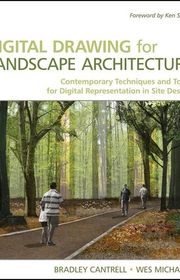
Digital Drawing for Landscape Architecture: Contemporary Techniques and Tools for Digital Representation in Site Design
For readers moving from hand drawing into digital landscape representation, Cantrell and Michaels connect visual principles with practical production methods. The workflow perspective remains useful, though the software instructions reflect older versions and require adaptation to current tools.
What it's about
Bradley Cantrell and Wes Michaels explain digital methods for representing landscape and site designs. Workflows combine drawing, image editing, mapping, and other visual techniques to create plans, sections, perspectives, and presentations that communicate spatial proposals.
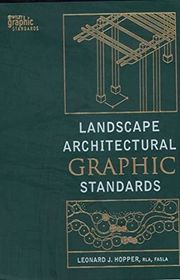
Landscape Architectural Graphic Standards
For students and practitioners who need illustrated technical reference, this brings construction and site information together more extensively than a design introduction. Its diagrams support detailed consultation, though specifications and regulatory requirements still need current local verification.
What it's about
Edited by Leonard Hopper, this reference gathers diagrams and technical information for landscape design and construction. It covers site elements, materials, systems, and detailing, supporting the translation of design ideas into more developed drawings and documentation.

For students learning to communicate outdoor space, Reid develops hand drawing from basic conventions to plans, sections, and perspectives. The exercises build spatial clarity, though the book does not replace training in contemporary digital production tools.
What it's about
Grant Reid teaches drawing methods for representing landscape spaces, from freehand sketches and lettering to plans, sections, elevations, and perspectives. Exercises and graphic conventions show how designers can communicate spatial ideas as they develop and present a landscape proposal.

Manual of Woody Landscape Plants
Their Identification, Ornamental Characteristics, Culture, Propogation and Uses
For designers who need detailed information on trees and shrubs, Dirr provides a deeper horticultural reference than a general design manual. Identification and cultivation detail reward repeated consultation, though suitability must be checked against local climate and planting conditions.
What it's about
Michael A. Dirr provides a reference to woody landscape plants, connecting identification with ornamental qualities, cultivation, propagation, and uses. Descriptions and drawings of features such as leaves, buds, and stems help readers distinguish plants and assess their suitability for landscape work.
Landscape Architecture: A Manual of Site Planning and Design
For students wanting a broad framework that connects site analysis with the design of outdoor space, Simonds offers more continuity than a specialist reference. The integrated approach provides context, though the linked older edition needs supplementing with current standards.
What it's about
John Ormsbee Simonds examines how landscapes are understood, planned, and designed for human use. The manual connects natural site conditions, circulation, spatial organization, and environmental experience, presenting principles for shaping outdoor places at different scales.

The Social Life of Small Urban Spaces
For designers who want to learn from how people occupy public space, Whyte offers a clear observational approach. Its attention to everyday behavior is practical, though the original New York studies need interpreting in relation to different places and users.
What it's about
William H. Whyte investigates how people use small urban public spaces through observation of plazas, parks, and pedestrian behavior. His Street Life Project connects everyday patterns of sitting and gathering with the design decisions that make places more inviting.
Sources
- 1
Required Reading for Landscape Architects
asla.org
- 2
6 Essential Books Every Landscape Designer Should Own: A Complete Guide
draftscapes.com
- 3
Top 10 Books For Landscape Architecture
land8.com
- 4
10 Books related to Landscape Architecture everyone should read
re-thinkingthefuture.com
- 5
Landscape Architecture Books
goodreads.com
- 6
Landscape Architecture: A Reading List
daily.jstor.org
- 7
Books, magazines and websites for landscape architects
landscapearchitecture.org.uk
- 8
Top 5 must read books for someone just starting out in LAR
reddit.com





Edited by
Software engineer whose passion for tracking book recommendations from podcasts inspired the creation of MRB.
Lead investor at 3one4 Capital whose startup expertise and love for books helped shape MRB and its growth.
Comments
Did we miss something? Have feedback?
Help us improve this page by sharing your thoughts