
34 Best Architecture Books
The best architecture books, ranked by expert-source recommendations, with notes to help readers choose design primers, urban studies, theory and references.
Our take
Architecture books can teach you to notice a room, analyze a building or question how a whole city works. The subject brings together spatial experience, history, drawing and construction, and no single book develops all of those equally. A useful starting shelf combines a clear introduction with a book that helps you look more closely at the places around you.
Experiencing Architecture introduces perception through familiar examples, while Architecture: Form, Space, & Order explains visual organization through drawings. Building Construction Illustrated connects design with assemblies and systems. For cities, The Death and Life of Great American Cities examines everyday street life, and Cities for People emphasizes human-scale public space. The Eyes of the Skin: Architecture and the Senses and Thinking Architecture explore bodily experience and memory. History books and manifestos offer competing accounts of why buildings take the forms they do.
Begin with Experiencing Architecture for a general introduction, or choose Architecture: Form, Space, & Order if you want to start drawing and analyzing design.
34 books · 9 sources · Last updated
As an Amazon Associate, we earn from qualifying purchases (at no extra cost to you).
How to choose from this list
Skip to the full rankingIf you want to notice buildings more closely: Experiencing Architecture → Why Architecture Matters
If you are beginning design study: 101 Things I Learned in Architecture School → Architecture: Form, Space, & Order
If you want to understand construction and change: Building Construction Illustrated → How Buildings Learn
If you want human-centered urban design: The Death and Life of Great American Cities → Cities for People
If you want to explore sensory experience: The Eyes of the Skin: Architecture and the Senses → Atmospheres: Architectural Environments. Surrounding Objects
If you want to compare modernist ideas with criticism: Towards a New Architecture → Complexity and Contradiction in Architecture → Modern Architecture: A Critical History
The 34 books, ranked
Ranked by how many expert sources name each book. Ties go to the book more people recommend.

The Death and Life of Great American Cities
For readers who want to understand buildings as parts of living neighborhoods. Its street-level observations challenge abstract planning more concretely than most design theory, but its mid-century American setting requires care when applying the arguments elsewhere.
What it's about
Jane Jacobs challenges prevailing urban planning through observations of streets and neighborhoods. She examines safety, diversity, and the conditions that allow communities to flourish, arguing that large redevelopment schemes often undermine the vitality they are meant to create.
Also recommended by
3 people Sam Altman recommended this book
Sam Altman
This book was on Sam Altman's bookshelf.
Sam Altman's recommendation of this book  Ramit Sethi recommended this book
Ramit Sethi
Ramit Sethi mentioned this book in the "What to Read Next" newsletter.
Ramit Sethi's recommendation of this book  Chris Dixon recommended this book
Chris Dixon
"Classic book that I admit I hadn’t read and my colleagues at a16z crypto got me to read." - Chris Dixon
Chris Dixon's recommendation of this book

For readers who want to connect design decisions with everyday human needs. Its linked patterns work across rooms, buildings and neighborhoods, but the prescriptive approach reflects a particular philosophy and requires judgment rather than literal application.
What it's about
Christopher Alexander and his colleagues present an approach to designing houses, neighborhoods, and public spaces with the participation of those who use them. The book offers guidance intended to connect people's needs with architecture, planning, and construction.
Also recommended by
6 people Patrick Collison recommended this book
Patrick Collison
Patrick Collison labeled this book "particularly great."
Patrick Collison's recommendation of this book  Naval Ravikant recommended this book
Naval Ravikant
"Love [this book]." - Naval Ravikant
Naval Ravikant's recommendation of this book - Sam Altman recommended this book
Sam Altman
This book was on Sam Altman's bookshelf.
Sam Altman's recommendation of this book  Stewart Brand recommended this book
Stewart Brand
Stewart Brand recommended this book on his "Selected Books for the Manual for Civilization" blog post.
Stewart Brand's recommendation of this book  Gretchen Rubin recommended this book
Gretchen Rubin
"I’m not a visual person, but this book taught me to see the world around me in an entirely new way." - Gretchen Rubin
Gretchen Rubin's recommendation of this book  Liz Lambert recommended this book
Liz Lambert
"[The author] is a writer and a thinker about architecture and about how we build." - Liz Lambert
Liz Lambert's recommendation of this book
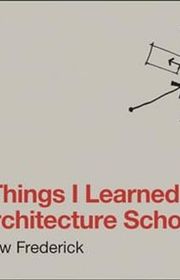
101 Things I Learned in Architecture School
For beginning students who want short lessons to revisit during studio work. Its concise observations make design habits memorable, but the compressed format works as a companion and prompt rather than a full course in architecture.
What it's about
Matthew Frederick presents concise lessons from architectural education, pairing brief explanations with drawings. Topics range from design thinking and representation to studio practice, giving students a compact collection of ideas to test while developing their own work.

For students who want a visual foundation in architectural composition. Ching’s drawings make relationships among form, circulation and scale easier to analyze, but understanding the diagrams still requires applying them through drawing and design exercises.
What it's about
Francis Ching explores the visual principles that organize architecture, using drawings and examples from different periods and cultures. Discussions of form, space, circulation, proportion, and scale show how basic elements combine to shape buildings and people's experience of them.
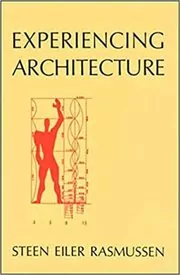
Experiencing Architecture
For newcomers who want to learn how buildings feel before learning specialist terminology. Its everyday comparisons make scale, texture and spatial experience approachable, but the reflective examples provide less construction detail than a technical introduction.
What it's about
Steen Eiler Rasmussen explains architecture through the ways people encounter buildings and ordinary objects. Examples ranging from footwear and teacups to villas and palaces help readers understand architecture as an art experienced in daily life.
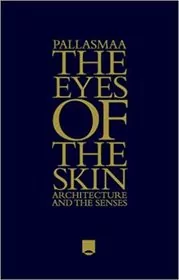
For designers who want to think beyond architecture as an image. Its argument for bodily and multisensory experience adds a critical lens missing from visual references, but the philosophical language offers fewer direct instructions for designing a project.
What it's about
Juhani Pallasmaa argues that architecture's emphasis on vision neglects the other senses and diminishes spatial experience. His essays examine the history of this visual bias and propose a more integrated understanding of the body's relationship with buildings.
Thinking Architecture
For designers who want to reflect on memory, materials and the meaning of making. Zumthor’s essays connect design with personal experience more closely than a textbook, but the individual perspective offers no comprehensive method for running a project.
What it's about
Peter Zumthor's essays explore architecture's connection to memory, sensation, and everyday life. He reflects on the emotional qualities of buildings and the process of designing spaces whose meaning extends beyond their forms and construction.

In Praise of Shadows
For readers interested in subtle light, materials and Japanese aesthetics. Its short essay sharpens attention to qualities technical manuals can overlook, but the personal, culturally situated argument is not a neutral survey or a practical lighting guide.
What it's about
Junichiro Tanizaki reflects on the role of shadow in Japanese aesthetics and everyday life. Considering architecture, food, theater, and literature, the essay explores subdued beauty and the changes brought by brighter lighting and Western technology.
Also recommended by
1 person Tim Ferriss recommended this book
Tim Ferriss
"A weird little book." - Tim Ferriss
Tim Ferriss's recommendation of this book
For readers interested in the immediate feeling of a place. Zumthor’s brief reflections connect materials, light and proportion with personal perception, but the intimate, selective account offers fewer transferable rules than the systematic design books.
What it's about
Peter Zumthor reflects on the qualities that give buildings their atmosphere. Across nine illustrated discussions, he considers materials, light, proportions, surrounding objects, and personal impressions to explain how architectural spaces can evoke an immediate emotional response.
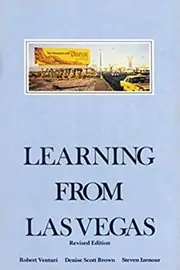
For students interested in how buildings communicate beyond their physical form. Its study of ordinary commercial signs challenges architectural prestige, but the polemical argument and specific American setting benefit from historical context and competing interpretations.
What it's about
Robert Venturi, Denise Scott Brown, and Steven Izenour reconsider architectural symbolism through their study of Las Vegas. They examine how ordinary commercial environments communicate meaning and challenge assumptions about monumental architecture and popular taste.
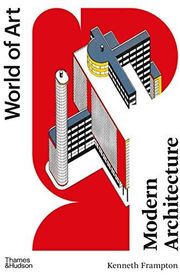
Modern Architecture: A Critical History
For students who want a critical framework for the modern movement. Its connections between buildings, technology and wider forces complement Curtis’s history, but the dense presentation and strong interpretive position make it slower reading than an illustrated introduction.
What it's about
Kenneth Frampton traces modern architecture through its cultural, technical and political contexts. This history examines the development of major movements and ideas, offering a critical interpretation of the forces that shaped modern building across different regions.

The Architecture of Happiness
For general readers curious about how surroundings affect emotional life. Its accessible reflections give architecture a personal relevance beyond professional design language, but the philosophical observations offer neither a technical method nor a comprehensive history.
What it's about
Alain de Botton explores how buildings and interiors influence feelings, identity, and ideas about a good life. His reflections connect architectural beauty with human aspirations and the relationship between surroundings and emotional experience.
The Poetics of Space
For readers interested in how domestic spaces shape memory and imagination. Its literary images offer a different perspective from the design manuals, but the philosophical digressions are more useful for reflection than for solving a building brief.
What it's about
Gaston Bachelard explores how intimate spaces shape imagination, dreams, and memory. Images of attics, cellars, drawers, nests, shells, and corners become starting points for his philosophical reflections on the experience of home.
Towards a New Architecture
For readers who want to understand a forceful statement of modernist design. Its comparisons and polemical voice illuminate the movement’s ambitions, but its selective claims and machine-age ideals need historical context and critical comparison with later responses.
What it's about
Le Corbusier argues for a new architectural outlook shaped by modern technology, engineering and changing ways of living. His manifesto combines discussion of classical form with examples from industrial design, setting out ideas that influenced twentieth-century architecture.
Building Construction Illustrated
For students who want to understand how buildings go together. Its drawings connect assemblies and systems more directly than the theory books, but the technical overview still needs local codes, engineering advice and project-specific detailing alongside it.
What it's about
Francis Ching explains building construction through illustrated discussions of materials, assemblies and systems. The book connects foundations, structure, enclosure and other components, helping students understand how design decisions relate to the practical organization of a building.
Complexity and Contradiction in Architecture
For students ready to question architectural simplicity as an ideal. Its close readings of buildings make ambiguity and competing meanings productive design questions, but the compressed argument and assumed historical knowledge require attentive reading.
What it's about
Robert Venturi argues for architecture that accommodates ambiguity, contradiction, and multiple meanings. Drawing on historical buildings and his own work, he examines forms and spaces that serve competing purposes rather than reducing design to simple rules.
For readers who want a provocative interpretation of Manhattan’s architectural culture. Its inventive narrative makes urban density intellectually vivid, but the retrospective manifesto is an argument about one city rather than a neutral history or planning manual.
What it's about
Rem Koolhaas interprets Manhattan as a place where metropolitan culture and architecture developed together. His retrospective manifesto investigates how the city's distinctive built environment expresses urban life and, in turn, helps shape that life.
Manual of Section
For designers who want to understand buildings through their vertical relationships. Its detailed section drawings reveal connections that plans and photographs can hide, but readers need drawing literacy and must interpret the examples rather than copy their forms.
What it's about
Paul Lewis, Marc Tsurumaki, and David J. Lewis explore architectural sections through sixty three detailed drawings. Seven categories organize different spatial arrangements, showing how cross sections reveal relationships between form, structure, and the use of buildings.
Modern Architecture Since 1900
For students who want modern architecture explained through buildings and wider change. Its sustained historical account gives more continuity than an image collection, but the substantial text and linked edition require time and supplementary coverage of later developments.
What it's about
William J. R. Curtis traces modern architecture through buildings and architects across the world. His history connects design with technical, economic, social, and intellectual change while examining the movement's origins and its varied regional expressions.
The Ten Books on Architecture
For readers who want to encounter architecture’s classical principles in an ancient primary text. Its breadth reveals connections among design, materials and public life, but the historical assumptions and terminology require a contextual reading rather than direct modern application.
What it's about
Vitruvius sets out principles of architecture, including proportion, symmetry, materials, and construction. His treatise considers public and private buildings, temples, theaters, baths, and sites, connecting design decisions with practical needs and the traditions of classical building.
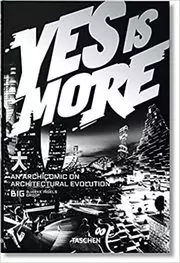
For readers who want to see how one practice explains its design process. BIG’s comic format makes project arguments unusually accessible, but the persuasive presentation is a studio’s own manifesto rather than an independent evaluation of its buildings.
What it's about
This comic-format architectural manifesto introduces the ideas and projects of Bjarke Ingels Group. Images and narrative reveal how the practice develops designs in response to social demands, regulations, and technical knowledge, making its processes accessible through the language of popular culture.

For readers interested in what happens after a building’s opening photograph. Its attention to maintenance, adaptation and different rates of change challenges static design thinking, but its selective examples develop an argument rather than a technical renovation manual.
What it's about
Stewart Brand examines what happens to buildings after construction, as occupants alter them to meet changing needs. Through examples ranging from farmhouses to major architectural projects, he explores how design can accommodate adaptation and the passage of time.
Also recommended by
1 person Caterina Fake recommended this book
Caterina Fake
"One of my favorite books." - Caterina Fake
Caterina Fake's recommendation of this book
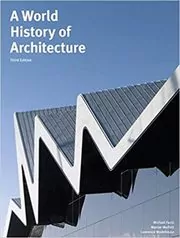
A World History Of Architecture
For readers who want architecture placed within a broad historical and cultural sequence. Its regional coverage supplies context missing from single-architect books, but a survey necessarily compresses local differences and rewards further reading on particular traditions.
What it's about
Michael Fazio, Marian Moffett, and Lawrence Wodehouse survey architecture from prehistory to the modern world. Buildings, photographs, and plans place architectural traditions across regions within the historical and cultural circumstances that shaped them.

Cities for People
For readers who want public spaces evaluated at walking pace. Its human-scale observations connect urban design with daily activity more practically than abstract city theory, but broader political, economic and transport constraints need separate consideration.
What it's about
Jan Gehl argues for urban design shaped by human senses, movement, and everyday social life. Illustrated discussions examine streets and public spaces at walking pace, offering methods for creating lively, safe, sustainable, and healthy cities.
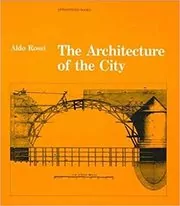
The Architecture of the City
For readers ready to explore cities through history, type and collective memory. Its theoretical argument adds depth beyond practical streetscape guidance, but the abstract language and assumed architectural background make it a demanding introduction.
What it's about
Aldo Rossi examines the city as a work of architecture shaped by history and collective memory. He challenges functionalist explanations of urban form, considering the enduring significance of buildings and the processes through which cities are constructed.
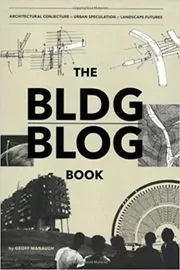
The BLDG BLOG Book
For curious readers who want architecture connected with science, landscape and speculation. Its unexpected essays and images widen the subject beyond conventional buildings, but the exploratory format provides less systematic history or practical design instruction.
What it's about
Geoff Manaugh explores architecture through speculative essays, interviews, maps, and illustrations. Topics range from underground spaces and urban farming to artificial reefs, climate, and sound, connecting the built environment with science, landscape, and imaginative possibilities.
The Four Books on Architecture
For readers studying Renaissance design through a primary architectural treatise. Its illustrated projects connect classical principles with Palladio’s work more directly than a modern survey, but its historical conventions require context rather than literal use as current construction guidance.
What it's about
Andrea Palladio's architectural treatise presents the ideas and illustrated designs of the Renaissance architect. This English translation includes supporting commentary and a glossary, placing his work within its historical setting and making its terminology accessible to modern readers.
For students who want a vocabulary for discussing design ideas. Its twenty-six principles connect examples with conceptual questions more clearly than a project monograph, but the compact framework cannot replace detailed technical or historical study.
What it's about
Andrea Simitch and Val Warke introduce architectural design through twenty six principles. Historical context, definitions, and examples connect the elements of buildings with their functions and uses, providing a framework for understanding architecture as a design discipline.

For readers curious about the hidden systems that make cities function. Its diagrams explain infrastructure more concretely than the urban theory books, but New York supplies the main examples and technical details reflect the period of publication.
What it's about
Kate Ascher explains the infrastructure that keeps a city functioning, using New York as her main example. Text and graphics reveal how transportation, electricity, water, sewage, garbage, and other systems operate behind everyday urban life.
A Visual Dictionary of Architecture
For students who need to recognize and name architectural elements. Its drawings make terminology easier to understand than a text-only dictionary, but the reference format is best consulted alongside projects rather than read as a continuous course.
What it's about
Francis Ching presents architectural terminology through drawings and concise explanations. Organized as a visual reference, the book connects concepts, materials, technologies, and construction details, helping readers understand the vocabulary used to describe buildings and the relationships among their components.

Invisible Cities
For designers who want fiction to stretch their imagination about cities. Its brief invented places connect urban form with memory and desire, but the poetic fragments offer inspiration rather than factual history or instructions for practice.
What it's about
Marco Polo describes fifty five imaginary cities to Kublai Khan, each revealing a different arrangement of human hopes and experience. Italo Calvino's novel uses these conversations to explore memory, language, culture, and the passage of time.
The Architecture of Community
For readers interested in classical and vernacular approaches to urban community. Its drawings make one alternative to modern planning concrete, but the strong design position is best compared with competing views rather than treated as a universal solution.
What it's about
Leon Krier presents his ideas for towns and cities grounded in classical and vernacular architecture. Drawings, photographs, design guidance, and examples including Poundbury and Seaside illustrate his approach to community, urban form, and sustainable settlement.
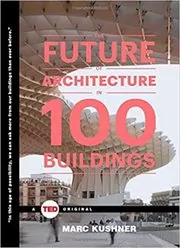
The Future of Architecture in 100 Buildings
For general readers who want a quick visual tour of experimental buildings. Its hundred-project format offers accessible variety and prompts questions about possibilities, but the brief entries give less technical and critical depth than a detailed project study.
What it's about
Marc Kushner examines one hundred buildings that experiment with materials, technology, reuse, and environmental conditions. Projects ranging from paper pavilions to mobile laboratories raise questions about how architecture might respond to communities and future needs.
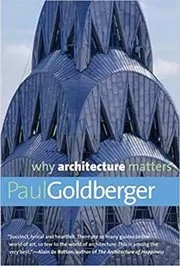
Why Architecture Matters
For general readers who want language for noticing and discussing buildings. Its accessible criticism connects form with lived experience more directly than specialist theory, but it offers neither a technical course nor an exhaustive account of architectural history.
What it's about
Goldberger explores how architecture affects people emotionally and intellectually, using examples from modest houses to celebrated monuments and museums. His account considers the experience of encountering buildings and the ways their forms and spaces become part of everyday life.
Sources
- 1
The 126 Best Architecture Books
archdaily.com
- 2
25 Books Every Architect and Architecture Lover Should Read
mymodernmet.com
- 3
50 Architecture Books That Will Make You a Better Architect
arch2o.com
- 4
Best Architecture Reference Books
archtoolbox.com
- 5
Best architecture books for students
archstudent.com
- 6
What are the must have architecture books?
reddit.com
- 7
Any book recommendations on architectural history and theory?
reddit.com
- 8
Architecture Books
goodreads.com
- 9
23 Of The Best Architecture Books
archisoup.com







Edited by
Software engineer whose passion for tracking book recommendations from podcasts inspired the creation of MRB.
Lead investor at 3one4 Capital whose startup expertise and love for books helped shape MRB and its growth.
Comments
Spotted a missing book, a wrong order or a mistake? Tell us and we'll fix this page.
We're a reading guide, not the author or publisher, so we can't send books or pass on messages.