
22 Best Korean War Books
The best Korean War books, ranked by how many expert sources recommend each, with notes for readers choosing military history, memoirs, and civilian stories.
Our take
Books about the Korean War approach the conflict through military campaigns, international decisions, Korea’s division, and the people who lived through the violence. An account centered on American commanders will answer different questions from a Korean family novel or a history of prisoners. The choice matters because the war’s consequences extend beyond battles and the armistice into displacement, political conflict, and lasting separation.
The Coldest Winter provides an expansive American narrative, while Brothers at War places the conflict within a longer international and Korean history. On Desperate Ground narrows the view to Chosin Reservoir, and Valleys of Death follows a soldier into captivity. War Trash uses fiction to explore Chinese prisoners’ divided loyalties. For civilian experiences across different sides, Ghost Flames offers a wider human cast. Start with a broad history, then choose a memoir, focused campaign account, or novel to examine experiences that a single overview cannot fully capture.
22 books · 8 sources · Last updated
As an Amazon Associate, we earn from qualifying purchases (at no extra cost to you).
How to choose from this list
Skip to the full rankingIf you want an American military overview: The Coldest Winter → This Kind of War
If you want Korea’s longer conflict: Brothers at War
If you want a focused battle narrative: On Desperate Ground → The Last Stand of Fox Company
If you want captivity accounts: Valleys of Death → War Trash
If you want civilian experiences: Ghost Flames → If You Leave Me
If you want to examine wartime messaging: Selling the Korean War → The Hidden History of the Korean War
The 22 books, ranked
Ranked by how many expert sources name each book. Ties go to the book more people recommend.
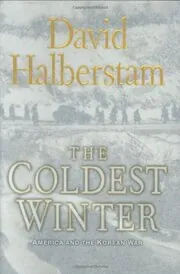
For readers seeking an expansive narrative of American decisions and battlefield experience. Halberstam connects political personalities to consequences for soldiers, though the strong American focus provides less coverage of Korean society and civilian perspectives.
What it's about
Halberstam’s final book takes on the Korean War, from Washington misjudgments to soldiers trapped in brutal cold near the Yalu River. It connects battlefield courage with the politics that shaped a costly conflict.
Also recommended by
1 person Bill Rasmussen recommended this book
Bill Rasmussen
"One that I would recommend." - Bill Rasmussen
Bill Rasmussen's recommendation of this book

For readers who want a forceful military account centered on American troops and preparedness. The small-unit perspective makes institutional failures concrete, though its American military viewpoint benefits from comparison with Korean and international histories.
What it's about
T. R. Fehrenbach recounts the Korean War through military records and the experiences of small-unit commanders and soldiers. He combines an overview of the conflict with close accounts of American troops facing North Korean and Chinese forces.
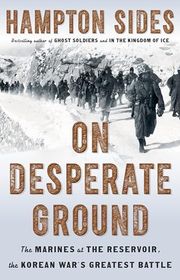
On Desperate Ground: The Marines at The Reservoir, the Korean War’s Greatest Battle
For readers who want an absorbing modern narrative of the Chosin Reservoir campaign. Sides links command decisions to individual ordeals, though the concentration on Marines and one battle provides less coverage of the war’s broader course.
What it's about
Hampton Sides recounts the Chosin Reservoir campaign, following American Marines facing Chinese encirclement and extreme cold. Command decisions, personal accounts, and the fighting withdrawal reveal how an ambitious advance became a struggle to escape with the force intact.

For readers who want to examine an early challenge to official accounts of the war. Stone’s scrutiny of public reporting offers a distinctive contemporary perspective, though his disputed interpretations need comparison with later archival histories.
What it's about
I. F. Stone questions official accounts of the Korean War’s opening years through scrutiny of public statements and contemporary reporting. His investigative history advances a critical interpretation of the conflict’s origins, motives, and early course.

For readers who want a personal account of combat followed by captivity. The memoir keeps survival and solidarity close to individual experience, though its narrow viewpoint cannot replace a broader history of the war.
What it's about
Bill Richardson recounts combat and captivity during the Korean War in a memoir written with Kevin Maurer. He describes the battle at Unsan, forced marches, deprivation, and efforts to resist imprisonment while supporting fellow American prisoners.
Also recommended by
1 person Jocko Willink recommended this book
Jocko Willink
Jocko Willink covered this book in "Jocko Podcast" Ep. 148
Jocko Willink's recommendation of this book

For readers who want to place the fighting within Korea’s longer division and international relationships. Jager’s broad scope connects war and aftermath, though the substantial detail requires more sustained attention than a concise introductory narrative.
What it's about
Sheila Miyoshi Jager examines the Korean War, its origins, and its lasting aftermath through Korean, American, Soviet, and Chinese perspectives. Diplomatic records and personal accounts connect military events with social and political struggles that continued beyond the armistice.

For readers seeking a broad military narrative that draws on participants from several countries. Toland combines battlefield events with leadership decisions and prisoner issues, though the extensive detail can make an initial overview harder to follow.
What it's about
John Toland recounts the Korean War through archival research and interviews with combatants from several countries. Military campaigns, leadership decisions, and the treatment and repatriation of prisoners reveal the international and human dimensions of the conflict.

For readers who want one late-war battle reconstructed at close range. The focus on soldiers facing repeated attacks makes the cost of the stalemate vivid, though it offers less background on the conflict’s wider origins.
What it's about
Bill McWilliams reconstructs the final battle for Pork Chop Hill in July 1953, following American infantrymen facing repeated Chinese attacks. Archival research and soldiers' accounts portray the fighting as Korean War armistice negotiations neared their conclusion.

The Korean War
For readers who want an accessible military overview that moves between strategy and participants’ experiences. Hastings offers a manageable entry into the conflict, though its perspective and archival base reflect the period when it was written.
What it's about
Max Hastings examines the Korean War's origins, military campaigns, and political consequences through documents and personal testimony. Accounts from participants place battlefield experiences alongside international decisions, tracing a conflict that reshaped Korea and deepened Cold War divisions.
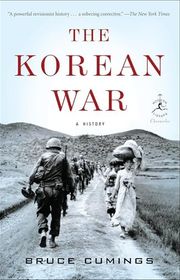
The Korean War: A History
For readers who want a concise interpretation centered on Korea’s division and the war’s civilian costs. Cumings challenges familiar American narratives, though his strongly argued perspective is best read alongside historians with different interpretations.
What it's about
Bruce Cumings places the Korean War within the peninsula’s colonial history, political division, and civil conflict. He examines American involvement, military violence, and the war’s long aftermath, emphasizing Korean experiences and challenging common accounts of its origins.

For readers who want a tightly focused account of a Marine company under pressure at Chosin. Its small-unit scale makes the defensive task clear, though it captures one part of the campaign rather than the entire war.
What it's about
Bob Drury and Tom Clavin recount Fox Company's defense of a mountain pass during the Chosin Reservoir campaign. Outnumbered Marines endure freezing weather and repeated Chinese attacks while protecting a crucial route for American forces.

War Trash
For readers who want fiction centered on Chinese prisoners rather than American commanders. The intimate viewpoint makes political coercion and divided loyalties tangible, though the sustained pressure and suffering make it an emotionally demanding novel.
What it's about
Chinese soldier Yu Yuan becomes a prisoner during the Korean War. His command of English makes him an intermediary, but competing loyalties, coercion and political divisions among fellow captives threaten his hopes of returning home.

For readers interested in leadership through the career of a prominent Marine commander. Puller’s long service gives Korea a wider military context, though the biography covers much more than the Korean War itself.
What it's about
Burke Davis recounts the life and military career of Lewis Chesty Puller, from early Marine service to World War II and Korea. The biography explores his battlefield command, relationships with his men, and conflicts within the military establishment.
Also recommended by
1 person- Jocko Willink recommended this book
Jocko Willink
Jocko Willink covered this book in "Jocko Podcast" Ep. 121
Jocko Willink's recommendation of this book

Devotion
For readers interested in naval aviation and the relationship between two American pilots. Its personal focus makes service and sacrifice immediate, though it provides a narrower view than a general military or political history.
What it's about
Makos tells the true story of Navy pilots Jesse Brown and Tom Hudner, wingmen whose friendship is tested in the Korean War. It is part combat history, part story of loyalty, sacrifice, and one desperate rescue attempt.
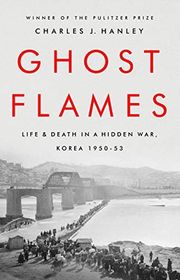
Ghost Flames: Life and Death in a Hidden War, Korea 1950-1953
For readers who want civilian and military lives from different sides placed within one narrative. Hanley broadens the human perspective beyond American units, though the shifting cast requires attention as the war unfolds.
What it's about
Charles J. Hanley follows soldiers, civilians, journalists, and other witnesses through the Korean War. Their experiences connect battlefield reversals with displacement, atrocities, survival, and the political decisions that made the conflict so destructive for people across Korea.

For readers who prefer historical fiction to a conventional account of Chosin Reservoir. The shifting viewpoints make battlefield decisions immediate, though reconstructed conversations and inner lives need to be distinguished from documented testimony.
What it's about
The Frozen Hours tells the story of the Battle of Chosin Reservoir in Korea, focusing on General O. P. Smith, Marine riflemen like Pete Riley, and Chinese commander Sung Shi-lun as brutal cold, bad intelligence, and encirclement turn an advance into a desperate fighting withdrawal.

For readers who want British and Commonwealth contributions given more attention alongside the wider UN campaign. Its multinational military focus broadens American-centered accounts, though Korean civilian experiences receive less sustained space.
What it's about
Michael Hickey recounts the Korean War through the multinational forces that fought under United Nations command. Alongside military operations and political decisions, he examines British and Commonwealth contributions, battlefield experiences and the treatment of prisoners.

For readers interested in the connection between fighting, diplomacy, and the limits of Cold War power. Its political framework complements campaign narratives, though the older scholarship should be read alongside work using subsequently available archives.
What it's about
Callum Macdonald examines the Korean War through its military events and Cold War politics. The history follows decisions, battlefield reversals, negotiations, and prisoner disputes, then considers the challenges of fighting a limited war on the ground and in the air.

Selling the Korean War
Propaganda, Politics, and Public Opinion in the United States, 1950-1953
For readers interested in how a limited war was explained to the American public. Its focus on propaganda and political communication fills a gap left by battlefield histories, though it assumes interest in Washington’s internal debates.
What it's about
Steven Casey examines how Truman and Eisenhower sought public support for the Korean War. His history follows government propaganda, press relations, censorship and congressional politics as officials struggled to explain a costly, limited conflict.
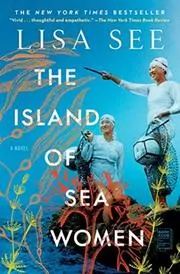
For readers interested in Korean women’s lives across occupation, political violence, and lasting division. The Jeju setting expands the civilian perspective, though its decades-long story is broader than the Korean War and begins before it.
What it's about
The Island of Sea Women is set on Jeju Island, where best friends Young‑sook and Mi‑ja join the haenyeo, a matrifocal community of deep‑sea divers, and their bond is tested over decades of Japanese occupation, civil conflict, and personal betrayals that leave scars above and below the water.

The Surrendered
For readers who want literary fiction about violence’s lasting emotional consequences. The intertwined lives connect wartime loss to later relationships, though the nonlinear structure and bleak material require patience and an appetite for difficult stories.
What it's about
Orphaned June Han, American veteran Hector Brennan, and missionary Sylvie Tanner meet at a Korean orphanage after the war. Their intertwined stories trace how violence, grief, and competing desires leave marks that endure across decades.

For readers who want the war’s consequences explored through a Korean woman’s intimate choices. The family relationships foreground civilian insecurity and constrained independence, though this is literary fiction rather than an account of military campaigns.
What it's about
Displaced by the Korean War, Haemi Lee finds companionship with her childhood friend Kyunghwan but faces a marriage offering greater security. Her choice shapes a family saga of love, motherhood, and longing for independence in the years after the war.
Sources
- 1
5 Essential Books About the Korean War
history.com
- 2
12 Powerful Korean War Books that Capture the Conflict
explorethearchive.com
- 3
100 Best Korean War Books of All Time
shortform.com
- 4
Korean War Books
goodreads.com
- 5
Any good non fiction books about the Korean War?
reddit.com
- 6
5 Unforgettable Books on the Korean War
earlybirdbooks.com
- 7
The best books on The Korean War
fivebooks.com
- 8
Korean Studies: Special Topic I : Korean War
libguides.library.nd.edu








Edited by
Software engineer whose passion for tracking book recommendations from podcasts inspired the creation of MRB.
Lead investor at 3one4 Capital whose startup expertise and love for books helped shape MRB and its growth.
Comments
Spotted a missing book, a wrong order or a mistake? Tell us and we'll fix this page.
We're a reading guide, not the author or publisher, so we can't send books or pass on messages.