
12 Best Karate Books
The best karate books, ranked by how many expert sources recommend each, with notes to help beginners and experienced students choose where to start.
Our take
Karate books can help you understand a movement, explore the history of a style, or think about the attitude you bring to training. These are different kinds of study. A photographic reference can support what your instructor demonstrates, while a memoir may help you make sense of persistence, frustration, and responsibility over years of practice.
For a personal introduction, Karate-Do: My Way of Life explains Funakoshi's outlook through recollections. Moving Zen offers a student's view of training in Japan. Shotokan practitioners looking for organized technical material can turn to The Shotokan Karate Bible or Best Karate, Vol.1. Readers interested in older traditions have Bubishi and History and Traditions of Okinawan Karate, while The Art of Hojo Undo focuses on supplementary conditioning. Start with a book that matches your style and immediate questions, then connect what you read with supervised practice.
12 books · 9 sources · Last updated
As an Amazon Associate, we earn from qualifying purchases (at no extra cost to you).
How to choose from this list
Skip to the full rankingIf you want to understand karate's outlook: Karate-Do: My Way of Life → The Twenty Guiding Principles of Karate
If you're studying Shotokan basics: Best Karate, Vol.1 → The Shotokan Karate Bible
If you want a training memoir: Moving Zen
If you want Okinawan historical context: History and Traditions of Okinawan Karate → Bubishi
If you want to interpret kata: Karate-Do Kyohan → The Way of Kata
If you want supplementary conditioning: The Art of Hojo Undo
The 12 books, ranked
Ranked by how many expert sources name each book. Ties go to the book more people recommend.

For students wondering how karate relates to everyday conduct. Funakoshi's personal recollections make humility and persistence more tangible than a technique manual, though this is one practitioner's retrospective account rather than a comprehensive history.
What it's about
Gichin Funakoshi recalls his early training in Okinawa and the hardships that accompanied his commitment to karate. Personal anecdotes connect the martial art's spread with his beliefs about perseverance, self-reliance, discipline, and the character of a practitioner.

For experienced practitioners exploring karate's Chinese and Okinawan background. McCarthy's translation and commentary connect fighting traditions with their historical context, though the old medical material needs to be read as history rather than current health guidance.
What it's about
Patrick McCarthy translates and contextualizes a Chinese martial arts manual that influenced Okinawan karate. Its material combines combat techniques and strategy with philosophy and traditional medical ideas, while commentary examines the document's history and its place in karate's development.

Karate-Do Kyohan: The Master Text
For Shotokan students seeking a technical reference from Funakoshi alongside his reflective writing. Its detailed kata instruction gives concrete material for study, though historical presentations can differ from the versions your instructor teaches today.
What it's about
Gichin Funakoshi presents karate's foundational techniques and selected kata in an illustrated training text. Explanations of movement, practice, and application connect physical instruction with his understanding of karate-do as a disciplined way of development.

For students who want a personal account of demanding dojo training and its emotional effects. Nicol's outsider perspective makes the experience accessible, though one man's journey through a particular era is not a universal training model.
What it's about
C. W. Nicol recounts traveling from Wales to Japan to study karate and discovering its influence on his character. His memoir connects disciplined training and kata with trust, responsibility, gentleness, and the pursuit of inner tranquility.

For students reflecting on awareness, restraint, and behavior beyond class. The short principles invite repeated consideration more readily than a technical reference, though applying them takes interpretation rather than simply following a set of physical exercises.
What it's about
Gichin Funakoshi's twenty principles and their accompanying commentary explore karate as a discipline of character and spirit. The book emphasizes mental agility, self-development, and the connection between martial practice and conduct beyond the dojo.
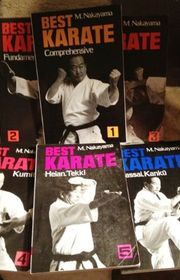
Best Karate, Vol.1: Comprehensive
For Shotokan beginners who want a compact overview before consulting specialized volumes. It links basic techniques, kata, and kumite within one reference, though its concise treatment leaves less room for troubleshooting individual movements than a longer manual.
What it's about
Masatoshi Nakayama introduces Shotokan karate through basic stances, strikes, blocks, kata, and kumite. Photographs and explanations organize the foundations of training, including balance, movement, and power, as the opening volume of a larger instructional series.

The Essence of Karate
For readers interested in Funakoshi's thinking beyond his autobiography. Its reflections on avoiding conflict and sustaining practice help explain his priorities, though the collection offers less systematic technical instruction than a training manual.
What it's about
Gichin Funakoshi explains karate's philosophical and spiritual foundations through memories of training, accounts of other masters, and reflections on its history. His emphasis on avoiding conflict connects martial practice with personal development and the possibility of improving with age.

The Way of Kata
For practitioners who can perform kata but want to investigate its applications. Its explicit principles provide questions to test in partner practice, though the interpretations require judgment and will not match every style's established explanations.
What it's about
Lawrence A. Kane and Kris Wilder present principles for analyzing the martial applications of kata. Their discussion connects formal movements with practical questions about technique, strategy, and partner work, encouraging practitioners to examine what their forms may express.

History and Traditions of Okinawan Karate
For readers investigating karate's Okinawan roots rather than following a grading syllabus. Hokama's historical material and photographs widen the picture beyond modern Shotokan, though the regional focus offers less direct help with day-to-day technique.
What it's about
Tetsuhiro Hokama documents Okinawan karate's history and traditions through historical photographs and accounts of its development. The book also presents illustrated material on Goju-ryu practice and connections between movements in Okinawan dance and combative techniques.

For traditional karate practitioners interested in supplementary conditioning. Its explanations of Okinawan equipment and training methods fill a gap left by kata manuals, though building and using the tools requires more care and space than ordinary reading exercises.
What it's about
Michael Clarke explains hojo undo, the supplementary conditioning practices used in traditional karate. Historical background, tool-building drawings, warm-up guidance, and training instructions connect Okinawan equipment with the movements and physical demands of the martial art.

For Shotokan students who want to review material by belt level. Its photographs and grading structure make revision straightforward, though your dojo's syllabus may differ, so check requirements with your instructor before treating them as fixed.
What it's about
Ashley P. Martin organizes Shotokan karate instruction around progression through the belt system. Photographs and step-by-step explanations cover techniques and kata, giving students a reference for the material encountered as their training moves from beginner toward advanced levels.

For Shotokan students who prefer a structured photographic course beside their dojo practice. Kanazawa connects foundational movements with more advanced work, though a book's progression cannot guarantee a black belt or replace an instructor's corrections.
What it's about
Hirokazu Kanazawa presents a structured course in karate's basic techniques, forms, and sparring. Detailed photographs accompany instruction that progresses from introductory practice toward more advanced work, showing how individual movements fit into a broader training program.
Sources
- 1
10 Books Every Karate Nerd Must Have (+ 1 DVD)
karatebyjesse.com
- 2
Karate Books
goodreads.com
- 3
Any ‘Must read’ karate books?
reddit.com
- 4
What are your favourite karate books?
reddit.com
- 5
Recommended Reading
fremontshotokan.com
- 6
Japan Karate Association | Shotakan Karate | Columbia University
columbia.edu
- 7
97 Best Karate Books of All Time (Updated for 2025)
shortform.com
- 8
Shotokan Karate Reading List | Required & Recommended Books
pentictonshotokankarate.ca
- 9
Karate Bibliography
katastepbystep.com









Edited by
Software engineer whose passion for tracking book recommendations from podcasts inspired the creation of MRB.
Lead investor at 3one4 Capital whose startup expertise and love for books helped shape MRB and its growth.
Comments
Spotted a missing book, a wrong order or a mistake? Tell us and we'll fix this page.
We're a reading guide, not the author or publisher, so we can't send books or pass on messages.