
11 Best Joan Didion Books
The best Joan Didion books, ranked by how many expert sources recommend each one, with notes on who each suits across essays, novels, and memoirs.
Our take
Joan Didion writes about the stories people use to make experience seem coherent, and the moments when those stories stop working. Her essays examine California, politics, public language, and cultural unease. Her novels approach disconnection through compressed scenes and uncertain narrators. The later memoirs turn the same close attention toward grief, family, and aging. Readers can begin with whichever form draws them most.
Slouching Towards Bethlehem offers a varied introduction to the essays, followed by the more fragmented The White Album. Play It As It Lays is a compact route into the fiction, but its bleakness differs from the intimacy of The Year of Magical Thinking. Miami, Salvador, and Political Fictions concentrate on political settings and the language surrounding power. Where I Was From returns to California through personal history and reconsideration. Start with Slouching Towards Bethlehem for her range, or choose the grief memoir if that is the subject you want to read about now.
11 books · 8 sources · Last updated
As an Amazon Associate, we earn from qualifying purchases (at no extra cost to you).
Reading Joan Didion in order? See all Joan Didion books in order
How to choose from this list
Skip to the full rankingIf you're new to Didion’s essays: Slouching Towards Bethlehem → The White Album
If you want personal writing about loss: The Year of Magical Thinking → Blue Nights
If you want to explore her fiction: Play It As It Lays → A Book of Common Prayer
If you want political reportage: Salvador → Miami → Political Fictions
If you want to examine California’s self-image: Slouching Towards Bethlehem → Where I Was From
If you want more media and political essays: The White Album → After Henry
The 11 books, ranked
Ranked by how many expert sources name each book. Ties go to the book more people recommend.
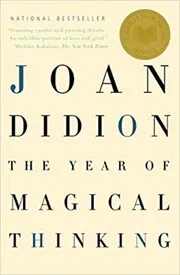
The Year of Magical Thinking
For readers interested in a precise personal account of bereavement. Its concentrated attention to thought and memory makes it more intimate than the cultural essays, though its repetitions reflect grief rather than offering an orderly recovery guide.
What it's about
A memoir of the year after John Gregory Dunne's sudden death, written while their daughter Quintana lay gravely ill, this book follows Didion's looping, irrational magical thoughts as she tries to understand loss and keep an ordinary life going.
Also recommended by
1 person Harry Styles recommended this book
Harry Styles
Harry Styles was seen purchasing this book.
Harry Styles's recommendation of this book
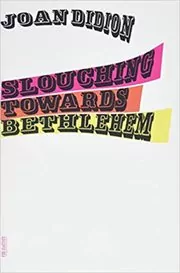
For newcomers who want to discover Didion’s observational voice in shorter pieces. The variety makes it an approachable introduction to her essays, though the California settings and 1960s references carry assumptions readers may need to investigate.
What it's about
Didion's breakthrough essay collection on 1960s California, from Haight-Ashbury's unraveling counterculture to John Wayne, Las Vegas weddings, and small-town rituals, capturing a country whose comforting stories no longer match the uneasy reality on the ground.
Also recommended by
2 people Kara Swisher recommended this book
Kara Swisher
"I read over and over again, like three or four times a year. It’s so beautifully constructed. She’s so wise." - Kara Swisher
Kara Swisher's recommendation of this book  Liz Lambert recommended this book
Liz Lambert
"I love [this book] so much." - Liz Lambert
Liz Lambert's recommendation of this book
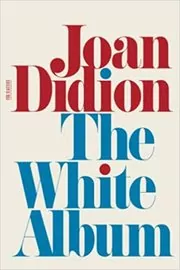
For readers who want cultural observation with a more fragmented, uneasy structure. These essays show Didion connecting public events with private disorientation, though their shifts and historical references demand more attention than a straightforward memoir.
What it's about
An essay collection tracing California and American culture from the late 1960s into the 1970s, from the Manson murders and Black Panthers to museums, malls, and women's lib, as Didion dissects how public stories fracture and private anxieties grow.
Also recommended by
3 people Anthony Bourdain recommended this book
Anthony Bourdain
"I wish I could write like [this author]." - Anthony Bourdain
Anthony Bourdain's recommendation of this book - Kara Swisher recommended this book
Kara Swisher
"[One] of my favorite books." - Kara Swisher
Kara Swisher's recommendation of this book  David Sedaris recommended this book
David Sedaris
"I can look back through my diary and I can tell when I discovered [this author] because all of a sudden I'm writing like [her]." - David Sedaris
David Sedaris's recommendation of this book
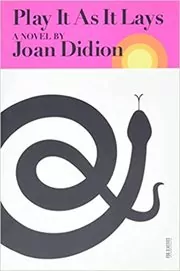
For readers who want Didion’s fiction at its most compressed and emotionally detached. The clipped form gives Hollywood disconnection a sharper edge than her reported essays, though the bleakness and narrative gaps offer little reassurance.
What it's about
A spare, haunting novel about Maria Wyeth, a drifting actress in late 1960s Hollywood whose endless drives on the freeways mirror her emotional free fall, as she tries to find meaning in a world that keeps offering nothing.
Also recommended by
2 people- Geoff Ramsey recommended this book
Geoff Ramsey
"Fucked me up. Powerful and painful read." - Geoff Ramsey
Geoff Ramsey's recommendation of this book  Jack Edwards recommended this book
Jack Edwards
"About 1960s LA." - Jack Edwards
Jack Edwards's recommendation of this book
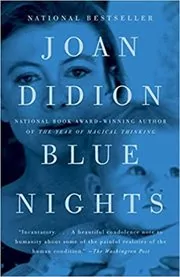
Blue Nights
For readers ready for Didion’s reflections on motherhood, aging, and a daughter’s death. Its spare, circling form makes uncertainty palpable, though the emotional intensity and unresolved questions can make it a difficult starting point.
What it's about
A late memoir about Didion's daughter Quintana Roo, her illnesses, death, and vibrant life, and about aging and fear, written in a looping, elegiac style that circles questions of parental love, regret, and how memory changes over time.
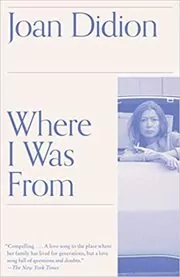
Where I Was From
For readers interested in California’s identity and the stories families inherit. Didion’s reconsideration of her own background gives the historical reporting a personal stake, though the movement between memoir and public institutions is deliberately indirect.
What it's about
Combining family memoir with reportage and history, this book reconsiders California's founding myths, from pioneers and railroads to aerospace and prisons, as Didion interrogates what it really meant to grow up believing in self reliance and exceptionalism there.
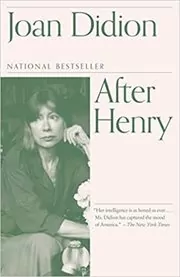
After Henry
For readers who want more essays about how public stories are made and sustained. Its attention to media and political narratives extends the earlier collections, though specific campaigns and controversies require historical context rather than current-news expectations.
What it's about
A collection of long essays written after the death of Didion's editor Henry Robbins, ranging from the Reagan White House and the 1988 campaign to New York's Central Park jogger case and the myths that still cling to California.
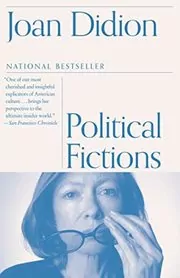
Political Fictions
For readers who want Didion’s skepticism focused on American political performance. The sustained attention to campaigns and media distinguishes it from her broader cultural collections, though its arguments address a particular period and benefit from historical context.
What it's about
In these linked essays, Didion dissects recent American politics, from presidential campaigns and party strategists to the Clinton impeachment, showing how a small class of insiders shapes the narrative of public life and keeps real voters at a distance.
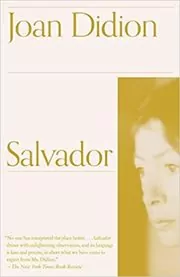
Salvador
For readers interested in Didion’s reporting on political violence and official language. Its short, concentrated account offers a different setting from her California essays, though it is a disturbing historical dispatch rather than a comprehensive national history.
What it's about
A taut report from two weeks in El Salvador during the civil war, this short book tracks death squads, official briefings, and ordinary fear, as Didion tries to make sense of American policy and everyday life in a place coming apart.
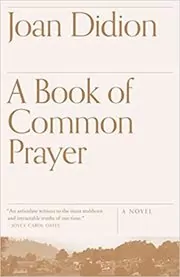
A Book of Common Prayer
For readers drawn to fiction where private motives meet political instability. The narrator’s limited perspective creates more ambiguity than Didion’s direct reporting, though the emotional distance and refusal of easy explanations may frustrate readers seeking clarity.
What it's about
Set in the unstable Central American republic of Boca Grande, this novel follows Charlotte Douglas, searching for her fugitive daughter, and Grace Strasser-Mendana, the cool observer who narrates a story of private grief entangled with coups, corruption, and violence.
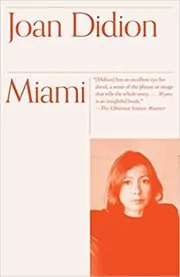
Miami
For readers who want political reportage rooted in one city’s exile communities and power networks. Its concentrated perspective reveals connections a broad history might miss, though familiarity with Cuban history and Cold War politics helps.
What it's about
This book looks at Miami through the Cuban exile community that remade the city, tracing how their politics, memories, and alliances shaped everything from the Bay of Pigs to the Reagan era and turned local struggles into Cold War drama.
Sources
- 1
8 Best Joan Didion Books
tckpublishing.com
- 2
A Guide to the Work of Joan Didion
penguinrandomhouse.com
- 3
How Kirkus Reviewed 5 Essential Joan Didion Books
kirkusreviews.com
- 4
Joan Didion Books
goodreads.com
- 5
JOAN DIDION BOOKS
joandidion.org
- 6
Which Joan Didion book should I read first?
reddit.com
- 7
Where should I start with Joan Didion ?
reddit.com
- 8
The 9 best Joan Didion books
happymag.tv









Edited by
Software engineer whose passion for tracking book recommendations from podcasts inspired the creation of MRB.
Lead investor at 3one4 Capital whose startup expertise and love for books helped shape MRB and its growth.
Comments
Spotted a missing book, a wrong order or a mistake? Tell us and we'll fix this page.
We're a reading guide, not the author or publisher, so we can't send books or pass on messages.