
Joan Didion Books in Order
Explore Joan Didion's books in order, with clear summaries of her essays and novels, plus background on her life and simple guidance on where to start reading.
Last updated:
As an Amazon Associate, we earn from qualifying purchases (at no extra cost to you).
Joan Didion books in publication order
31 books
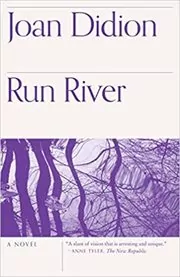
Run River
by Joan Didion
1963
Didion's debut novel follows Lily and Everett McClellan, descendants of California pioneers whose troubled marriage, betrayals, and violence play out against the fading world of Sacramento Valley ranches, questioning what remains of the old frontier myths.
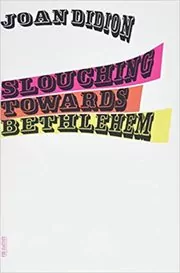
Slouching Towards Bethlehem
by Joan Didion
1968
Didion's breakthrough essay collection on 1960s California, from Haight-Ashbury's unraveling counterculture to John Wayne, Las Vegas weddings, and small-town rituals, capturing a country whose comforting stories no longer match the uneasy reality on the ground.
Recommended by
2 people Kara Swisher recommended this book
Kara Swisher
"I read over and over again, like three or four times a year. It’s so beautifully constructed. She’s so wise." - Kara Swisher
Kara Swisher's recommendation of this book  Liz Lambert recommended this book
Liz Lambert
"I love [this book] so much." - Liz Lambert
Liz Lambert's recommendation of this book
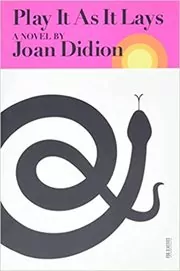
Play It As It Lays
by Joan Didion
1970
A spare, haunting novel about Maria Wyeth, a drifting actress in late 1960s Hollywood whose endless drives on the freeways mirror her emotional free fall, as she tries to find meaning in a world that keeps offering nothing.
Recommended by
2 people- Geoff Ramsey recommended this book
Geoff Ramsey
"Fucked me up. Powerful and painful read." - Geoff Ramsey
Geoff Ramsey's recommendation of this book  Jack Edwards recommended this book
Jack Edwards
"About 1960s LA." - Jack Edwards
Jack Edwards's recommendation of this book
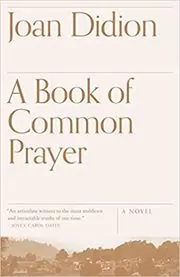
A Book of Common Prayer
by Joan Didion
1977
Set in the unstable Central American republic of Boca Grande, this novel follows Charlotte Douglas, searching for her fugitive daughter, and Grace Strasser-Mendana, the cool observer who narrates a story of private grief entangled with coups, corruption, and violence.
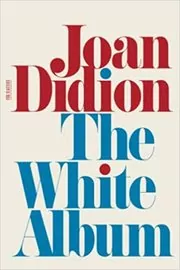
The White Album
by Joan Didion
1979
An essay collection tracing California and American culture from the late 1960s into the 1970s, from the Manson murders and Black Panthers to museums, malls, and women's lib, as Didion dissects how public stories fracture and private anxieties grow.
Recommended by
3 people Anthony Bourdain recommended this book
Anthony Bourdain
"I wish I could write like [this author]." - Anthony Bourdain
Anthony Bourdain's recommendation of this book - Kara Swisher recommended this book
Kara Swisher
"[One] of my favorite books." - Kara Swisher
Kara Swisher's recommendation of this book  David Sedaris recommended this book
David Sedaris
"I can look back through my diary and I can tell when I discovered [this author] because all of a sudden I'm writing like [her]." - David Sedaris
David Sedaris's recommendation of this book
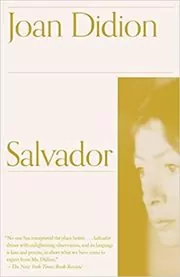
Salvador
by Joan Didion
1983
A taut report from two weeks in El Salvador during the civil war, this short book tracks death squads, official briefings, and ordinary fear, as Didion tries to make sense of American policy and everyday life in a place coming apart.
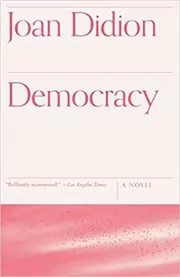
Democracy
by Joan Didion
1984
A formally daring novel in which Didion herself appears as narrator, telling the story of Inez Victor, wife of a U.S. senator, and her long entanglement with shadowy fixer Jack Lovett amid coups, evacuations, and the end of the Vietnam War.
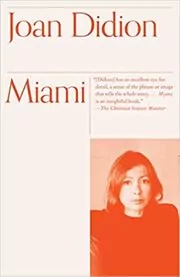
Miami
by Joan Didion
1987
This book looks at Miami through the Cuban exile community that remade the city, tracing how their politics, memories, and alliances shaped everything from the Bay of Pigs to the Reagan era and turned local struggles into Cold War drama.
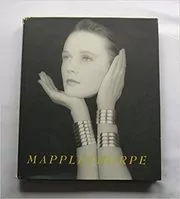
Some Women
by Joan Didion
1990
A photography book of Robert Mapplethorpe's portraits of women, from artists and models to cultural icons, introduced by Didion's brief essay about seeing, being seen, and the uneasy bargain between subject, image, and viewer.
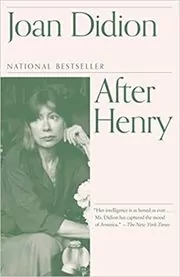
After Henry
by Joan Didion
1992
A collection of long essays written after the death of Didion's editor Henry Robbins, ranging from the Reagan White House and the 1988 campaign to New York's Central Park jogger case and the myths that still cling to California.
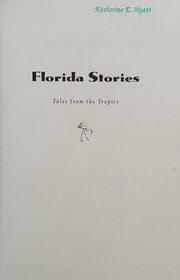
Florida Stories
by John Miller, Larry McMurtry, Dave Barry, Elmore Leonard, Ernest Hemingway, John D MacDonald, Damon Runyon, Isaac Bashevis Singer, Nathaniel Hawthorne, Stephen Crane, Zora Neale Hurston, Elizabeth Bishop, Tennessee Williams, Alison Lurie, Wallace Stevens, John Sayles, John James Audubon, Joy Williams, Joan Didion, Kirsten Miller & William Bartram
1993
Edited by John and Kirsten Miller, this literary collection brings together fiction and nonfiction set in Florida. Selections by writers including Joan Didion, Zora Neale Hurston, and Dave Barry offer varied perspectives on the state’s history, landscape, and cultural contradictions.
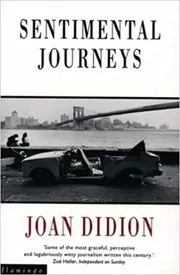
Sentimental Journeys
by Joan Didion
1993
In this essay collection, published under a different title in the United States, Didion examines New York, California, and Washington power circles, including her searing account of the Central Park jogger case and the sentimental stories the city told itself.
The Last Thing He Wanted
by Joan Didion
1996
A political novel about Elena McMahon, a Washington reporter who steps into her ailing father's shadowy arms deals in Central America, and discovers how secret wars, campaign politics, and personal loyalties collide with disastrous results.
Perspectives on the Individual
by Joan Didion
1998
An anthology created for a college freshman seminar, bringing together essays and other pieces that explore how individuals define themselves, make choices, and balance private conscience with the pressures of family, community, and history.
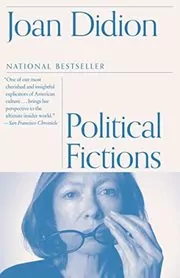
Political Fictions
by Joan Didion
2001
In these linked essays, Didion dissects recent American politics, from presidential campaigns and party strategists to the Clinton impeachment, showing how a small class of insiders shapes the narrative of public life and keeps real voters at a distance.
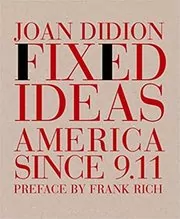
Fixed Ideas
by Joan Didion
2003
A concise work of political criticism that looks at the language and assumptions shaping American debate after September 11, tracing how familiar slogans and fears were used to justify older agendas on war, civil liberties, and national identity.
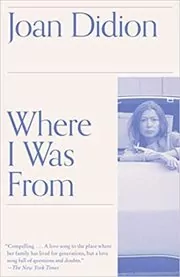
Where I Was From
by Joan Didion
2003
Combining family memoir with reportage and history, this book reconsiders California's founding myths, from pioneers and railroads to aerospace and prisons, as Didion interrogates what it really meant to grow up believing in self reliance and exceptionalism there.

Vintage Didion
by Joan Didion
2004
A compact sampler of Didion's nonfiction, drawing on work about Central America, Miami, New York, and Washington, including pieces on the Central Park jogger case and the war on terror, ideal for readers who want a single volume introduction.
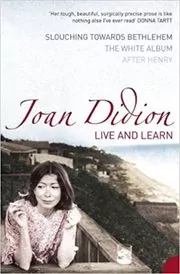
Live and Learn
by Joan Didion
2005
A large omnibus that gathers three major essay collections, presenting Slouching Towards Bethlehem, The White Album, and later political and cultural pieces together so readers can follow Didion's view of America from the 1960s into the 1990s.
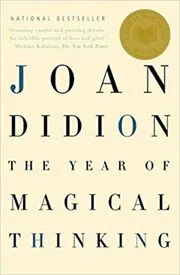
The Year of Magical Thinking
by Joan Didion
2005
A memoir of the year after John Gregory Dunne's sudden death, written while their daughter Quintana lay gravely ill, this book follows Didion's looping, irrational magical thoughts as she tries to understand loss and keep an ordinary life going.
Recommended by
1 person Harry Styles recommended this book
Harry Styles
Harry Styles was seen purchasing this book.
Harry Styles's recommendation of this book
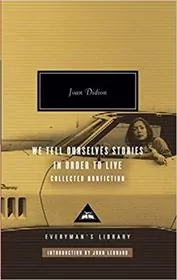
We Tell Ourselves Stories in Order to Live
by Joan Didion
2006
This hefty collection brings together seven books of nonfiction, including Slouching Towards Bethlehem, The White Album, Salvador, Miami, After Henry, Political Fictions, and Where I Was From, offering the core of Didion's journalism, memoir, and cultural criticism.
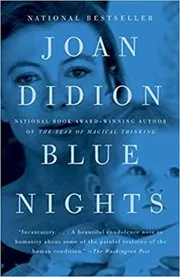
Blue Nights
by Joan Didion
2011
A late memoir about Didion's daughter Quintana Roo, her illnesses, death, and vibrant life, and about aging and fear, written in a looping, elegiac style that circles questions of parental love, regret, and how memory changes over time.
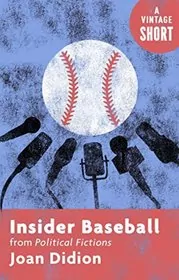
Insider Baseball
by Joan Didion
2016
An ebook edition of Didion's famous essay on the 1988 Dukakis campaign, examining staged photo opportunities, press buses, and consultant jargon to show how modern presidential races become performances in which ordinary voters are mostly background scenery.
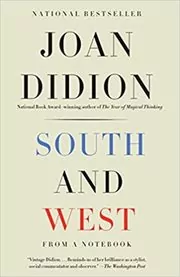
South and West
by Joan Didion
2017
Drawn from Didion's 1970s notebooks, this slim volume follows a road trip through Louisiana, Mississippi, and Alabama, then shifts to fragmentary California notes, capturing the atmospheres, class tensions, and private thoughts that later fed into her longer work.

Collected Essays
by Joan Didion
2018
A digital collection that combines three landmark books of essays, Slouching Towards Bethlehem, The White Album, and After Henry, offering decades of Didion's reporting and criticism in a single, searchable volume for readers who prefer to read on screen.
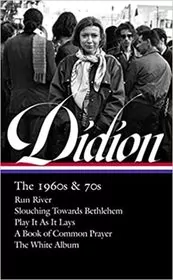
The 1960s & 70s
by Joan Didion
2019
This first volume of a Library of America set collects Didion's early work from the 1960s and 70s, including Run River, Slouching Towards Bethlehem, Play It As It Lays, A Book of Common Prayer, and The White Album in a single authoritative edition.
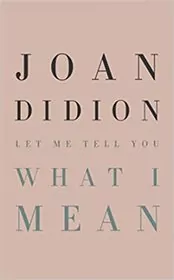
Let Me Tell You What I Mean
by Joan Didion
2021
A late collection of twelve earlier essays, with a foreword by Hilton Als, ranging from thoughts on writing and not getting into Stanford to portraits of Martha Stewart, Robert Mapplethorpe, and visits to places that shaped Didion's imagination.
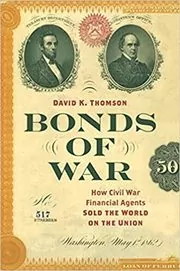
Bonds of War
by Joan Didion
2022
A study of how Union officials and financier Jay Cooke sold Civil War bonds to ordinary Americans and investors abroad, showing how patriotic marketing, small investors, and global finance combined to fund the war and reshape American capital markets.

What She Means
by Joan Didion
2022
An exhibition catalogue that uses art, photographs, film stills, and archival images alongside short texts to trace Didion's life and work, presenting a portrait of the writer through the places she lived and the artists who responded to her.

I Write to Find Out What I Am Thinking
by Joan Didion
2025
This omnibus gathers Didion's final four nonfiction books in one volume, pairing the grief memoirs The Year of Magical Thinking and Blue Nights with the travel notebook South and West and the essay collection Let Me Tell You What I Mean.

Notes to John
by Joan Didion
2025
A posthumous book drawn from Didion's private journal, made up of diary like notes to her husband John Gregory Dunne during early sessions with a psychiatrist, charting her fears about motherhood, alcoholism, depression, work, and what her life has meant.
Where to start with Joan Didion
If you want her classic essays on California: Slouching Towards Bethlehem → The White Album → Where I Was From.
If you are drawn to memoir and grief: The Year of Magical Thinking → Blue Nights → Notes to John.
If you prefer her fiction: Play It As It Lays → Run River → A Book of Common Prayer → Democracy → The Last Thing He Wanted.
If you want politics and power: Salvador → Miami → After Henry → Political Fictions → Fixed Ideas.
If you like big collections in one volume: We Tell Ourselves Stories in Order to Live → The 1960s & 70s → I Write to Find Out What I Am Thinking.
Joan Didion collections, short stories, and related book types
Collections
Non-Fiction Books
Standalone Joan Didion books
by John Miller, Larry McMurtry, Dave Barry, Elmore Leonard, Ernest Hemingway, John D MacDonald, Damon Runyon, Isaac Bashevis Singer, Nathaniel Hawthorne, Stephen Crane, Zora Neale Hurston, Elizabeth Bishop, Tennessee Williams, Alison Lurie, Wallace Stevens, John Sayles, John James Audubon, Joy Williams, Joan Didion, Kirsten Miller & William Bartram
1993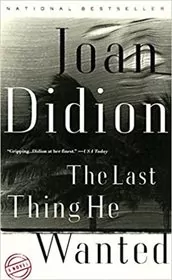
Author bio
Joan Didion grew up in Sacramento, California, the child of a military finance officer and a mother who encouraged her to read widely. She called herself a shy, bookish kid, the sort who typed out Hemingway sentences just to feel how they worked.
As a girl her family moved from post to post while her father served in the Army Air Corps, a rootlessness that later shaped the way she wrote about California as both home and foreign country. She earned an English degree from the University of California, Berkeley, in 1956, and in her senior year won a Vogue essay contest that came with a ticket to New York and a job. She arrived intending to stay for six months and spent seven years there instead, working her way from copywriter to features editor while drafting the novel that would become Run River.
In New York she met writer John Gregory Dunne, who edited the final draft of Run River and soon became her husband. The two moved to Los Angeles in 1964, adopted their daughter Quintana Roo in 1966, and spent two decades toggling between magazine work, novels, and screenplays. During those years Didion published the essay collections Slouching Towards Bethlehem and The White Album, the Hollywood novel Play It As It Lays, and later the political fictions A Book of Common Prayer and Democracy. Nonfiction like Salvador and Miami pushed her gaze outward, into Central American wars and exile politics, without ever losing the feel of one observant person standing slightly off to the side.
By the late 1960s she was one of the writers grouped under the label of New Journalism, though her work never felt like anyone else's. She brought a novelist's attention to cadence and image into reporting that was skeptical of official narratives, clear about her own presence, and attuned to small, destabilizing details, whether a child given LSD in Haight Ashbury or a staged campaign photo on an airport tarmac. Again and again she returned to the same questions, who gets to tell the story, what we choose to forget, and how private unease leaks into public life.
After the family returned to New York in the late 1980s, Didion's nonfiction grew more openly analytical. In the essays collected in After Henry and Political Fictions she wrote about Ronald Reagan, campaign consultants, the Central Park jogger case, and the language of Washington insiders, tracing how politics turns into performance and how journalism can help or hinder that process. She was unsparing about the myths cities tell about themselves, especially when those myths make inequality and violence easier to ignore.
At the same time she kept circling back to California. Where I Was From braided family history with a cool look at the state's boom and bust cycles, its dependence on government money, and the pioneer stories she had grown up repeating. Her first seven works of nonfiction were later gathered in We Tell Ourselves Stories in Order to Live, a title borrowed from the famous opening line of one of her essays and a rough statement of her lifelong subject.
In the 2000s her work turned sharply inward. Her husband died of a heart attack in December 2003, while Quintana was in intensive care with a severe infection. Out of that shock came The Year of Magical Thinking, a clear eyed record of grief in which she tracks the irrational loops of thought that follow sudden loss. A few years later she wrote Blue Nights, about Quintana's death in 2005, her own fears about aging, and the unease of revisiting ordinary memories after they have been scorched by tragedy.
Late in life she continued to publish work drawn from her notebooks and earlier assignments. South and West stitched together a 1970 road trip through the American South with fragments about California and the Patty Hearst trial. Let Me Tell You What I Mean collected previously scattered essays about everything from not getting into Stanford to watching Martha Stewart and Robert Mapplethorpe invent their public selves. Exhibitions, documentaries, and new editions of her work kept reintroducing her to readers who had not yet been born when those pieces first appeared.
Didion received major literary honors in her later years, including a National Book Award, a National Humanities Medal, and a lifetime achievement award from PEN. She died in New York City in December 2021, at age eighty seven, from complications of Parkinson's disease. Even after her death, new material has surfaced, including Notes to John, a book of intimate journal entries from therapy sessions in the late 1990s, which adds another voice to the conversation she carried on with readers for more than half a century.




Edited by
Software engineer whose passion for tracking book recommendations from podcasts inspired the creation of MRB.
Lead investor at 3one4 Capital whose startup expertise and love for books helped shape MRB and its growth.
Comments
Did we miss something? Have feedback?
Help us improve this page by sharing your thoughts