
8 Best JM Coetzee Books
The best JM Coetzee books, ranked by how many expert sources recommend each one, with notes on who they suit and where to begin with his varied fiction.
Our take
J. M. Coetzee writes spare novels that ask difficult questions about power, responsibility, and the limits of understanding other lives. Clear sentences do not make the choices within them simple. His characters often struggle to explain themselves or to respond adequately to someone else’s suffering, and the books leave readers space to question their judgments. These are good choices for readers comfortable with moral uncertainty and emotionally difficult material.
Waiting for the Barbarians uses an unnamed empire to examine cruelty and complicity, while Disgrace places its conflicts in post-apartheid South Africa. Life and Times of Michael K follows a quieter route through withdrawal and survival. Foe questions the making of stories, and Elizabeth Costello brings philosophical arguments into fiction. Boyhood offers an indirect approach to the author’s own past. Begin with Waiting for the Barbarians for a compact political fable, or Life and Times of Michael K for a quieter narrative.
8 books · 8 sources · Last updated
As an Amazon Associate, we earn from qualifying purchases (at no extra cost to you).
Reading JM Coetzee in order? See all JM Coetzee books in order
How to choose from this list
Skip to the full rankingIf you’re new to Coetzee: Waiting for the Barbarians → Life and Times of Michael K
If you want fiction set in South Africa: Age of Iron → Disgrace
If you want questions about storytelling: Foe → Elizabeth Costello → Slow Man
If you want autobiographical writing: Boyhood
The 8 books, ranked
Ranked by how many expert sources name each book. Ties go to the book more people recommend.
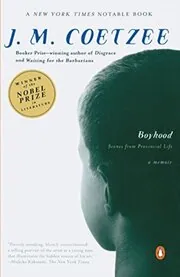
For readers curious about the childhood experiences behind Coetzee’s recurring concerns. Its third-person approach makes memory feel observed rather than explained, though the distance and fictional shaping make it an indirect form of autobiography.
What it's about
Told in the third person, this memoir-novel returns to Coetzee's childhood in Cape Town and Worcester. It captures family tension, school cruelty, and the sharp unease of growing up white in apartheid South Africa.
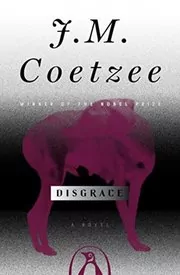
For readers prepared to examine power through an uncomfortable, compromised viewpoint. Its restrained prose leaves moral judgments open, though sexual violence and the limits of the narrator’s understanding make the experience emotionally difficult.
What it's about
After an affair with a student destroys his position, Cape Town professor David Lurie retreats to his daughter Lucy's farm in the Eastern Cape. What follows is a harsh, intimate reckoning with power, violence, and life after old certainties fail.
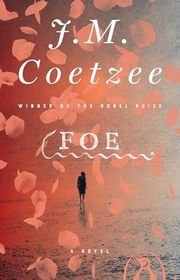
Foe
For readers interested in who controls a story and whose experience remains inaccessible. Its reworking of a familiar classic makes those questions concrete, though prior knowledge of Robinson Crusoe helps and the ending resists explanation.
What it's about
Susan Barton survives an island stay with Cruso and Friday, then asks the writer Daniel Foe to shape her account. Their struggle over what can be told raises questions about authorship, silence, and the ownership of experience.
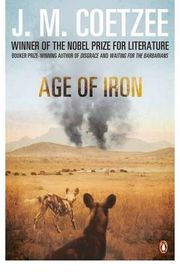
Age of Iron
For readers who want a more directly situated confrontation with apartheid and moral responsibility. Its intimate letter form connects public violence with private vulnerability, though the dying narrator’s limited perspective offers no comfortable resolution.
What it's about
An elderly Cape Town woman dying of cancer writes to her daughter abroad as violence under apartheid enters her sheltered life. Her letters explore complicity, care, estrangement, and the difficulty of responding to suffering beyond her own.
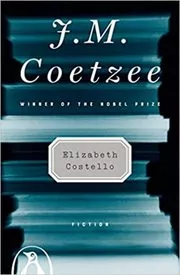
For readers who enjoy fiction as a space for unresolved ethical debate. Its talks and encounters bring animals, belief, and representation into question, though the lecture-based structure offers less narrative continuity than the earlier novels.
What it's about
Elizabeth Costello, an aging Australian novelist, travels the world giving talks on animals, belief, evil, and writing itself. The book moves like a novel and a set of arguments at once, with Coetzee keeping every certainty slightly off balance.
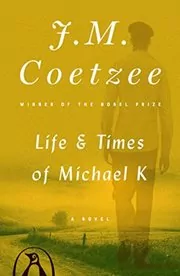
For readers who prefer sparse storytelling and questions about freedom to overt argument. Its attention to withdrawal and survival gives ordinary acts weight, though the quiet central figure and shifting perspectives leave much unexplained.
What it's about
Michael K, a quiet gardener with a cleft lip, tries to carry his dying mother from Cape Town to her birthplace as civil war spreads. His stripped-down journey becomes a powerful story about freedom, survival, and refusing the world's demands.
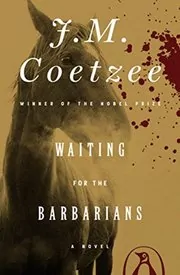
For readers interested in how institutions manufacture enemies and ordinary people become complicit. Its unnamed setting gives the political fable broad reach, though torture and the narrator’s uncertain motives resist a reassuring moral position.
What it's about
At a remote frontier outpost, a magistrate watches the Empire turn rumor into cruelty when officials arrive to hunt an unseen enemy. The novel is both political fable and moral nightmare, tense from the first page.
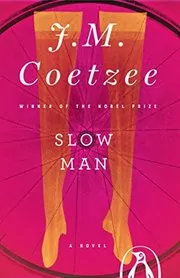
For readers interested in dependence, aging, and the uneasy relationship between authors and characters. Its turn toward metafiction makes it a distinctive later work, though that interruption can frustrate investment in the initial realist story.
What it's about
After a bicycle accident leaves him an amputee, Paul Rayment finds his life shrinking and then turning strange. His attachment to his nurse's family, and the arrival of Elizabeth Costello, push the novel into unexpected moral and metafictional territory.
Sources
- 1
Where to start with J.M. Coetzee: a guide to his best fiction
thebookerprizes.com
- 2
Where to start with: JM Coetzee
theguardian.com
- 3
Books by J.M. Coetzee
goodreads.com
- 4
J M Coetzee
fantasticfiction.com
- 5
Books by J. M. Coetzee and Complete Book Reviews
publishersweekly.com
- 6
J.M. Coetzee
kirkusreviews.com
- 7
J. M. Coetzee
penguinrandomhouse.com
- 8
What do you think of J.M. Coetzee?
reddit.com







Edited by
Software engineer whose passion for tracking book recommendations from podcasts inspired the creation of MRB.
Lead investor at 3one4 Capital whose startup expertise and love for books helped shape MRB and its growth.
Comments
Spotted a missing book, a wrong order or a mistake? Tell us and we'll fix this page.
We're a reading guide, not the author or publisher, so we can't send books or pass on messages.