
10 Best JavaScript Books
The best JavaScript books, ranked by how many expert sources recommend each one, with notes on who they suit, from first-time coders to working developers.
Our take
JavaScript books serve different stages of learning. Some introduce programming through short drills or visual examples. Others expect you to write code already and focus on why functions, objects, and asynchronous operations behave as they do. Browser programming adds another layer, so it helps to distinguish a guide to the language from a guide to building interactive pages.
A Smarter Way to Learn JavaScript favors repetition, while Learn JavaScript VISUALLY with Interactive Exercises offers a gentler visual starting point. Eloquent JavaScript asks more of you through exercises and larger programs. JavaScript: The Definitive Guide suits sustained study once the basics feel familiar. Older books here remain useful for particular explanations, but their editions matter: jQuery-centered examples and pre-ES6 advice need context alongside modern material. Start with the approach that keeps you writing small programs, then use You Don't Know JS Yet to begin examining your assumptions about the language.
10 books · 8 sources · Last updated
As an Amazon Associate, we earn from qualifying purchases (at no extra cost to you).
How to choose from this list
Skip to the full rankingIf you prefer small practice sessions: A Smarter Way to Learn JavaScript → Eloquent JavaScript
If you learn visually: Learn JavaScript VISUALLY with Interactive Exercises → Head First JavaScript Programming
If you want language depth: You Don't Know JS Yet → JavaScript: The Definitive Guide
If you already write JavaScript: Effective JavaScript → Secrets of the JavaScript Ninja
The 10 books, ranked
Ranked by how many expert sources name each book. Ties go to the book more people recommend.

For readers willing to learn by solving exercises and building substantial programs. Haverbeke connects language ideas with working applications, though the pace can challenge first-time programmers and this third edition predates the current fourth edition.
What it's about
Marijn Haverbeke's third edition introduces programming through JavaScript and practical application development. Explanations and exercises build familiarity with the language while encouraging readers to understand how programs work and develop clear, effective solutions to programming problems.

For programmers who want sustained explanations of the language and its browser and server environments. Flanagan offers more depth than a quick tutorial, though the substantial seventh edition requires time and does not cover every subsequent language addition.
What it's about
David Flanagan's seventh edition provides a detailed guide to JavaScript, covering the language alongside browser and Node.js programming. Explanations and examples address modern features, asynchronous work, and the tools needed to develop applications in multiple environments.

For experienced readers interested in the reasoning behind a selective JavaScript style. Crockford makes language pitfalls memorable in a short book, though its pre-ES6 perspective needs interpreting alongside modern modules, classes, and asynchronous patterns.
What it's about
Douglas Crockford identifies a selective core of JavaScript that favors readable, maintainable programs. He examines objects, functions, inheritance, and other language features while distinguishing useful techniques from problematic design decisions and habits that encourage fragile code.

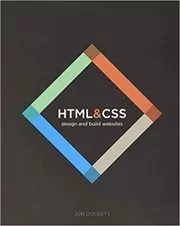
For visual learners who already know some HTML and CSS. Duckett makes browser interactions easier to picture than a dense language reference, though its jQuery emphasis and older examples reflect an earlier period of frontend development.
What it's about
Jon Duckett teaches JavaScript and jQuery through visual explanations and worked examples for interactive websites. Beginning with programming fundamentals, he develops readers' understanding of scripts and demonstrates techniques for responding to users, validating forms, updating content, and building interface features.
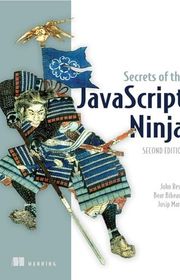
Secrets of the JavaScript Ninja
For developers ready to examine functions, closures, and browser behavior through detailed examples. The second edition connects language mechanisms with practical problems, though it predates newer standards and is a more demanding read than a beginner's introduction.
What it's about
The second edition examines JavaScript functions, closures, prototypes, and asynchronous programming, alongside browser APIs, events, and testing. Worked examples connect the language's underlying behavior with techniques for developing and understanding more complex web applications.

For readers who want to question assumptions about JavaScript before studying its mechanisms more deeply. Simpson gives the language a deliberate conceptual introduction, though this opening volume is an orientation rather than a complete programming course.
What it's about
Kyle Simpson opens his second-edition series with a foundation for understanding JavaScript more deeply. He examines the language's identity, addresses misconceptions, and surveys major concepts to prepare readers for further study of its underlying mechanisms.

A Smarter Way to Learn JavaScript
The New Approach That Uses Technology to Cut Your Effort in Half
For beginners who remember concepts best through repeated practice. Myers pairs small lessons with online exercises, giving more immediate reinforcement than a dense reference, though the older language coverage needs supplementing with modern syntax and tooling.
What it's about
Mark Myers introduces JavaScript through brief explanations followed by online practice exercises. The book emphasizes frequent hands-on repetition, helping beginners work through programming concepts in manageable steps and check their understanding as they progress through the material.

For developers who can already write JavaScript but want to understand subtle behavior and avoid common mistakes. Herman's focused lessons reward careful study, though the older examples predate much of today's syntax and development tooling.
What it's about
David Herman presents 68 practical lessons for writing JavaScript with greater reliability and clarity. Examples explain language behavior and common traps, helping programmers understand design choices and build code that works effectively across different environments.
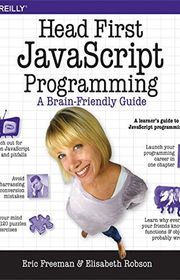
Head First JavaScript Programming
For beginners who learn through puzzles, diagrams, and conversational explanations. Freeman and Robson provide more playful practice than a conventional reference, though this edition's older examples need pairing with current guidance on browser development.
What it's about
Eric Freeman and Elisabeth Robson introduce JavaScript through illustrated explanations, puzzles, exercises, and browser-based examples. Lessons develop programming fundamentals, objects, functions, and interactions with web pages, encouraging readers to test ideas instead of only reading about them.

Learn JavaScript VISUALLY with Interactive Exercises
The Beautiful New Way to Learn a Programming Language
For complete beginners who find diagrams and analogies easier than long technical explanations. Demirov offers a gentle initial foothold, though its compact visual treatment needs a fuller course or project practice alongside it.
What it's about
Ivelin Demirov introduces JavaScript through colorful illustrations, metaphors, and analogies designed to make basic concepts approachable. Short explanations and interactive exercises offer an initial foothold for beginners who prefer visual material alongside more detailed programming resources.
Sources
- 1
Best JavaScript Books for 2026
computingforgeeks.com
- 2
Top 7 JavaScript Books for Every Skill Level
codemotion.com
- 3
Javascript Books
goodreads.com
- 4
100 Best JavaScript Books of All Time
shortform.com
- 5
Guide to the Best JavaScript Books for Beginners
sitepoint.com
- 6
Best JavaScript Books 2026: Pick by Time, Not Fame
ebookwale.com
- 7
Best books to learn JavaScript for beginners
reddit.com
- 8
Book recommendations for Javascript beginners
reddit.com


Edited by
Software engineer whose passion for tracking book recommendations from podcasts inspired the creation of MRB.
Lead investor at 3one4 Capital whose startup expertise and love for books helped shape MRB and its growth.
Comments
Spotted a missing book, a wrong order or a mistake? Tell us and we'll fix this page.
We're a reading guide, not the author or publisher, so we can't send books or pass on messages.