
14 Best Front End Development Books
The best front end development books, ranked by how many expert sources recommend each one, with notes for beginners and experienced interface developers.
Our take
Front end development brings together the structure of a page, its visual presentation and the behavior people interact with. These books help beginners learn HTML, CSS and JavaScript, while giving working developers ways to improve responsive layouts, understand browser code and build more consistent interfaces. Learning the underlying technologies makes it easier to judge what a framework is doing for you.
The visual explanations in HTML and CSS offer a gentle entry point. Learning Web Design provides a broader course, while Eloquent JavaScript asks more of readers through programming exercises and projects. CSS Secrets develops problem-solving skills for styling. Beyond code, Don't Make Me Think, Revisited examines usability, and Atomic Design explains how reusable interface parts fit together. Several linked editions use older examples, so check their techniques against current browser documentation as you practice.
Start with HTML and CSS if you have never built a page, then move to Eloquent JavaScript when you are ready to make it interactive.
14 books · 8 sources · Last updated
As an Amazon Associate, we earn from qualifying purchases (at no extra cost to you).
How to choose from this list
Skip to the full rankingIf you have never built a page: HTML and CSS → Learning Web Design
If you want programming practice: Eloquent JavaScript → Secrets of the JavaScript Ninja
If you want stronger styling skills: Responsive Web Design with HTML5 and CSS → CSS Secrets
If you want more usable, consistent interfaces: Don't Make Me Think, Revisited → Atomic Design
If you lead multiple frontend teams: Building Micro-Frontends
The 14 books, ranked
Ranked by how many expert sources name each book. Ties go to the book more people recommend.

For learners who want to become programmers rather than just copy interface snippets. Its exercises and projects develop deeper reasoning than a visual introduction, but the difficulty rises quickly and the linked edition is older.
What it's about
Marijn Haverbeke's third edition introduces programming through JavaScript and practical application development. Explanations and exercises build familiarity with the language while encouraging readers to understand how programs work and develop clear, effective solutions to programming problems.
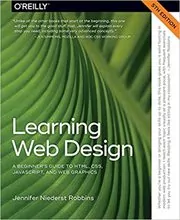
For beginners who want a broad course with exercises instead of separate books for every technology. Its integrated coverage connects markup, styling and graphics, but the linked fifth edition predates more recent developments in the browser platform.
What it's about
Jennifer Niederst Robbins introduces website creation through HTML, CSS, JavaScript, and web graphics. Exercises and quizzes build from page structure to responsive layouts, image optimization, and development tools, giving beginners practice in creating sites that adapt to different screen sizes.
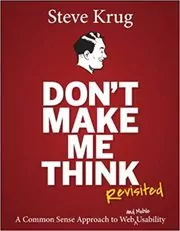
For developers who can build a page but struggle to judge whether people can use it. Its short, illustrated usability lessons complement the coding books, but they do not teach implementation or provide comprehensive accessibility guidance.
What it's about
Steve Krug explains how to design websites people can navigate and understand with little effort. Using practical examples, he examines information design, scanning, usability testing, and mobile experiences, emphasizing clarity in everyday interactions.
Also recommended by
5 people Ev Williams recommended this book
Ev Williams
On the "books read" section of Ev Williams' GoodReads profile.
Ev Williams's recommendation of this book  Brian Armstrong recommended this book
Brian Armstrong
"A framework to simulate how customers experience your product, especially the moments of confusion." - Brian Armstrong
Brian Armstrong's recommendation of this book  Jeff Atwood recommended this book
Jeff Atwood
"The single best book on usability I've ever read." - Jeff Atwood
Jeff Atwood's recommendation of this book  Nick Ganju recommended this book
Nick Ganju
"About usability and making software and user interfaces that are friendly to people." - Nick Ganju
Nick Ganju's recommendation of this book  Garry Tan recommended this book
Garry Tan
"The simplest book I recommend everyone to read when they want to do design." - Garry Tan
Garry Tan's recommendation of this book

For programmers who want detailed explanations to consult while building browser applications. Its broad language coverage reaches further than the beginner guides here, but the length and reference-like structure can overwhelm readers learning their first programming language.
What it's about
David Flanagan's seventh edition provides a detailed guide to JavaScript, covering the language alongside browser and Node.js programming. Explanations and examples address modern features, asynchronous work, and the tools needed to develop applications in multiple environments.

For beginners who learn best from illustrated explanations rather than dense reference prose. Its visual treatment makes scripts and browser interactions approachable, but the jQuery emphasis and older language style need supplementing with current JavaScript guidance.
What it's about
Jon Duckett teaches JavaScript and jQuery through visual explanations and worked examples for interactive websites. Beginning with programming fundamentals, he develops readers' understanding of scripts and demonstrates techniques for responding to users, validating forms, updating content, and building interface features.
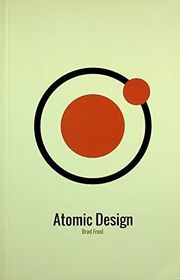
Atomic Design
For developers building reusable interfaces across multiple pages or products. Its component hierarchy connects design decisions with pattern libraries and team workflow, but the conceptual approach offers less implementation detail than a framework-specific engineering guide.
What it's about
Brad Frost introduces a method for organizing interfaces as hierarchies of reusable parts. The book connects that model with pattern libraries, design systems and collaborative workflows, explaining how teams can create and maintain more consistent user interfaces.
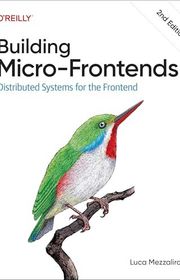
Building Micro-Frontends
For experienced developers and leads coordinating frontend work across independent teams. Its architectural focus addresses organizational boundaries and integration choices beyond individual components, but the added complexity is unnecessary for many small applications and teams.
What it's about
Luca Mezzalira explains how independently developed micro-frontends can compose a larger application. The updated second edition examines architectural choices, team autonomy, deployment and integration with distributed systems, including the benefits and pitfalls of adopting this approach.
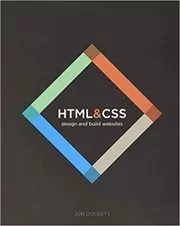
For complete beginners who want to understand page structure and styling visually. Its carefully illustrated explanations are easier to browse than a reference manual, but older layout examples need supplementing with current CSS techniques.
What it's about
Jon Duckett introduces HTML and CSS through illustrated explanations, photographs, and code examples. The book shows beginners how web pages are structured and styled, connecting markup and presentation with practical considerations for organizing content and designing a usable website.

For readers who want step-by-step examples of HTML features beyond basic text and links. Its practical breadth includes media and graphics, but older compatibility advice and application features require checking against current browser documentation.
What it's about
Matthew MacDonald explains HTML5 and related web standards through step-by-step tutorials and practical examples. The guide connects page structure and responsive layouts with features such as video, dynamic graphics, geolocation, offline capabilities, and drag and drop in web applications.

For developers interested in why some JavaScript patterns produce clearer code than others. Its compact, opinionated treatment sharpens judgment, but it reflects an earlier language era and needs pairing with a modern language guide.
What it's about
Douglas Crockford identifies a selective core of JavaScript that favors readable, maintainable programs. He examines objects, functions, inheritance, and other language features while distinguishing useful techniques from problematic design decisions and habits that encourage fragile code.

Secrets of the JavaScript Ninja
For developers comfortable with basic JavaScript who want stronger command of functions and browser behavior. Its examples develop closures, prototypes and asynchronous techniques in depth, but it is more demanding than a first programming book.
What it's about
John Resig, Bear Bibeault, and Josip Maras explain advanced JavaScript concepts through practical examples. The guide covers functions, closures, objects, prototypes, promises, browser APIs, events, and timers, alongside testing and techniques for developing across browsers.

For developers who already know CSS and want to improve their problem-solving technique. Its focused visual examples explain how to reason toward flexible solutions, but some workarounds should be checked against newer browser capabilities.
What it's about
Lea Verou presents 47 CSS techniques for solving everyday web development problems. Examples cover backgrounds, borders, shapes, visual effects, typography, layout, and animation, demonstrating an analytical approach to creating flexible, maintainable styles with standards-based code.

Responsive Web Design with HTML5 and CSS
Develop Future-Proof Responsive Websites Using the Latest HTML5 and CSS Techniques
For developers who know basic markup and want practical responsive layouts. Its worked examples connect CSS Grid, forms and typography with adaptable pages, but the linked third edition misses features covered in later editions.
What it's about
Ben Frain explains how to build responsive websites using HTML5 and CSS in this third edition. Practical examples explore adaptable layouts, CSS Grid, custom properties, variable fonts, forms, and visual effects for interfaces that work across different screen sizes.

Sass and Compass in Action
For developers maintaining older Sass and Compass projects who need to understand their stylesheet workflow. Its practical examples explain reuse and automation, but the dated tooling makes it a specialist maintenance resource rather than a starting point.
What it's about
Wynn Netherland and his coauthors teach stylesheet development with Sass and Compass through practical examples. Starting with CSS resets, the book progresses to layouts, browser implementation differences, reusable frameworks, and techniques for simplifying and automating common styling tasks.
Sources
- 1
Books to Learn Front-End Web Development
geeksforgeeks.org
- 2
Best books for a senior front end
reddit.com
- 3
Where to learn modern front-end
joshuabriley.com
- 4
Best books for Frontend Developers
jobroadmaps.com
- 5
20 Best Web Development Books you need to read (in 2026)
loopstudio.dev
- 6
Top Frontend books curated by experts
mentorcruise.com
- 7
15 Best Frontend Development Books To Go From Novice To Expert
whatpixel.com
- 8
Front End Development Books
goodreads.com

Edited by
Software engineer whose passion for tracking book recommendations from podcasts inspired the creation of MRB.
Lead investor at 3one4 Capital whose startup expertise and love for books helped shape MRB and its growth.
Comments
Spotted a missing book, a wrong order or a mistake? Tell us and we'll fix this page.
We're a reading guide, not the author or publisher, so we can't send books or pass on messages.