
14 Best Martial Arts Books
The best martial arts books, ranked by how many expert sources recommend each one, with notes on who each suits, from new students to experienced fighters.
Our take
Martial arts books range from illustrated training references to philosophy, memoir, and reporting about combat sports. A book that helps you review a technique serves a different purpose from one that examines discipline or strategy. Begin with the martial art you practice and the question you want answered, then choose the format that supports it.
Jiu Jitsu University and Kodokan Judo are companions for students reviewing what they learn in practice. Tao of Jeet Kune Do mixes Bruce Lee’s technical notes with ideas about adaptability, while The Book of Five Rings offers a historical perspective on strategy. Sam Sheridan’s books turn toward the people and mental habits behind fighting. Older works can remain useful, but their assumptions and examples belong to particular settings. For a first choice, pair a reference in your own discipline with a reflective book that broadens how you think about training.
14 books · 8 sources · Last updated
As an Amazon Associate, we earn from qualifying purchases (at no extra cost to you).
How to choose from this list
Skip to the full rankingIf you want Bruce Lee’s approach: Tao of Jeet Kune Do → Bruce Lee's Fighting Method
If you practice grappling: Jiu Jitsu University → Kodokan Judo
If you want historical strategy: The Book of Five Rings → The Art Of War
If you want fighters’ experiences: A Fighter's Heart → The Fighter's Mind
If you want training support: Ultimate Flexibility
The 14 books, ranked
Ranked by how many expert sources name each book. Ties go to the book more people recommend.

The Art Of War
For readers who want a broader strategic perspective on preparation and adapting to opponents. Its brevity makes it easy to revisit, though its subject is warfare rather than a specific martial art or training system.
What it's about
Sun Tzu's military treatise examines planning, leadership, deception, terrain, and adapting to an opponent. Its thirteen chapters consider how preparation and strategic judgment can secure an advantage while limiting the costs and dangers of warfare.
Also recommended by
12 people Jocko Willink recommended this book
Jocko Willink
Jocko Willink covered this book in "Jocko Podcast" Ep. 23
Jocko Willink's recommendation of this book  Neil deGrasse Tyson recommended this book
Neil deGrasse Tyson
"To learn that the act of killing fellow humans can be raised to an art." - Neil deGrasse Tyson
Neil deGrasse Tyson's recommendation of this book  Marc Benioff recommended this book
Marc Benioff
"Served me well. [...] Advocates keeping one’s cool at all times." - Marc Benioff
Marc Benioff's recommendation of this book  Evan Spiegel recommended this book
Evan Spiegel
"After meeting Mark Zuckerberg, [Evan Spiegel] immediately bought every [Snapchat] employee a copy of 'The Art Of War'." - Business Insider
Evan Spiegel's recommendation of this book  Dave Camarillo recommended this book
Dave Camarillo
"Another [book] I have to mention." - Dave Camarillo
Dave Camarillo's recommendation of this book  Ryan Petersen recommended this book
Ryan Petersen
Ryan Petersen mentioned this book on Twitter.
Ryan Petersen's recommendation of this book +6
More recommendations
- Travis Kalanick
"It became [Travis Kalanick's bible]." - Mike Isaac
- Vlad Tenev
"I like the classics such as The Republic by Plato and The Art of War by Sun Tzu." - Vlad Tenev
- Fred Wilson
"Has to get onto my list." - Fred Wilson
- Lex Fridman
Lex Fridman mentioned this book on Instagram.
- Elon Musk
"I've read [this book] many times." - Elon Musk
- Patrick Bet-David
Patrick Bet-David recommended this book on his website.
- Travis Kalanick

The Book of Five Rings
For readers interested in strategy through a historical swordsman’s perspective. Its compact reflections on timing and judgment reward rereading, though the distance from modern practice makes translation and historical context especially useful.
What it's about
Miyamoto Musashi sets out principles of strategy drawn from his experience as a swordsman. He examines skill, timing, concentration, and the choice of weapons, combining practical observations about confrontation with reflection on discipline and the pursuit of mastery.
Also recommended by
6 people Joe Rogan recommended this book
Joe Rogan
"Increased my focus in all disciplines I pursue. It’s some undeniably inspiring shit, and I can’t recommend it enough." - Joe Rogan
Joe Rogan's recommendation of this book - Jocko Willink recommended this book
Jocko Willink
Jocko Willink covered this book in "Jocko Podcast" Ep. 80
Jocko Willink's recommendation of this book  Ryan Holiday recommended this book
Ryan Holiday
Ryan Holiday recommended this book on his blog.
Ryan Holiday's recommendation of this book  Naval Ravikant recommended this book
Naval Ravikant
Naval Ravikant tweeted about this book.
Naval Ravikant's recommendation of this book  PewDiePie recommended this book
PewDiePie
"This is like the coolest book ever!" - PewDiePie
PewDiePie's recommendation of this book  Lex Fridman recommended this book
Lex Fridman
Lex Fridman mentioned this book on Instagram.
Lex Fridman's recommendation of this book

A Fighter's Heart: One Man's Journey Through the World of Fighting
For readers who want to understand fighting cultures through a participant’s experience. Its travel and reporting offer a change from manuals and philosophy, though the personal viewpoint gives selective glimpses rather than a comprehensive survey.
What it's about
Sam Sheridan travels into different fighting communities and takes part in their training. Combining personal experience with reporting, he examines what draws people to combat sports and how preparation, competition, and local cultures shape their lives.

Zen in the Art of Archery
For readers interested in the inner experience of disciplined practice. Its short, reflective narrative offers a contrast to technical manuals, though it should be read as one person’s interpretation rather than a comprehensive account of Japanese archery.
What it's about
Eugen Herrigel recounts studying Japanese archery while living in Japan, interpreting his training through a Zen perspective. His account explores the difficulties of relinquishing deliberate control and connects the discipline of practice with spiritual understanding and self-transformation.
Also recommended by
4 people- Joe Rogan recommended this book
Joe Rogan
"A great book." - Joe Rogan
Joe Rogan's recommendation of this book  Adam Robinson recommended this book
Adam Robinson
"[One of five books that confirm] there is far, far more in our unconscious mind than is dreamt of in our philosophy." - Adam Robinson
Adam Robinson's recommendation of this book  Aubrey Marcus recommended this book
Aubrey Marcus
"As an amateur archer myself, I found the archery analogy to fit me well." - Aubrey Marcus
Aubrey Marcus's recommendation of this book  Dave Elitch recommended this book
Dave Elitch
"[I give this book] to people all the time." - Dave Elitch
Dave Elitch's recommendation of this book

Tao of Jeet Kune Do
For readers who want Bruce Lee’s ideas about adaptability alongside notes on technique. Its mixture of philosophy and sketches invites reflection, though the compiled material does not form a complete, sequential training course.
What it's about
Compiled from Bruce Lee's notes and drawings, this book presents his martial arts philosophy and approach to Jeet Kune Do. Reflections on simplicity and adaptability accompany discussions of movement, conditioning, technique, and developing an individual expression of combat skill.
Also recommended by
1 person Ed Latimore recommended this book
Ed Latimore
"For your body." - Ed Latimore
Ed Latimore's recommendation of this book

Jiu Jitsu University
For Brazilian jiu-jitsu students who want a structured reference alongside classes. Its attention to common mistakes makes it useful for reviewing practice, though the volume of photographed techniques can overwhelm readers without mat experience.
What it's about
Saulo Ribeiro organizes Brazilian jiu-jitsu instruction around the progression from white belt to black belt. Illustrated techniques address common grappling situations, while explanations of frequent mistakes and their corrections help readers understand the principles behind effective practice.

For judo students who want foundational techniques connected with the discipline’s guiding principles. Its breadth makes it a useful reference across training stages, though explanations and photographs work best alongside instruction and physical practice.
What it's about
Jigoro Kano presents the principles and techniques of Kodokan judo, including fundamental movements, free practice, and formal exercises. Illustrated explanations connect physical training with his guiding idea of using mental and physical energy efficiently.

For readers who want martial practice connected to discipline and everyday conduct. Its coherent warrior framework gives it a stronger philosophical focus than technique manuals, though its assumptions may not fit every practitioner’s goals.
What it's about
Forrest Morgan explores the Japanese warrior mindset as a framework for martial arts training and everyday conduct. His manual connects physical preparation with discipline, strategy, and personal responsibilities, presenting martial practice as a broader way of living.

For practitioners who want to understand how different phases of MMA connect. Its integrated approach distinguishes it from books on a single discipline, though the sport’s continued development means some tactical examples reflect an earlier era.
What it's about
B.J. Penn, Glen Cordoza, and Erich Krauss explain a mixed martial arts system that links striking, takedowns, and ground fighting. Illustrated techniques cover cage work and combinations, alongside strategies adapted to a fighter's individual strengths.
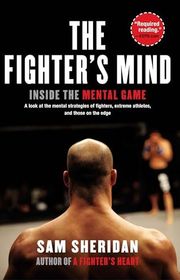
The Fighter's Mind: Inside the Mental Game
For readers who want to explore mental preparation through conversations with experienced competitors and trainers. Its reporting supplies several perspectives rather than one doctrine, though it is not a step-by-step sports psychology program.
What it's about
Sam Sheridan investigates the mental side of fighting through conversations with competitors, coaches, and other performers. He explores confidence, fear, learning, and persistence, asking how people prepare for demanding contests and respond to setbacks.

For martial artists who want a dedicated reference for stretching routines and flexibility goals. Its exercise-focused format complements technique manuals, though choosing suitable movements still depends on the reader’s current mobility and training needs.
What it's about
Sang Kim examines stretching as part of martial arts training, explaining flexibility methods before presenting nearly 200 exercises. Photographs, workout plans, and difficulty guidance connect individual stretches with goals such as high kicks and full splits.

For practitioners interested in studying Bruce Lee’s movements through photographs and organized lessons. Its visual format is more concrete than his philosophical notes, though still images cannot provide the feedback of training with an instructor.
What it's about
Bruce Lee's illustrated martial arts guide brings together material on basic training, self-defense, skill development, and advanced techniques. Photographs and explanations present his approach to movement, conditioning, timing, and Jeet Kune Do across a sequence of progressively developed lessons.

For boxers interested in an older champion’s explanation of punching mechanics and defense. Its direct, illustrated approach makes a useful historical training companion, though some methods reflect the sport and coaching of its period.
What it's about
Jack Dempsey explains his approach to boxing through illustrated lessons on punching, defense, stance, and footwork. The manual connects training with the mechanics of generating power, using feints, and applying techniques during aggressive exchanges in the ring.

For new Muay Thai students who want an illustrated overview to accompany classes. Its coverage gives useful orientation before more specialized study, though photographs cannot fully convey timing, distance, or the feel of partner work.
What it's about
Christoph Delp introduces Muay Thai through its traditions, rules, training, and basic fighting techniques. Illustrated instruction covers stance, distance, punches, kicks, knees, elbows, and clinch work, with guidance on combinations and responses to an opponent's attacks.
Sources
- 1
100 Best Martial Arts Books of All Time
shortform.com
- 2
Classic Martial Arts Books
goodreads.com
- 3
Best Books on Martial Arts & Self-Defense
readingandthinking.com
- 4
What’s your favorite martial art book?
reddit.com
- 5
5 Books Martial Artists Need To Read
evolve-mma.com
- 6
The 100 Best Martial Arts Books, Films, and Fights
listmuse.com
- 7
10 Best Mixed Martial Arts Books of All Time
sportsfoundation.org
- 8
What are some good, thorough martial arts texts a library of martial arts should include?
reddit.com








Edited by
Software engineer whose passion for tracking book recommendations from podcasts inspired the creation of MRB.
Lead investor at 3one4 Capital whose startup expertise and love for books helped shape MRB and its growth.
Comments
Spotted a missing book, a wrong order or a mistake? Tell us and we'll fix this page.
We're a reading guide, not the author or publisher, so we can't send books or pass on messages.