
11 Best Investigative Journalism Books
The best investigative journalism books, ranked by expert source recommendations, with notes on political investigations, corporate exposés, reporting ethics, and reader fit.
Our take
Investigative journalism asks what powerful people or institutions would prefer to leave unexplained, then builds an account from evidence that can be checked. Books give reporters room to follow that work across years, connect separate decisions, and show the consequences for people caught inside a system. Some also reveal the process itself: finding sources, testing claims, handling pressure, and deciding what can responsibly be published.
All the President's Men follows the incremental work behind Watergate. Bad Blood examines corporate promises and concealment, while She Said makes the difficulties of reporting sensitive allegations visible. Empire of Pain takes a longer view of wealth and accountability, and The Immortal Life of Henrietta Lacks connects institutional history with a family’s experience. For questions about the reporter’s own power, turn to The Journalist And The Murderer or the broader principles in The Elements of Journalism. Start with a subject you care about, then notice how the reporting establishes what the narrative asks you to believe.
11 books · 9 sources · Last updated
As an Amazon Associate, we earn from qualifying purchases (at no extra cost to you).
How to choose from this list
Skip to the full rankingIf you want the reporting process behind a political investigation: All the President's Men
If you want a corporate investigation: Bad Blood → Empire of Pain
If you want sources and corroboration under pressure: She Said
If you want science and institutional accountability: The Immortal Life of Henrietta Lacks
If you want to examine reporting ethics: The Journalist And The Murderer → The Elements of Journalism
If you want immersion and narrative crime reporting: Hell's Angels → In Cold Blood
The 11 books, ranked
Ranked by how many expert sources name each book. Ties go to the book more people recommend.

All the President's Men
For readers who want to follow the reporting process behind a political investigation. The source work and incremental discoveries make verification tangible, though the crowded names and procedural detail matter more than a polished retrospective overview.
What it's about
Bob Woodward and Carl Bernstein recount their investigation of the Watergate break-in for The Washington Post. Following sources and evidence through successive revelations, they describe the reporting behind the exposure of a widening political conspiracy.

For readers who want a corporate investigation with a clear trail of claims, sources, and resistance. The reporting reveals how prestige and secrecy protected a company’s story, though the technical and organizational details require more attention than a simple rise-and-fall biography.
What it's about
John Carreyrou investigates Theranos and Elizabeth Holmes’s claims about revolutionary blood-testing technology. Through reporting and accounts from employees and whistleblowers, he traces how secrecy, ambition, and pressure concealed serious problems within a celebrated Silicon Valley company.
Also recommended by
4 people Bill Gates recommended this book
Bill Gates
"I couldn’t put down this thriller with a tragic ending." - Bill Gates
Bill Gates's recommendation of this book  Andrew Wilkinson recommended this book
Andrew Wilkinson
"Soooo good." - Andrew Wilkinson
Andrew Wilkinson's recommendation of this book  Bill Gurley recommended this book
Bill Gurley
"An incredible book that should be read by each and every player in the startup/Silicon Valley ecosystem." - Bill Gurley
Bill Gurley's recommendation of this book  Michael Mauboussin recommended this book
Michael Mauboussin
"Amazing [book] about human nature." - Michael Mauboussin
Michael Mauboussin's recommendation of this book

For readers who want to understand how reporters corroborate sensitive allegations against powerful people. The focus on interviews, documentation, and obstacles makes the process visible, though the accounts of harassment and coercion are distressing.
What it's about
Jodi Kantor and Megan Twohey reconstruct their investigation into Harvey Weinstein’s sexual misconduct. Interviews, concealed settlements, and the struggle to persuade sources to speak publicly reveal how the reporting developed and helped propel the #MeToo movement.
Also recommended by
3 people Kathryn Minshew recommended this book
Kathryn Minshew
Kathryn Minshew recommended this book on Twitter.
Kathryn Minshew's recommendation of this book  Kara Swisher recommended this book
Kara Swisher
"Buy it, I command." - Kara Swisher
Kara Swisher's recommendation of this book  Mindy Kaling recommended this book
Mindy Kaling
"Can a book feel important AND be a page turner? Yes! This one!" - Mindy Kaling
Mindy Kaling's recommendation of this book
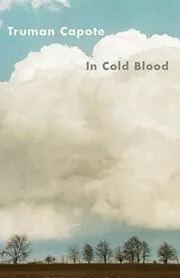
In Cold Blood
For readers interested in how reported crime can be shaped into a sustained narrative. The attention to people and place gives the case unusual intimacy, though the reconstructed scenes and disputed boundaries of fact invite critical reading.
What it's about
Capote’s nonfiction novel reconstructs the 1959 murder of the Clutter family in rural Kansas, following the investigation and the lives of killers Perry Smith and Dick Hickock. Combining immersive reporting with novelistic detail, it helped define the modern true crime book.
Also recommended by
3 people Ben Shapiro recommended this book
Ben Shapiro
"Truman Capote's best book. It's a really, really good book." - Ben Shapiro
Ben Shapiro's recommendation of this book  Sam Harris recommended this book
Sam Harris
"If you just want to forget about the future and lose yourself in the book that forever changed how narrative nonfiction is written, read [this book]." - Sam Harris
Sam Harris's recommendation of this book  Tim Draper recommended this book
Tim Draper
"My [mother] recommended [this book]." - Tim Draper
Tim Draper's recommendation of this book

For readers who want an investigation that follows wealth and reputation across generations. The family history connects philanthropy, business, and accountability, though the long chronology and many institutional relationships demand sustained reading.
What it's about
Keefe investigates three generations of the Sackler family, tracing their pharmaceutical fortune and cultural influence. The narrative examines drug marketing, OxyContin, and the opioid crisis while considering the relationship between immense wealth, public reputation, and accountability.
Also recommended by
1 person Ryan Shea recommended this book
Ryan Shea
Ryan Shea recommended this book on his website.
Ryan Shea's recommendation of this book

The Immortal Life of Henrietta Lacks
For readers who want science reporting connected with the family behind a familiar research story. The sustained personal engagement gives institutional questions a human scale, though the movement among biology, biography, and reporting requires attention to several threads.
What it's about
Rebecca Skloot investigates the life of Henrietta Lacks, whose cells were taken without her knowledge and became important tools in medical research. Her reporting connects scientific advances with the experiences of Lacks's family and questions of consent, race, and justice.
Also recommended by
1 person A.J. Jacobs recommended this book
A.J. Jacobs
"Great writer." - A.J. Jacobs
A.J. Jacobs's recommendation of this book

Kill the Messenger
How the CIA's Crack-Cocaine Controversy Destroyed Journalist Gary Webb
For readers interested in what happens when a major investigation turns back on its reporter. Schou’s biographical focus puts professional conflict in human terms, though his defense of Webb is a particular argument rather than a neutral survey.
What it's about
Nick Schou examines journalist Gary Webb's career and the controversy surrounding his Dark Alliance reporting on cocaine trafficking and CIA-backed Contras. Interviews with colleagues and relatives underpin an argument about media attacks, institutional betrayal, and professional ruin.

The Dark Side of Camelot
For readers who want a critical investigation of the distance between presidential image and private conduct. Hersh gathers a challenging counterportrait of Kennedy, though disputed claims and the interpretive argument require attention to evidence rather than automatic acceptance.
What it's about
Seymour Hersh investigates John F. Kennedy's private life and presidential leadership, arguing that personal recklessness influenced public decisions. His account examines family privilege, concealed compromises, and the gap between Kennedy's image and conduct in office.

The Journalist And The Murderer
For readers who want the ethics of reporting examined as closely as its results. The writer-subject relationship exposes tensions around access and trust, though the concentrated case study and provocative argument offer few comfortable professional rules.
What it's about
Janet Malcolm examines the relationship between journalist Joe McGinniss and convicted murderer Jeffrey MacDonald. Their dispute over Fatal Vision becomes a study of trust, betrayal, power, and the ethical tensions between nonfiction writers and the people they portray.
Also recommended by
2 people Patrick Collison recommended this book
Patrick Collison
Patrick Collison labeled this book "substantially above average."
Patrick Collison's recommendation of this book  Balaji Srinivasan recommended this book
Balaji Srinivasan
"Short and well worth reading. Presages much of today's train crash on social media." - Balaji Srinivasan
Balaji Srinivasan's recommendation of this book
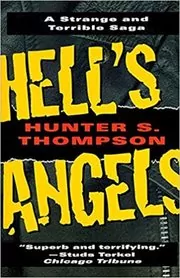
For readers interested in the possibilities and costs of immersion reporting. Thompson’s proximity to the motorcycle club tests its public mythology, though the author’s strong presence and the period’s violence and prejudices make it an abrasive account.
What it's about
Based on a year spent riding with the Hells Angels in California, this book gives a close, unsentimental look at the motorcycle club’s parties, clashes with police, and internal code. Thompson’s immersion reporting exposes both their myth and the fear they inspired.

For readers who want principles for evaluating journalism alongside individual investigations. The focus on verification, independence, and public responsibility supplies useful questions, though it is a general professional framework rather than a narrative exposé or specialist investigative manual.
What it's about
Bill Kovach and Tom Rosenstiel examine journalism's purpose and the principles the public should expect from news organizations. Drawing on research and discussions with journalists, they explore reporting's civic role and the challenges posed by technology, misinformation, and changing news economics.
Sources
- 1
The best books on Investigative Journalism
fivebooks.com
- 2
Eye-opening Investigative Journalism Books
celadonbooks.com
- 3
Nothing is as it seems: 9 must-read exposés
panmacmillan.com
- 4
The Best Investigative Journalism Books Of All Time
bookscrolling.com
- 5
6 Best Investigative Journalism Books
mikedeeson.com
- 6
Investigative Journalism Books
goodreads.com
- 7
Books by investigative journalists?
reddit.com
- 8
8 Eye-Opening Investigative Journalism Books to Add to Your Reading List
magazine.columbia.edu
- 9
7 Great Investigative Journalism Books to Read This Fall
hachettebookgroup.com







Edited by
Software engineer whose passion for tracking book recommendations from podcasts inspired the creation of MRB.
Lead investor at 3one4 Capital whose startup expertise and love for books helped shape MRB and its growth.
Comments
Spotted a missing book, a wrong order or a mistake? Tell us and we'll fix this page.
We're a reading guide, not the author or publisher, so we can't send books or pass on messages.