
22 Best Screenplay Books
The best screenplay books, ranked by expert source recommendations, with notes to help you choose story guides, drafting exercises, formatting references, and revision tools.
Our take
A screenplay has to make a story legible through action, images, dialogue, and the arrangement of scenes. Books can help with that work, but they solve different problems. A structural guide may help you outline; a workbook supplies practice; a formatting reference answers questions about the page. Accounts of the film business explain why writing a script and getting it produced are separate challenges.
Screenplay provides a starting framework, while Save The Cat! offers a more explicit beat-based approach. Story, Into the Woods, and The Anatomy of Story examine dramatic construction from different angles. For practice, try 150 Screenwriting Challenges or the short-film focus of Crafting Short Screenplays That Connect. The Hollywood Standard addresses presentation, and Making a Good Script Great suits revision. Adventures in the Screen Trade adds a working writer’s perspective. Start with one craft guide, read completed screenplays beside it, and use the other books when an actual draft exposes a specific question.
22 books · 12 sources · Last updated
As an Amazon Associate, we earn from qualifying purchases (at no extra cost to you).
How to choose from this list
Skip to the full rankingIf you want to write a first screenplay: Screenplay (Syd Field) → 150 Screenwriting Challenges
If you want an outlining framework: Save The Cat! → The Anatomy of Story
If you want to understand dramatic construction: Story → Into the Woods → The Art of Dramatic Writing
If you want to begin with short films: Crafting Short Screenplays That Connect
If you want to revise and present a draft: Making a Good Script Great → The Hollywood Standard
If you want the professional context: Adventures in the Screen Trade → Writing Movies for Fun and Profit → How to Manage Your Agent
The 22 books, ranked
Ranked by how many expert sources name each book. Ties go to the book more people recommend.

For writers who want a concrete way to outline and diagnose a commercial film story. The beat sheet makes abstract structure easy to test, though treating its milestones as mandatory can make a script feel mechanical.
What it's about
Blake Snyder presents a practical approach to developing and revising screenplays. He explains loglines, story types, a fifteen-beat structure, and scene planning, connecting character change with the demands of shaping a coherent, engaging film script.
Also recommended by
5 people Eric Weinstein recommended this book
Eric Weinstein
Eric Weinstein tweet about books that mattered enough to him.
Eric Weinstein's recommendation of this book  Neville Medhora recommended this book
Neville Medhora
"It takes you through 11 different 'archetypes' of screenplays you can write, and the exact elements each needs to be a great story." - Neville Medhora
Neville Medhora's recommendation of this book  Tim Ferriss recommended this book
Tim Ferriss
"A very helpful book as a starting point when thinking of screenwriting and also calls me on my own bullshit." - Tim Ferriss
Tim Ferriss's recommendation of this book  Joseph Gordon-Levitt recommended this book
Joseph Gordon-Levitt
"Smart in a lot of ways, but also, with all due respect to the smart guy who wrote it, sort of cynical and off-putting at times." - Joseph Gordon-Levitt
Joseph Gordon-Levitt's recommendation of this book  Donald Miller recommended this book
Donald Miller
Donald Miller recommended this book on Twitter.
Donald Miller's recommendation of this book

For beginners who want a clear route from an idea to a first screenplay. The attention to dramatic structure supplies a workable foundation, though its organizing model is a tool to test rather than a rule for every film.
What it's about
Syd Field explains how to develop a screenplay through character, dramatic structure and visual storytelling. His guide addresses opening scenes, dialogue, adaptation and revision, taking writers through the practical work of shaping an idea into a script.
Also recommended by
1 person Rolf Potts recommended this book
Rolf Potts
Rolf Potts recommended this book in the "Tools of Titans" book.
Rolf Potts's recommendation of this book

For writers ready to examine why scenes and story choices create dramatic effects. The detailed analysis provides a broad vocabulary for revision, though its length and conceptual density make it demanding before you have written a draft.
What it's about
Robert McKee examines the principles underlying compelling stories for screen, stage and prose. He explores how structure, character and substance work together, offering a framework for understanding dramatic choices and developing narratives with meaningful conflict.
Also recommended by
1 person- Rolf Potts recommended this book
Rolf Potts
Rolf Potts recommended this book in the "Tools of Titans" book.
Rolf Potts's recommendation of this book

For writers who want mythic patterns as a way to explore character journeys. The accessible framework makes recurring roles and transitions easy to recognize, though applying the template too literally can flatten a story’s particular needs.
What it's about
Christopher Vogler explores the relationship between mythology and storytelling as a resource for writers. Drawing on recurring narrative structures, he examines how mythic patterns can illuminate stories, films, and the process of creating them.
Also recommended by
2 people Jon Favreau recommended this book
Jon Favreau
"Takes Joseph Campbell, and refines it down from the perspective of [I think] a story executive at Disney." - Jon Favreau
Jon Favreau's recommendation of this book  Darren Aronofsky recommended this book
Darren Aronofsky
"Very good. But it’s only for people who are writing screenplays." - Darren Aronofsky
Darren Aronofsky's recommendation of this book

Writing Movies for Fun and Profit
How We Made a Billion Dollars at the Box Office and You Can, Too!
For writers interested in the working life of commercial Hollywood screenwriters. The comic delivery makes pitches, revisions, and relationships approachable, though the deliberately money-minded studio perspective is narrower than the full range of screenwriting careers.
What it's about
Thomas Lennon and Robert Ben Garant share a humorous guide to earning a living as Hollywood screenwriters. Drawing on their studio experience, they discuss pitching, script structure, industry relationships, revisions, credit, and the unpredictable business of making movies.
Also recommended by
1 person Anna Kendrick recommended this book
Anna Kendrick
"Hilarious, but more than that, it’s insanely accurate." - Anna Kendrick
Anna Kendrick's recommendation of this book

The Screenwriter's Bible
A Complete Guide to Writing, Formatting, and Selling Your Script
For beginners who want writing, formatting, revision, and submission guidance in one reference. Its practical organization helps answer page-level questions, though the breadth makes it less focused than a book devoted to a single craft problem.
What it's about
David Trottier combines screenwriting instruction, a writing workbook, formatting guidance, and advice on selling scripts. Sample scenes, revision exercises, and marketing tools guide writers from developing an idea through preparing a screenplay for industry readers.
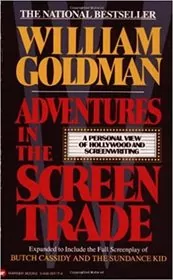
Adventures in the Screen Trade
For writers curious about how scripts meet the practical and political realities of filmmaking. Goldman’s experience makes the gap between page and production vivid, though the historical Hollywood context is more enduring perspective than current career instruction.
What it's about
Goldman opens up Hollywood from the writer's chair, mixing war stories, blunt advice, and a practical look at how scripts become movies. It is funny, skeptical, and still useful for anyone curious about screenwriting.
Also recommended by
2 people Andrew Klavan recommended this book
Andrew Klavan
"Still one of the great books on Hollywood." - Andrew Klavan
Andrew Klavan's recommendation of this book  Preet Bharara recommended this book
Preet Bharara
"Spectacular book." - Preet Bharara
Preet Bharara's recommendation of this book

For writers who want character change, moral choices, and plot developed together. The detailed questions help build a story from its internal relationships, though the extensive process can feel cumbersome when you need a quick first draft.
What it's about
John Truby presents a twenty-two-step approach to developing narratives for novels, screenplays, and other forms. Examples from literature and film illustrate connections among premise, character, plot, theme, moral development, and endings within a cohesive story.

The Hollywood Standard
The Complete and Authoritative Guide to Script Format and Style
For writers who need to solve specific formatting and presentation problems. The examples turn abstract conventions into usable page choices, though clear formatting supports a story and cannot substitute for dramatic development.
What it's about
Christopher Riley answers screenplay and television script formatting questions through instructions and examples. The reference covers scene headings, dialogue, direction, transitions, and visual presentation, showing how choices on the page can clarify action and control pacing.

For writers whose premise feels more like a situation than a developing story. The connected elements provide a compact diagnostic framework, though reducing a complex draft to the diagram can take practice and interpretive judgment.
What it's about
Jill Chamberlain presents a screenwriting method built around eight interconnected story elements. Diagrams and analyses of thirty films demonstrate how these elements work together, distinguishing a dramatic story from a situation and guiding writers through their own scripts.

For writers who want encouragement grounded in habits, reading, and revision. The memoir gives the craft advice a human context, though its strongest examples concern prose fiction and need translation into visual scenes and screenplay format.
What it's about
King combines memories of childhood, early publication, and personal setbacks with practical advice about storytelling and revision. He considers the tools and habits of a writer's work, including the role writing played in recovering from his near-fatal accident.
Also recommended by
4 people Jason Calacanis recommended this book
Jason Calacanis
"Got me jazzed up about writing and reading more." - Jason Calacanis
Jason Calacanis's recommendation of this book  Brian Koppelman recommended this book
Brian Koppelman
"Still the gold standard." - Brian Koppelman
Brian Koppelman's recommendation of this book  Edgar Wright recommended this book
Edgar Wright
Edgar Wright recommended this book on Twitter.
Edgar Wright's recommendation of this book  Russell Moore recommended this book
Russell Moore
"Really helpful." - Russell Moore
Russell Moore's recommendation of this book

For writers who want to investigate why narrative patterns recur across forms. The five-act analysis connects structure with audience understanding, though the explanatory argument is more useful for reflection and diagnosis than a quick drafting checklist.
What it's about
John Yorke investigates why stories repeatedly take similar shapes, using Shakespearean five-act structure as a guide. Examples from television, film, theatre, and novels connect narrative patterns with his argument about how the mind makes sense of experience.

The Hero with a Thousand Faces
For writers interested in the myths behind familiar heroic structures. The comparative argument provides cultural and psychological context, though it is a dense interpretive work rather than a practical screenwriting course or a universal story formula.
What it's about
Joseph Campbell compares myths from different cultures to develop his account of a common heroic journey. He connects recurring figures and symbolic adventures with psychology and religious traditions, examining how apparently different stories address shared questions of human life.
Also recommended by
4 people Ray Dalio recommended this book
Ray Dalio
"A little bit dense, but it’s so rich, it’s a good one." - Ray Dalio
Ray Dalio's recommendation of this book - Darren Aronofsky recommended this book
Darren Aronofsky
"[I'm] totally part of his cult. Because I believe in that hero’s journey." - Darren Aronofsky
Darren Aronofsky's recommendation of this book  Kyle Maynard recommended this book
Kyle Maynard
One of Kyle Maynard's 3 answers to "what is the book (or books) you’ve given most as a gift?"
Kyle Maynard's recommendation of this book  Patrick O'Shaughnessy recommended this book
Patrick O'Shaughnessy
"One of my favorite books." - Patrick O'Shaughnessy
Patrick O'Shaughnessy's recommendation of this book

The Art of Dramatic Writing
For writers who want conflict to grow from character and a clear dramatic premise. The sustained attention to opposing motives strengthens story logic, though its theatrical examples and emphatic method need adaptation for visual screen storytelling.
What it's about
Lajos Egri explains dramatic writing through premise, character and conflict, emphasizing the motives that drive human behavior. Examples from Shakespeare and Ibsen illustrate how relationships and choices create a story, with lessons applicable to plays, novels and screenplays.
Also recommended by
1 person Seth Rogen recommended this book
Seth Rogen
"Very referential to certain plays." - Seth Rogen
Seth Rogen's recommendation of this book

150 Screenwriting Challenges
For writers who need to stop reading theory and practice specific skills. The short challenges give dialogue, character, and revision a manageable focus, though the exercises require self-evaluation and do not supply one continuous method for a feature.
What it's about
Eric Heisserer collects 150 exercises for developing screenwriting skills in dialogue, character, story, idea generation, and revision. Drawn from his working practice, the challenges also address finding a distinctive voice and moving through writer's block.

Lew Hunter's Screenwriting 434
The Industry's Premier Teacher Reveals the Secrets of the Successful Screenplay
For writers who learn best by following a screenplay as it is built. The developing example makes a teaching method visible in practice, though its particular style and older industry context should be compared with contemporary scripts.
What it's about
Lew Hunter turns his UCLA screenwriting course into a step-by-step account of creating a screenplay. He writes an original script within the book, allowing readers to follow the process through a concrete example as it develops.

Crafting Short Screenplays That Connect
For writers beginning with short films rather than a feature-length outline. The graduated exercises and completed examples make scale and human connection concrete, though the focus will not answer every question about sustaining a longer screenplay.
What it's about
Claudia Hunter Johnson teaches short screenplay writing through exercises that grow in length and complexity. Human connection provides the central thread as writers explore their purpose, develop stories, and study examples of completed student screenplays.

For writers approaching representation who want to understand the continuing professional relationship. The explanation of agents, managers, and career interactions fills a business gap, though the Hollywood emphasis and changing industry practices require current context.
What it's about
Chad Gervich explains how Hollywood agents and managers influence script sales, pitches, and writing careers. Drawing on industry advice, he covers finding suitable representation, approaching meetings, understanding deals, and handling the continuing relationship with a representative.
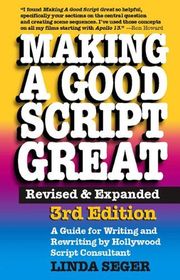
Making a Good Script Great
For writers with a draft who want a practical way to diagnose and revise it. The focus on strengthening existing material makes rewriting concrete, though the methods work best when applied to pages rather than absorbed as theory alone.
What it's about
Linda Seger guides writers through developing and revising a screenplay, from the original concept to later rewrites. Her approach examines structural and dramatic problems, offering methods for assessing a script and making its characters, story, and individual choices more effective.

For students who want a course covering development, characterization, plotting, and revision together. The sustained progression helps connect separate craft decisions, though the textbook breadth calls for active assignments rather than casual browsing.
What it's about
Robin Russin and William Missouri Downs guide writers from developing a theme and researching a story through plotting, characterization, writing, and revision. Screenplay examples and industry advice extend the course to marketing scripts and pitching projects.

For writers who want to question what drama is doing rather than follow another template. The essays connect structure with human motives for storytelling, though the compressed, opinionated reflections offer less step-by-step help than a craft manual.
What it's about
David Mamet reflects on why people create drama and what distinguishes effective theater. Drawing on plays and films, his essays explore dramatic structure, transitions between acts, soliloquies, and the relationship between storytelling and everyday life.
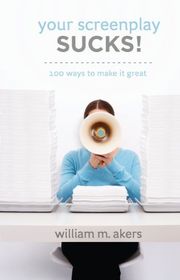
Your Screenplay Sucks!
For writers with a draft who want pointed questions that expose avoidable weaknesses. Akers makes revision feel concrete through a checklist-like approach, though the blunt tone and numerous prescriptions work better as prompts than universal rules.
What it's about
Akers identifies common screenplay problems and offers practical ways to improve them. The book addresses character, structure, dialogue, scene writing, and presentation, giving writers a set of checks to use while developing or revising a script.
Sources
- 1
15 Best Screenwriting Books to Help You Break Into Hollywood
studiobinder.com
- 2
The 20 Best Screenwriting Books
nofilmschool.com
- 3
Top 16 Screenwriting Books
finaldraft.com
- 4
Screenwriting Books You Need to Read - Top Ten List
indiefilmhustle.com
- 5
Screenwriting Books: 89 Books Every Screenwriter Should Read
nfi.edu
- 6
Screenwriting Books
goodreads.com
- 7
What screenwriting/writing/storytelling books would you recommend? Are there any you'd steer clear from?
reddit.com
- 8
Recommended Resources
hsswriters.com
- 9
best screenwriting books
goodreads.com
- 10
100 Best Screenwriting Books of All Time
shortform.com
- 11
8 Books Every Screenwriter Should Check Out
nyfa.edu
- 12
Recommended RECENT books on screenwriting/Hollywood
reddit.com



Edited by
Software engineer whose passion for tracking book recommendations from podcasts inspired the creation of MRB.
Lead investor at 3one4 Capital whose startup expertise and love for books helped shape MRB and its growth.
Comments
Spotted a missing book, a wrong order or a mistake? Tell us and we'll fix this page.
We're a reading guide, not the author or publisher, so we can't send books or pass on messages.