
Fear and Loathing Books in Order
Part ofHunter S Thompson Books in OrderSee the Fear and Loathing books by Hunter S. Thompson in order, with brief summaries, series background, and simple tips on where new readers should start.
Last updated:
As an Amazon Associate, we earn from qualifying purchases (at no extra cost to you).
Fear and Loathing books in publication order
3 books
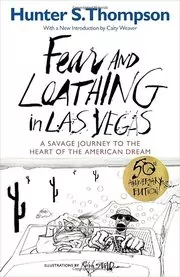
Fear and Loathing in Las Vegas
by Hunter S. Thompson
1971
Journalist Raoul Duke and his attorney, Dr. Gonzo, drive from Los Angeles to Las Vegas on a simple assignment that mutates into a drug‑fueled, paranoid hunt for the American Dream and a savage reflection on the end of the 1960s.
Recommended by
3 people Anthony Bourdain recommended this book
Anthony Bourdain
"The book that probably influenced me more than any other." - Anthony Bourdain
Anthony Bourdain's recommendation of this book  Jordan Peterson recommended this book
Jordan Peterson
Recommended on Jordan Peterson's website.
Jordan Peterson's recommendation of this book  Naval Ravikant recommended this book
Naval Ravikant
"It was entertaining, but I sort of gave up after a bit." - Naval Ravikant
Naval Ravikant's recommendation of this book
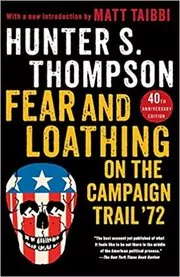
Fear and Loathing on the Campaign Trail '72
by Hunter S. Thompson
1973
Thompson’s month‑by‑month account of the 1972 U.S. presidential race follows George McGovern’s doomed challenge to Richard Nixon from inside the press bus. Equal parts serious political reporting and gonzo riff, it captures the paranoia, deal‑making, and media circus of modern campaigns.
Recommended by
1 person Jim Cramer recommended this book
Jim Cramer
"A most amazing book... Total Gonzo! Must read for all!!!" - Jim Cramer
Jim Cramer's recommendation of this book
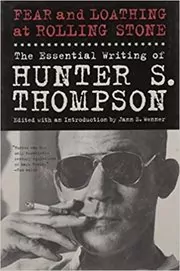
Fear and Loathing at Rolling Stone
by Hunter S. Thompson
2009
This collection gathers Thompson’s essential Rolling Stone pieces, from his Freak Power campaign in Aspen to Nixon‑era politics, boxing, Super Bowls, and more. It reads like a crash course in his career, with editorial memos and correspondence woven through the articles.
Fear and Loathing books in chronological order
Series background & context
The phrase Fear and Loathing started as the title of one book and grew into a shorthand for Hunter S. Thompson’s most famous work. Under this banner you’ll find his Las Vegas road novel, his insider’s account of the 1972 election, and later collections that carry the same mix of outrage, slapstick, and sharp political sense. Taken together, the series shows him chasing and dissecting the idea of the American Dream from a dozen different angles.
Fear and Loathing in Las Vegas is the natural starting point. A reporter named Raoul Duke and his attorney, Dr. Gonzo, blast across the desert to cover a motorcycle race and a narcotics conference, armed with too much cash, too many chemicals, and fading faith in the 1960s. Vegas becomes both a cartoon and a crime scene, where the wreckage of the counterculture glows under casino lights.
The book’s drug‑blurred voice and Ralph Steadman’s ink‑splattered drawings fixed gonzo in the popular imagination and later inspired a cult‑favorite film adaptation.
Fear and Loathing on the Campaign Trail '72 drags the same sensibility onto buses, hotel bars, and convention floors. Here Thompson follows George McGovern’s long, losing fight against Richard Nixon, filing brutally honest dispatches about staffers, reporters, and candidates he admires or despises. The book is dense with names and dates, but it also reads like a thriller about how American democracy can buckle under paranoia and spin.
Later volumes such as Fear and Loathing at Rolling Stone gather pieces from across his career that share the same DNA: first‑person reporting pushed to the edge of fiction, a narrator who is never neutral, and a fixation on power, corruption, and the stories America tells about itself. You move from desert highways to boxing matches, funerals, Super Bowls, and small‑town elections, always with the same nervous energy humming under the scene.
Each book stands alone, so you can drop into whichever subject grabs you – Las Vegas, presidential politics, or a curated slice of his magazine work. Read in sequence, though, the Fear and Loathing titles sketch one long argument about how big promises curdled between the 1960s and the early 2000s.
It’s not a gentle ride, but if you want the loudest possible tour of late‑twentieth‑century America, this is where Thompson turns the volume all the way up.







Edited by
Software engineer whose passion for tracking book recommendations from podcasts inspired the creation of MRB.
Lead investor at 3one4 Capital whose startup expertise and love for books helped shape MRB and its growth.
Comments
Did we miss something? Have feedback?
Help us improve this page by sharing your thoughts