
13 Best Insurance Books
The best insurance books, ranked by how many expert sources recommend each one, with notes to help consumers, agents, and industry newcomers choose.
Our take
Insurance books serve very different needs. A household reviewing protection needs clear explanations of coverage and useful questions for an agent. Someone entering the industry needs to understand underwriting, claims, risk, and the way insurers operate. Agency owners have another set of concerns: finding clients, organizing work, and building a business that can serve them well.
For an industry overview, Inside the Insurance Industry offers a different starting point from the selling and agency-management books. If an Elephant Sits on You, Are You Covered? turns toward the consumer’s coverage questions, while Insurance and Behavioral Economics explores the reasoning behind insurance decisions. The Breakthrough Insurance Agency focuses on running an agency, and Go for No! addresses the emotional difficulty of rejection. Older marketing and product discussions need to be read with their original setting in mind. Start with the book that matches your role, then add technical or business depth as needed.
13 books · 8 sources · Last updated
As an Amazon Associate, we earn from qualifying purchases (at no extra cost to you).
How to choose from this list
Skip to the full rankingIf you are new to the industry: Inside the Insurance Industry → Fundamentals of Risk and Insurance
If you want to review your protection: If an Elephant Sits on You, Are You Covered?
If you run an agency: The Breakthrough Insurance Agency → Power Position Your Agency
If prospecting feels difficult: Go for No! → The Psychology of Selling
If you want to understand insurance decisions: Insurance and Behavioral Economics
The 13 books, ranked
Ranked by how many expert sources name each book. Ties go to the book more people recommend.

Inside the Insurance Industry
For newcomers who want to understand what insurers actually do. Its overview of underwriting, claims, and related functions offers a broader orientation than the sales guides, though specialists will need greater depth in their own area.
What it's about
Kevin Glaser explains how insurance companies operate and what influences premiums and claims. The guide introduces underwriting, actuarial work, claims handling, subrogation, loss control, and risk management, helping readers understand industry processes and make informed insurance decisions.

Insurance and Behavioral Economics
Improving Decisions in the Most Misunderstood Industry
For readers who want to understand why insurance choices can depart from economic logic. Its treatment of consumers, companies, and regulators adds an analytical perspective, though the economics focus is less immediately practical for selling policies.
What it's about
Howard Kunreuther, Mark Pauly, and Stacey McMorrow examine why insurance decisions often depart from economic models. They use behavioral economics to analyze consumers, insurers, and regulators, then consider incentives and policy changes that could improve outcomes.

For agency owners who want to improve the business behind their sales. Its attention to organization, compensation, and growth distinguishes it from motivational selling books, though it offers less help with understanding policy coverage.
What it's about
Bart Baker presents a ten-step process for building and growing an insurance agency. The book discusses business vision, funding growth, departmental organization, employee compensation, and generating referrals, addressing both new agencies and established businesses facing stagnation.

The Psychology of Selling
Increase Your Sales Faster and Easier Than You Ever Thought Possible
For agents who want to work on confidence, buyer motivation, and sales conversations. Its broad selling framework complements insurance-specific guides, though readers must adapt the examples and techniques to their own products and professional responsibilities.
What it's about
Brian Tracy explores the mental aspects of selling, including confidence, fear of rejection, and understanding why customers buy. He combines reflections on attitudes and behavior with practical approaches intended to help salespeople communicate and manage their work more effectively.
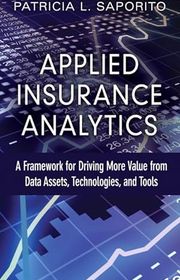
Applied Insurance Analytics: A Framework for Driving More Value from Data Assets, Technologies, and Tools
For insurance managers who want to organize how their business uses data. Its enterprise-wide approach to analytics connects underwriting, claims, and other functions, though the technology examples predate many current tools and it is not a coding manual.
What it's about
Patricia Saporito outlines a framework for using analytics across an insurance company. She discusses strategy, organizational capabilities, data, and implementation, showing how analytical work can support underwriting, risk management, claims, and other business functions.
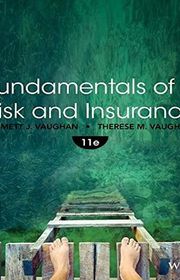
Fundamentals of Risk and Insurance
For students and industry newcomers who want a systematic grounding in risk and insurance. Its textbook structure gives more technical breadth than the short overviews, though sustained study is needed and older editions contain dated regulatory material.
What it's about
Emmett and Therese Vaughan introduce risk management, the insurance mechanism, insurer operations, and the legal setting. The textbook also examines personal risks and major insurance products, connecting broad principles with how coverage works in practice.

For agents who avoid prospecting because rejection feels personal. Its short, story-based approach makes persistence easier to discuss than a sales textbook does, though it teaches a mindset rather than insurance knowledge or detailed techniques.
What it's about
Richard Fenton and Andrea Waltz encourage readers to rethink rejection as part of pursuing success. Their approach emphasizes taking action, asking more often, and developing persistence instead of avoiding opportunities because the answer might be no.

For insurance agents who want to connect relationship-based marketing with online outreach. Its agency-specific examples make the marketing advice relevant, though the older social-media guidance needs checking against current platforms and working practices.
What it's about
Angela Johnson and Nadeem Damani explain how insurance agents can combine traditional marketing with social media. The guide addresses online prospecting, customer service, retention, cross-selling, referrals, and agency branding through practical marketing strategies.

If an Elephant Sits on You, Are You Covered?
How to Talk with Your Insurance Agent to be Properly Insured
For consumers who want better questions to ask an insurance agent. Its coverage-gap approach is more directly useful for reviewing protection than the agency-growth books, though it cannot resolve the details of an individual policy.
What it's about
Bart Baker explains how to discuss coverage needs with an insurance agent and identify gaps in protection. Stories and practical questions introduce eight insurance categories, including home, auto, life, disability, long-term care, and coverage for disasters and collectibles.

For readers interested in how insurance products fit into retirement income planning. Its distinction between essential spending and discretionary money gives the discussion structure, though retirement planning is narrower than the general insurance topic.
What it's about
Tom Hegna presents a retirement strategy that separates income for essential expenses from money for discretionary spending. The book discusses lifetime income, portfolio planning, long-term care, and estate considerations as parts of preparing for retirement.

For agents who need to organize their time around useful client conversations. Its insurance-agency focus is more specific than the general sales books, though it emphasizes production and appointments rather than policy analysis or technical training.
What it's about
Troy Korsgaden presents strategies for insurance agents seeking to spend less time on paperwork and more time with suitable clients. The guide discusses appointments, attracting prospects, efficient client meetings, and developing an effective sales approach.
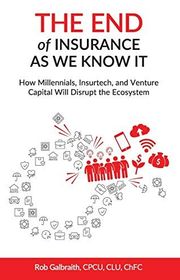
The End of Insurance As We Know It: How Millennials, Insurtech, and Venture Capital Will Disrupt the Ecosystem
For industry professionals who want to think about technological and demographic change. Its focus on disruption adds a strategic perspective beyond agency operations, though its forecasts reflect the insurtech environment when it was written.
What it's about
Rob Galbraith examines how technology, changing customer expectations, and venture investment challenge traditional insurance businesses. The book discusses structural problems in the industry and the opportunities that emerging insurance technology creates for established companies and newcomers.

For agency professionals who learn well from everyday situations and career experience. Its conversational lessons provide an approachable alternative to process manuals, though the personal perspective is less systematic than a full agency-management framework.
What it's about
Eddie Price draws on conversations with his daughter Jenna as she follows him into the insurance business. Sharing challenges from his own career, he offers practical lessons on handling situations and making agency work more rewarding.
Sources
- 1
Insurance Books
wallstreetmojo.com
- 2
Insurance Books
educba.com
- 3
Insurance Books
goodreads.com
- 4
8 Best Books to Transform Your Insurance Business
cloudinsurance.io
- 5
Top 10 Best Books For Insurance Agents
theadvisorcoach.com
- 6
The 10 Best Insurance Sales Books
hourly.io
- 7
Books on insurance
reddit.com
- 8
Book Recommendations
reddit.com




Edited by
Software engineer whose passion for tracking book recommendations from podcasts inspired the creation of MRB.
Lead investor at 3one4 Capital whose startup expertise and love for books helped shape MRB and its growth.
Comments
Spotted a missing book, a wrong order or a mistake? Tell us and we'll fix this page.
We're a reading guide, not the author or publisher, so we can't send books or pass on messages.