
11 Best Information Technology Books
The best information technology books, ranked by expert source recommendations, with notes on who each suits, from computing beginners to IT team leaders.
Our take
Information technology involves understanding computers, delivering reliable services, and helping people use systems effectively. A useful reading plan depends on which part of that work you want to understand. Some books explain the machinery beneath software; others address development habits, organizational bottlenecks, or communicating technical findings to colleagues. Broader books explore technology’s business and social consequences.
Code provides a conceptual foundation for readers curious about how computers work. The Pragmatic Programmer addresses software craftsmanship, while The Practice of System and Network Administration focuses on operational responsibilities. For teams working across development and operations, The Phoenix Project introduces organizational problems through fiction, The DevOps Handbook develops practical responses, and Accelerate examines delivery performance through research. Communicating with Data helps readers present findings to decision-makers. The startup and future-focused books offer context rather than technical instruction. Start with Code for foundations, or The Phoenix Project if your immediate concern is how IT work moves through an organization.
11 books · 9 sources · Last updated
As an Amazon Associate, we earn from qualifying purchases (at no extra cost to you).
How to choose from this list
Skip to the full rankingIf you want to understand computer foundations: Code
If you want better programming habits: The Pragmatic Programmer
If you manage systems and services: The Practice of System and Network Administration
If you want to improve software delivery: The Phoenix Project → The DevOps Handbook → Accelerate
If you need to explain analytical findings: Communicating with Data
If you want to examine long-term AI risks: Superintelligence
The 11 books, ranked
Ranked by how many expert sources name each book. Ties go to the book more people recommend.

For IT staff and managers who want a shared language for bottlenecks and competing priorities. The business-novel format makes organizational problems recognizable, though its tidy teaching structure simplifies the difficulty of changing a real workplace.
What it's about
IT manager Bill must rescue the troubled Phoenix Project at Parts Unlimited within ninety days or risk having his department outsourced. This business novel uses his struggle with bottlenecks and competing demands to explore collaboration and the principles of DevOps.
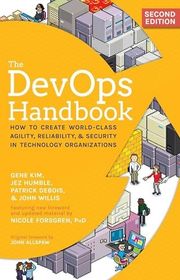
The DevOps Handbook
For teams ready to turn DevOps principles into changes in daily work. Practices and organizational examples extend the ideas introduced in The Phoenix Project, though the breadth calls for selective application rather than following every recommendation at once.
What it's about
Gene Kim and his coauthors explain practices for improving technology delivery through flow, feedback, and continual learning. Examples connect development, operations, and organizational culture, showing how teams can improve reliability while making changes more effectively.
For programmers who want stronger everyday judgment about maintainability, requirements, and teamwork. The practical habits travel across languages, though this original edition has older examples and assumes you already have some experience writing software.
What it's about
Andrew Hunt and David Thomas present practical guidance on programming as a craft. They explore making informed choices, understanding requirements, communicating clearly, and producing software that others can maintain and build upon across different technologies.
Also recommended by
2 people Ev Williams recommended this book
Ev Williams
On the "books read" section of Ev Williams' GoodReads profile.
Ev Williams's recommendation of this book  Jeff Atwood recommended this book
Jeff Atwood
"Instead of worrying about code, the authors boiled down all the practical approaches that they've found to work in the real world into this one book." - Jeff Atwood
Jeff Atwood's recommendation of this book

For technology leaders who want evidence to inform delivery practices and measurement. The research connects team capabilities with outcomes, though interpreting the findings takes more care than treating its metrics as universal performance targets.
What it's about
Nicole Forsgren, Jez Humble, and Gene Kim present research on measuring software delivery performance and the capabilities associated with it. Statistical findings connect development practices and organizational culture to improving technology teams and business outcomes.
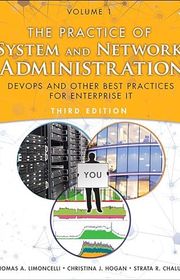
The Practice of System and Network Administration
For system administrators who want guidance on running dependable services and supporting users. Its attention to processes, teamwork, and operational planning fills a practical gap here, though its substantial reference format rewards reading around a specific problem.
What it's about
Thomas Limoncelli, Christina Hogan, and Strata Chalup examine system administration as both a technical and organizational responsibility. The book covers service delivery, infrastructure planning, teamwork, and repeatable processes for supporting users and managing enterprise IT environments.

For curious beginners who want to understand computers beneath the applications they use. Its progression from simple communication to hardware builds intuition without assuming programming experience, though it is conceptual rather than a troubleshooting manual.
What it's about
Charles Petzold explains how computers work by building from familiar communication systems, including Morse code and Braille. Everyday examples lead into bits, bytes, and hardware, tracing how simple mechanisms combine to support complex information processing.

For technology founders interested in distinctive products and business strategy. The contrarian arguments offer questions to test against your own plans, though the startup focus provides little guidance for running an IT department.
What it's about
Peter Thiel examines how startups can create something new rather than imitate existing businesses. Written with Blake Masters, the book explores independent thinking, technological progress, and the search for opportunities that produce distinctive value in any industry.
Also recommended by
22 people Andrew Ng recommended this book
Andrew Ng
"Gives an overview of entrepreneurship and innovation." - Andrew Ng
Andrew Ng's recommendation of this book  Ben Horowitz recommended this book
Ben Horowitz
"I learned a lot reading it." - Ben Horowitz
Ben Horowitz's recommendation of this book  Bryan Johnson recommended this book
Bryan Johnson
"A must read." - Bryan Johnson
Bryan Johnson's recommendation of this book  Chris Dixon recommended this book
Chris Dixon
Chris Dixon recommended this book on Twitter.
Chris Dixon's recommendation of this book  Dustin Moskovitz recommended this book
Dustin Moskovitz
Dustin Moskovitz recommended this book during a Stanford lecture in 2014.
Dustin Moskovitz's recommendation of this book  Elon Musk recommended this book
Elon Musk
"[This author] has built multiple breakthrough companies, and [this book] shows how." - Elon Musk
Elon Musk's recommendation of this book +16
More recommendations
- Eric Weinstein
"If you really understand something that the rest of the world is confused about, and it’s an important truth, [this book] says here are all the ways you might want to make that work." - Eric Weinstein
- Keith Rabois
Keith Rabois recommended this book on a Medium blog post.
- Kishore Biyani
"Captures some interesting perspectives and insights on the way the world and the business organisations are changing and challenging the status quo." - Kishore Biyani
- Lee Stranahan
"A great business book." - Lee Stranahan
- Luis von Ahn
"I love [this book]." - Luis von Ahn
- Marc Andreessen
"The first book any working or aspiring entrepreneur must read—period." - Marc Andreessen
- Mark Zuckerberg
"This book delivers completely new and refreshing ideas on how to create value in the world." - Mark Zuckerberg
- Matt Mullenweg
"[This book] was excellent." - Matt Mullenweg
- Max Levchin
One of Max Levchin's answers to "what's your favourite business book you'd advise to young entrepreneurs?"
- Nassim Taleb
"When a risk taker writes a book, read it. In the case of [this author], read it twice. Or, to be safe, three times. This is a classic." - Nassim Taleb
- Sam Altman
This book was on Sam Altman's bookshelf.
- Patrick O'Shaughnessy
"An obvious suggestion, because [this book] is the talk of the town and sits at the top of bestseller lists everywhere." - Patrick O'Shaughnessy
- Tom Bilyeu
Tom Bilyeu recommended this book on his website.
- Ryan Petersen
"[Part of] my biz book canon." - Ryan Petersen
- Brian Dean
"Business classic that lives up to the hype. Completely reframes what a startup should do with their product and positioning." - Brian Dean
- Rupert Murdoch
"Brilliant, often provocative." - Rupert Murdoch
- Eric Weinstein

For readers interested in the long-term risks of advanced AI. Its careful distinctions make competing scenarios easier to examine, though the argument is speculative and demanding rather than a guide to using current tools.
What it's about
Nick Bostrom examines the possibility that machines could surpass humans in general intelligence. He considers how such systems might become powerful, the dangers they could pose, and whether their initial design could help make an intelligence explosion survivable.
Also recommended by
6 people- Elon Musk recommended this book
Elon Musk
"Worth reading [this book]. We need to be super careful with AI. Potentially more dangerous than nukes." - Elon Musk
Elon Musk's recommendation of this book  Naval Ravikant recommended this book
Naval Ravikant
"I wouldn’t just read [this book] breathless and wide-eyed and believe everything." - Naval Ravikant
Naval Ravikant's recommendation of this book  Sam Harris recommended this book
Sam Harris
"Made me worry that machine knowledge could ruin everything." - Sam Harris
Sam Harris's recommendation of this book  Sam Altman recommended this book
Sam Altman
"Best thing I’ve seen on this topic." - Sam Altman
Sam Altman's recommendation of this book  Will MacAskill recommended this book
Will MacAskill
"Very important book." - Will MacAskill
Will MacAskill's recommendation of this book  Marc Goodman recommended this book
Marc Goodman
One of Marc Goodman's most-gifted or recommended books.
Marc Goodman's recommendation of this book

For general readers who want computational ideas connected to everyday choices. Familiar problems make abstract principles approachable, though the analogies offer ways to think rather than training in algorithm implementation or IT operations.
What it's about
Brian Christian and Tom Griffiths connect computer algorithms with everyday decisions constrained by time and information. They explore questions of searching, organizing, scheduling, and choosing between familiar options and new possibilities, showing how computational ideas illuminate human judgment.
Also recommended by
1 person Anthony Pompliano recommended this book
Anthony Pompliano
"[One of the] best books I read in 2017." - Anthony Pompliano
Anthony Pompliano's recommendation of this book

For analysts and technical specialists who need other people to understand their findings. Its focus on audience and organizational context complements technical training, though readers seeking advanced analytical methods will need a different book.
What it's about
Carl Allchin explains how to turn data analysis into communication that helps others make decisions. The book connects visualization and analytical skills with audience needs, stakeholder context, and the practical task of presenting a persuasive case.

The Industries of the Future
For readers interested in how emerging technologies affect industries and work. The global business perspective broadens a technical reading plan, though its forecasts reflect the period of writing and need checking against subsequent developments.
What it's about
Alec Ross explores technologies he expects to reshape economies and work, including robotics, genomics, cybersecurity, big data, and digital money. Drawing on examples from around the world, he considers how businesses, workers, and societies might respond.
Sources
- 1
100 Best Information Technology Books of All Time
shortform.com
- 2
Information Technology Books
goodreads.com
- 3
12 must-read technology books for IT professionals
capella.edu
- 4
Reading List — Ops School Curriculum 0.1 documentation
opsschool.org
- 5
DevOps Reading Recommendations
octopus.com
- 6
One must have Book for IT Admins
reddit.com
- 7
Important books on computing
reddit.com
- 8
17 Best Books For IT Beginners To Read In 2026
thectoclub.com
- 9
10 must-read technology books for 2022
enterprisersproject.com



Edited by
Software engineer whose passion for tracking book recommendations from podcasts inspired the creation of MRB.
Lead investor at 3one4 Capital whose startup expertise and love for books helped shape MRB and its growth.
Comments
Spotted a missing book, a wrong order or a mistake? Tell us and we'll fix this page.
We're a reading guide, not the author or publisher, so we can't send books or pass on messages.