
10 Best DevOps Books
The best DevOps books, ranked by how many expert sources recommend each one, with notes on who each suits, from new practitioners to leaders of large teams.
Our take
DevOps books address how organizations deliver and operate software, including the relationships and feedback loops behind the tools. Some explain the ideas through workplace stories, others examine delivery pipelines, organizational change, or research on performance. The best starting point depends on whether you need shared language, a technical framework, or a way to coordinate several teams.
The Phoenix Project makes familiar delivery problems visible through a business novel; The Unicorn Project revisits that world from a developer’s perspective. The DevOps Handbook and Effective DevOps turn attention toward practices and collaboration. Continuous Delivery focuses on the pipeline, while Accelerate examines the evidence behind delivery capabilities and outcomes. For broader organizational questions, consider Team Topologies or Leading the Transformation. Site Reliability Engineering adds a view of operating services after deployment. Start with the story if the concepts are new, then choose the technical or organizational book that matches the constraint your team actually faces.
10 books · 7 sources · Last updated
As an Amazon Associate, we earn from qualifying purchases (at no extra cost to you).
How to choose from this list
Skip to the full rankingIf you're new to DevOps ideas: The Phoenix Project → The DevOps Handbook
If you want the developer’s perspective: The Unicorn Project
If you're improving a delivery pipeline: Continuous Delivery
If you want to assess the evidence: Accelerate
If you're improving collaboration and team structure: Effective DevOps → Team Topologies
If you're responsible for reliable services: Site Reliability Engineering
The 10 books, ranked
Ranked by how many expert sources name each book. Ties go to the book more people recommend.

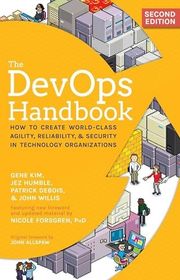
The DevOps Handbook
How to Create World-Class Agility, Reliability, and Security in Technology Organizations
For teams that want to turn DevOps ideas into organizational practices. Its cases connect flow, feedback, and learning across roles, but the breadth makes it a framework for discussion rather than a detailed guide to one toolchain.
What it's about
Gene Kim, Jez Humble, Patrick Debois, and John Willis explain practices for improving collaboration across software development, operations, and security. Case studies illustrate approaches to work flow, feedback, and continual learning that support more reliable technology delivery.
Also recommended by
1 person Changpeng Zhao recommended this book
Changpeng Zhao
"A must-read for tech teams." - Changpeng Zhao
Changpeng Zhao's recommendation of this book

For leaders and practitioners who want an evidence-oriented account of software-delivery performance. The research focus helps question assumptions about effective teams, but it provides neither a complete implementation plan nor a guarantee of results in every organization.
What it's about
Nicole Forsgren, Jez Humble, and Gene Kim present research on measuring software delivery performance and the capabilities associated with it. Statistical findings connect development practices and organizational culture to improving technology teams and business outcomes.

For readers who learn through a recognizable workplace story before tackling a handbook. The fictional crisis makes bottlenecks and conflicting priorities easy to discuss, but its simplified turnaround should not be mistaken for a ready-made transformation plan.
What it's about
IT manager Bill must rescue the troubled Phoenix Project at Parts Unlimited within ninety days or risk having his department outsourced. This business novel uses his struggle with bottlenecks and competing demands to explore collaboration and the principles of DevOps.

Continuous Delivery
Reliable Software Releases through Build, Test, and Deployment Automation
For engineers who want to understand the principles behind reliable build, test, and deployment pipelines. Its detailed treatment connects the stages well, but the older tools and examples require adaptation to a current delivery environment.
What it's about
Jez Humble and David Farley explain how automated build, test, and deployment pipelines can make software releases more reliable. Their guide covers configuration management, acceptance testing, infrastructure, and collaboration between developers, testers, and operations teams.

Effective DevOps
Building a Culture of Collaboration, Affinity, and Tooling at Scale
For readers who see collaboration and organizational habits as the main obstacles to delivery. Davis and Daniels give relationships more attention than tool-focused guides, but readers seeking commands or deployment recipes will need a practical companion.
What it's about
Jennifer Davis and Ryn Daniels examine DevOps as a change in organizational culture and working relationships. Practical strategies and case studies address collaboration, shared goals, tooling, and scaling improvements across teams.
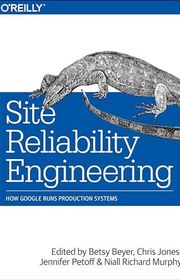
Site Reliability Engineering: How Google Runs Production Systems
For engineers who want to connect operating services with explicit reliability goals and disciplined practices. Google’s original essays offer substantial operational reasoning, but their scale, organizational assumptions, and older examples need adaptation rather than direct copying.
What it's about
Google engineers explain practices for operating large production systems, including service objectives, monitoring, incident response, automation, and capacity planning. The essays connect software engineering with operations and describe tradeoffs involved in balancing reliability, change, and human effort.
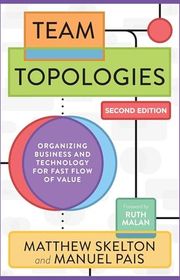
Team Topologies: Organizing Business and Technology for Fast Flow of Value
For leaders and teams whose delivery problems come from dependencies and unclear responsibilities. Its team types and interaction patterns give organizational design a practical vocabulary, but applying them mechanically can overlook the specific constraints of a workplace.
What it's about
Matthew Skelton and Manuel Pais describe ways to organize technology teams around sustainable flows of work. Team types, interaction modes, and cognitive load provide a framework for revisiting responsibilities, reducing unnecessary dependencies, and evolving collaboration as organizations change.

The DevOps Adoption Playbook
A Guide to Adopting DevOps in a Multi-Speed IT Enterprise
For people introducing DevOps across an enterprise with different systems, constraints, and delivery speeds. Its organizational perspective addresses adoption beyond one team, but the enterprise focus may feel heavy for a small organization seeking immediate technical changes.
What it's about
Sanjeev Sharma presents a framework for adopting DevOps in large enterprises with differing systems and delivery needs. Guidance addresses business cases, automation, organizational change, and cultural practices needed to coordinate the transformation.

The Unicorn Project
A Novel about Developers, Digital Disruption, and Thriving in the Age of Data
For developers who want the organizational frustrations behind delivery problems made recognizable. Maxine’s perspective complements The Phoenix Project’s management story, but the business-novel format simplifies conflicts and provides fewer technical details than a delivery handbook.
What it's about
Senior developer Maxine is sent to the troubled Phoenix Project after a payroll outage, where bureaucracy makes ordinary work difficult. Gene Kim's business novel follows developers and leaders confronting organizational barriers while trying to restore innovation and effective software delivery.

For executives who need to improve how work moves between many development teams. Its focus on coordination gives leaders a concrete role, but the large-enterprise assumptions make it less directly useful for an individual engineer or small team.
What it's about
Gary Gruver and Tommy Mouser explain how executives can apply Agile and DevOps principles across large organizations. The guide focuses on coordinating work between teams and changing development and delivery processes at an enterprise level.
Sources
- 1
DevOps Reading Recommendations
octopus.com
- 2
4 DevOps books to read this year
opensource.com
- 3
7 Essential DevOps Books You Must Read to Become A DevOps Expert
simplilearn.com
- 4
Top 10 DevOps books that you must read
opsera.io
- 5
11 DevOps Books and Communities for Directors in 2026
controlmonkey.io
- 6
5 DevOps Books Worth Reading in 2026
devops-daily.com
- 7
49 Best DevOps Books for Engineers to Read in 2026
spacelift.io






Edited by
Software engineer whose passion for tracking book recommendations from podcasts inspired the creation of MRB.
Lead investor at 3one4 Capital whose startup expertise and love for books helped shape MRB and its growth.
Comments
Did we miss something? Have feedback?
Help us improve this page by sharing your thoughts