
12 Best Indian Philosophy Books
The best Indian philosophy books, ranked by expert-source recommendations, with notes to help beginners and advanced readers choose texts, surveys and studies.
Our take
Indian philosophy explores how we know, what exists, how we should act and whether liberation is possible. Its traditions disagree about the self, consciousness and the authority of sacred texts, so a single spiritual teaching cannot stand in for the whole subject. These books help readers move between broad orientation, primary writing and focused arguments.
Sue Hamilton’s Indian Philosophy: A Very Short Introduction gives a compact starting map, while Classical Indian Philosophy develops a longer historical journey. An Introduction to Indian Philosophy and Outlines of Indian Philosophy organize the major schools. For primary material, A Sourcebook in Indian Philosophy offers selections, Upanisads supplies scholarly context for early texts, and The Bhagavad Gita connects ethical reflection with a personal crisis. Perception examines knowledge in greater depth, while The Disinterested Witness focuses on Advaita consciousness.
Begin with Hamilton for orientation, then choose Classical Indian Philosophy for a survey or The Bhagavad Gita for a primary text.
12 books · 7 sources · Last updated
As an Amazon Associate, we earn from qualifying purchases (at no extra cost to you).
How to choose from this list
Skip to the full rankingIf you are starting from zero: Indian Philosophy: A Very Short Introduction → Classical Indian Philosophy
If you want a systematic map of the schools: An Introduction to Indian Philosophy → Outlines of Indian Philosophy
If you want primary texts with context: A Sourcebook in Indian Philosophy → Upanisads
If you want ethical questions through narrative: The Bhagavad Gita → The Mahabharata
If you want to study knowledge and consciousness: Perception → The Disinterested Witness
If you want advanced historical study: Indian Philosophy → The Oxford Handbook of Indian Philosophy
The 12 books, ranked
Ranked by how many expert sources name each book. Ties go to the book more people recommend.
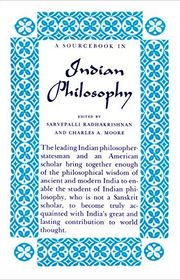
A Sourcebook in Indian Philosophy
For readers who want to encounter arguments in selected primary texts. Its anthology format lets you compare traditions more directly than a continuous survey, but excerpts benefit from a companion introduction and do not replace complete works.
What it's about
Sarvepalli Radhakrishnan and Charles Moore collect selections from Indian philosophical literature. The anthology introduces major traditions through translated texts, bringing together arguments about reality, knowledge, ethics and liberation for readers who want primary material alongside historical surveys.

Indian Philosophy
For readers who want a substantial historical interpretation of early Indian thought. Radhakrishnan offers more sustained exposition than the short introductions, but his perspective is interpretive and this linked volume is only part of the larger work.
What it's about
Sarvepalli Radhakrishnan surveys Indian philosophical thought through its classical texts and traditions. This volume introduces the development of major ideas and their relationships, offering interpretations that connect individual systems with the wider history of Indian philosophy.

For readers who want philosophy expressed through a dialogue about action and responsibility. Its immediate ethical dilemma offers a more personal entry than the surveys, but its religious framework benefits from historical context and commentary.
What it's about
On the eve of battle, Prince Arjuna turns to Krishna for guidance about action and his own nature. Their dialogue explores spiritual understanding and moral responsibility within the larger story of the Mahabharata.
Also recommended by
5 people Alexandria Ocasio-Cortez recommended this book
Alexandria Ocasio-Cortez
Alexandria Ocasio-Cortez recommended this book on Twitter.
Alexandria Ocasio-Cortez's recommendation of this book  Wim Hof recommended this book
Wim Hof
Wim Hof's answer to "What do you give to people as gifts?"
Wim Hof's recommendation of this book  Naval Ravikant recommended this book
Naval Ravikant
Naval Ravikant tweeted about this book.
Naval Ravikant's recommendation of this book 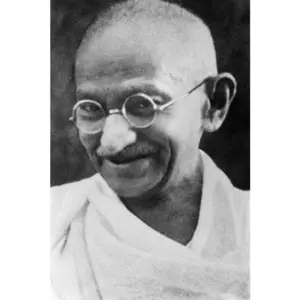 Mahatma Gandhi recommended this book
Mahatma Gandhi
"[This book] became an infallible guide of conduct. It became my dictionary of daily reference." - Mahatma Gandhi
Mahatma Gandhi's recommendation of this book  Paulo Coelho recommended this book
Paulo Coelho
"A book that everybody should read." - Paulo Coelho
Paulo Coelho's recommendation of this book

An Introduction to Indian Philosophy
For beginners who want a systematic introduction to the major schools. Its explanations and critical comparisons provide a firmer map than starting with primary texts, but the traditional survey structure can feel dense and schematic.
What it's about
Satischandra Chatterjee and Dhirendramohan Datta introduce the major schools of Indian philosophy. Their survey explains central principles and arguments, placing individual traditions within the broader outlook of Indian philosophical thought and offering critical discussion for beginning readers.
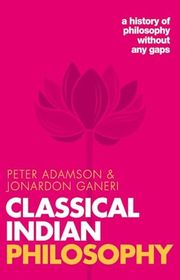
Classical Indian Philosophy
For newcomers who want a readable historical journey through arguments and thinkers. Its short chapters offer an easier continuous read than the specialist studies, but readers seeking extensive primary passages will need an anthology alongside it.
What it's about
Peter Adamson and Jonardon Ganeri trace classical Indian philosophy through its thinkers, traditions and debates. Short chapters explain arguments in their historical setting, introducing questions about knowledge, language, selfhood and ethics across a range of schools.
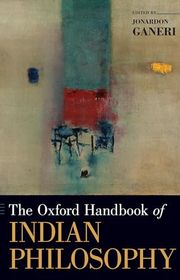
The Oxford Handbook of Indian Philosophy
For advanced students who want research perspectives across a long intellectual history. Its specialist chapters extend beyond the usual classical overview, but the varied contributors and assumed background make it better for targeted study than first orientation.
What it's about
Edited by Jonardon Ganeri, this collection brings together specialist studies of Indian philosophy across its history. Contributors examine traditions, thinkers and arguments from early texts through later developments, providing a research reference with varied approaches and areas of expertise.
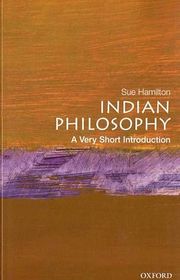
Indian Philosophy: A Very Short Introduction
For beginners who want orientation before committing to a large survey. Hamilton places philosophical questions in their cultural setting with unusual brevity, but the short format leaves little space for detailed arguments or complete coverage of individual schools.
What it's about
Sue Hamilton introduces Indian philosophy through its historical setting and central concerns. The short overview explains how philosophical inquiry developed alongside religious traditions, guiding new readers through questions about reality, knowledge and the aims of human life.
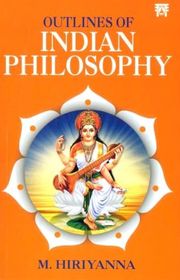
Outlines of Indian Philosophy
For readers who want a compact traditional survey before taking up individual schools. Hiriyanna connects major positions within a coherent overview, but the older style and compressed explanations make this less conversational than the newer introductions.
What it's about
M. Hiriyanna surveys the development of Indian philosophical thought and its major schools. His overview connects early religious texts with later systems, explaining central positions on knowledge, reality and liberation within a broad historical framework.

For readers ready to examine arguments about knowledge in detail. Matilal connects Nyaya and Buddhist debates with modern philosophical problems more closely than the broad surveys, but the sustained analysis assumes patience with technical reasoning.
What it's about
Bimal Krishna Matilal examines perception within classical Indian debates about knowledge. Focusing on Nyaya realism and its Buddhist critics, he considers illusion, inference, language, and universals, relating these arguments to problems in modern philosophy.

For readers interested specifically in consciousness and Advaita Vedanta. Gupta develops the witness concept through comparison with Western phenomenology, offering a narrower investigation than the surveys, but some familiarity with philosophical vocabulary will help.
What it's about
Bina Gupta explores the Advaita Vedanta concept of the witness, or saksin, as a way of understanding consciousness. Drawing on the Upanishads, Gaudapada, and Shankara, she compares this account with Western phenomenology and theories of knowledge.

For readers who prefer ethical questions embedded in characters and competing obligations. The epic gives moral ambiguity a narrative setting beyond the shorter dialogue of the Gita, but its scale makes it a demanding starting point.
What it's about
This Hindu epic unfolds in a world of warfare, magic, and competing obligations. Its stories explore duty, purpose, and pleasure through the struggles of related royal families, combining dramatic conflicts with reflection on how people should act.

Upanisads
For readers who want early philosophical texts with scholarly support. Olivelle’s translation and notes give more historical and linguistic guidance than a devotional introduction, but the compact teachings remain difficult without patient reading and context.
What it's about
Patrick Olivelle translates the ancient Sanskrit Upanishads into English, introducing their religious ideas and historical setting. Notes and supporting material guide readers through the texts, drawing on philological scholarship to clarify difficult passages and terminology.
Sources
- 1
Resources for Indian Philosophy
malcolmkeating.com
- 2
100 Best Indian Philosophy Books of All Time
shortform.com
- 3
Indian Philosophy Books
goodreads.com
- 4
Books on Hindu and Buddhist philosophy
reddit.com
- 5
Books for getting into Indian philosophies
reddit.com
- 6
The Most Important Indian Philosophy Books
thereadinglists.com
- 7
So You Want to Teach Some Indian Philosophy?
blog.apaonline.org





Edited by
Software engineer whose passion for tracking book recommendations from podcasts inspired the creation of MRB.
Lead investor at 3one4 Capital whose startup expertise and love for books helped shape MRB and its growth.
Comments
Spotted a missing book, a wrong order or a mistake? Tell us and we'll fix this page.
We're a reading guide, not the author or publisher, so we can't send books or pass on messages.